
Retaining Wall Removal in Boise: What Holds the Dirt Back?
Planning retaining wall removal in Boise? Here's what's behind the wall, where the dirt goes, what happens to old railroad ties, and when DIY makes sense.
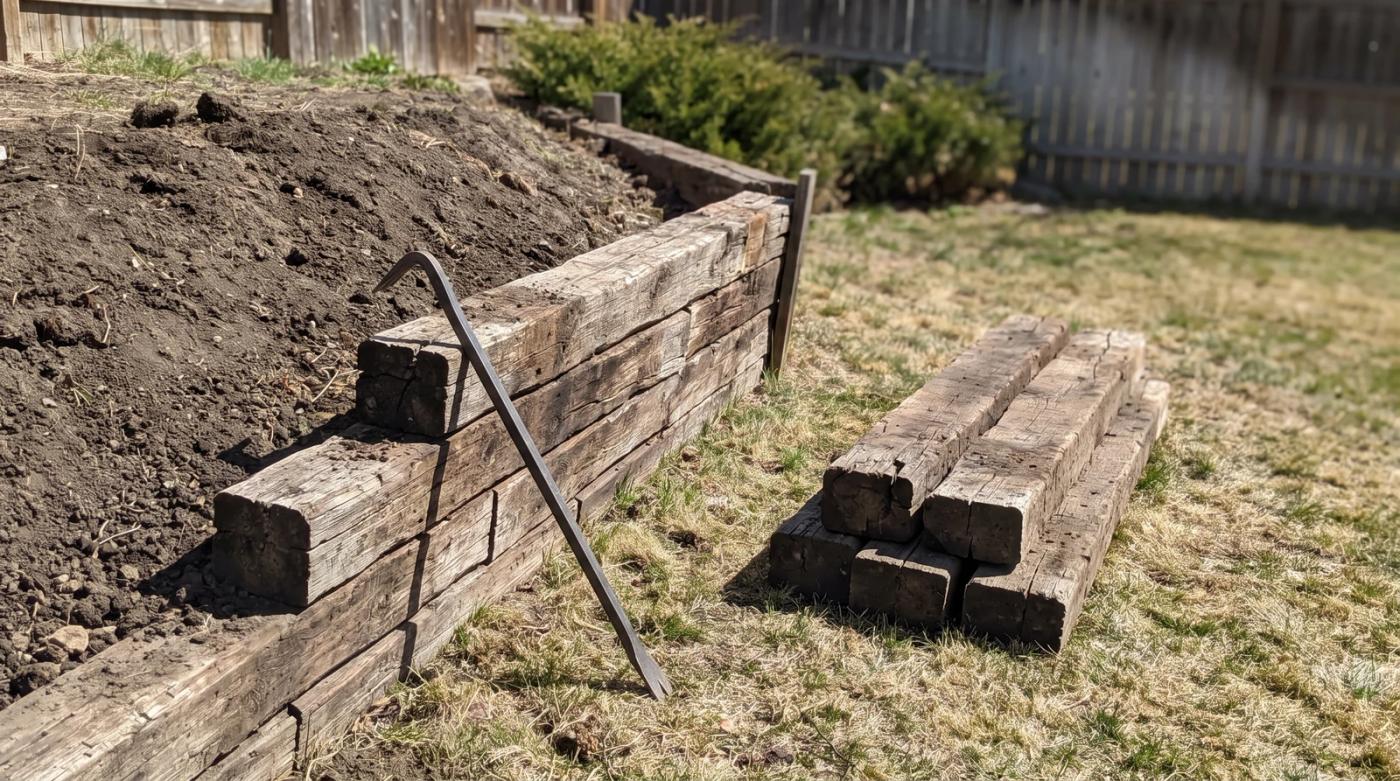
Last spring we looked at a retaining wall removal on the Bench in Boise. A row of old railroad ties was leaning out toward the lawn like a tired fence, and the homeowner wanted it gone before the landscapers showed up.
Fair enough. But the first thing we asked about wasn't the price. It was this: what's that wall actually holding up?
That's the part people skip. Pull the wall, and whatever it was holding back has to go somewhere. Sometimes that's no big deal. Sometimes it's your neighbor's yard sliding into yours.
What Kind of Wall Have You Got?
Most of the walls we pull out around Boise fall into three camps.
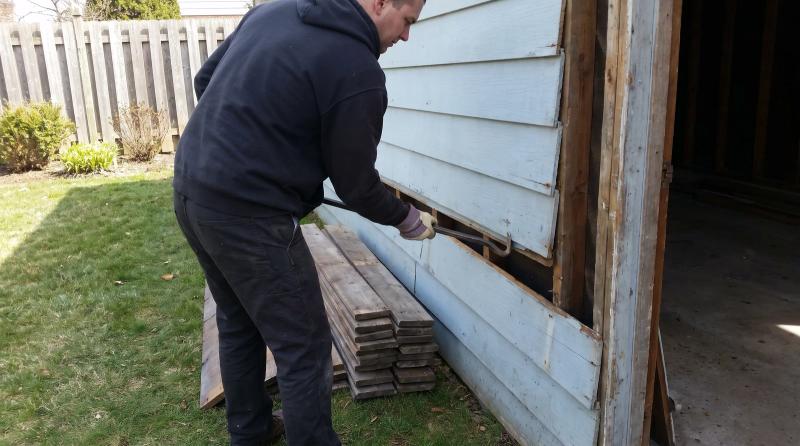
Railroad ties and landscape timbers show up a lot in older neighborhoods like the North End and parts of the Bench. They're usually rotted at the base and pinned down with long spikes or rebar. They come out in chunks, and the pins are almost always the slowest part.
Stacked concrete block, the interlocking kind you see in newer Meridian and Eagle subdivisions, is easier than it looks. The blocks come apart by hand. Behind them there's usually gravel, and sometimes a buried fabric grid.
Poured concrete or mortared block is a different job. Those walls have footings and often rebar, so they get broken up with a jackhammer. That means more time, more weight and more truck space.
Which one you've got changes the whole plan. It's the first thing we look at on an estimate.
Retaining Wall Removal in Boise: Check What's Behind It
Here's the honest version. A wall a foot or two tall holding back a flower bed? You can usually pull it and slope the dirt back without much drama.
A wall that's waist high or taller deserves a closer look before anybody swings a hammer. Same goes for one holding up a driveway, a patio, a fence line, or a slope that drops toward the house. Changing the grade near a foundation or a property line can mess with drainage for you and the folks next door.
Taller walls can also come with permit rules, and those vary between Boise, Meridian, Nampa and the rest of the Treasure Valley. A quick call to your city before you change anything saves a headache later.
We're not engineers, and we'll tell you when a job needs one. Most don't. But if the wall is clearly doing real work, figure out what replaces it before it comes out.
Heads up: Call 811 a few days before any retaining wall comes out. Sprinkler lines, landscape lighting and sometimes gas or electric get run right along the base of these walls, and the pins on a timber wall go deep enough to find them the hard way.
Take a look at the property line too. Plenty of walls in older Boise neighborhoods sit right on it.
If it's shared, talk to your neighbor first. That conversation goes a lot better before the wall is gone.
The Dirt Is the Part Nobody Plans For
Once the wall is out, you're left with a pile of soil that used to stand up on its own. So what do you do with it?
If you've got the room, you can regrade it into a gentle slope. You can keep it for a new wall or some raised beds. Or you can have it hauled off.
Dirt is heavy. A truck hits its weight limit long before it looks full, so a wall with a lot of backfill can turn into more loads than people expect.
That's not a reason to panic. It's just good to know up front so the estimate makes sense.
The gravel behind a block wall is usually clean and worth keeping if you're rebuilding. Landscapers are always happy to see it.
Where the Old Wall Material Ends Up
Railroad ties are the tricky ones. Most were treated with creosote, so they don't belong in your fire pit, and you shouldn't cut them up for vegetable beds either. Old ties need to be disposed of properly, not set on the curb with a free sign.
Concrete block and broken poured concrete usually get recycled. Clean concrete gets crushed and reused around the Treasure Valley, so a good share of it never sees the landfill.
Interlocking blocks in decent shape often get a second life. If you want a stack saved for a future project, just say so and we'll set them aside.
DIY Retaining Wall Removal or Hire It Out?
A short timber wall in a Kuna or Star backyard is a fair weekend project if you've got a pry bar, a trailer and a cooperative back. The pins will fight you. Plan on it.
DIY gets rough with anything poured, anything tall, or anything with a lot of soil behind it. You end up renting a breaker, making several runs to the Ada County landfill, and figuring out the dirt halfway through. Yes, we'd love the work, but honestly, a lot of people start these themselves and call us on day two.
If you do hand it off, here's how it goes with us. We come look at it, tell you what we think is behind it and what we'd do with the dirt, and give you a firm price before anything gets touched.
Pricing is based on volume, and the estimate is free. Most walls get scheduled within a few days, and a typical backyard wall is done in a day.
The Bottom Line
Removing a retaining wall is less about the wall and more about what it's holding back. Know what it's made of, call 811, and have a plan for the dirt before the first block comes off.
If you'd like a second set of eyes on yours, anywhere from Boise and Meridian out to Nampa and Caldwell, give us a call at (208) 593-2877. We'll come take a look and give you a straight answer, even if that answer is that you can handle it yourself.
Need Help With Demolition?
Top Shelf serves Boise and the Treasure Valley with professional junk removal, cleanouts, and demolition services.