
Concrete Slab Demolition After a Shed: Keep the Pad or Break It Out?
By Eric Hinderager, owner of Top Shelf Junk Removal and Demolition · Updated
Concrete slab demolition after a shed comes down: when to keep the pad, how hard it is to break out, and what moves removal and disposal costs.
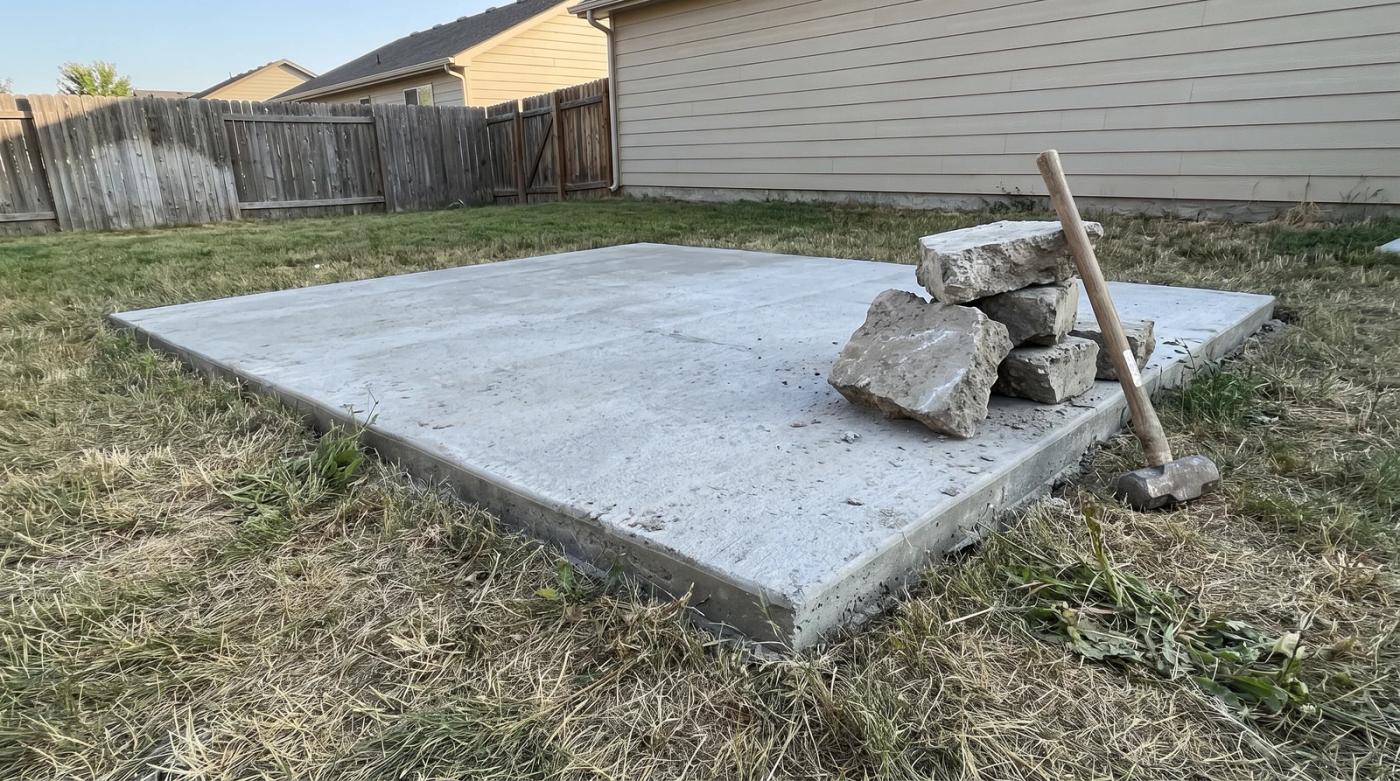
Concrete slab demolition after a shed comes down
Concrete slab demolition after a shed comes down is its own decision: keep the pad and build on it, or break it up and haul it away. It depends on what that corner of the yard becomes next.
Either way, settle it before the project starts, because a shed quote doesn't always include concrete removal. Demolition is the easy part. The concrete underneath is where people get surprised.
Why the slab never comes up until demo day
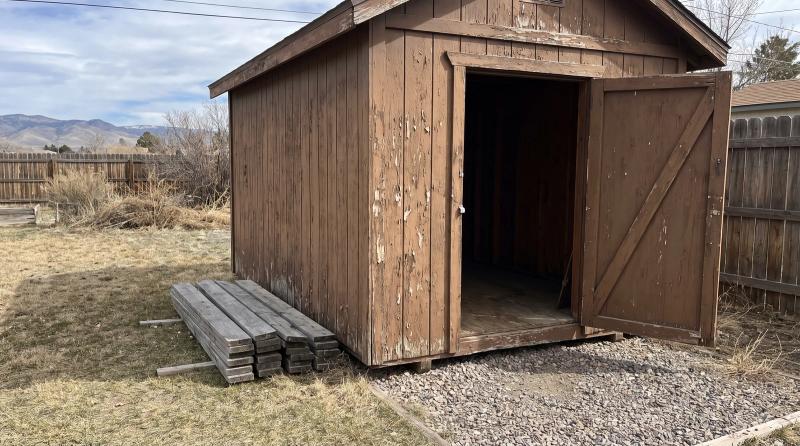
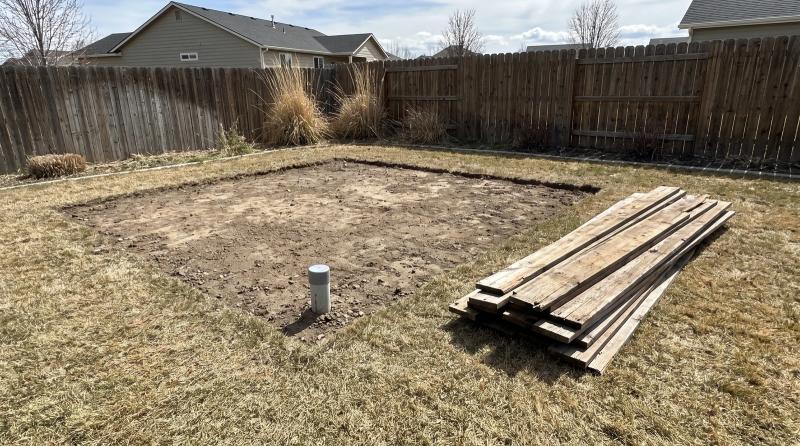
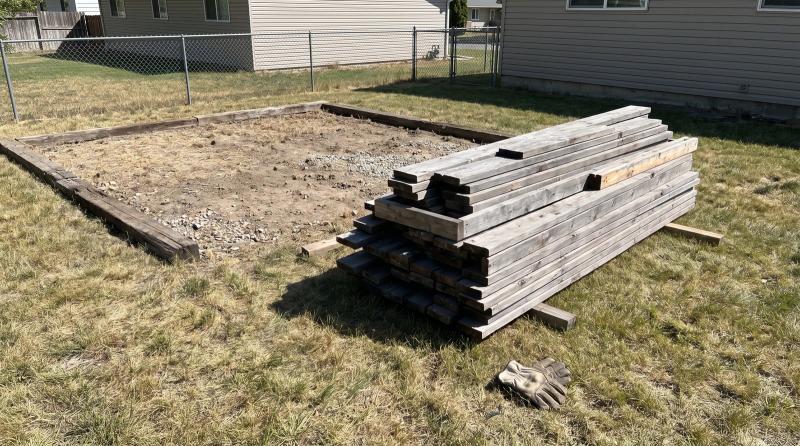
A backyard shed usually sits on one of three things: a poured concrete pad, a bed of gravel with skids or blocks, or straight dirt with pressure-treated runners slowly rotting into it.
Gravel or skids? You're fine. Rake it out, throw down topsoil, plant grass, done.
Concrete is a different story. It's heavy, and that weight adds to hauling and disposal costs.
So some quotes leave slab removal out. It's easy to miss until the shed's gone and the pad is staring at you.
Ask up front whether the slab is part of the project and the price. When you compare demolition services, ask if the quote covers breaking, hauling and disposal, or just the shed.
Three things you can do with the slab
You've got options, and none of them are wrong. It comes down to what that spot is going to be.
| Option | What it involves | Makes sense when |
|---|---|---|
| Leave it in place | Pressure wash it, check the cracks, reuse the concrete | You're putting a new shed, hot tub or patio there |
| Break it up and haul it out | Full concrete removal, disposal and cleanup | You want lawn, garden or a tree in that spot |
| Break it up, bury it, cap with soil | Broken concrete left in the ground | Almost never |
That last one gets suggested a lot, and we're not fans. Buried chunks settle unevenly, work their way up and eat a mower blade, and they're awkward to explain if you ever sell the house.
Leaving the concrete in place is a better call than people expect, and it skips removal entirely. Replacing an old wood shed with a new metal one? That pad is free foundation work.
Quick tip: Watch where the slab drains first. If water sheets toward your house or a crawlspace vent, pull it out even if you planned to reuse it.
How hard is it to demo a slab of concrete?
Most concrete pads under backyard sheds are fairly thin, and those break up without much fuss.
Concrete demolition is mostly about two things: how thick the pad is and what's inside it. Out in the field, crews size up both before anyone picks up a tool.
Thickness and reinforced concrete
Thickness drives almost everything. Thicker slabs take more hits to crack, weigh more per load and slow down removal.
Some folks poured what was really a small garage slab and later called it a shed pad. Reinforced concrete like that, with wire mesh or rebar inside, is a different animal.
Steel holds broken pieces together, so chunks get cut or pried free. That's why crews check slab thickness and reinforcement type before removal starts.
Unreinforced slabs are the friendly kind. Breaking them is the easy end of concrete demolition, and the concrete comes apart in cleaner pieces.
Demolition methods and tools
The right demolition methods depend on the pad's size, access and whether there's reinforced concrete in the way. Here's how the tools line up:
- By hand: For thin, unreinforced slabs, a sledgehammer and pry bar work well. It's slow, tiring work.
- Electric hammer: A jackhammer handles thicker pads and most reinforced concrete without bringing a machine into the yard.
- Machine: Mounted on a small machine, hydraulic breakers get through big pads fast when there's room.
- Saw: Saw cutting scores a clean line in the concrete, so part of a slab can come out while the rest stays.
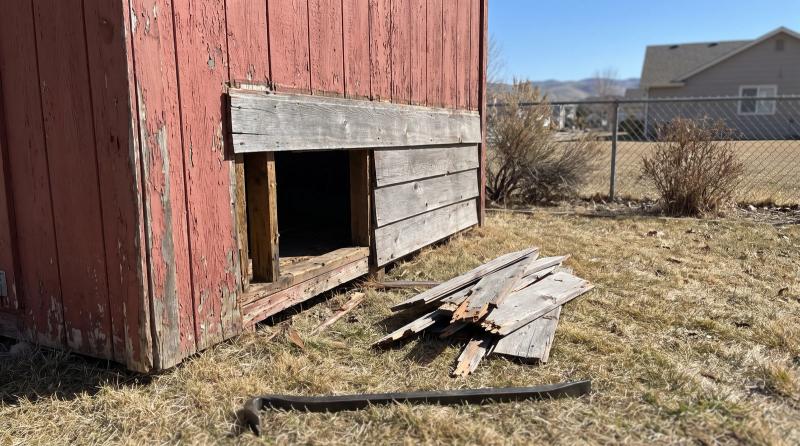
Good demolition techniques, learned in the field, are about control, not force. In concrete demolition, a careful crew demolishes a pad in pieces it can carry.
How much does concrete removal cost?
Concrete removal costs depend on the slab and the yard, so the honest answer is a quote after someone sees it. Here's what moves the cost up or down.
What moves the price up or down
| Factor | Keeps the cost down | Pushes the cost up |
|---|---|---|
| Thickness | A thin pour | Thick edges or a deep pour |
| Steel | No rebar or mesh | Reinforced concrete with rebar or wire mesh |
| Access | A side gate a machine fits through | Every piece carried out by hand |
| Disposal | Clean concrete, ready for recycling | Concrete mixed with dirt, wood or trash |
Access is usually the big one. A side gate a machine fits through makes it quick work. If removing concrete means carrying every piece down a tight side yard, removal takes longer.
Weight matters too. Concrete is heavy, so the load drives removal costs, and mixed debris can cost more in disposal than clean concrete. Doing the shed demolition and slab removal as one project means one setup and one haul.
Concrete disposal and recycling
Here's the good part: clean concrete doesn't have to be buried after removal. Recycling yards crush concrete into road base, so clean concrete disposal can go to a recycler instead of the Ada County landfill.
That's why it pays to keep concrete waste separate from wood, shingles and trash. A mixed load can lose the recycling option and push removal costs up.
The slab removal process, step by step
Here's how it usually goes for a backyard pad. The same basic concrete removal process works for pads of every size.
- Walk the site. Check the slab's size, thickness and access before the project gets quoted.
- Mark utilities. Top Shelf places the 811 call so buried lines get marked before any breaking or digging starts.
- Shut off power. Any line feeding the shed gets turned off at the panel. Safety comes before speed.
- Break the concrete. The crew picks tools for the pad and works in from one edge, which keeps the process controlled.
- Sort and haul. Broken pieces of clean concrete go to recycling, and everything else goes to the right disposal site.
- Grade and clean up. After removal, the spot gets raked level for soil, gravel or your next project.
Skipping steps is where removing concrete goes wrong. A missed sprinkler line or hot wire turns a simple project into a repair and a safety risk.
Getting ready before the crew shows up
Most prep comes down to safety, because in concrete demolition the real risk is what's hidden around the pad.
- Clear planters, hoses and the grill nobody's touched in years away from the pad
- Point out sprinkler lines and low-voltage landscape wiring, since they often run right along the slab edge
- Mention any electrical line feeding the shed, since older sheds sometimes have a buried line that's still hot
That last one matters most. Plenty of older sheds were wired as a weekend project with no conduit, so if you know a line is there, say so and it gets shut off first.
Empty the shed before removal day, too. Idaho Youth Ranch takes usable items, which beats paying to haul off something somebody else wanted.
Permits for shed demolition and slab removal
Whether slab removal or the shed itself needs a permit depends on where you live, the shed's size and whether it had power. Rules can differ between Boise, Meridian and unincorporated Ada County, so check with the local building department.
If a permit is required, Top Shelf handles the permit application for the demolition work.
Heads up: A shed subpanel needs to be disconnected the right way, for everyone's safety. It's not something to freestyle on a Saturday.
The bottom line
Decide about the slab before the shed comes down. Reuse it if something's going back in that spot, and the cost of concrete removal is worth it if you want that corner to be yard again.
Top Shelf's junk removal and demolition services cover shed demolition and concrete removal across the Treasure Valley, slab included. Call (208) 593-2877 for a free estimate, even if the answer is to leave it alone.
Frequently asked questions about concrete removal
Can I demo concrete myself?
You can for thin pads with no rebar. The process is the same, just slower: removing concrete by hand takes rented tools, safety glasses and patience, and rentals have their own costs. Reinforced concrete is where concrete removal services earn their keep.
Can a broken slab be fixed instead?
Small cracks can be cleaned out and filled with a concrete patch. Grinding removes concrete surfaces that stick up, but if the slab has sunk or split through, removing concrete and starting fresh is often easier.
How do you remove concrete deck footings?
Dig around each footing, then break it up or pull it out whole if it's small. Dismantling concrete structures like footings is the same concrete demolition as a slab, just deeper and tighter.
Can you remove just part of a slab?
Related reading: Concrete Slab Demolition: Can You DIY It, or Should You Hand It Off? and Chicken Coop Removal in Boise: Dust, Wire and Old Posts.
Yes. A saw scores a clean line, so partial removal takes out one section and leaves the rest. That's handy if you want to keep a strip for a path.
Need Help With Shed Demolition?
Top Shelf serves Boise and the Treasure Valley with professional junk removal, cleanouts, and demolition services.