
Chicken Coop Removal in Boise: Dust, Wire and Old Posts
Taking down an old chicken coop in Boise or Kuna? Here's what's involved: the droppings and dust, buried wire, set posts, and what to sort before demo.
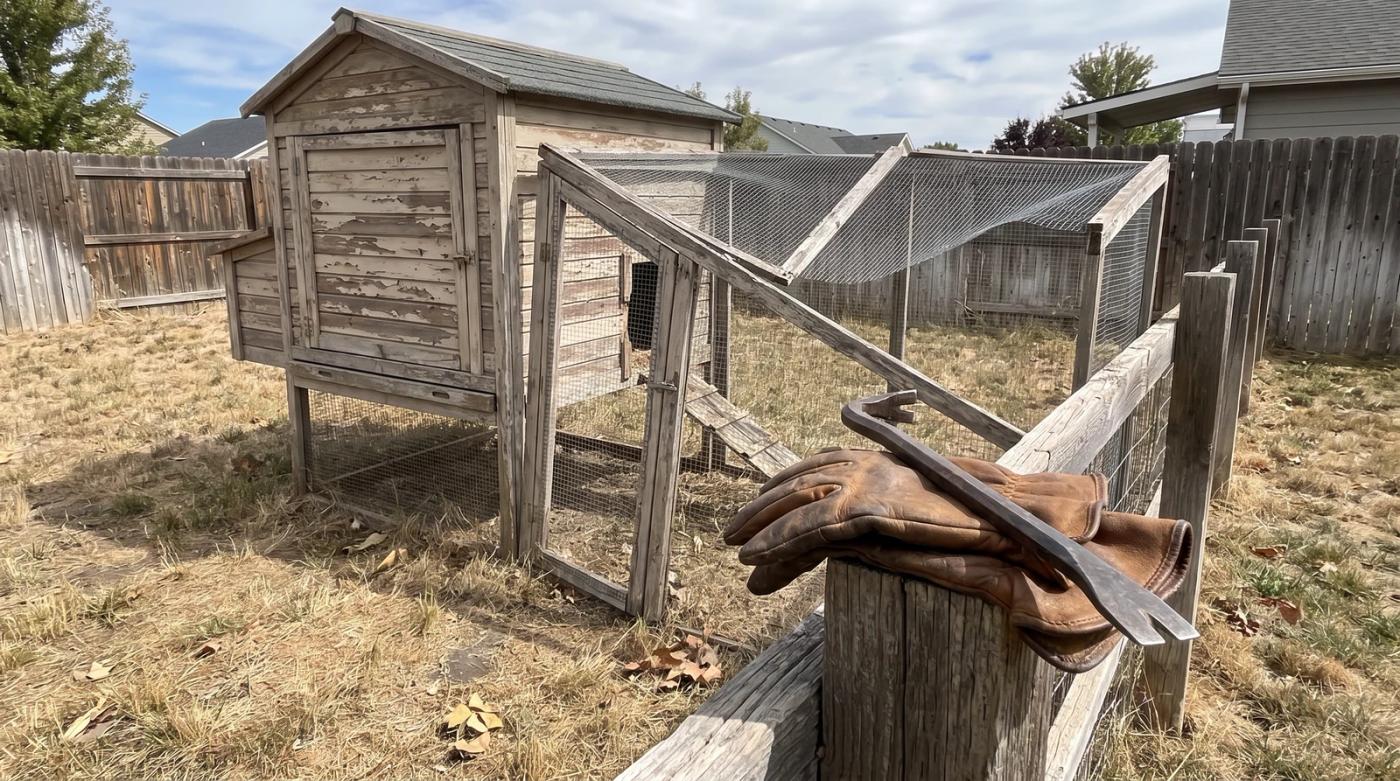
The hens are gone, or you're down to one stubborn old bird, and the coop out back leans a little more every winter. Maybe you bought a place in Kuna or Star and the coop came with it. Either way, chicken coop removal looks like a quick weekend job until you open the door and take a good look inside.
A coop is a small structure, but it isn't a clean one. Here's what you're getting into before anyone picks up a hammer.
Why Chicken Coop Removal Isn't Just a Small Shed Job
From the street, a coop looks like a mini shed. The difference is what's built up inside.
Years of droppings, old bedding, feathers and spilled feed pack into the corners, the nesting boxes and the gaps under the roost bars. Our summers here are hot and dry, so all of that turns into fine dust. Pull the walls apart and that dust ends up in the air you're breathing.
Dried bird droppings can carry fungal spores and bacteria you don't want in your lungs. That's not meant to scare you off. It just means step one isn't demolition. It's cleaning out.
Tip: Lightly mist the bedding and droppings with a garden hose before you scrape or shovel anything. Damp dust stays put. Wear gloves, eye protection and a real N95 mask, not a cloth one, and wash your work clothes separately afterward.
Still have birds? Move or rehome them first. It sounds obvious, but a half-torn-down coop is an open invitation to raccoons, skunks and the neighbor's dog.
What to Do With the Manure and Old Bedding
Here's the good news. Chicken manure and pine shavings are some of the best stuff you can put in a compost pile.
If you garden, shovel it into a bin or a back corner of the yard and let it age before it goes anywhere near your vegetables. Fresh chicken manure is strong enough to burn plants, so give it time.
No garden? Bag it up. Gardeners in local neighborhood groups will sometimes come grab aged coop litter if you offer it. If nobody bites, it can go out with the rest of the debris.
What you don't want is a loose pile of manure sitting next to the work area in July. It smells, it pulls in flies, and once it dries out the dust is right back.
The Wire and Posts Nobody Remembers
This is the part that turns a quick job into a long afternoon.
Most coops have a run made of chicken wire or welded wire, stapled to wood posts. The staples are everywhere, and cut wire springs back at you. Heavy gloves and long sleeves aren't optional.
Then there's what you can't see. A lot of careful chicken keepers bury hardware cloth around the perimeter so predators can't dig under. It can run the whole length of the run, a good way below the surface. If you want lawn or a garden bed there later, that wire has to come out, or it'll snag a shovel or a tiller every spring.
Posts are the other surprise. Some are just driven into the dirt and rock loose with a little effort. Others are set in concrete, which means digging out each footing or cutting them off below grade.
Probe around the base of a couple posts before you decide how big the job is. It'll tell you a lot.
And what's the coop actually sitting on? Older ones on the Bench or out in Canyon County might be on pavers, cinder blocks, an old pallet or a small slab. Each of those comes out differently, and a slab is a different job than the coop itself.
Do You Need a Permit for Chicken Coop Removal in Boise?
For a small backyard coop, usually not. But usually isn't the same as never.
If the coop is big, has power run to it for a heat lamp or lights, or it's really an old outbuilding someone turned into a coop, check with your city or with Ada or Canyon County first. The rules aren't the same in Boise, Meridian, Kuna and unincorporated county land, and a quick call to the building department beats finding out the hard way.
If there is power, get it properly disconnected before anything else. A buried line to an old heat lamp is easy to forget, and you really don't want to find it with a spade.
In an HOA? Read the rules. Some care about what's left behind, like bare dirt, a dead patch of grass or an empty slab.
DIY Chicken Coop Removal or Hand It Off?
Honestly, a small, simple coop is a reasonable DIY job. If you're fine with a pry bar, have a truck and don't mind a dusty, scratchy afternoon, clean it out, cut the wire into manageable sections, unscrew what you can and haul it to the Ada County landfill.
It gets harder with walk-in coops, long runs with buried wire, posts set in concrete, or a slab underneath. That's when the hauling takes more trips than you'd guess and the digging takes longer than anyone plans for.
Yes, we'd like the work. But if your coop is a little A-frame sitting on the grass, you can probably handle it yourself, and we'd rather just tell you that.
Whichever way you go, the order stays the same. Move the birds, wet down the dust, mask up and decide where the manure goes. Then check for buried wire, concrete posts and any power line before you start pulling things apart.
If you'd rather not deal with any of it, Top Shelf Junk Removal and Demolition takes down coops, runs and the posts underneath anywhere in the Treasure Valley. Pricing is by volume, and you'll get a firm price at a free on-site estimate before anything gets touched. Give us a call at (208) 593-2877 to set up an estimate.
Need Help With Demolition?
Top Shelf serves Boise and the Treasure Valley with professional junk removal, cleanouts, and demolition services.