
Chimney Removal in Boise: Taking Down an Old Brick Chimney
What chimney removal in Boise really involves: roofline-down vs. full tear-out, permits, gas and vents, dust, debris and how the price gets set.
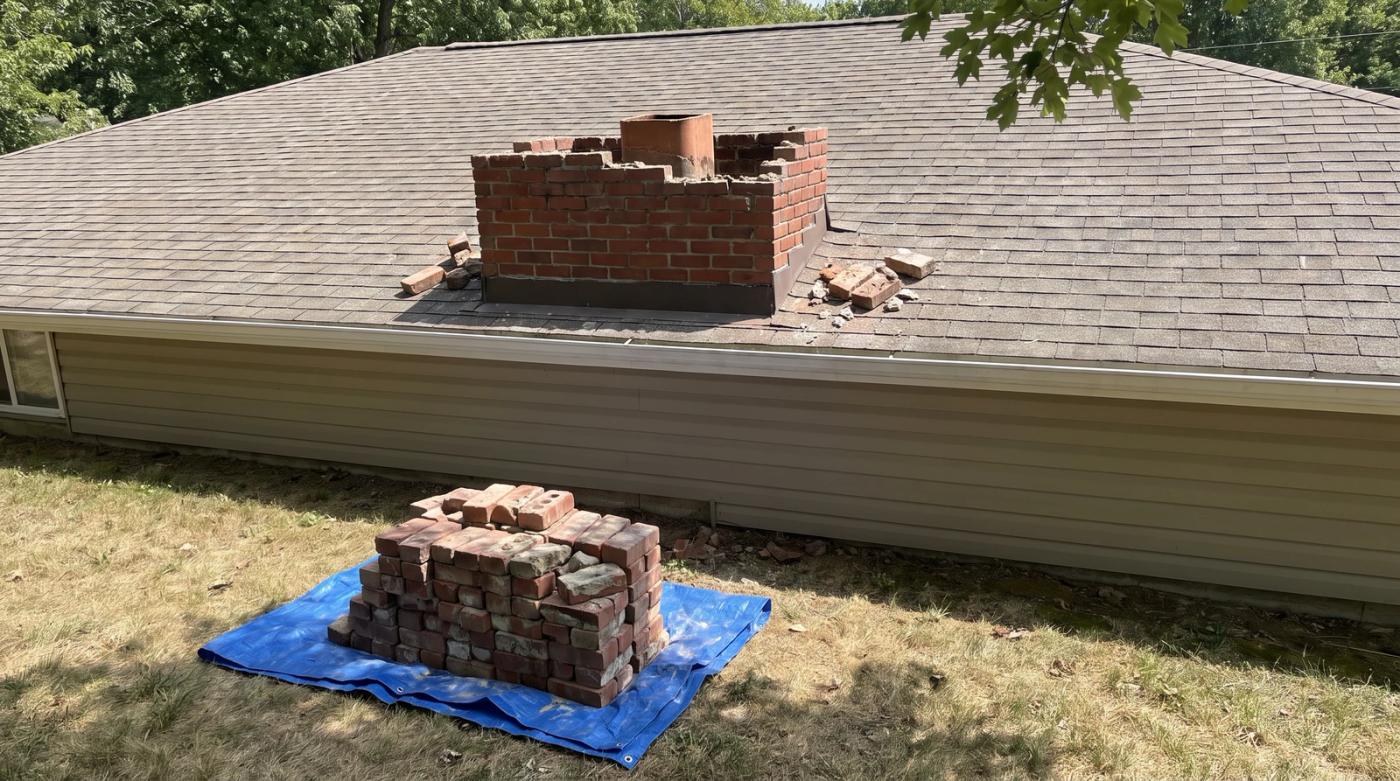
Last spring a homeowner in Boise's North End walked us around the side of a 1920s bungalow and pointed up at the reason they'd called about chimney removal. Nobody had lit a fire in that chimney for twenty years. It leaned a little, the mortar had gone sandy, and every windstorm dropped a few more chunks of brick into the flower bed.
That's how most of these jobs start. Nobody plans to take out a chimney. It slowly goes from a feature to a liability, and one day you're done patching it.
If that's where you're at, here's what actually happens when an old brick chimney comes down, and what to sort out before anybody climbs a ladder.
Why Boise homeowners take old chimneys out
Usually the reason is simple. Nobody uses the chimney, and it keeps costing money just to keep it standing.
Plenty of older houses on the Bench, in the North End and in the older parts of Nampa and Caldwell have brick chimneys built for coal or wood stoves. Decades of Treasure Valley weather are hard on them. Water soaks into the mortar, freezes in January, expands, and the bricks start to shift.
The roof is the other big one. If you're re-roofing anyway, a dead chimney is one more thing to flash around and one more spot for a leak. A lot of people pull it while the roof is already open.
Some folks bring up earthquakes too. The 2020 Stanley quake was felt all over the valley, and an unreinforced brick chimney is one of the first things to crack when the ground moves. That's a fair thing to weigh.
Roofline down or all the way out?
This is the first real decision, and it changes the size of the job a lot.
Taking it down below the roofline means we remove everything above the roof, cap what's left in the attic, and the roof gets patched over the opening. It's faster and keeps most of the mess outside. The rest of the chimney is still there, just out of sight.
Full removal means the whole thing comes out, sometimes all the way to the footing in the crawl space or basement. You get the floor space back and there's nothing left to crumble. It also means opening walls and ceilings, and hauling a lot more brick.
How much more? Usually more than people expect. A two-story chimney can take up a good chunk of a truck on its own, and brick is heavy.
So which one makes sense for you? If the chimney runs up the middle of a room you'd like to open up, full removal usually wins. If it's on an outside wall and you mostly care about the roof and the falling bricks, roofline down is often plenty.
Getting ready for chimney removal
A few things need to happen before the first brick comes off.
Start by finding out what's still hooked up to it. A lot of old chimneys around here still vent a furnace or water heater, even though the fireplace hasn't been used in years.
Heads up: If a furnace or water heater still vents up that chimney, it needs a new vent run before demolition day. Have your HVAC company or a plumber check it first. Pulling a chimney that's quietly doing a job is how carbon monoxide ends up inside the house.
If there's a gas insert or gas logs, the line has to be shut off and capped properly. Intermountain Gas or a licensed plumber handles that part, not us.
Then there's permits. Chimney work touches your roof and sometimes your framing, so check with the City of Boise building department, or your own city or county if you're in Meridian, Kuna, Star or out in Canyon County. We're glad to help you figure out what your address needs.
Last, line up a roofer. We do the demolition and haul everything away, but the patch is a roofer's job. Try to get them scheduled the same week so you're not living under a tarp.
How the work actually goes
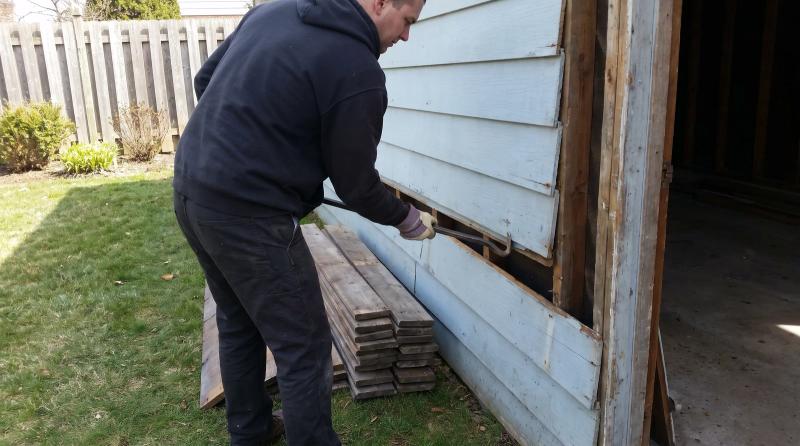
Chimneys come down from the top, by hand, a few bricks at a time. Nobody pushes it over. That's how a brick ends up through the neighbor's window.
We protect the roof and the ground around the house, lower the brick down a chute or in buckets, and keep the area roped off. For a full removal, the room inside gets sealed off with plastic, because mortar dust gets into everything otherwise.
A roofline-down job is often done in a day. Full removal takes longer, depending on height and how much plaster or drywall has to come off around it. You'll get a realistic timeline at the estimate, and we can usually get demolition on the calendar within a few days of that visit.
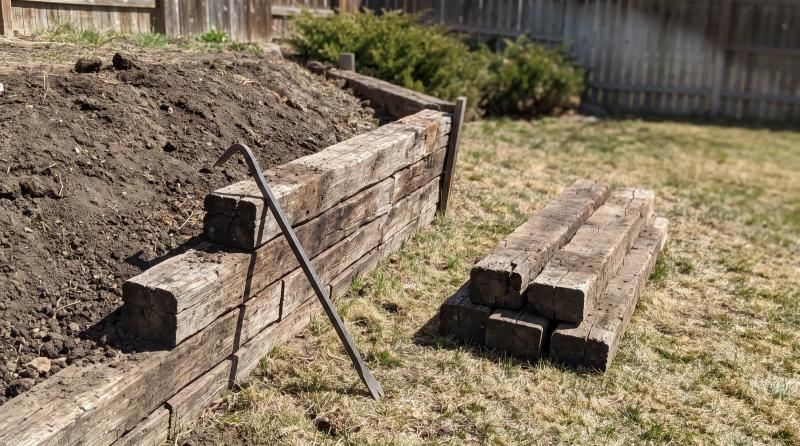
What happens to all that brick? Good old brick gets a second life as garden edging, patios and fire pits. The rest gets recycled or goes to the landfill, depending on condition. If you want a stack for your own project, just say so.
What chimney removal costs
We price by volume and by how much work it takes to get the brick down and out safely. Height, roof pitch, roofline down versus full removal, and how much interior wall is involved all factor in.
That's why we won't guess at a number over the phone. The estimate is free, we look at the chimney in person, and you get a firm price before anything gets touched. No surprise charges at the end.
We take cash, card and Venmo, and financing is available on bigger projects.
Bottom line
An old chimney nobody uses is usually worth taking out before it turns into a roof leak or a pile of bricks in the yard. Figure out what's venting through it, get the gas capped, check on permits, and get a roofer lined up for the patch.
Yes, we'd love the job. But if you mostly want an honest opinion, give us a call at (208) 593-2877 and we'll come take a look. Sometimes the answer is that it can wait, and we'll tell you that too.
Need Help With Demolition?
Top Shelf serves Boise and the Treasure Valley with professional junk removal, cleanouts, and demolition services.