
Concrete Slab Demolition: Can You DIY It, or Should You Hand It Off?
By Eric Hinderager, owner of Top Shelf Junk Removal and Demolition
Concrete slab demolition explained: what makes a slab hard to break, when DIY works, how concrete removal runs and what really drives the cost of the job.
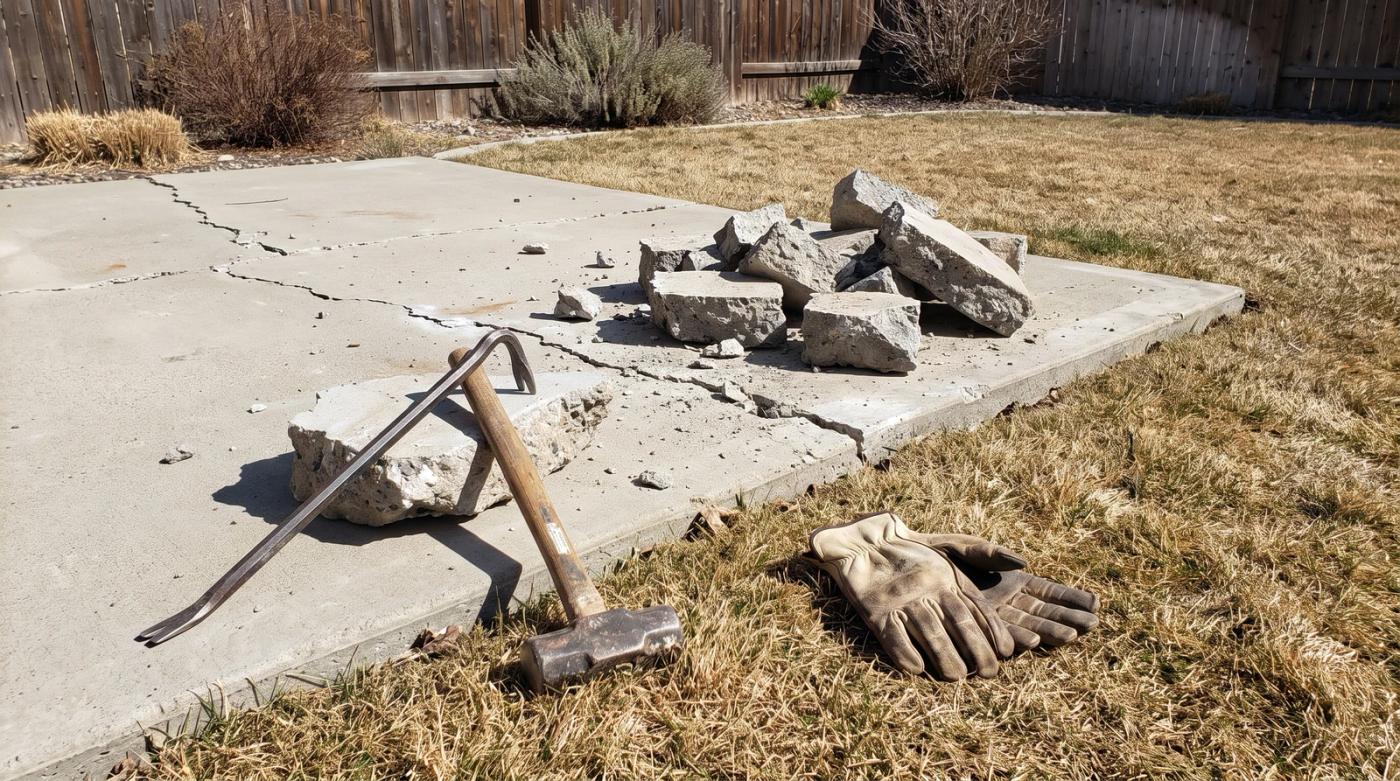
Concrete slab demolition comes down to three jobs. First comes breaking the slab into pieces you can lift. Then you get those pieces off the property and leave clean ground behind. How hard each one is depends on how thick the concrete is, what's inside it and what's around it.
A thin, unreinforced walkway is a fair DIY project for a lot of Boise homeowners. A thick garage slab full of rebar usually isn't. Below is how the process runs, where DIY ends and what drives removal costs in the Treasure Valley.
How hard is it to demo a slab of concrete?
Check the thickness, the steel inside and what's around it before you pick up any tools.
Thickness: a thin walkway vs. a garage or shed slab
Hand tools are fine for thin concrete walkways and old patio pads.
Thicker slabs are different. Garage floors, shed pads and driveways are poured heavier. That extra concrete soaks up hammer blows instead of cracking. A thicker pour also tends to have steel in it, so check for both.
To check thickness, dig a small hole beside one edge. Measure down to the bottom of the concrete. Check more than one spot, since concrete isn't always poured even. The hole also shows how much broken concrete the removal will produce for disposal.
Rebar, wire mesh, or nothing at all
Unreinforced concrete breaks clean. Reinforced concrete holds together even after it cracks. The steel keeps the pieces tied to each other.
Wire mesh is common in patios and walkways. It has to be cut or bent to free each piece. Rebar is heavier steel found in garage slabs, driveways and footings. Removing concrete with rebar takes power tools like a grinder or torch. That steel is what slows reinforced concrete down.
Not sure which you have? A cracked edge with rusty wire or a rod sticking out tells you.
What's under and around it: sprinkler lines, utilities, footings
In the field, what's under the slab can matter more than the concrete itself. Sprinkler, gas and electrical lines and old drain pipes often sit right under it. Hitting a gas line is a serious safety risk.
Dismantling concrete structures tied into a house foundation, a garage footing or a driveway you're keeping takes a clean break line. Without one, the damage spreads into concrete you wanted to keep.
Deck footings work the same way, just smaller. Dig around each block of concrete, then pry it out or break it up.
Can I demo concrete myself?
Yes, if you're dealing with thin, unreinforced slabs that are easy to reach. You also need a plan for rubble removal. Past that, DIY concrete demolition gets slow and rough on your body, and the rental costs add up.
Plan the whole project, every piece of concrete included, before the first swing.
When a sledgehammer and pry bar work well
For thin, unreinforced slabs, a sledgehammer and pry bar work well. Removing concrete by hand goes best from a corner. Dig out a little dirt underneath so the concrete can drop, then hit it there.
Once a crack opens, lever pieces up with the pry bar. Keep them small enough to lift without straining your back.
Safety gear isn't optional. Concrete demolition throws sharp chips. Wear safety glasses, gloves, sturdy boots and hearing protection, and keep kids and pets well back.
When it's a jackhammer job, and what renting one involves
If your swings just bounce off, you need more power. Deep slabs and reinforced concrete need at least an electric breaker hammer, which removes concrete surfaces far faster. Rental shops around the valley carry these tools, but plan ahead:
- You'll still need a grinder or cutoff saw for rebar or mesh.
- Rental time adds to your concrete demolition costs when the slab fights you longer than you expected.
In the field, contractors use hydraulic breakers on a skid steer or mini excavator. Those demolition methods are faster, but they need room and an experienced operator.
Common mistakes with DIY concrete demolition
Most trouble with DIY concrete demolition comes from a few simple mistakes:
- Starting in the middle. Concrete breaks best from an edge, with the dirt dug out below it.
- Ignoring the dust. Wet the concrete down to keep dust low, and wear a mask.
- Skipping the utility check. Buried lines need to be marked before the first swing.
The part people forget: where the broken concrete goes
Breaking the slab is only half of concrete removal. The other half is getting the rubble off your property.
Concrete is heavy. A small slab can max out a pickup bed before it looks full. An overloaded truck or trailer is a real safety problem on the road. Trash service won't take concrete waste, and many dumpster services cap weight.
Your concrete disposal options are basically the Ada County landfill or a concrete recycling yard that takes clean rubble. Either way, plan on several trips. Check hours, disposal fees and what each place accepts. Disposal costs can depend on the load, so keep the concrete free of dirt and trash.
The concrete slab demolition process, step by step
The process runs in the same order for a small patio or a full shed pad. Here's how Top Shelf runs a concrete removal project.
Call 811 and mark what's buried
Call 811 before anyone breaks ground. It's the free call-before-you-dig safety line, and utility companies mark their lines.
811 doesn't mark private lines like sprinkler pipes or a gas run to a grill. So when Top Shelf takes on a slab removal, we place the call and ask about anything private down there.
Saw-cut a clean line where the slab meets concrete that stays
Saw cutting comes first if the slab touches concrete you're keeping. That way the concrete breaks on a straight line instead of cracking into your sidewalk. Skip it, and a simple removal can turn into a repair.
Break it into liftable pieces
Next comes the breaking. Depending on thickness and reinforcement type, that's hand tools, a jackhammer or a machine-mounted breaker. Choosing between those demolition techniques comes down to the slab, not preference.
The goal is concrete pieces a person can safely lift, with rebar or mesh cut free.
Load, haul and recycle the rubble
Removal comes next: the pieces get loaded and hauled off for disposal. Where possible, clean concrete goes to recycling instead of the landfill. There it's crushed and reused as base material for new projects.
Steel from rebar and mesh goes to recycling too, and concrete is one of the easier materials to keep out of the landfill.
Clean up the base and check the ground underneath
Once the concrete removal is done, cleanup is the last step of the process. The base gets raked clear. Then check the ground for soft or wet spots, roots, old pipes or hollow spots before you pour new concrete, lay sod or set a new shed.
How much does concrete removal cost?
Concrete removal costs come down to volume, weight, labor and disposal. Two slabs that look alike can be very different removal jobs.
Size and depth set the volume and weight
Size and thickness decide how much concrete the removal crew has to move. More volume means more truck space, more weight and more trips to disposal.
Top Shelf prices removal by volume, meaning how much of the truck your job fills. A bigger or deeper slab costs more, and a short walkway costs less.
Access: how close the truck can get
Access changes the labor. Removing concrete from a fenced backyard, behind a narrow gate or down a slope means carrying every piece farther. That adds to removal costs.
Reinforcement, saw cutting and permits
Reinforced concrete takes longer to break, cut and haul, which adds to removal costs. If your project needs a permit, Top Shelf handles the permit application for demolition work when one is required. We also handle any utility disconnects.
Why a free on-site estimate beats a guess
A free on-site estimate beats a guess. Someone in the field can check the thickness, spot reinforced concrete and judge the access. You get a firm price before anything is touched, with no hidden fees, so removal costs aren't a surprise. Top Shelf takes cash, card or Venmo, and financing is available for larger projects.
Concrete demolition is mostly about planning. Know what's in the slab, what's under it and where the rubble ends up.
Demolition is one of the three core services at Top Shelf, alongside junk removal and cleanouts. Our crew demolishes and hauls slabs of every size across Boise, Meridian, Nampa, Caldwell and the rest of the Treasure Valley. Our concrete removal services include the disposal. For a firm price, call (208) 593-2877 and we'll come take a look.
Frequently asked questions about concrete removal
How do you get rid of old concrete for free?
Some concrete recycling yards take clean, broken pieces at little or no cost, as long as there's no dirt, trash or steel mixed in. Policies change, so call ahead. Removing concrete for free still means hauling it yourself.
Do you need a permit for slab removal in Boise?
It depends on the project. Simple flatwork removal may not need one, but a slab tied to a structure, utilities or the public right-of-way can. Check with the City of Boise or ask during your estimate.
Can you fix a cracked slab instead of tearing it out?
Small cracks in concrete can often be filled or patched. If the slab has sunk, heaved or broken into loose pieces, removal and a new pour is usually the better fix. A crack that keeps getting wider often points to a problem in the ground under the concrete.
Should the ground be regraded after the slab is gone?
Related reading: Chicken Coop Removal in Boise: Dust, Wire and Old Posts and Treehouse Removal in Boise: Saving the Tree It's Built In.
Usually, yes. After concrete removal, level the ground and slope it away from your house. If new concrete or a structure is going in, compact the soil first and don't use leftover concrete chunks as fill.
Need Help With Demolition?
Top Shelf serves Boise and the Treasure Valley with professional junk removal, cleanouts, and demolition services.