
Concrete Removal Cost: What's Included and What You Can Prep First
By Eric Hinderager, owner of Top Shelf Junk Removal and Demolition
Concrete removal cost depends on size, thickness, rebar and access. See what a firm quote should include and the prep that keeps surprises off the bill.
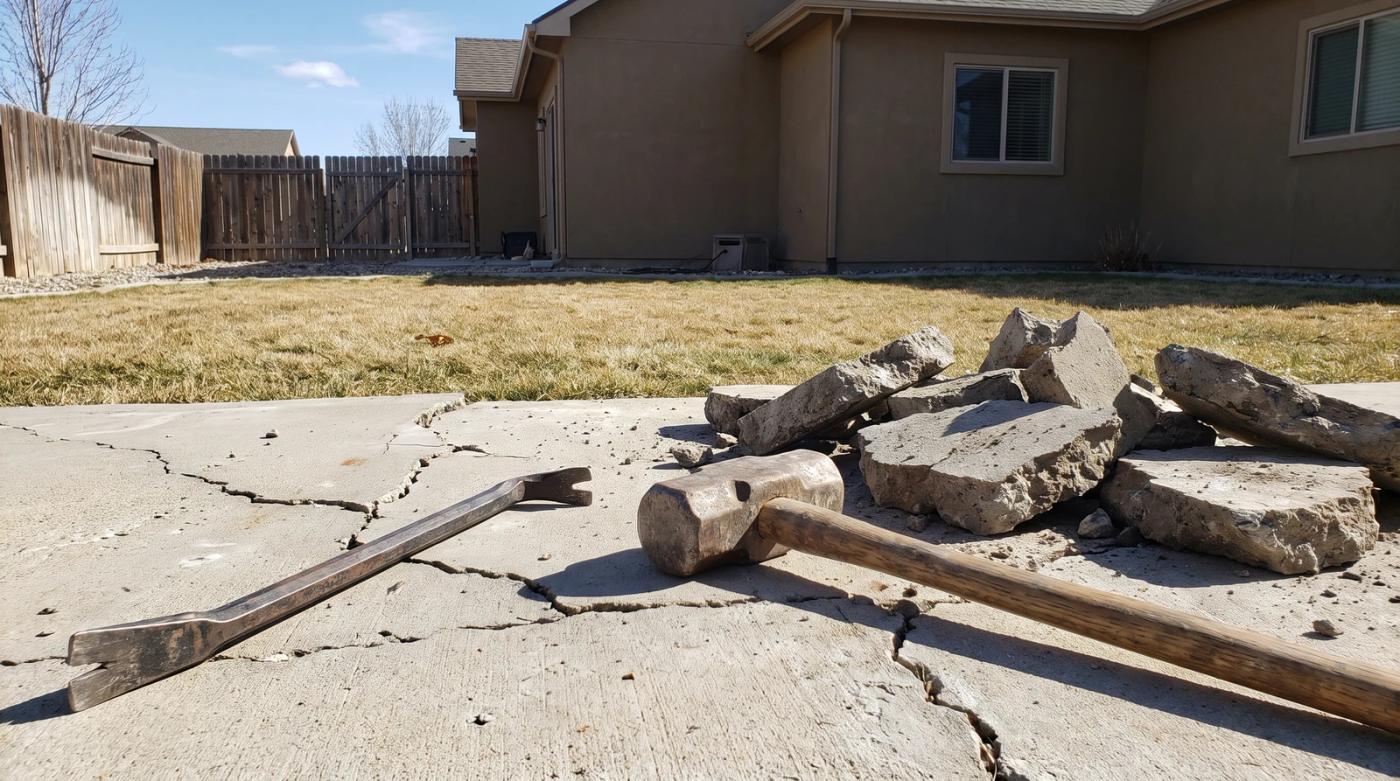
Concrete removal cost comes down to how big the slab is, how thick and reinforced it is, how easy it is for a crew to reach, and what the price actually covers: breaking it up, loading it, hauling it, disposal, cleanup and, for a driveway, sometimes a permit. Two quotes for the same patio in Boise or Meridian can look nothing alike just because one includes hauling and dump fees and the other doesn't.
So compare what's inside each price before you compare the totals. A little prep around the slab makes the price you're quoted far more likely to be the price you pay.
How much is it to remove a concrete slab?
It depends on the slab's size, thickness, steel and access, plus whether the quote includes hauling and dumping. Most of that can't be judged from a photo, because what moves the price is often under the surface.
That's why Top Shelf prices by truck space and comes out for a free on-site estimate. You get a firm price before anyone touches the slab, with no hidden fees.
What a firm quote should cover, from the first break to the swept-off ground
A real concrete removal quote covers the whole job, not just the loud part. It should spell out:
- Permit help when the work touches the street approach or the public right of way
- Utility checks, including the 811 locate request before any saw work
- Concrete cutting where the old slab meets anything that stays
- Concrete breaking into pieces a crew can lift and load
- Loading and hauling, rebar and wire mesh included
- Dumping or recycling, fees included
- Cleanup, down to bare ground with no chunks left in the lawn
Worth asking: Who pays the dump fees, and are they in this price or billed after? Get that answer in writing.
What pushes the price up or down: size, thickness, rebar, access and how far the truck can get
Size is the obvious one. A bigger slab means more concrete to break, load and haul away.
Thickness matters just as much, and you usually can't see it. A thick concrete pad poured for an RV or a hot tub takes far more work than a walkway, and it hits a truck's weight limit faster. Sometimes the only way to know is a broken edge or drilling concrete near a corner.
Then there's steel. Rebar or wire mesh holds broken pieces together, so it has to be cut free before anything can be lifted.
Access is the one people underestimate. A slab right off the street is easy. A backyard patio in the North End, behind a fence with a narrow gate and no alley, means every piece gets wheeled out by hand. The farther the truck sits from the slab, the more labor goes into every load.
Driveways: the apron, the right of way and who issues the permit
Driveway demolition can run higher than a backyard slab of the same size, because it may be thicker and part of it sits in the public right of way. That part is the apron, between the sidewalk or curb and the street, and it usually isn't yours to tear out without permission.
In Ada County, approach work generally goes through the Ada County Highway District (ACHD) rather than the city. In Canyon County, it depends on which city or highway district covers your street in Nampa, Caldwell or out in the county. Not sure who covers yours? Your city or county office can tell you. Top Shelf handles the permit application for demolition work, so you're not the one chasing paperwork.
Heads up: Plan to replace it right away? Ask your installer how their approach permit lines up with the removal, so the street edge isn't left open while two crews wait on each other.
Prep that keeps your concrete removal cost from creeping up
It's mostly knowing what's under, around and next to the slab before the estimate. Surprises on removal day cost time, and time is labor.
Find sprinkler lines, utilities and anything buried under or beside the slab
Idaho requires an 811 locate request before excavation, and Top Shelf places that call before the work starts. But 811 only marks the utility companies' lines. It won't find your sprinkler pipe, a buried wire to a yard light, a gas line to a grill or a drain under the patio.
Mark sprinkler heads near the edges, find the valve box, and tell the crew about anything you or a past owner added. Cracked sprinkler lines are a common side effect of breaking out a slab when nobody knows where the pipe runs.
Quick tip: Run each sprinkler zone for a minute before the estimate and watch which heads pop up near the slab. It's the fastest way to map pipe you can't see.
Decide exactly what stays and what goes, and where the saw-cut line should be
Be specific about the edges. Do you want to remove the whole patio, or just the cracked half? Does the walkway to the back door stay?
Where the old slab meets something you're keeping, the clean way to split them is sawing concrete along a straight line, then breaking up the side that's leaving. Skip the saw cut and breaking one slab can crack the one next to it. Top Shelf does the saw cuts, so mark the line you want with spray paint or string.
Clear the path for the truck and the crew, and settle what you want left behind (dirt, grade, gravel)
Move cars, trailers, planters and patio furniture away from the slab and the route out before removal day, and check gate widths and low branches. If the garage or side yard is packed with stuff you don't want, garage cleanouts, yard waste removal and general debris removal can go on the same estimate, since clearing space is part of the prep.
Season matters too. A soggy spring lawn ruts under a loaded wheelbarrow, while dry summer ground holds up better.
Then decide what you want left. Many slabs sit on a layer of gravel. Do you want it left for a new pour, dug out to dirt for sod, or roughly leveled? Say so at the estimate, since extra gravel or dirt is more volume in the truck.
Does the dump charge for concrete?
Usually, yes. Most disposal sites charge for concrete, and because it's so heavy, the cost adds up quickly. Facilities charge tipping fees, usually by weight or by load, and many handle broken slabs and construction debris separately from household trash.
Hauling it yourself in the Treasure Valley: weight, vehicle limits and checking the facility's current rules
If you're hauling it yourself, weight is the real problem. Broken concrete is dense, and a pickup hits its payload rating long before the bed looks full. Go by your vehicle's rating, not the space in the bed.
Curbside city or county trash service generally won't take it. The Ada County landfill at Hidden Hollow and the Canyon County landfill at Pickles Butte each set their own rules for concrete, rebar and mixed construction debris, and those rules change, so check the county's current list first. Some recyclers take clean concrete but may turn away mixed loads, so call ahead.
Honestly, though, a short walkway is a fair DIY project if you've got a strong back and a vehicle rated for the weight.
Large amounts: why it turns into a truck-weight and loading problem
When there's a lot of concrete, the hard part shifts from breaking to loading. Every piece has to be lifted or wheeled to a truck, and weight fills the truck before space does. More trips, more loading and more dump fees all push your concrete demolition cost up.
That's usually when paying for removal makes sense. Concrete removal is part of what Top Shelf does under Demolition, along with sheds, decks, pools and driveways.
Frequently asked questions
How do you get rid of old slab pieces for free?
List small amounts of clean broken concrete online, since people use the pieces for garden paths and borders. Some recyclers in Ada County and Canyon County may take clean loads at little or no charge. A whole slab rarely goes free once you count the concrete removal labor.
What's the easiest way to break up a slab?
For a small, thin slab, a sledgehammer, a pry bar and a rented demolition hammer will do it. For anything thick, reinforced or large, the easiest way is a crew that handles the whole concrete removal: saw cuts, breaking, hauling and dumping.
How much for a 20x20 driveway?
A 20x20 is 400 square feet. The cost depends on the slab's thickness, any rebar, how close the truck can park and whether the apron needs a right-of-way permit. Top Shelf gives a firm, volume-based price at a free on-site estimate.
Is hauling and disposal included in the quote?
It should be, but not every removal quote includes it. Ask whether loading, hauling, dump fees and cleanup are all in the removal price. Top Shelf's firm price includes the haul-away and dumping, with no hidden fees.
Before you get a quote
Know what's under the slab, mark what stays, clear a path and ask what the price covers. That heads off most of the surprises.
Related reading: Removing a Deck From a House: Where All That Lumber Ends Up and Concrete Slab Demolition: Can You DIY It, or Should You Hand It Off?.
If you're anywhere in the Treasure Valley, from the Bench to Kuna to Caldwell or out in the county, call Top Shelf at (208) 593-2877 for a free on-site estimate on the slab, any cleanouts or both. No pressure either way.
Need Help With Demolition?
Top Shelf serves Boise and the Treasure Valley with professional junk removal, cleanouts, and demolition services.