
Removing a Deck From a House: Where All That Lumber Ends Up
By Eric Hinderager, owner of Top Shelf Junk Removal and Demolition
Removing a deck from a house leaves a big pile. Learn what gets recycled, donated or landfilled, how to sort it, and what moves the cost of hauling.
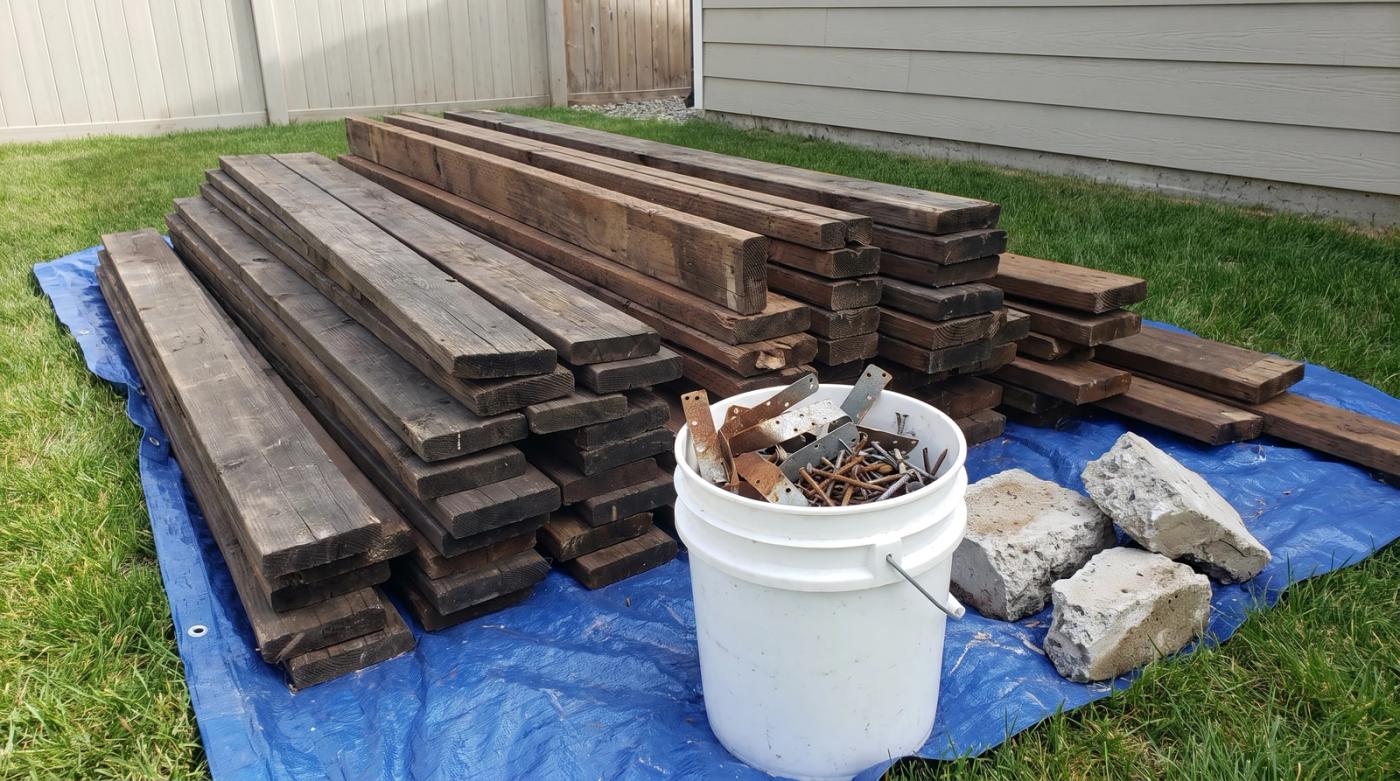
Removing a deck from a house leaves a bigger pile than most people expect, and the part nobody plans for is where it all goes. Treated lumber, wood-plastic boards, metal hardware and concrete footings each go somewhere different. Sorting them as you work makes the whole cleanout easier, and a good share of a torn-down deck can be donated or recycled instead of buried.
Removing a deck from a house with disposal in mind
A torn-down deck isn't one kind of debris. It's four or five kinds mixed together:
- Decking boards: pressure-treated wood, cedar or wood-plastic boards
- The frame: joists, beams, the rim and the ledger board that was bolted to the wall
- Posts and rails: sometimes wood, sometimes aluminum or vinyl
- Hardware: joist hangers, deck screws, nails, lag bolts and post bases
- Footings: concrete piers or blocks, sometimes with a metal anchor cast in
If everything lands in one heap, most of it ends up at the landfill, because nobody is going to pick screws out of a tangle of boards.
The order things come apart already lines up with sorting. Rails and stairs come off first, then the boards, then the joists and beams, then the ledger, and the posts and footings come out last. Set up separate piles before you begin and each layer drops into its own spot.
A few habits that help:
- Pick your pile spots first. Wood goes on a tarp somewhere a trailer or truck can reach, metal goes in a bucket, and concrete goes off to the side on firm ground.
- Strip the edges. Pull skirting, lattice and any trim boards attached to the rim first. If you can, remove deck stairs in one piece by unbolting the stringers at the top.
- Work from the outside in. Removing boards in rows from the outer edge toward the wall keeps solid deck under you while you're working.
- Cut to carry. A reciprocating saw makes quick work of long boards, and shorter pieces stack tighter, which matters when hauling is priced by space.
- Deal with fasteners as you go. A pry bar pops nailed boards loose, and working a second pry bar from the other end lifts a stubborn board without splitting it. Screws tend to strip or snap, so cutting the board right beside the joist is often faster than fighting each one.
- Keep wood-plastic boards away from wood. They go to different places, and they're heavier than they look.
Heads up: Check for wiring before removing deck boards. Outdoor outlets, lights and hot tub circuits often run under the boards or up a post. Shut it off at the panel and confirm it's dead.
The ledger comes off last, since the joists hang from it. Once it's gone the wall behind it is open to the weather, so have flashing, house wrap and a siding patch ready before you pull it.
Where does all that lumber, metal and concrete go?
Pressure-treated lumber
A lot of decks around the Treasure Valley are built from pressure-treated wood, and that limits your disposal options. Treated lumber shouldn't be burned, chipped for mulch or composted, and it doesn't belong in a curbside yard waste or compost cart.
In practice, worn-out treated lumber usually goes to the landfill. In Boise and the rest of Ada County that means the Ada County landfill, and Canyon County has its own. Check current hours, rules and fees before you load up, since they change.
Lumber that still has life in it
Not every board is rotten. Decks come down for all sorts of reasons, like a new patio, an addition or an estate cleanout before a sale, and straight, solid joists and boards can usually find a new use.
Some building-material reuse stores and nonprofits take sound lumber, but each has its own rules about treated wood, nails and length, so call before you haul. Neighbors building garden beds or a small shed sometimes want clean pieces too.
Good to know: Lumber is much easier to give away once the nails and screws are out. A stack of clean boards sorted by length is far more likely to find a second home than a tangled pile.
Wood-plastic boards
Composite decking is a blend of wood fiber and plastic. That mix makes it hard to recycle, and most local programs won't take it. Some manufacturers have run take-back programs, so if you know the brand, it's worth checking.
Otherwise, these boards usually go to the landfill. They're dense, so a load of them gets heavy faster than you'd guess.
Hardware and metal railing
Joist hangers, post bases, bolts, screws and aluminum or steel railings are all scrap metal, and scrap recyclers take them. Keeping metal out of the wood pile also makes the wood easier to reuse.
Vinyl is trickier. A few places recycle clean vinyl, but plan on it going out with the general debris unless you find someone who wants it.
Footings and deck posts
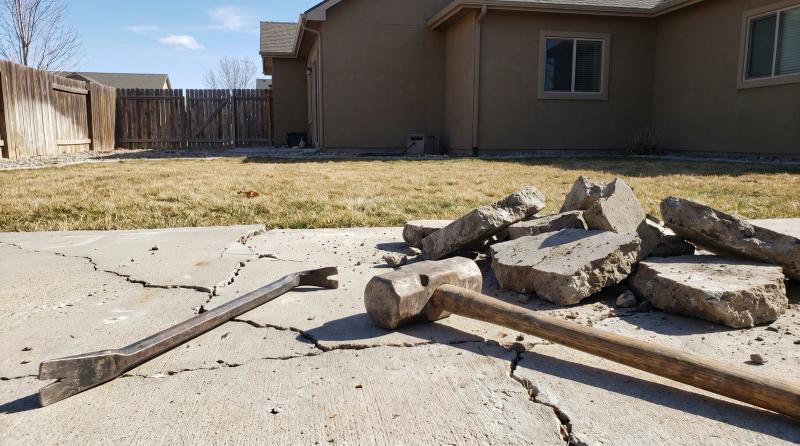
Deck posts usually sit in metal bases on concrete piers, or they're set straight into concrete. Breaking out footings is the sledgehammer step, and it's the heaviest part of the haul.
Clean concrete can often go to a concrete recycler instead of the landfill. Chunks with anchors or post stubs still attached may need cleaning up first, so ask before you drop them off. If nothing's going on that spot again, leaving the footings in the ground is a fair call and cuts a lot of weight.
The short version: sort as you go. Pull the hardware so good lumber can be reused, send metal to scrap and clean concrete to a recycler, and take treated wood that's done to the landfill, never the fire pit.
How much should it cost to remove a deck?
There's no honest average price for deck removal, because every yard is different. Here's what pushes the cost up or down:
- Size and height. A low deck comes apart from the ground. A raised or second-story deck needs ladders and more care with every cut to safely demolish it.
- Material. Wood-plastic boards and wet treated lumber are heavy, and weight and volume both affect disposal costs.
- Footings. Leaving them in is simpler. Breaking them out adds labor and weight.
- Access. An open backyard in Kuna or Star is a different job from a tight side yard in Boise's North End or a sloped lot on the Bench or in Harris Ranch.
- What else goes. Old patio furniture, a grill or a garage cleanout on the same trip takes more truck space.
- Season. Frozen ground makes footing removal harder in winter, and spring fills up with outdoor projects.
A lot of junk removal companies price by volume, meaning how much truck space the load takes up. Ask for an on-site estimate and a firm price before anything is touched.
| Approach | Who does the teardown | Who handles the haul |
|---|---|---|
| Do it all yourself | You | You, including sorting and disposal |
| Tear it down, then call a junk removal service | You | The haulers |
| Hire demolition companies or removal contractors | The crew | The same crew |
If you're comparing demolition companies, ask where the debris removal actually ends up. Demolition companies that pull out metal and clean concrete are doing more than ones that send everything to the landfill.
Worth asking: Does the price cover disposal fees and the final cleanout, or just the teardown? Ask each company before you book.
Can you demo a deck without a permit?
Sometimes, but don't assume. Whether taking down a deck will require a permit can depend on things like its size and whether it's attached to the house, and the rules aren't the same in Boise, Meridian, Nampa and the other cities. Call your city's building department before any deck removal starts.
If you're hiring out the deck demolition, ask whether the crew will take care of the permit application.
Then there's the wall. Seal the bolt holes, patch the wrap with the upper piece lapped over the lower one, and make sure the back door doesn't open onto a drop. Some demolition companies leave that part to you, so ask before you book.
Frequently asked questions
Can I put the old boards in my curbside trash?
Not for a whole deck. Curbside service is built for household trash, and treated lumber doesn't belong in yard waste or compost carts. Check your city's rules on bulky items, or plan a landfill trip.
Can wood-plastic boards be recycled?
Not easily. The wood and plastic blend keeps most local programs from taking them. See whether the manufacturer has a take-back program, and plan on the landfill otherwise.
Can I burn the old wood?
Don't burn pressure-treated wood. The treatment chemicals end up in the smoke and the ash, so it belongs in the landfill.
Is it worth hiring a removal service?
Plenty of people take down a small, low deck themselves. A raised deck or one bolted to the wall is a bigger job, and having one crew safely demolish it, sort it and haul it away saves a lot of trips.
Related reading: Concrete Slab Demolition: Can You DIY It, or Should You Hand It Off? and Chicken Coop Removal in Boise, Idaho: Dust, Wire and Old Posts.
If you'd rather hand it off, Top Shelf takes down decks across the Treasure Valley, from Boise and Meridian to Eagle, Nampa and Caldwell, and handles the junk removal and debris haul-off afterward. Give us a call and we'll come out for a free estimate.
Need Help With Demolition?
Top Shelf serves Boise and the Treasure Valley with professional junk removal, cleanouts, and demolition services.