
Metal Carport Removal in Boise: Steel, Wood and What's Left Behind
By Eric Hinderager, owner of Top Shelf Junk Removal and Demolition · Updated
Planning metal carport removal in Boise? Learn how steel and wood carports come apart, what happens to the anchors and slab, and what moves the cost.
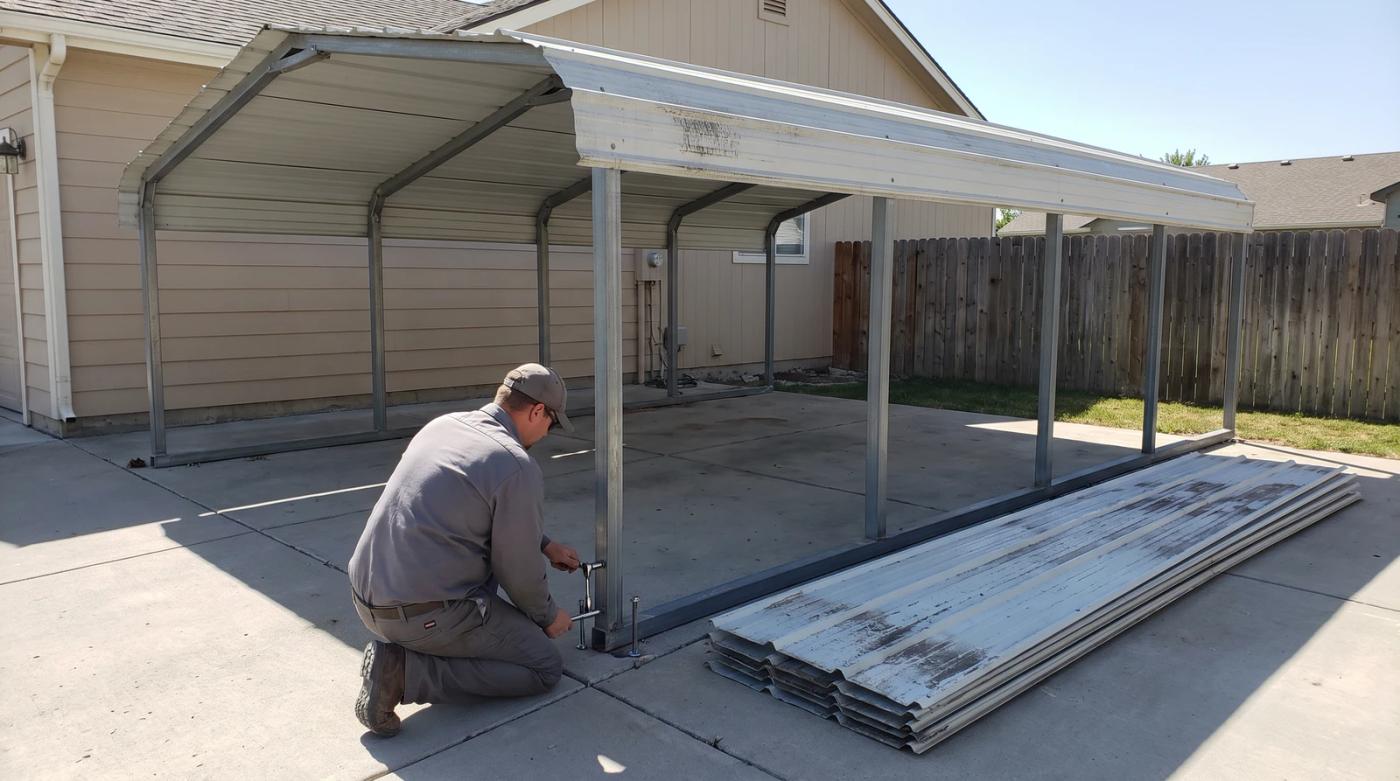
Metal carport removal in Boise comes down to three things: what the frame is made of, how it's held to the ground, and what you want left behind when it's gone.
Nobody gets excited about tearing one down. It's rusted, a storm bent it, or you're putting up a real garage and it's in the way. It's small-scale demolition, and the details decide how the day goes.
Steel frame or wood frame? It changes the whole job
Most carports around Boise, Meridian and Nampa fall into two camps.
The first is the prefab steel kit. Galvanized tubing and corrugated roof panels, bolted to the ground or to a slab. The same kits get sold in bigger sizes as a steel barn or workshop, and a small barn comes apart the same way, just with more panels. Once the panels are off, the frame unbolts quickly.
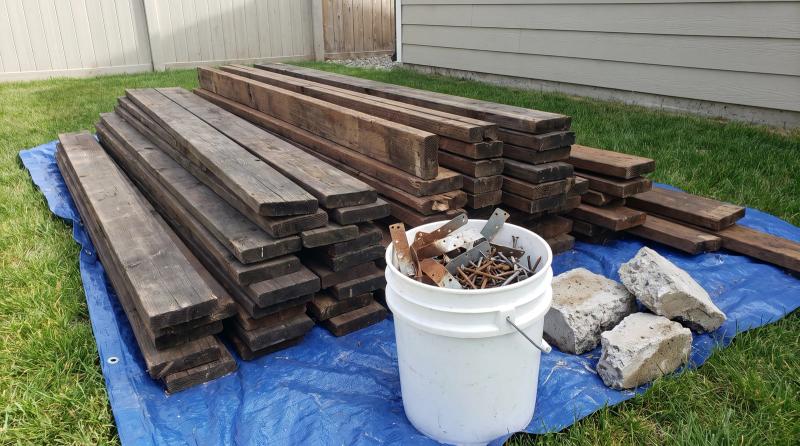
The second is the wood-framed carport. Usually a previous owner built it, and a lot of the time it's tacked onto the side of the house. Think of a small deck with a roof on it: posts, beams, rafters, sometimes shingles. More pieces, more nails, and a lot more weight.
So which one takes longer? Wood, almost every time, especially when the work happens right up against your fascia, gutters and siding.
Is it attached to the house?
That's one of the first questions to sort out at the estimate.
A freestanding frame is simple. We take it apart, load it up, and we're done.
An attached one is tied into the house with a ledger board or brackets. Once that comes off, you'll see whatever's been hiding behind it for years. Sometimes it's clean siding. Sometimes it's a strip of unpainted wall, old bolt holes, or soft wood where water sat winter after winter.
We pull the ledger carefully and tell you what we find. That wall might need a little patching or paint afterward, which is easier to handle while the area is open and clear.
Heads up: If there's a light, outlet or motion sensor on it, have an electrician disconnect it before demo day. Nobody should be cutting through a carport post that still has a live wire running up it.
How disassembly works, step by step
Before anything comes apart, we walk the site and look for power lines, fences and anything close by. Steel kits are built to bolt together, so they come apart in roughly the reverse order. Here's how it usually goes:
- Clear what's underneath. Patio furniture, bikes, firewood and anything else stored under the cover comes out first.
- Remove the roof panels. The screws along each rib come out, and the sheets come down one at a time. A loose panel in the wind acts like a sail, so calm days are better.
- Pull the trim and side panels, if it has them.
- Unbolt the trusses from the legs. Bolts that are rusted solid get cut with an angle grinder.
- Drop the legs and remove the anchors.
- Stack and load. Panels go in a flat stack, and the tubing gets bundled so nothing shifts in the truck.
The tools are simple: drills and sockets, a ladder or two, a cutting wheel and good gloves.
If you'd rather safely relocate it than scrap it, the order is the same but slower. Keep the panels and tubing in separate piles, with every bolt in a labeled bag. The old screw holes can leak once the panels go back up, so plan on fresh screws with new washers.
Wood frames are the opposite. They're nailed, not bolted, so disassembly goes piece by piece: rafters first, then beams, then posts.
Metal carport removal in Boise: what about the anchors and slab?
Once it's gone, you're left with whatever it was sitting on. A lot of people only learn what's down there when the legs come up.
Steel kits are usually held down one of three ways: long rebar stakes driven into dirt, screw-in auger anchors for softer ground, or concrete anchors bolted into a slab. Stakes and augers get pulled. Bolts in concrete get cut flush with an angle grinder, then a grinding disc takes the sharp edge off the stub.
Wood frames usually have posts set in concrete footings or sitting on piers. Those can stay, get cut down to grade, or get dug out completely. It really depends on what you're putting there next.
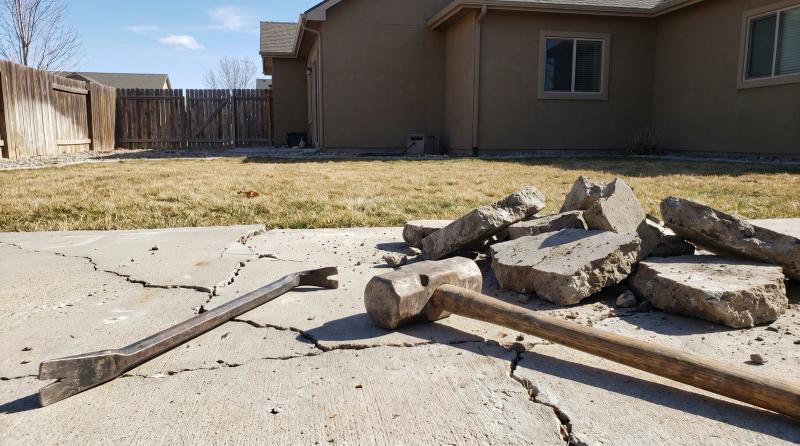
Then there's the slab. If it sat on a concrete pad, you've got a choice. A lot of people keep it as a parking pad, an RV spot or the base for a future shed or small barn. Others want it broken out so they can put down lawn or gravel.
Neither answer is wrong. Just decide before we show up so the estimate covers everything you want done.
Quick tip: Keeping the pad? Ask for every anchor to be ground smooth with a grinding disc, not just cut. A rough stub can still slice a tire or a bare foot.
Permits, cost and how long it takes
There's no single rule for all of Idaho. Boise, Meridian, Nampa, Eagle and Canyon County each set their own, and what's required can depend on the size and whether it's tied into the house. It's worth a quick check with your city first.
If you've got an HOA, ask them too. Some HOAs care less about the teardown and more about what's left on the lot afterward.
When a permit is needed, we can handle the application for you. You shouldn't have to spend your lunch break on hold with a city office.
Demolition jobs are priced the same way as our hauling work: by volume. How much truck space the frame, the panels or shingles and any concrete take up is what sets the price. Here's what pushes it up or down:
| What's on site | How it changes the job |
|---|---|
| Steel frame, freestanding | Light and breaks down small |
| Wood frame attached to the house | More pieces, more care near the siding |
| Slab or footings coming out | Concrete adds weight and volume |
| Stuff stored underneath | More to load, but it can go in the same trip |
That's why the estimate happens in person. We come out, look at it, and give you a firm price before anything is touched. The estimate is free. How long the job takes comes down to the size, the material, whether it's attached to the house, and whether the concrete is coming out too.
It can also make sense to pair the teardown with a garage cleanout, since the old furniture, bikes and boxes that lived under the cover need somewhere to go.
One thing we'd suggest: if it's already bent, don't wait for winter. Heavy, wet snow or a strong spring wind can finish off a tired carport here in the Treasure Valley. Cleaning up a collapsed one is slower and messier than taking down one that's still standing.
As for where it all goes, steel components and panels usually head to a scrap recycler. Clean wood gets recycled when we can manage it. Whatever's left makes the trip to the landfill.
Treat this as a rough guide, not a quote. If it's coming down to make room for a garage or a steel barn, sort out the frame, the anchors and the slab first.
If you'd like someone to come take a look, call us at (208) 593-2877. We'll walk it with you, give you a firm price, and you can decide from there. No pressure either way.
Frequently asked questions
Can you move the building instead of tearing it down?
A bolted steel kit can usually be taken apart and put back up at a new location. To safely relocate one, take it down in reverse order, keep the hardware labeled, and plan on new anchors at the new site.
How is it held to the ground?
Usually with rebar stakes in dirt, auger anchors in soft soil, or concrete anchors on a slab. Find every anchor before you lift anything, because one you missed can bend a leg.
How do you lift one without bending it?
You don't lift it whole. Take the panels off first, then the trusses, so every part is light enough to carry by hand. Lifting an assembled frame from one side twists the tubing, so have a second person steady each piece as it comes down.
Is a 20x20 frame heavy?
Related reading: Removing a Deck From a House: Where All That Lumber Ends Up and Concrete Slab Demolition: Can You DIY It, or Should You Hand It Off?.
Put together, it's too heavy and awkward to carry as one piece. The exact weight depends on the tubing gauge, the panel size and any side walls, and the manufacturer's spec sheet may list it. Broken down, each piece is manageable.
Need Help With Demolition?
Top Shelf serves Boise and the Treasure Valley with professional junk removal, cleanouts, and demolition services.