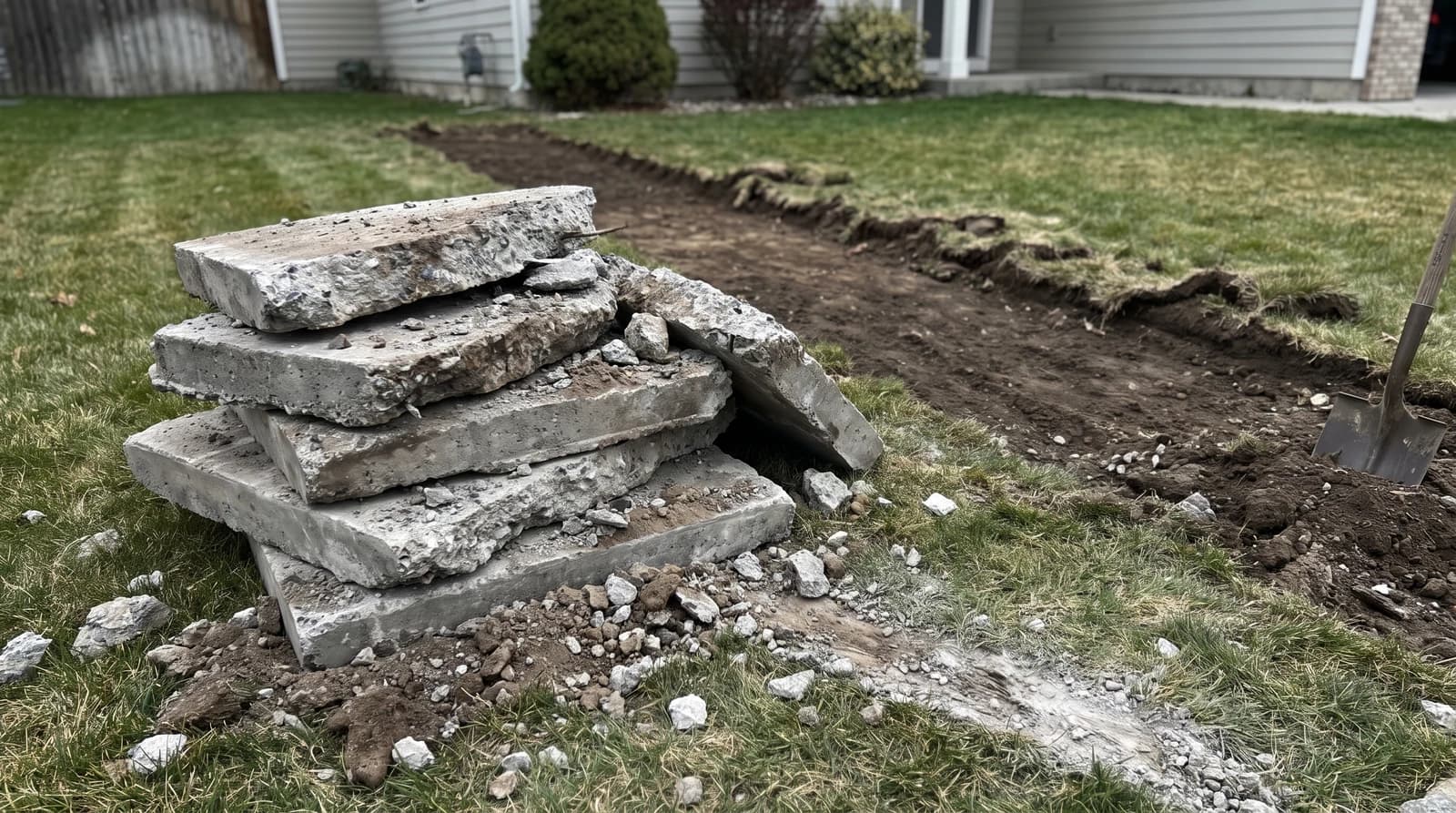

Concrete Removal in Boise: What About the Dirt Underneath?
After concrete removal in Boise, you're left with a hole. Here's what to do with the dirt, how much fill you need, and who handles the grading.
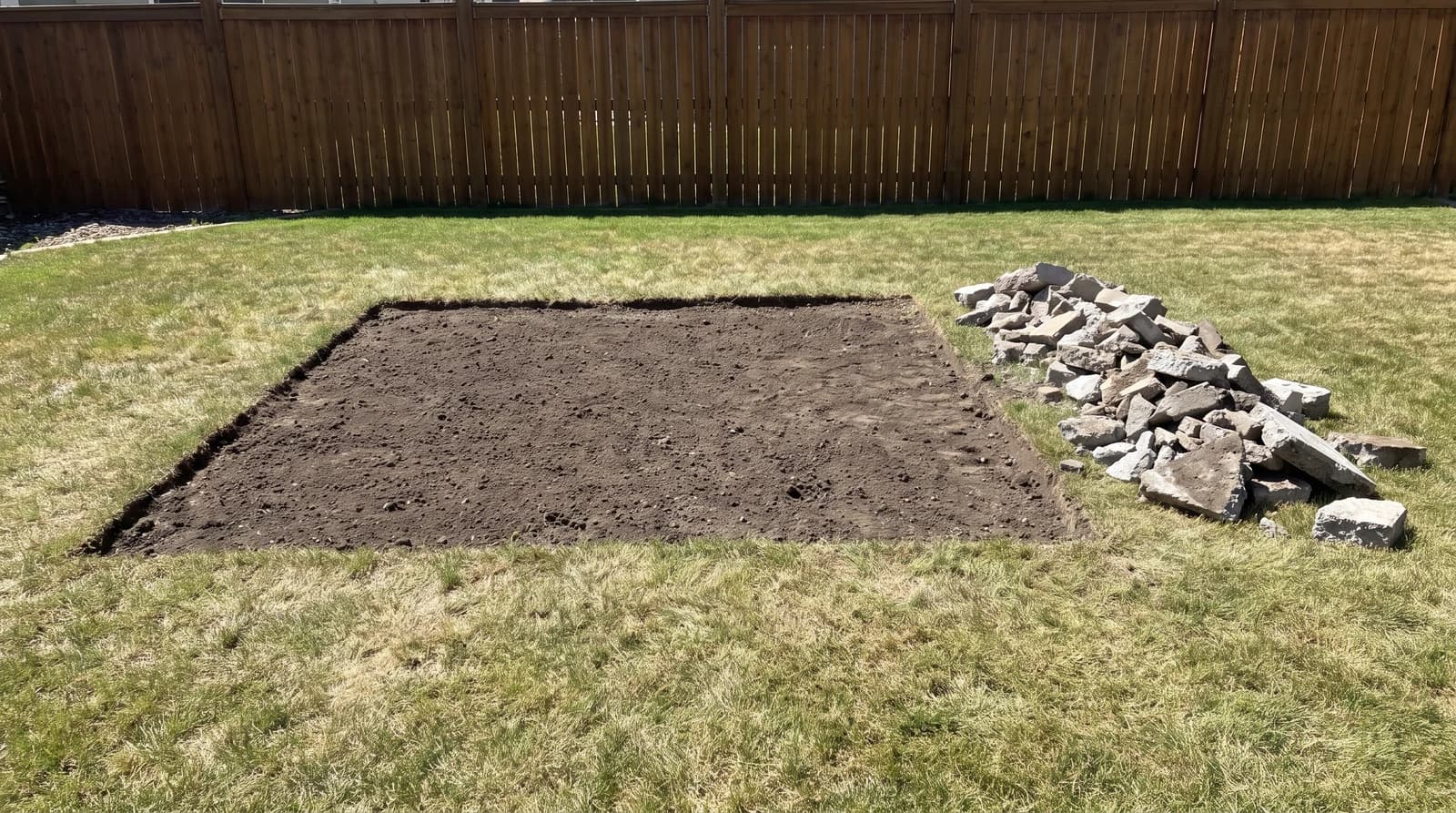
A guy in Meridian called us last spring, a few days after he'd knocked out his own back patio. The concrete removal part he'd already handled, more or less. He was calling because he was standing over a rectangle of chewed-up dirt sitting six inches below his lawn and had no clue what came next.
That's the part almost nobody plans for.
The job isn't finished when the slab leaves your driveway. There's a hole where it used to be, and what you do with that dirt depends entirely on what's going in that spot next.
So let's talk about the ground under the slab. That's where most of the surprise cost hides.
What's actually under a concrete slab
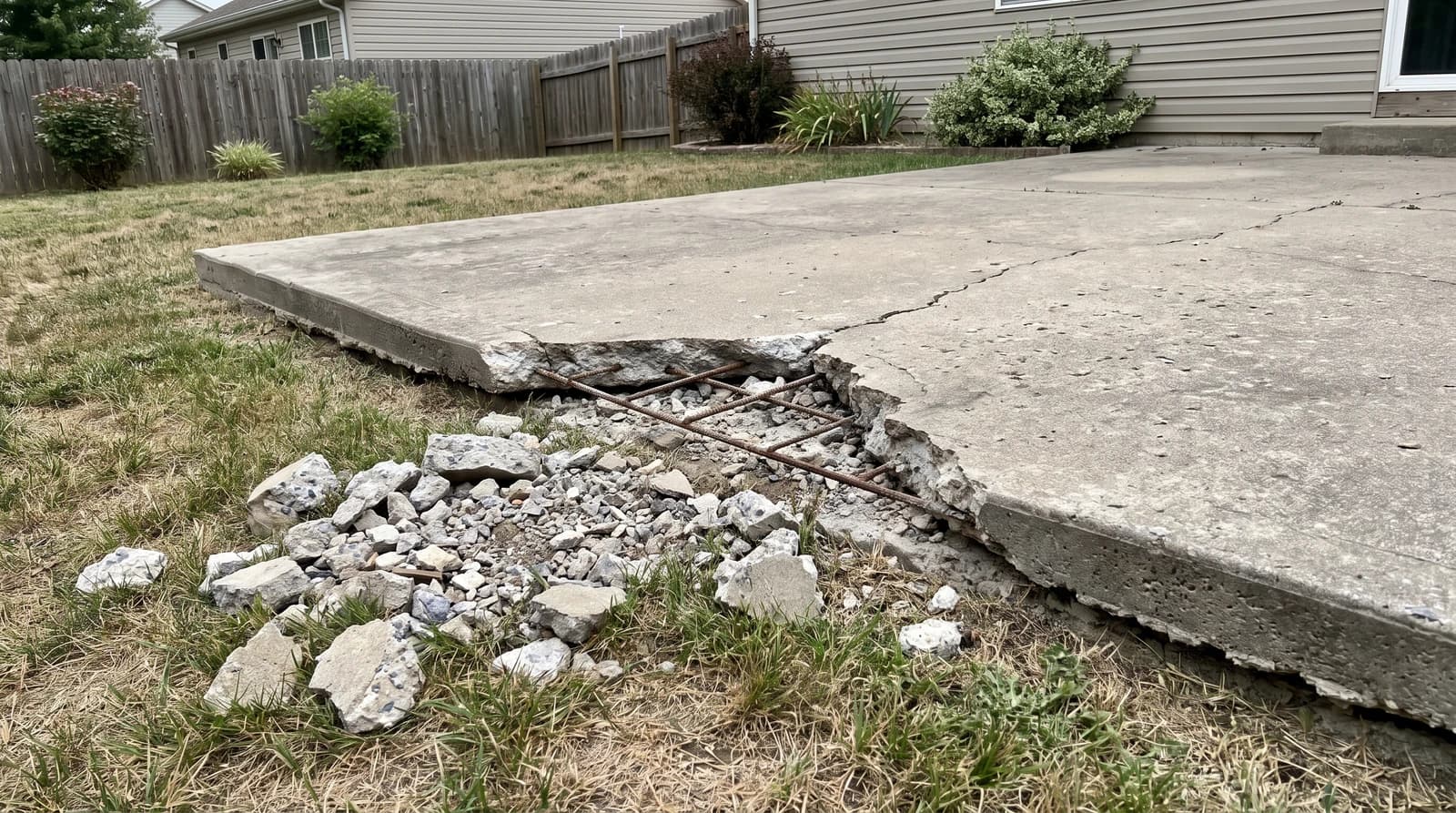
Most residential slabs around the Treasure Valley sit on three to six inches of compacted gravel, and that gravel sits on native soil. Around here the soil is usually silty loam with enough clay to hold water and enough rock to dull a shovel.
In older Boise neighborhoods you also get whatever fill the builder had lying around in 1962. Could be anything.
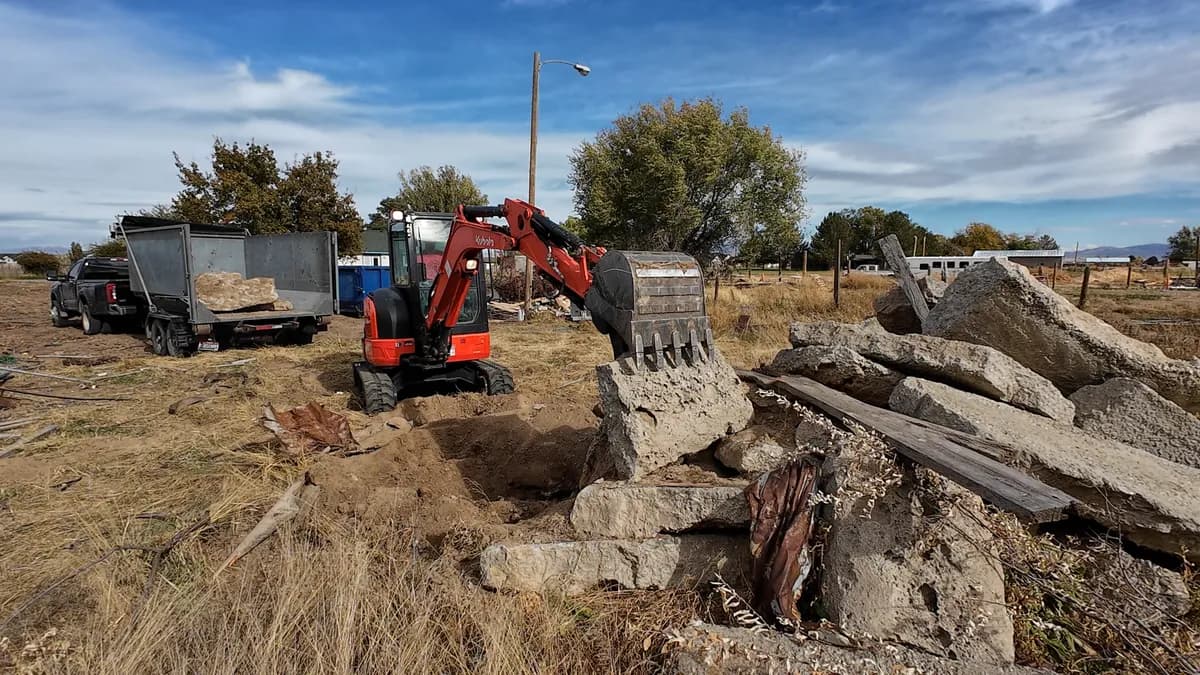
When the concrete breaks up, a good chunk of that gravel base comes with it. It's been pressed into the underside of the slab for forty years. Pieces of it ride out in the chunks, and the rest gets scooped up when we clean the area out.
Add it up and you're often short eight to ten inches of material once everything's on the truck and headed to Western Recycling. A four-inch patio slab, plus four to six inches of base. That's a real hole, not a scuff.
Why the ground sits low after concrete removal
People expect the dirt to come up flush with the lawn. It never does.
Depth is only part of it. The soil directly under an old slab has been squeezed flat for decades with no water or roots working through it. It's dense, dead, and usually a different color than the topsoil around it. Rake it smooth and it still reads as a scar for a season.
Then there's settling. Loose fill dropped in a hole sinks another inch or two after the first few good soaks, and a Boise winter's freeze-thaw does its own compacting.
Fill exactly to grade in September and you'll have a shallow dish there by April. Which is why we crown the fill an inch or so high and let it settle. Looks odd for a month. Looks right by summer.
What you put in the hole depends on what's going on top
Here's the breakdown we walk people through on nearly every concrete removal job:
| What's going there next | What the dirt needs | Rough material cost |
|---|---|---|
| Grass or sod | Fill dirt to within 4" of grade, then screened topsoil | $150 to $400 |
| Garden beds | Fill plus compost-amended soil, dug a little deeper | $200 to $500 |
| Gravel, bark, or rock | Fill and rough grade only, no topsoil | $75 to $250 |
| New concrete or pavers | Nothing. Leave it low and let the concrete crew build their own base | $0 |
| Shed or playset pad | Compacted fill in lifts, then gravel base | $250 to $600 |
Those are materials delivered, not labor. Fill dirt is cheap in the valley, usually $20 to $35 a yard, and screened topsoil runs closer to $35 to $50.
A 12x20 patio footprint at eight inches deep eats about six yards. Run that math before you order, or you'll be making a second trip to the gravel yard on a Saturday.
The cheapest option is the one nobody guesses: if you're pouring new concrete in the same footprint, don't fill anything. The new pour needs its own compacted base, so paying to haul dirt in and then paying somebody to dig it back out is money set on fire.
Not every hole is a clean rectangle, though. The things that trip people up most:
- Old footings around the edges. Patios tied to a house or an old porch often have a thickened edge running twelve to eighteen inches deep. That comes out too, and it leaves a trench along the perimeter that needs its own fill.
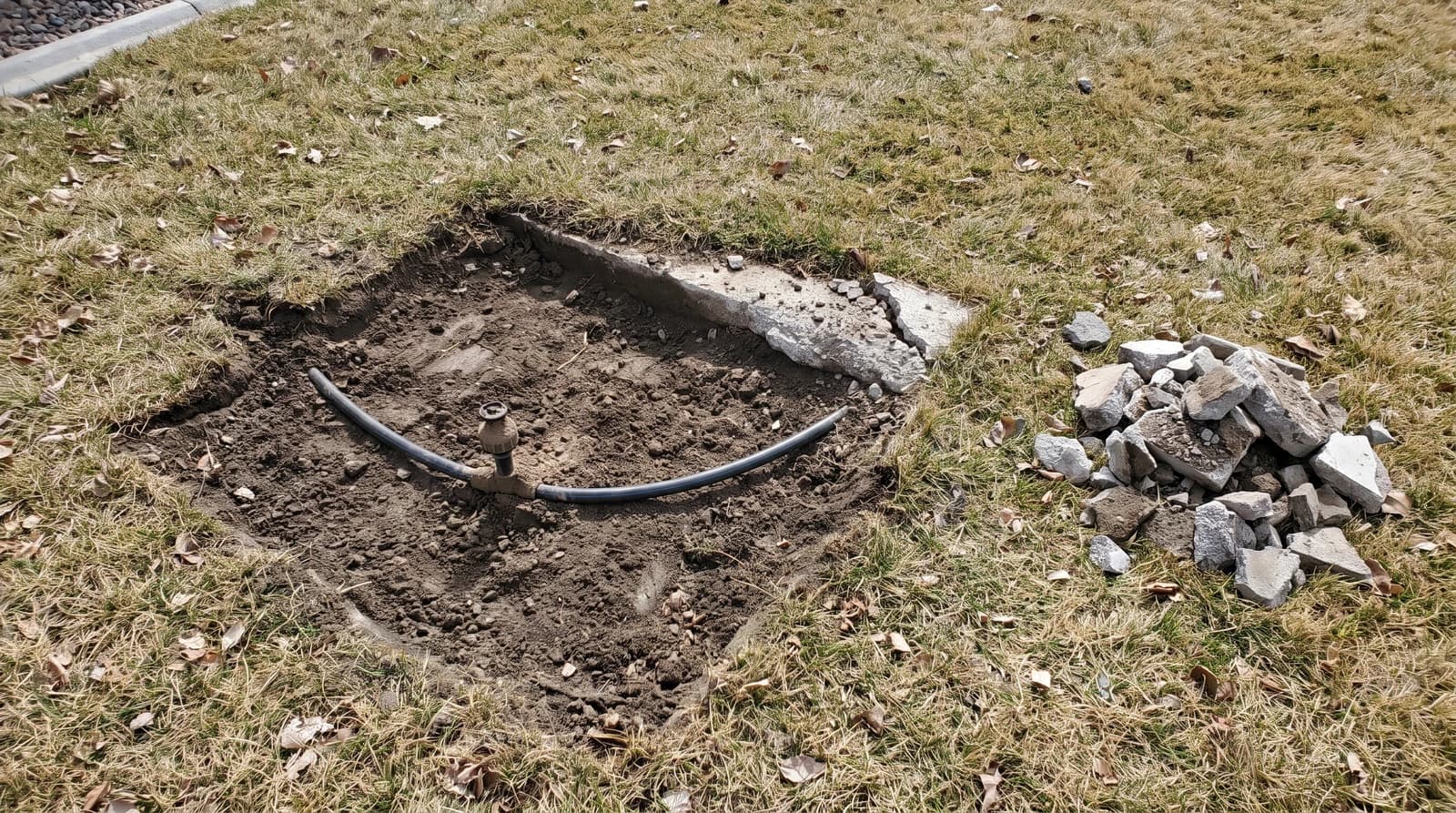
- Sprinkler lines. They love to run right along the slab edge, sometimes under it. Worth knowing where yours are before anyone starts swinging, and we get into that in our post on concrete removal and sprinkler lines.
- Tree roots. Big roots under an old slab are common in the North End and in the older parts of Nampa. Cut them clean, don't yank them, or you'll have a leaning tree to deal with next year.
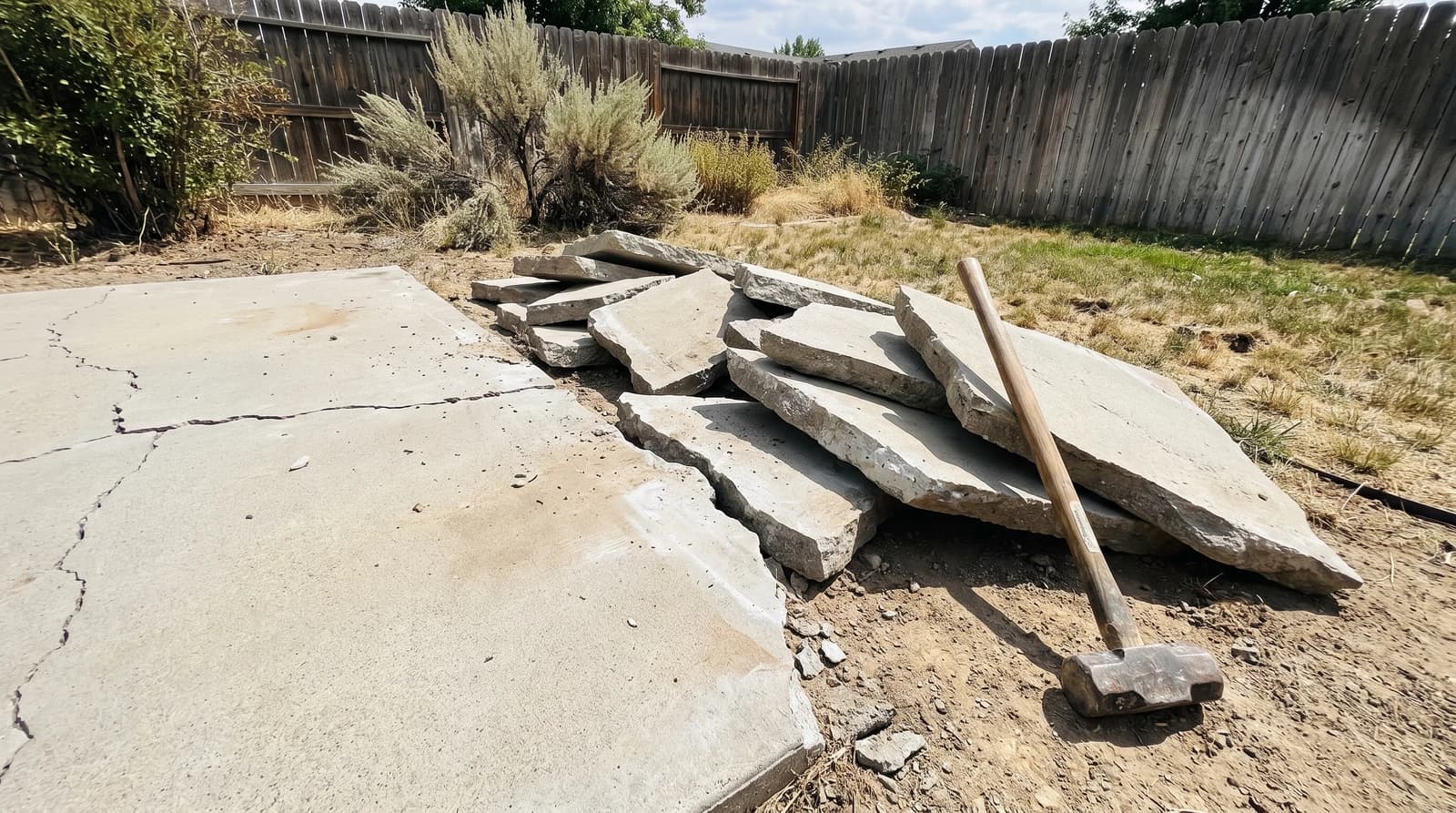
Worth knowing too: broken concrete makes decent fill in the right situation, so you may not need to pay to haul all of it off to the Ada County landfill. We covered when that works and when it doesn't in can the slab stay onsite.
So who handles the dirt after concrete removal?
Depends on who you hire and what you asked for. That's the honest answer.
A demo crew's default is break it, load it, haul it, and leave the area raked out and reasonably level. That's what most quotes cover. Bringing in six yards of topsoil and finish-grading it for sod is landscaping, and it shows up as its own line item.
We'll do fill and rough grade on most jobs, and we're glad to bring dirt in so it's all one trip. What we won't do is pretend we're a landscape company.
Want a laser-flat lawn or a designed bed layout? Hire the people who do that every day. Yes, we'd love the whole job, but the guy who grades lawns for a living will do it better than we will, and you'll be happier with the result.
Ask about it while you're collecting quotes. Anyone pricing concrete removal should be able to tell you in plain English where the ground will sit when they pull out of the driveway. For the wider picture on methods and pricing, our concrete removal guide covers the rest.
Bottom line
The slab is half the project. The other half is eight inches of missing dirt and a decision about what goes in that spot.
Figure out what you want there before demo day and the fill question mostly answers itself.
Got a patio, sidewalk, or old slab you're thinking about? Give us a call at (208) 593-2877. Tell us what you're putting there next and we'll tell you what the ground is going to need. No pressure either way.
Need Help With Concrete Removal?
Top Shelf serves Boise and the Treasure Valley with professional junk removal, cleanouts, and demolition services.