
Concrete Removal in Boise: Can the Slab Stay Onsite?
Does concrete removal in Boise mean hauling every chunk away? Here's when broken slab can stay on your property, and when it's cheaper to haul it.
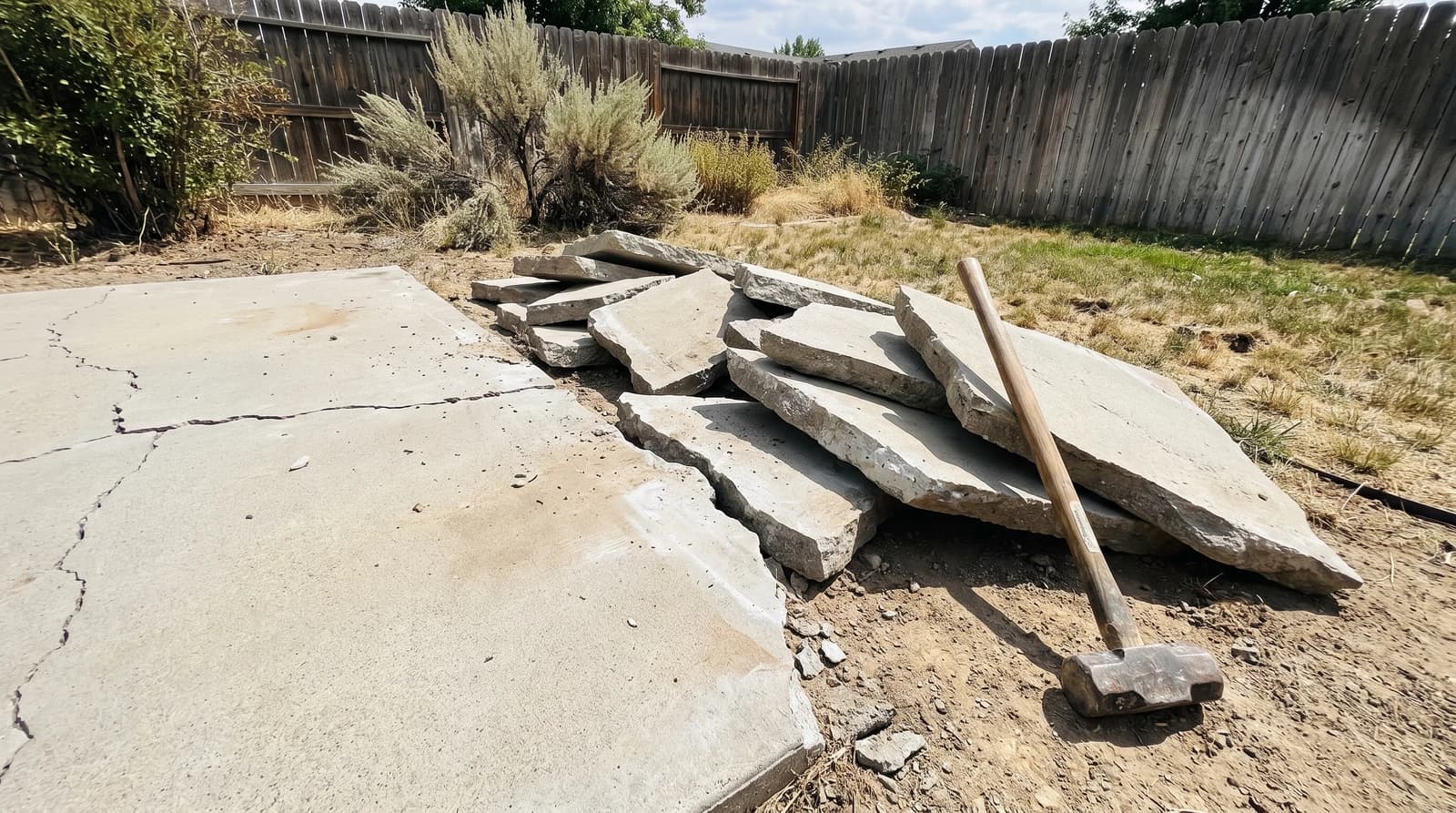
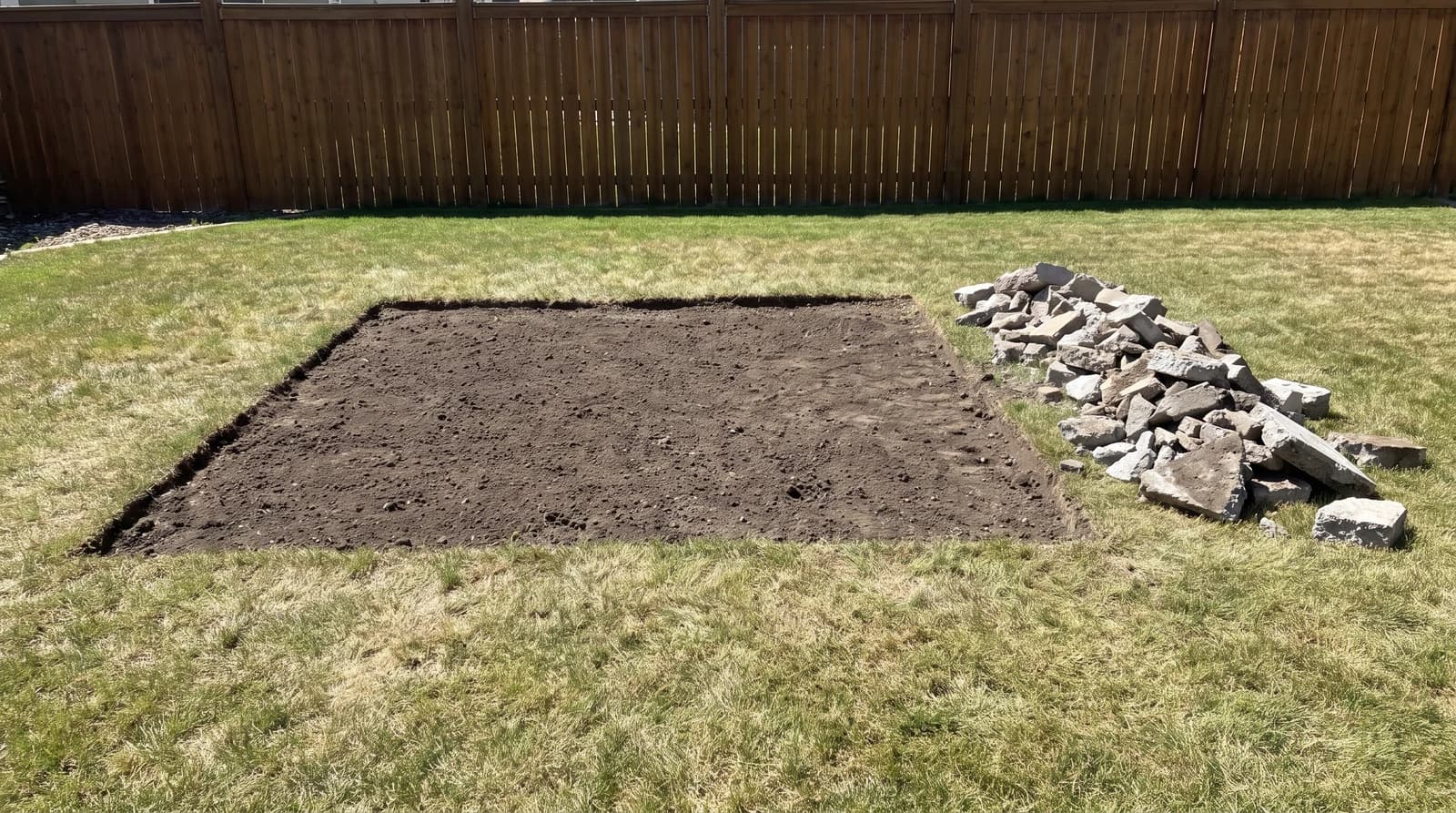
Last spring I was measuring an old patio in Meridian when the homeowner pointed behind his shed and asked, "Can't you just bury it back there?" He'd already priced concrete removal in Boise and figured most of the cost was in the hauling, not the breaking.
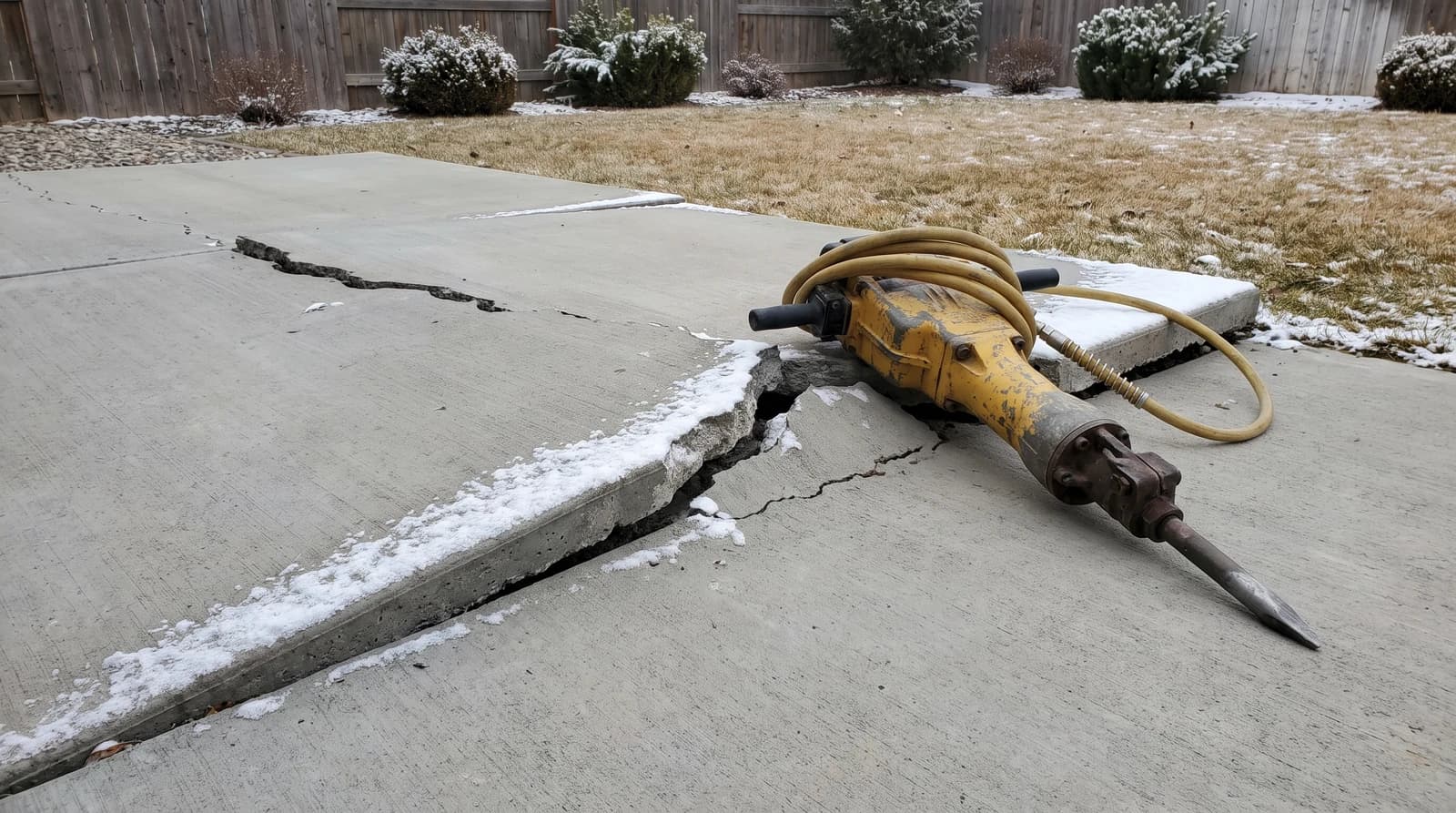
He's right about that part. Breaking a slab is a couple hours with a jackhammer. Loading the pieces and paying to dump them is where the bill grows.
So can it stay? Sometimes. Other times it's a problem you pay for twice.
When concrete removal doesn't mean hauling it off
People who ask about leaving the concrete usually have one of three pictures in their head.
Bury it in a low spot in the yard. Use it as base under a new driveway or shed pad. Or stack it along a slope as a rough wall.
The first one is almost always a bad idea. The second depends. The third works more often than people expect.
The demo itself doesn't change either way. Breaking out the slab costs what it costs. What changes is where the pieces end up, and that's where the money moves.
Why burying it in the yard usually backfires
I get the appeal. There's a dip in the back corner and a pile of broken slab sitting ten feet from it. Feels like a match.
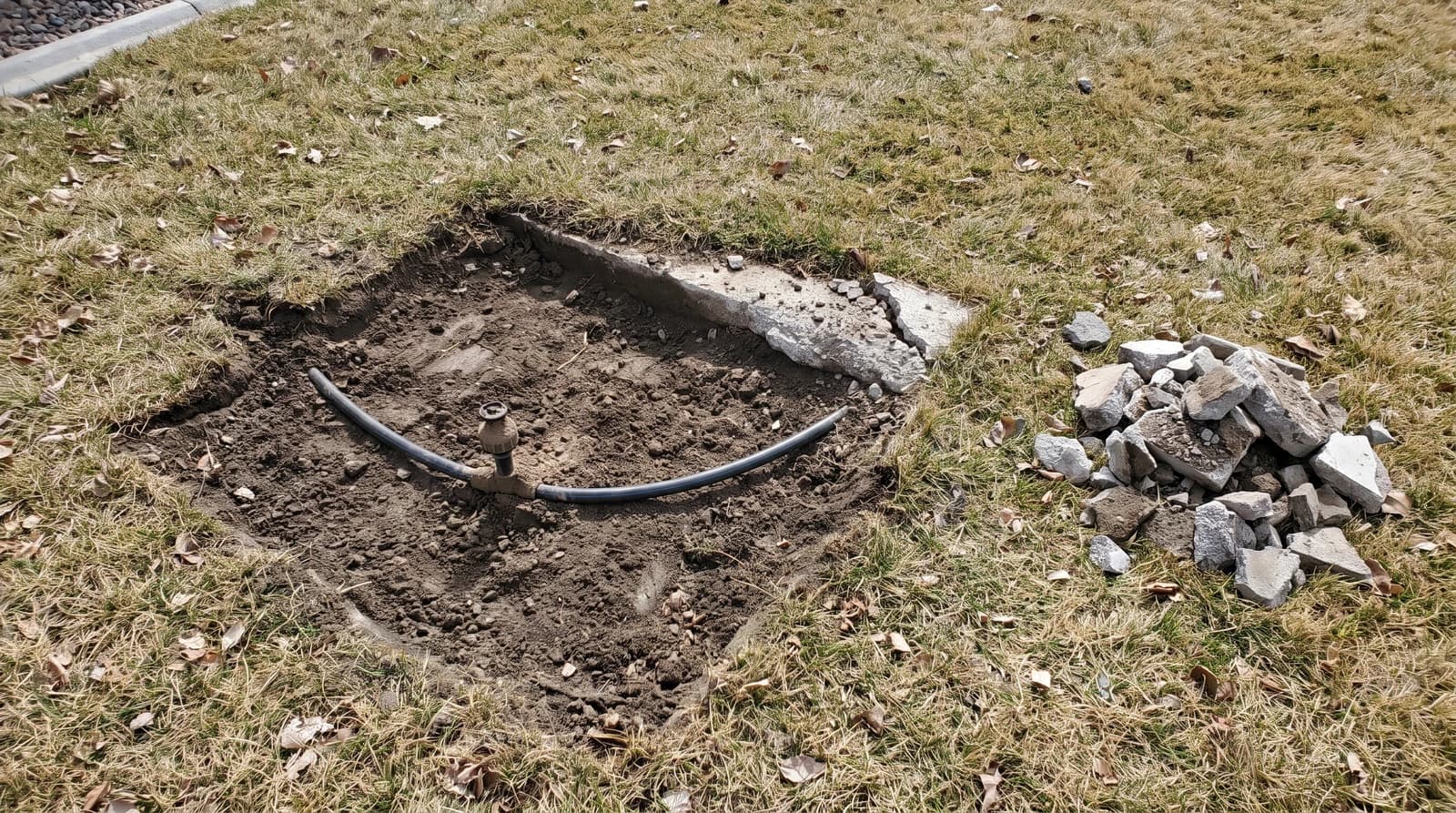
Here's what goes wrong. Broken concrete doesn't compact. You get big voids between the chunks, and after a couple of freeze-thaw cycles those voids close up unevenly, so the ground above sinks in patches.
Then there's everything you might want to do later. Plant a tree, trench a sprinkler line, set a fence post. Now you're swinging a digging bar into a rubble field.
Anybody who's bought an older house on the Bench has hit a mystery slab three inches down and had some words about it.
The county matters too. Ada County has rules about placing fill that changes how water moves across a property, and almost nobody reads them before they start. If you sit uphill of a neighbor or anywhere near a drainage swale, that's not a technicality.
Where broken concrete actually earns its keep
Now the other side, because plenty of it does stay put.
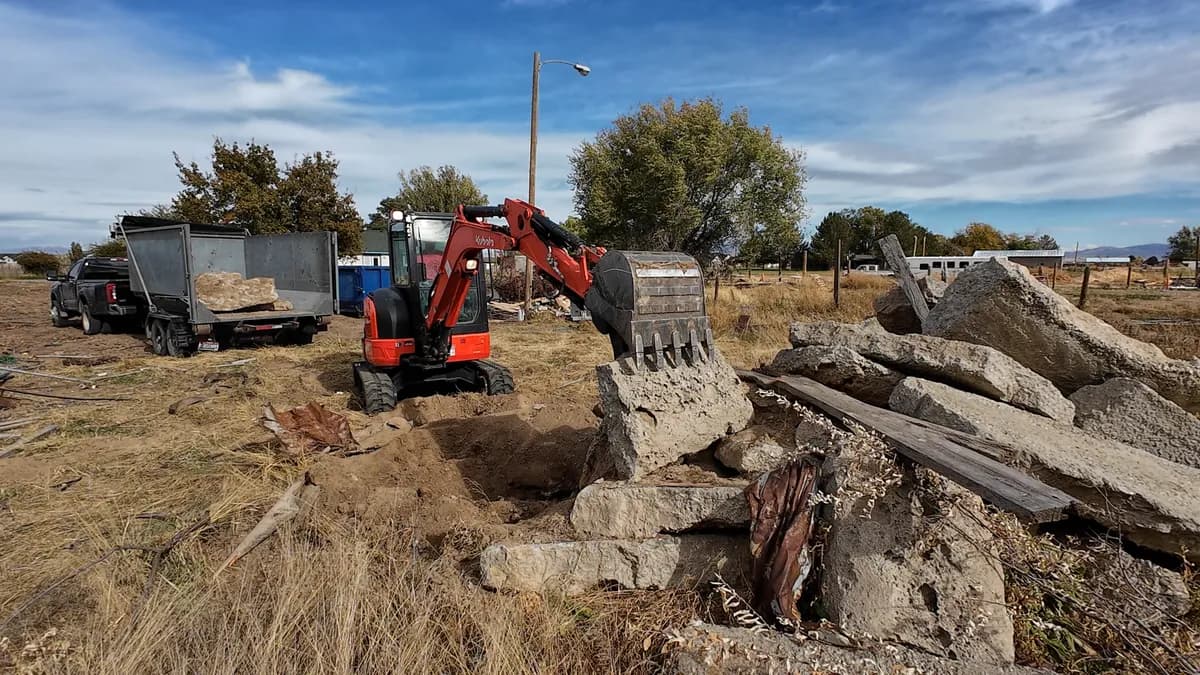
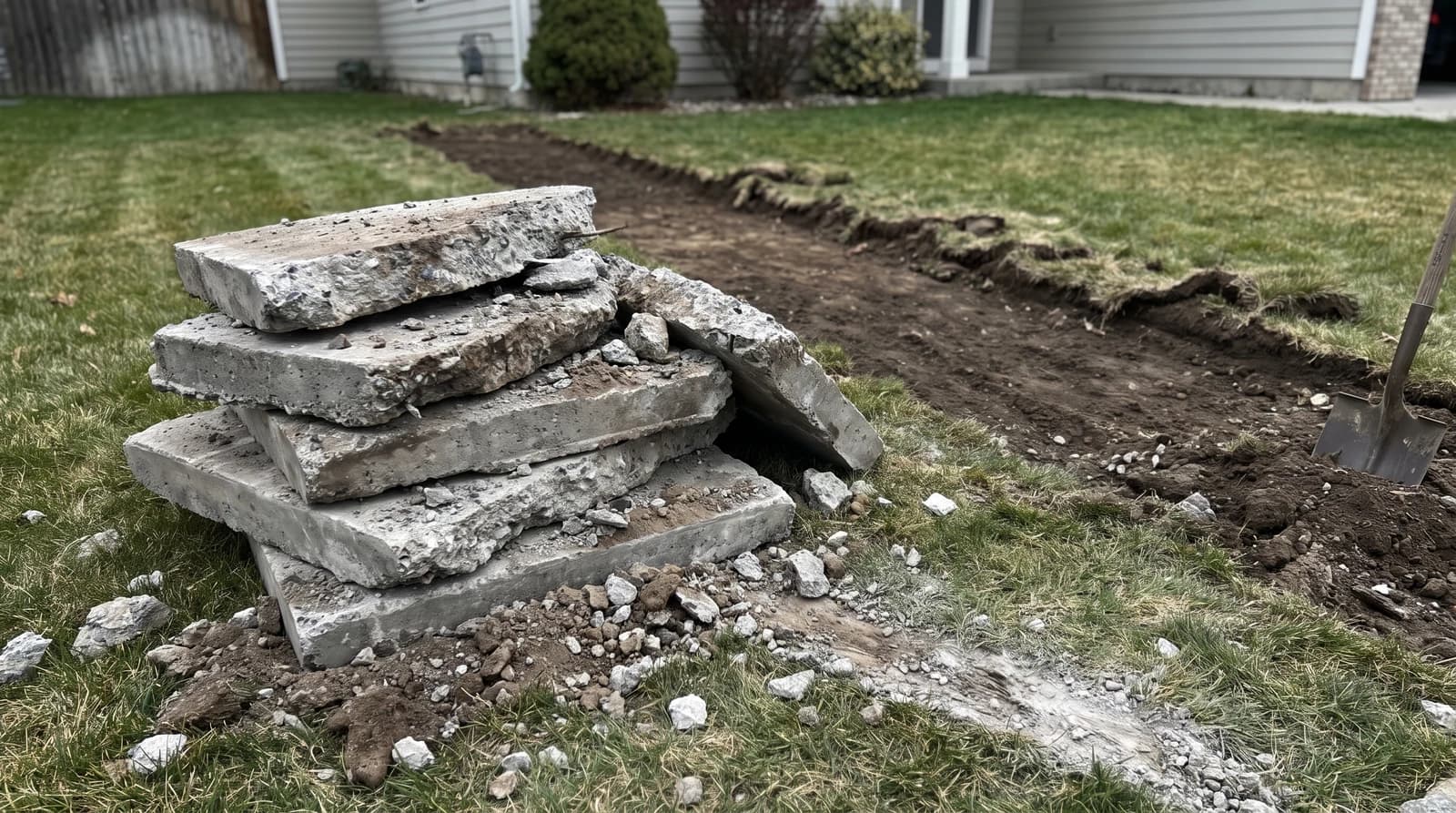
Rip rap on a slope. Big flat pieces stacked along an embankment or ditch bank hold soil back and slow erosion. Old sidewalk and patio sections work best, since they break into slabs instead of rubble. We've left material on properties out toward Kuna and Star for exactly this.
Crushed base under a new pour. Replacing a driveway with another driveway? Crushed concrete makes a solid sub-base. The key word is crushed. Chunks the size of a car hood won't compact, and your new slab cracks over them inside a season or two.
Drainage fill. Broken pieces do fine in a dry well or the bottom of a French drain, where a little settling doesn't bother anyone.
The honest test: is there a real job this material would do, or are you just dodging a dump fee? If it's the second one, haul it.
Before you decide, walk the yard and look for:
- A specific spot with a specific job, not just "the back corner"
- A clean slab, meaning no paint, no sealer, no sod and mud caked on the bottom
- Room for a wheelbarrow or a mini skid to reach the spot
- Nothing downhill that water could get pushed toward
That last one causes more trouble than the rest combined. Sending runoff onto the neighbor's grass is how saving $300 turns into a letter from somebody's attorney. Worth a look at your CC&Rs too, since some subdivisions say plenty about fill and grading.
What concrete removal costs once it's hauled
When we quote concrete removal, disposal is usually a third to half the total. Here's roughly how that side shakes out around the Treasure Valley right now.
| Where it goes | Rough cost | Notes |
|---|---|---|
| Stays onsite, we stack it | No disposal fee | Placement is on you |
| Clean concrete, Western Recycling | $30-55/ton | No rebar, no dirt |
| Mixed debris, Ada County landfill | $50-80/ton | Contaminated loads cost more |
| Full haul-off, we handle it | $250-600 typical | Most patios, walks, small pads |
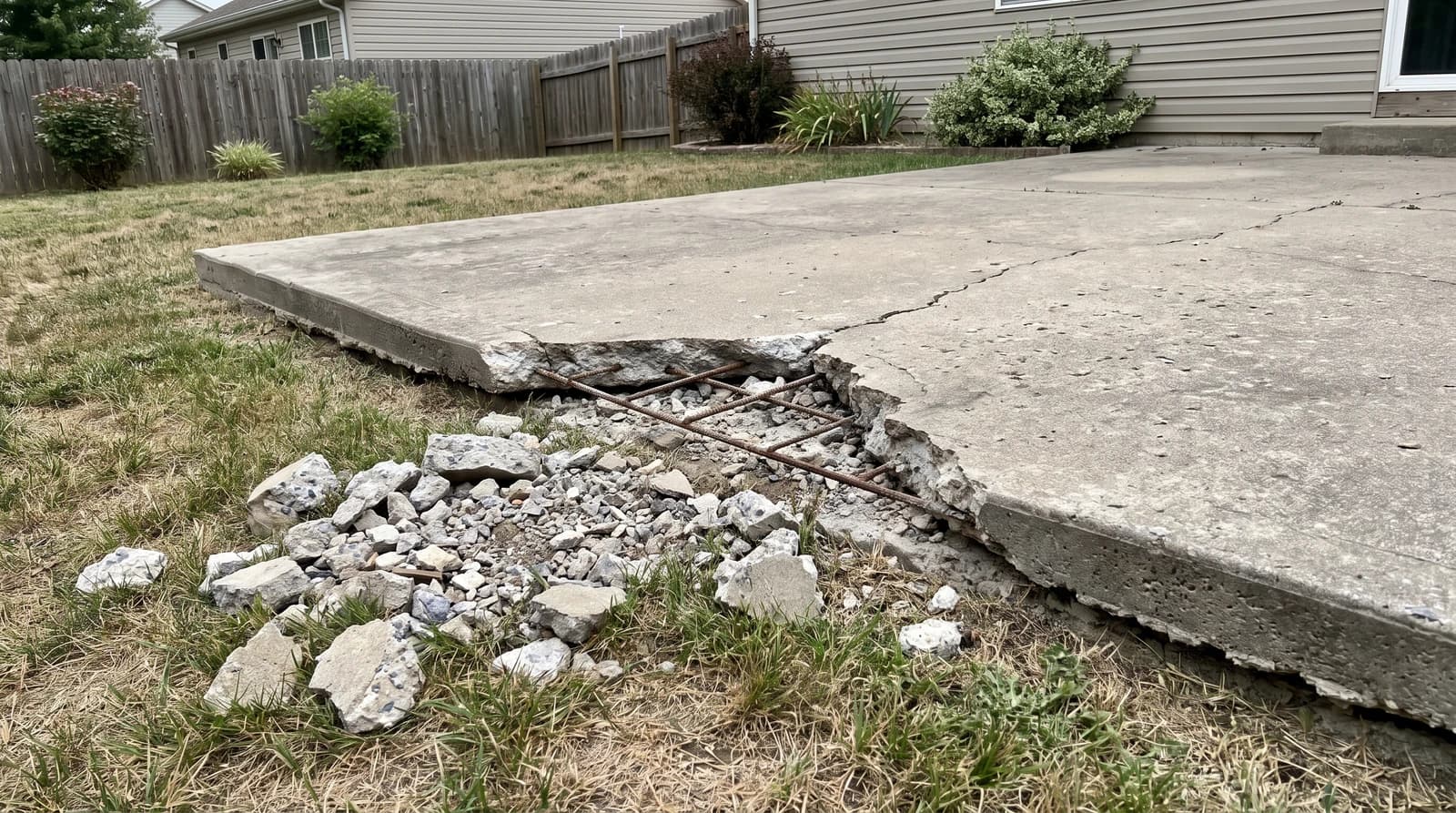
Clean concrete is cheaper to get rid of than mixed. That's the part people miss. Rebar, wire mesh, roofing tar, a bunch of sod stuck to the bottom: any of that bumps you to the higher rate, which is one reason thickness and rebar move a quote more than square footage does.
So yes, keeping it onsite saves real money. On a 400 square foot patio in Nampa or Meridian, that's usually $200 to $400 off the bill.
But you own that pile now. Make sure you want it.
Bottom line
Concrete can stay when it has work to do: holding a slope, sitting under a planned pour, filling a dry well. Burying it because it's free is how you end up with settling, a bent shovel, and a mess for whoever owns the place next.
Ask yourself this. If you didn't already have the material, would you pay somebody to truck it in and place it there? If the answer is no, it isn't fill. It's debris in a nicer location.
We do this all over Boise, Meridian, and Nampa, and we'll tell you straight which way makes sense on your lot. Want the wider picture on methods and pricing first? Our concrete removal guide covers it.
Otherwise, give us a call at (208) 593-2877 and describe what you're looking at. Two minutes on the phone and we can usually get you a number.
Need Help With Concrete Removal?
Top Shelf serves Boise and the Treasure Valley with professional junk removal, cleanouts, and demolition services.