
Concrete Removal in Boise: Why Thickness and Rebar Matter
Slab thickness and rebar are the two biggest cost drivers in concrete removal. Here's how to check yours before you call for a quote in the Boise area.
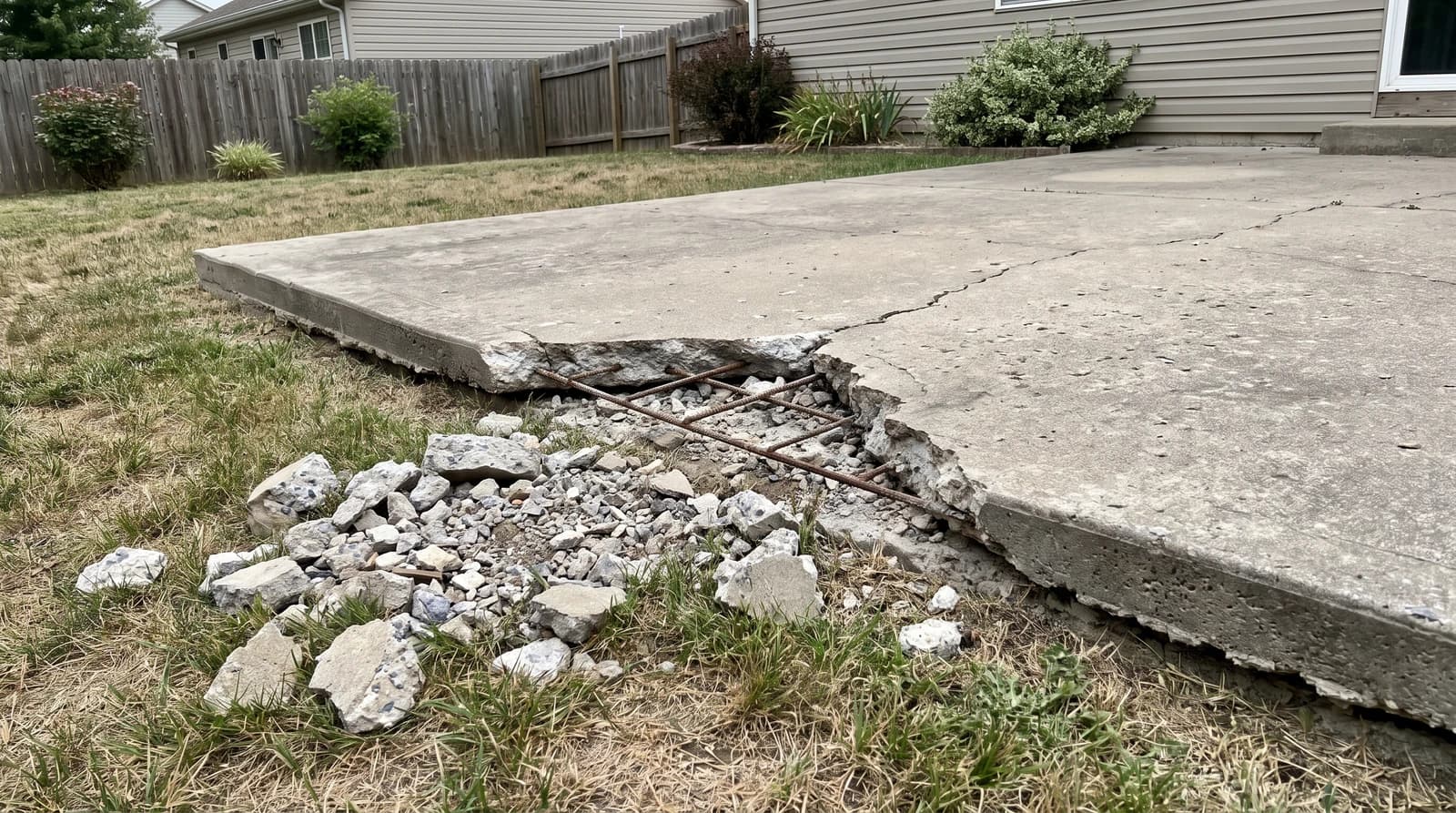
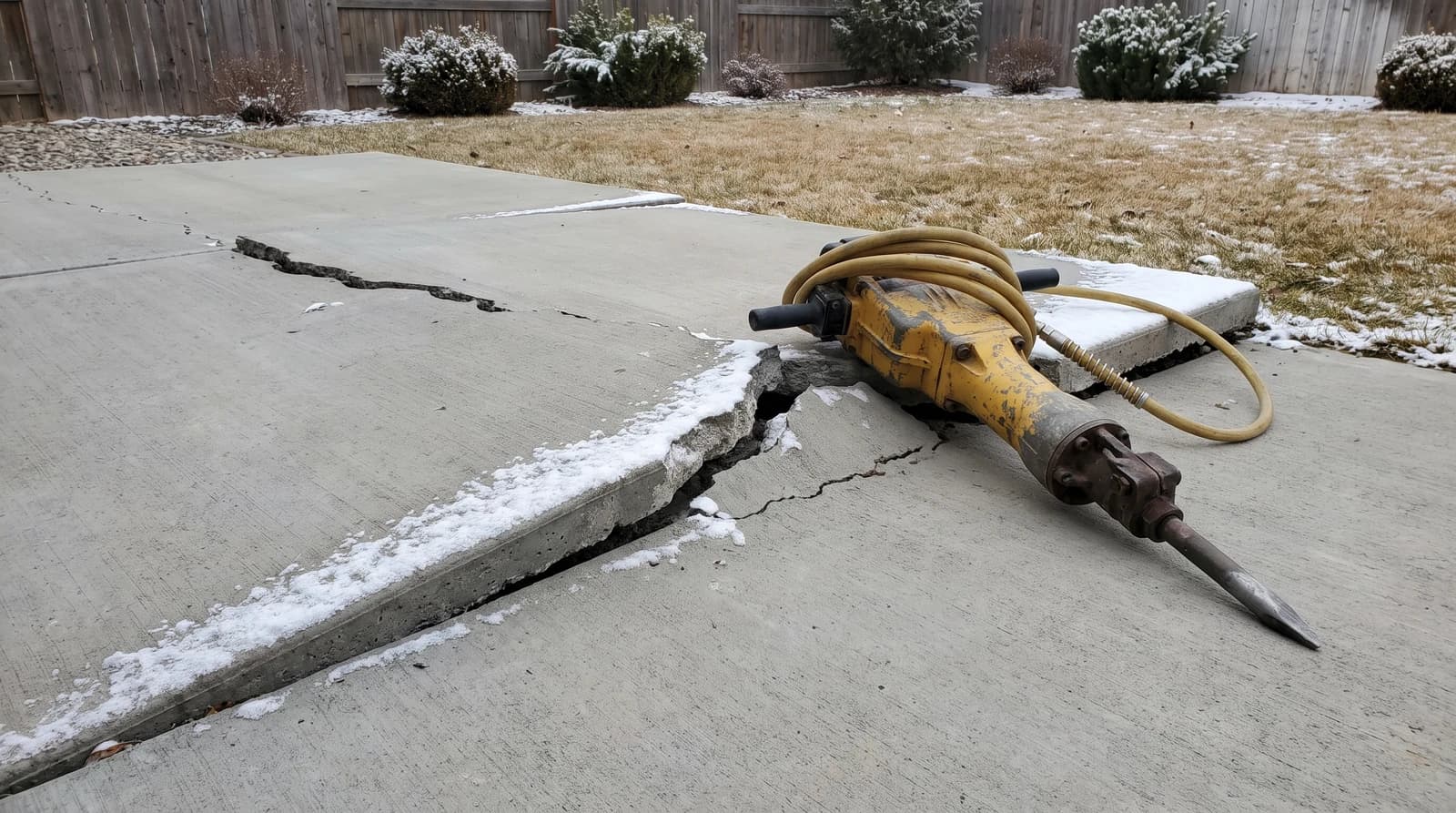
A guy in Meridian called us last spring about concrete removal on his back patio. He'd already burned a Saturday with a rented electric jackhammer and made a hole about the size of a dinner plate.
Then he pulled a chunk loose and saw a grid of half-inch steel bar running through the whole slab. He put the hammer down and picked up the phone.
That's the part most people don't see coming. Pricing has almost nothing to do with how ugly the slab looks and almost everything to do with two things: how thick it is, and whether there's steel inside it.
Square footage is what everybody asks about first. It's the least interesting number in the quote.
What's actually under your slab
Most residential concrete in the Treasure Valley falls into a few predictable buckets. A patio poured by the original builder in a Boise subdivision is usually 4 inches, no rebar, maybe some wire mesh if you're lucky.
A driveway is typically 4 to 6 inches with rebar on 18-inch centers. A shop floor or an RV pad somebody poured themselves out on the Nampa side? That could be anything. We've hit 10 inches with rebar and fiber mesh both.
Here's the thing about rebar. It doesn't just make the concrete harder to break, it makes the pieces refuse to separate.
You break the slab and it stays there like a rug, because the steel is holding every chunk to every other chunk. Now somebody's on their knees with a grinder cutting bar so the pieces can actually be lifted.
Wire mesh is a lighter version of the same problem. Fiber mesh gets mixed into the pour, and you can't really tell it's in there until the slab breaks weird and stringy.
How thickness changes concrete removal costs
Rough numbers for the Boise area. These are ranges we actually quote, not a national average scraped off somebody else's website.
| What you've got | Typical thickness | Ballpark per sq ft |
|---|---|---|
| Builder patio or walkway | 4 in, no steel | $3 – $5 |
| Driveway | 4–6 in, rebar | $5 – $8 |
| Shop floor or RV pad | 6–10 in, heavy rebar | $8 – $12 |
| Footings, steps, retaining base | varies, always steel | quoted on site |
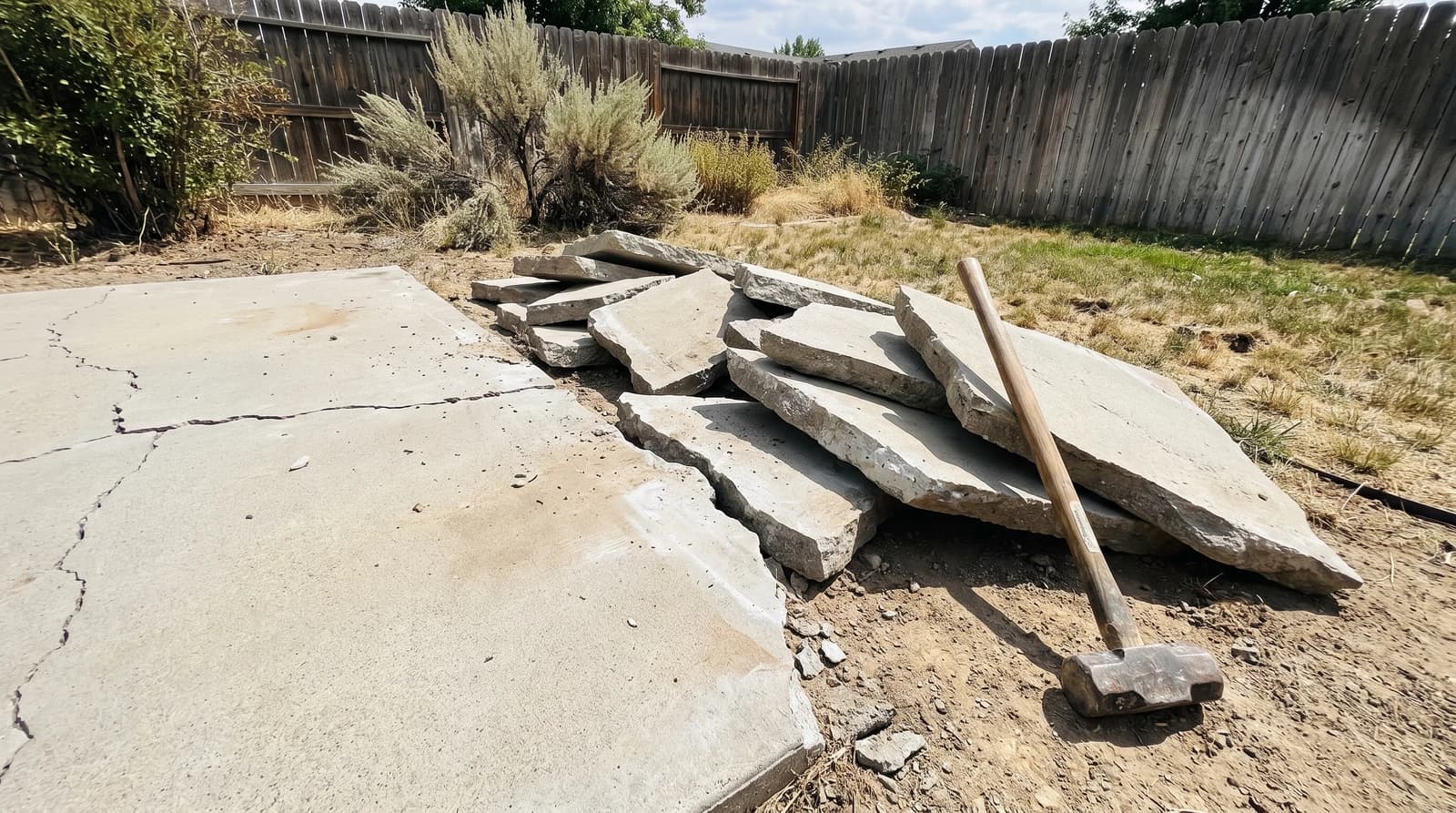
A 400-square-foot patio at four inches is a straightforward morning. That same 400 feet at eight inches with rebar is double the weight, and weight is what fills the truck.
Concrete runs about 150 pounds per cubic foot. So four inches of it weighs 50 pounds per square foot, and eight inches weighs 100.
Do that math on the little patio and you land at ten tons. People are always surprised by that, and it's why nobody hauls a real slab off in a pickup without regretting it.
We go deeper on the method side in our full concrete removal guide for Boise, including how breakers and saws get picked for a job.
Three things that move a quote more than square footage
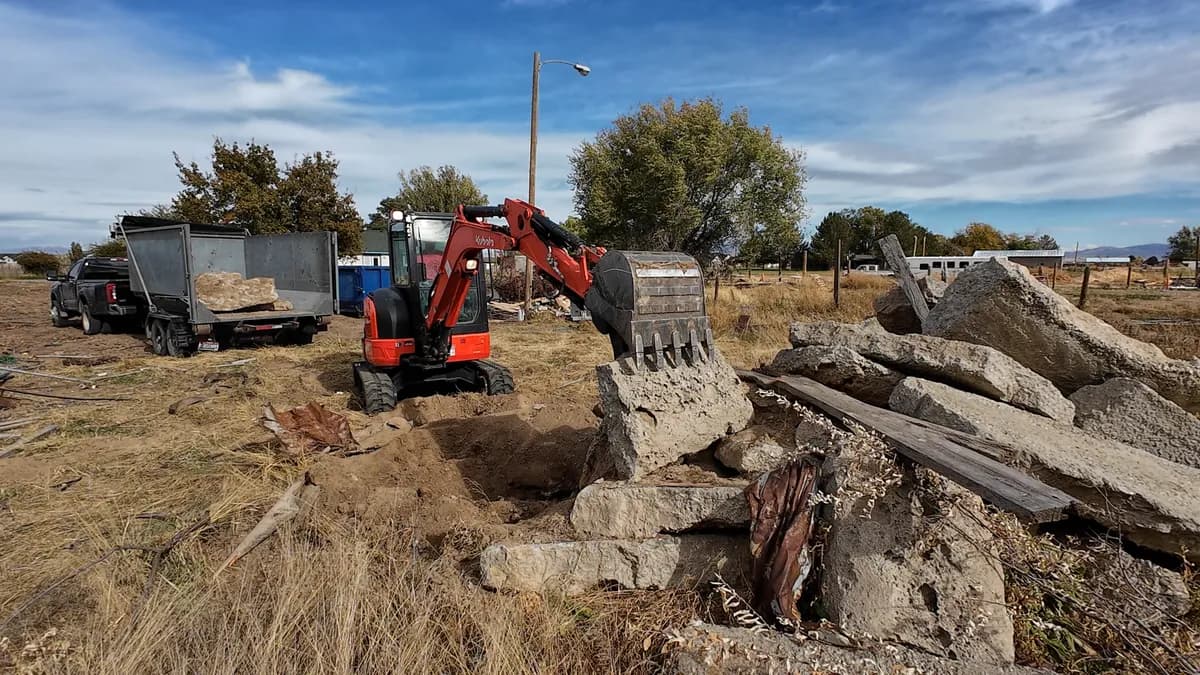
Access is the big one. If a skid steer can reach the slab, the job is fast. If your only path is a 32-inch side gate between the house and the fence, everything comes out by wheelbarrow, and a wheelbarrow holds maybe 300 pounds of broken concrete before it turns into a bad idea.
The other two:
- What's under it. Sprinkler lines, gas service, and old conduit love to run right beneath patios. Call 811 (Digline) before anyone swings anything. It's free and takes two business days.
- What happens to the hole. Pulling the slab and leaving open dirt is one price. Backfilling, compacting, and grading it so it doesn't puddle against your foundation is another.
Don't skip that grading conversation. Plenty of Boise neighborhoods sit on clay-heavy soil, and water that used to sheet off your concrete has to go somewhere now.
We'd rather sort that out before the slab is gone than after.
Where the concrete ends up
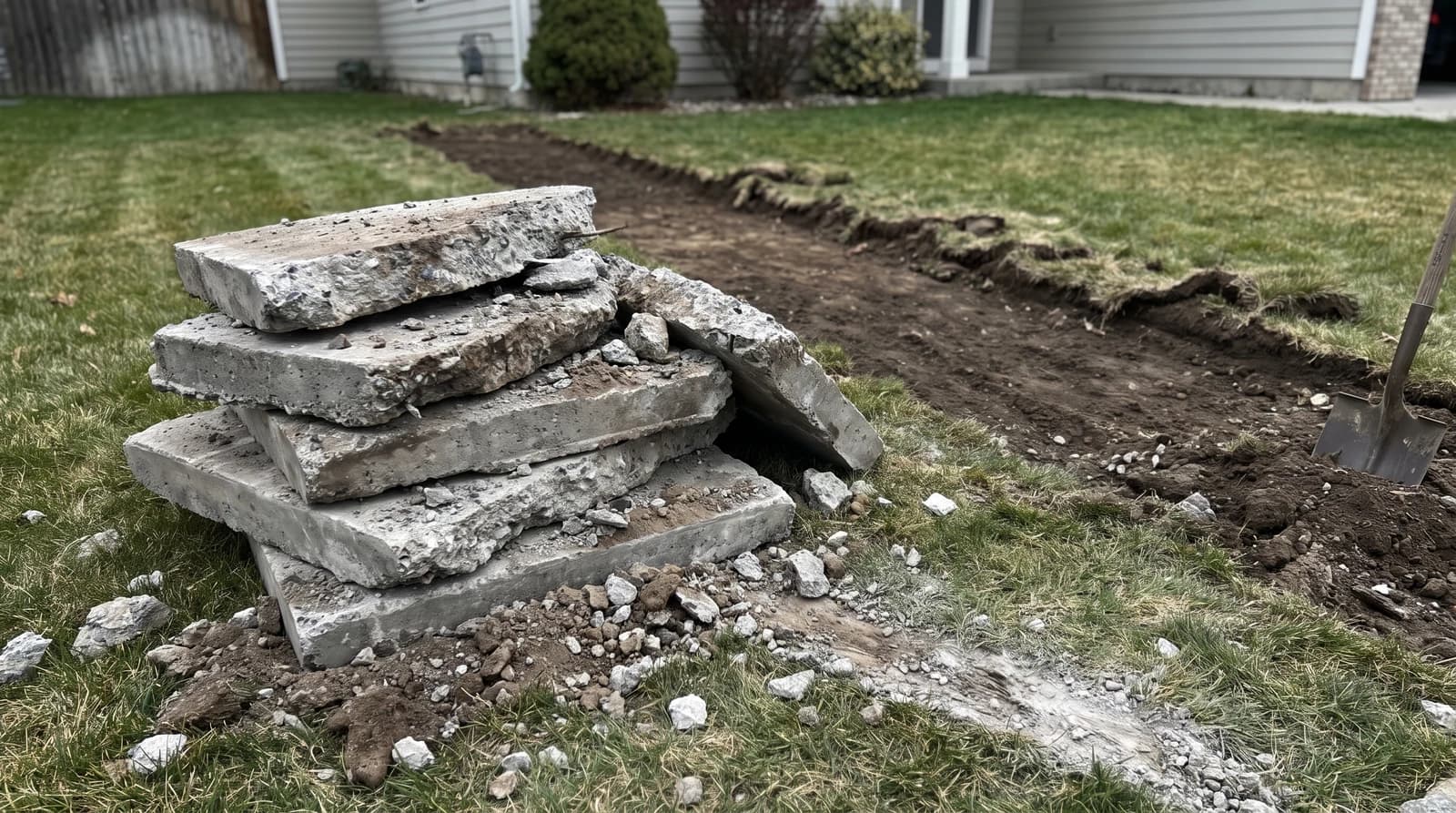
Clean concrete is one of the genuinely good stories in this business. It gets crushed and reused as road base, and outfits around the valley take it as recycled material instead of it going in a hole. Western Recycling handles a lot of what comes off jobs on this side of town.
But it has to be clean. Concrete with rebar sticking out of it, or mixed in with asphalt, wood, or dirt, either gets turned away or costs more to dump.
So why does steel add to the price? Because somebody is separating it, either on site or at the yard, and that time gets paid for one way or another.
We cut and pull the bar as we go. It slows the demo down and speeds up everything after it. Whatever can't be recycled goes to the Ada County landfill, and there usually isn't much.
When concrete removal is a real DIY job
Honestly? A 4-inch sidewalk section under about 60 square feet with no steel is worth doing yourself. Rent an electric breaker for around $80 a day, wear eye protection, and go slow.
Breaking it isn't the hard part. Hauling it is.
Anything with rebar, anything over 5 inches, or anything sitting tight against your foundation is where the math flips. And if you're thinking about waiting for spring, we wrote up whether concrete removal in winter is worth putting off. Short version: frozen ground matters less than you'd guess.
Yes, we'd love the job. But we'd rather you know what you're walking into either way, and our concrete removal service page walks through what a typical job looks like start to finish.
Bottom line
Measure the thickness at the edge, look for steel, check your access path. Those three answers get you a real quote instead of a guess, whether you're in Boise, Meridian, or out toward Nampa.
Want a number? Call or text us at (208) 593-2877. A photo of the slab edge helps, and it saves everybody a trip.
Need Help With Concrete Removal?
Top Shelf serves Boise and the Treasure Valley with professional junk removal, cleanouts, and demolition services.