
Concrete Removal in Boise: Driveway Aprons and ACHD Rules
Removing a driveway in Boise? The apron, sidewalk, and curb usually sit in ACHD right-of-way. Here's what needs a permit and what it does to your cost.
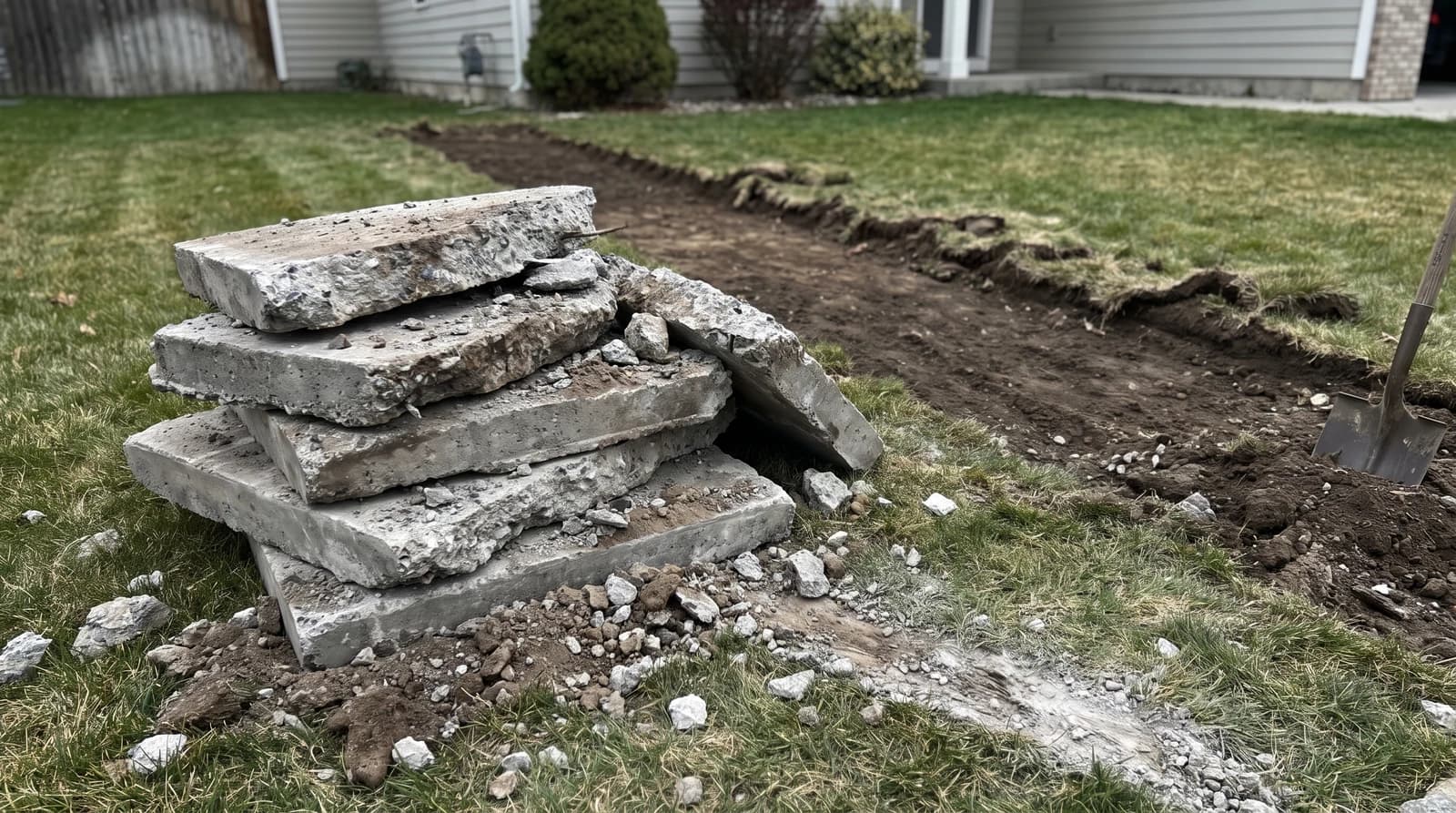
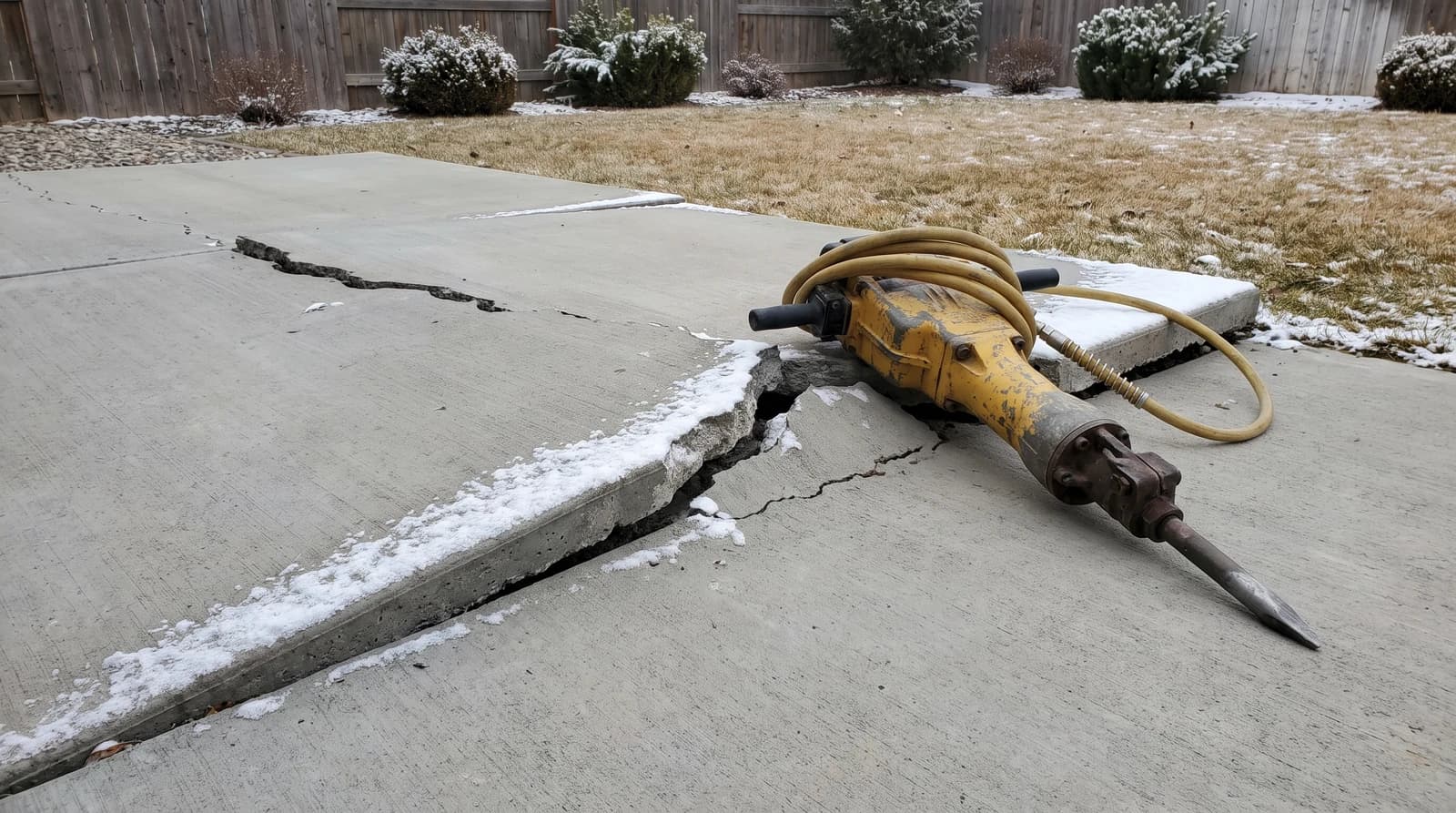
A guy off Hill Road called us last spring, halfway through a concrete removal job on his own driveway. He'd rented a jackhammer, burned a whole Saturday, and got maybe 60 feet before he hit the sidewalk and stopped cold.
He wasn't sure he was allowed to keep going. Good instinct.
Here's the thing. Your driveway gets more complicated the closer you get to the street. The slab sitting in the middle of your property is yours to do whatever you want with.
The apron, that flared section where your driveway meets the road, usually isn't. Neither is the sidewalk running across it.
That surprises people. So let's walk through where the line actually falls and what it does to your project.
Where your driveway stops being yours
Most Boise-area lots have a strip of public right-of-way running along the street, and it reaches further onto your lot than you'd guess. In plenty of neighborhoods, your actual property line sits behind the sidewalk, not out at the curb.
That grass strip between the sidewalk and the street? Usually right-of-way too, even though you're the one mowing it.
In Ada County, the Ada County Highway District (ACHD) controls the roadway, curb, gutter, sidewalk, and driveway approach for Boise, Meridian, Eagle, Garden City, Kuna, and Star. One agency, all those cities. Over in Canyon County you're dealing with Nampa or Caldwell's own engineering department instead, and the rules read a little differently town to town.
Here's the rough breakdown we walk homeowners through:
| Section of concrete | Who usually controls it | What that means |
|---|---|---|
| Patio, shop pad, back slab | You | Tear it out whenever |
| Driveway between garage and sidewalk | You | Generally no right-of-way permit |
| Sidewalk crossing the driveway | ACHD / city | Permit, and it has to be replaced |
| Apron, curb cut, gutter | ACHD / city | Permit, spec'd repour required |
That last row is the one that trips people up. You can't take out an approach and leave dirt sloping down to the gutter. The agency wants it rebuilt to spec or restored to full curb, and they aren't flexible about it.
Do you need a permit for concrete removal in Boise?
For concrete sitting entirely on your own property, usually not. Back patio, old shop slab, a cracked walkway down the side yard: that's just demo work, no permit conversation. Same goes for most of the driveway itself.
Touch the sidewalk, the curb, or the approach and you're in right-of-way territory. Now you need a permit from ACHD, or from your city if you're in Canyon County.
Fees are small next to what the concrete work costs, but the review isn't instant. Don't plan on calling the morning of.
One more thing worth knowing. The permit generally goes to whoever's doing the work, and the agency wants it done to their standard. If you're replacing the driveway anyway, your concrete contractor is usually the one who pulls it and handles the repour.
What the right-of-way does to your concrete removal quote
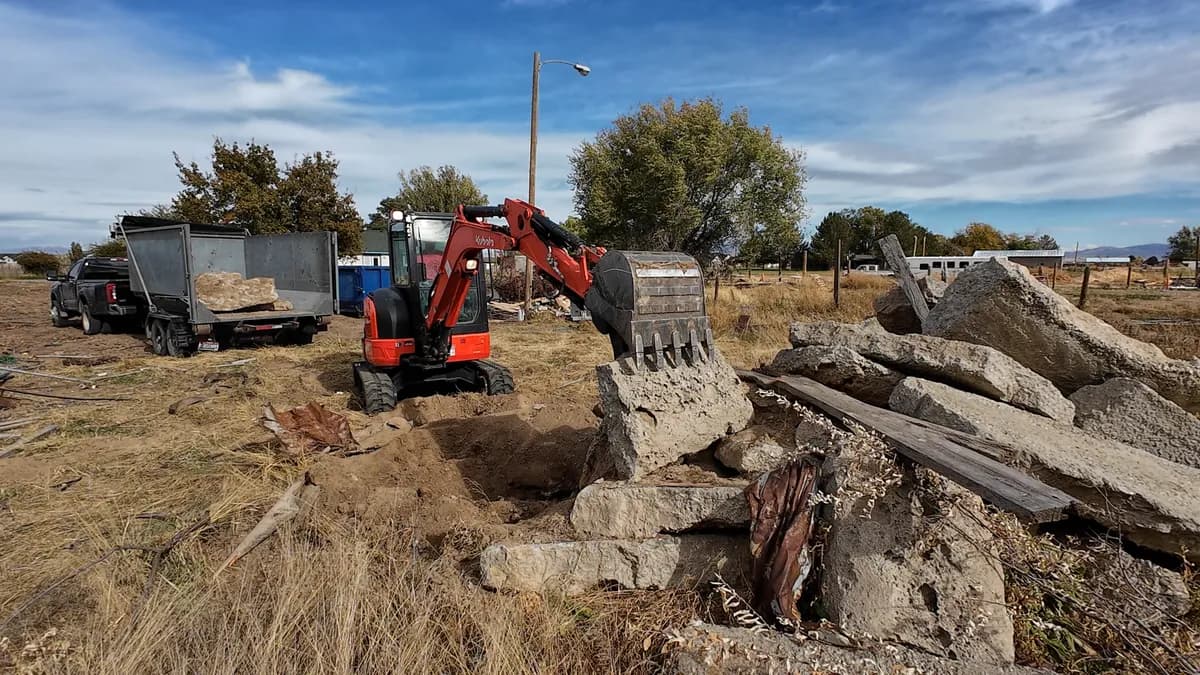
Honestly? Less than you'd think. We quote the demo and the haul-off, and that runs roughly $2 to $6 per square foot around the Treasure Valley depending on thickness, reinforcement, and how hard the slab is to get to.
A standard two-car driveway, call it 600 to 800 square feet, usually lands somewhere between $1,500 and $3,500 for removal and disposal.
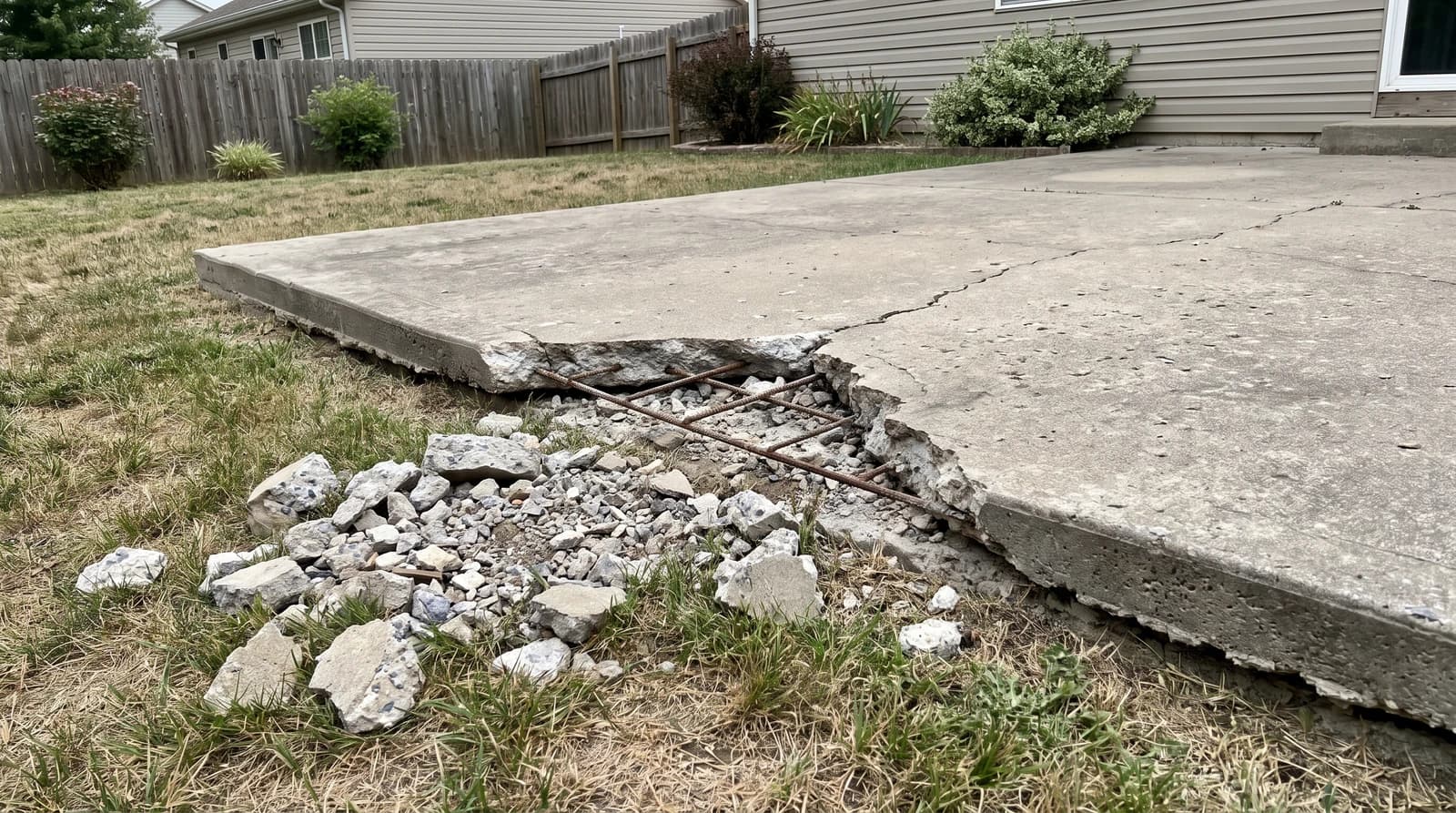
What moves that number is what's under the surface, not where the property line falls. Approaches and sidewalks tend to be poured thicker than the rest of the driveway and are more likely to have rebar or mesh in them, which slows breaking way down. We got into why thickness and rebar matter so much to the price if you want the detail.
So the permit is a small line item. The real story is that the last eight feet of your driveway is often the toughest eight feet of the whole job.
How these jobs usually get split up
Most driveway projects we handle in Boise break into two pieces. We take out everything on the private side and haul it off, and the concrete contractor doing the new pour handles the right-of-way section under their permit. Clean handoff, nobody standing around waiting.
Sometimes it's simpler than that. If you're not replacing the driveway at all, say you're putting in lawn or gravel, you can often leave the apron and sidewalk right where they are and just pull everything behind them.
Nothing wrong with that. It's usually the cheapest path, and we'll tell you so even though it means a smaller job for us.
A few things worth sorting out before we show up:
- Whether the sidewalk and apron are staying or going
- Any sprinkler lines or low-voltage wire buried under the slab
- Where the truck can sit without cracking the newer concrete you *do* want to keep
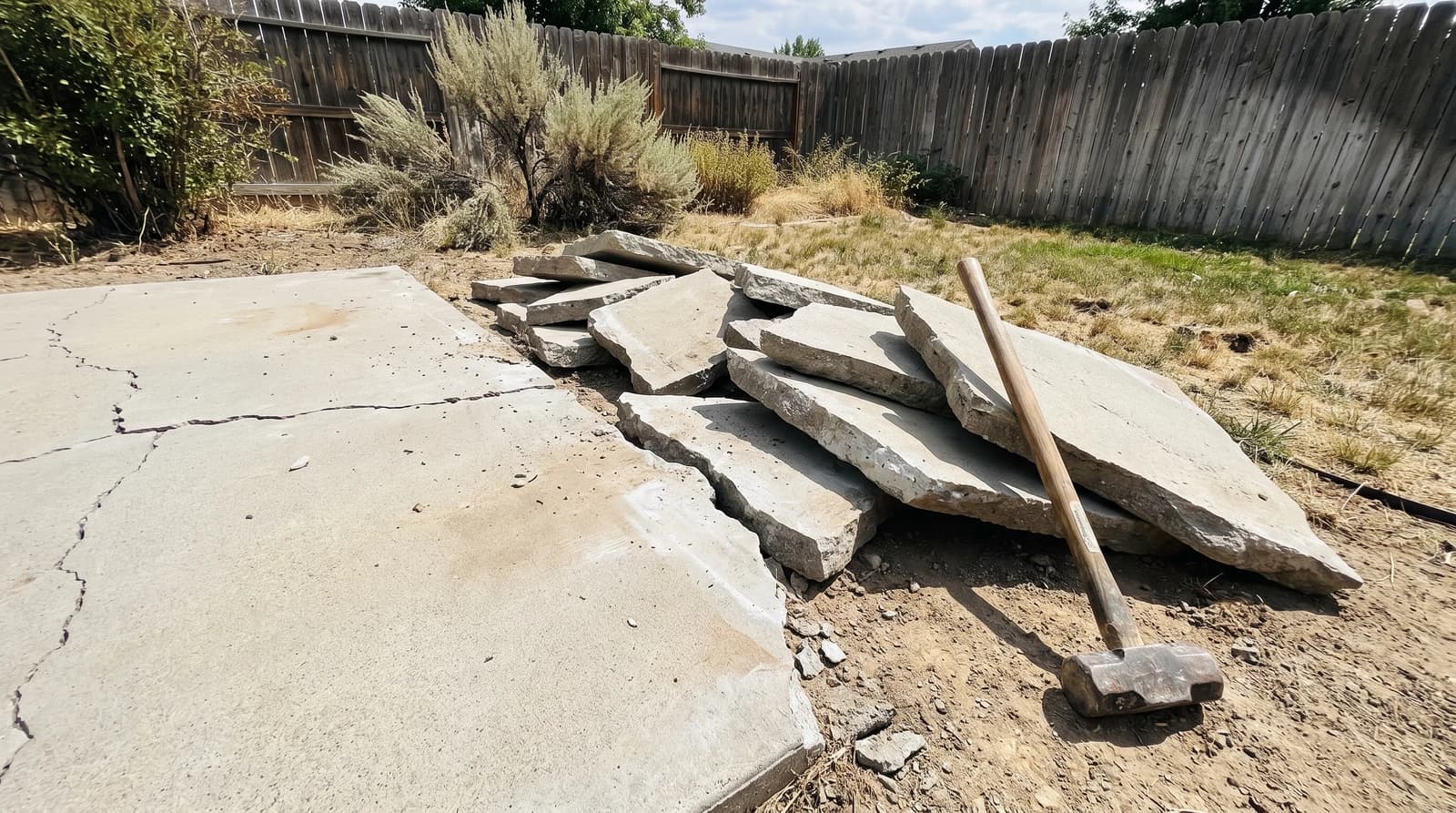
Disposal works differently for concrete, too. Broken slab doesn't go to the Ada County Landfill with the rest of the debris. It goes to a recycler like Western Recycling to get crushed into road base, which is why clean concrete costs less to get rid of than mixed demo debris.
And if trucking it off isn't the plan, some slabs can stay onsite as fill or a base layer. Worth asking about before you pay for the hauling.
Bottom line
Your driveway is probably yours right up to the sidewalk and not an inch past it. Everything from there to the street belongs to ACHD in Ada County or to your city in Canyon County, and touching it means a permit plus a repour to spec.
Not sure where your line falls? We can usually tell you by looking at it.
Our concrete removal crew works all over Boise, Meridian, and Nampa, and we'd rather flag the right-of-way piece during the estimate than have you find out halfway through a Saturday.
Give us a call at (208) 593-2877 and we'll come take a look. No pressure either way.
Need Help With Concrete Removal?
Top Shelf serves Boise and the Treasure Valley with professional junk removal, cleanouts, and demolition services.