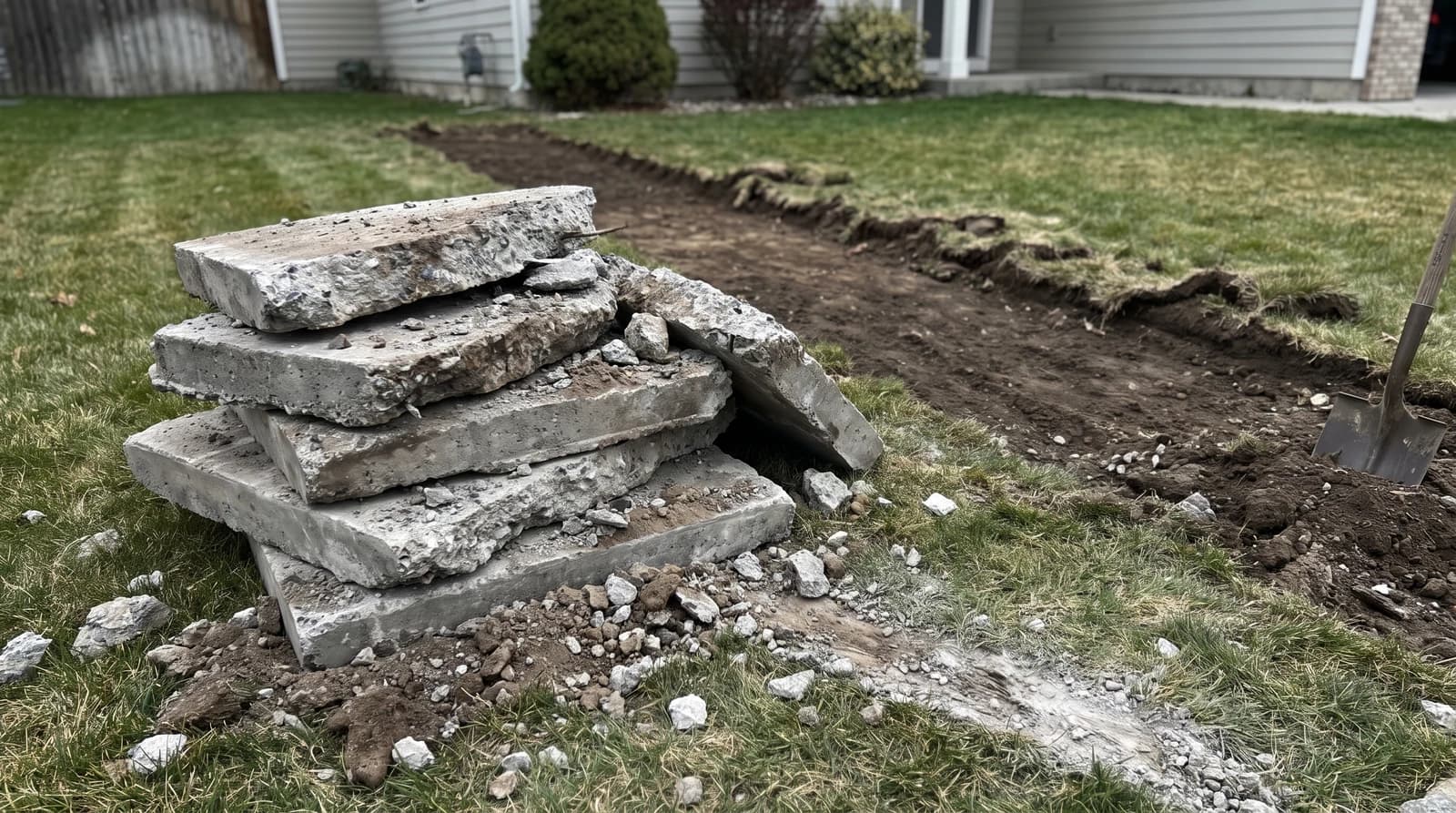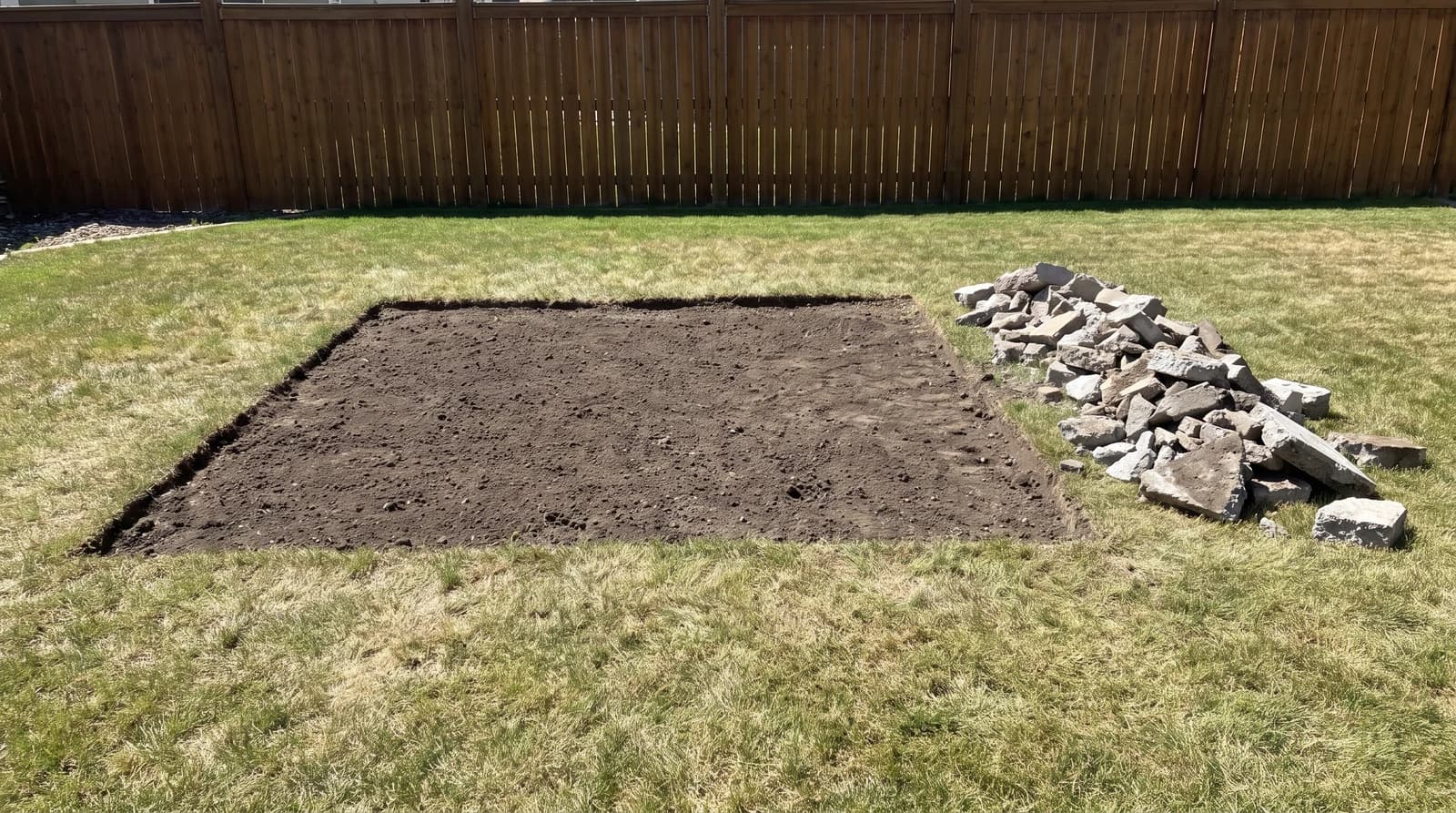

Concrete Removal in Boise: What About Sprinkler Lines?
Sprinkler and irrigation lines run under a lot of Boise patios. Here's how a concrete removal crew finds them, works around them, and handles breaks.
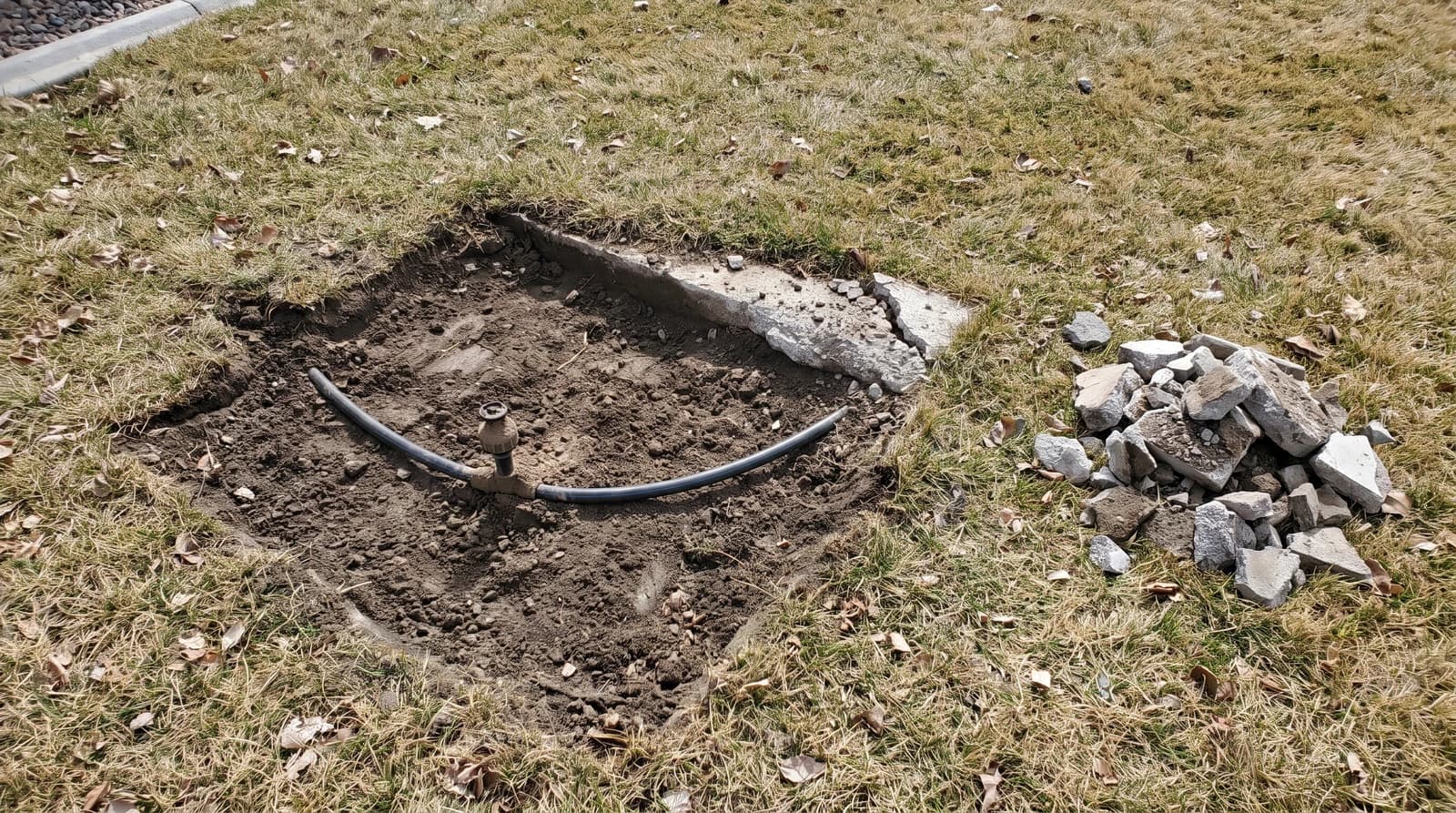
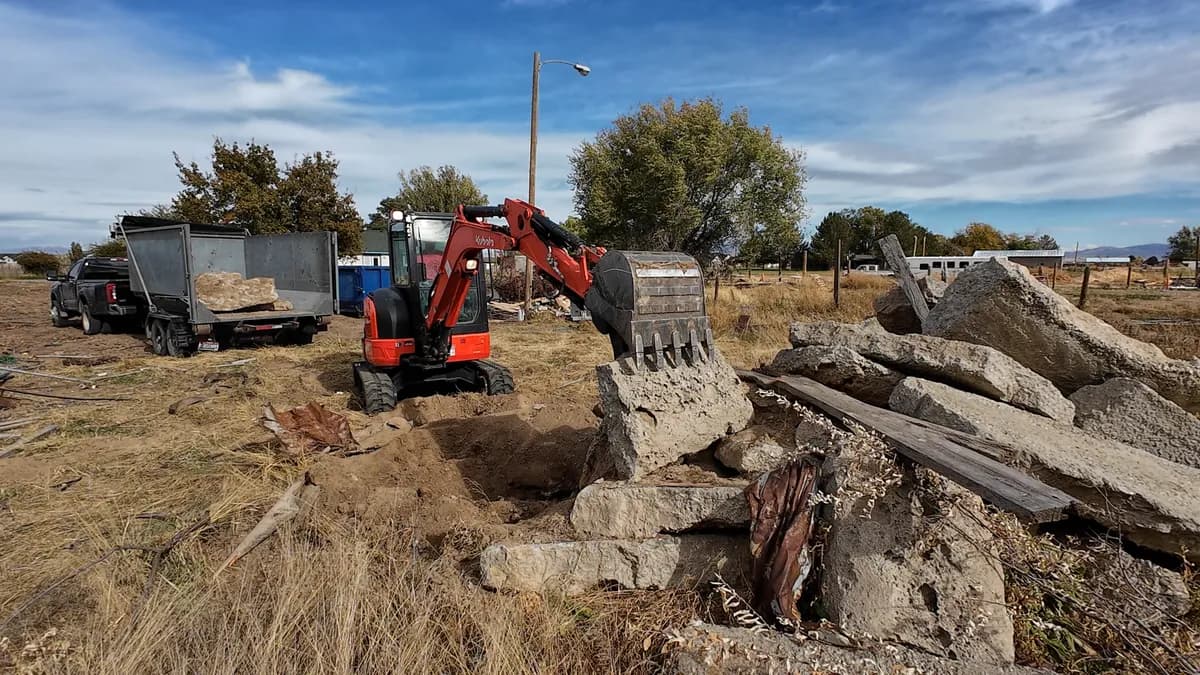
A guy off Ustick called us out for a small concrete removal job: one patio slab behind the house, maybe eighty square feet. Twenty minutes in, the breaker went through the last corner, we lifted the chunk out, and there it was. A one-inch poly line running right under where the slab had been, about six inches down.
Whoever poured that patio back in the 90s just went over the top of it.
That's not unusual around here. So much of the Treasure Valley sits on old farm ground with pressurized irrigation, and sprinkler systems get added, moved, and patched over decades.
So what actually happens to your sprinkler lines when the concrete comes out? Here's the honest version.
Why concrete removal and sprinkler lines cross paths so often
Most slabs we take out weren't the first thing in the yard. House went in, then the lawn and sprinklers, then somebody added a patio, a walkway, a hot tub pad, or an RV slab a few years later.
When that pour happened, the easy move was to run the line under the new concrete. Sleeve it if you were doing it right. Plenty of people skipped the sleeve.
Then there's the irrigation district side. If you're on Nampa & Meridian, Settlers, or Boise Project water, you may have a delivery line crossing your property that has nothing to do with your sprinkler heads. Those are bigger, deeper, and a lot more expensive to fix.
The spots that surprise people most:
- Where a walkway crosses from the side yard into the back, which is close to a guarantee
- Under a slab tucked between the house and the fence, the natural path for a mainline
- Along the front edge of a driveway, where the lawn zone loops back around
What we do before concrete removal starts
First thing: we call 811 (Dig Line here in Idaho) any time the job goes past surface-level breaking. It's free and takes a couple of business days. Here's the part people miss.
811 marks public utilities only. Gas, power, cable, city water to the meter. Nobody is coming out to mark your sprinkler lines or your private irrigation, because those belong to you. So the locate ticket keeps us off a gas line and does exactly nothing for your lawn zones.
That's where you come in. Ten minutes of your time before we show up can save you a repair bill.
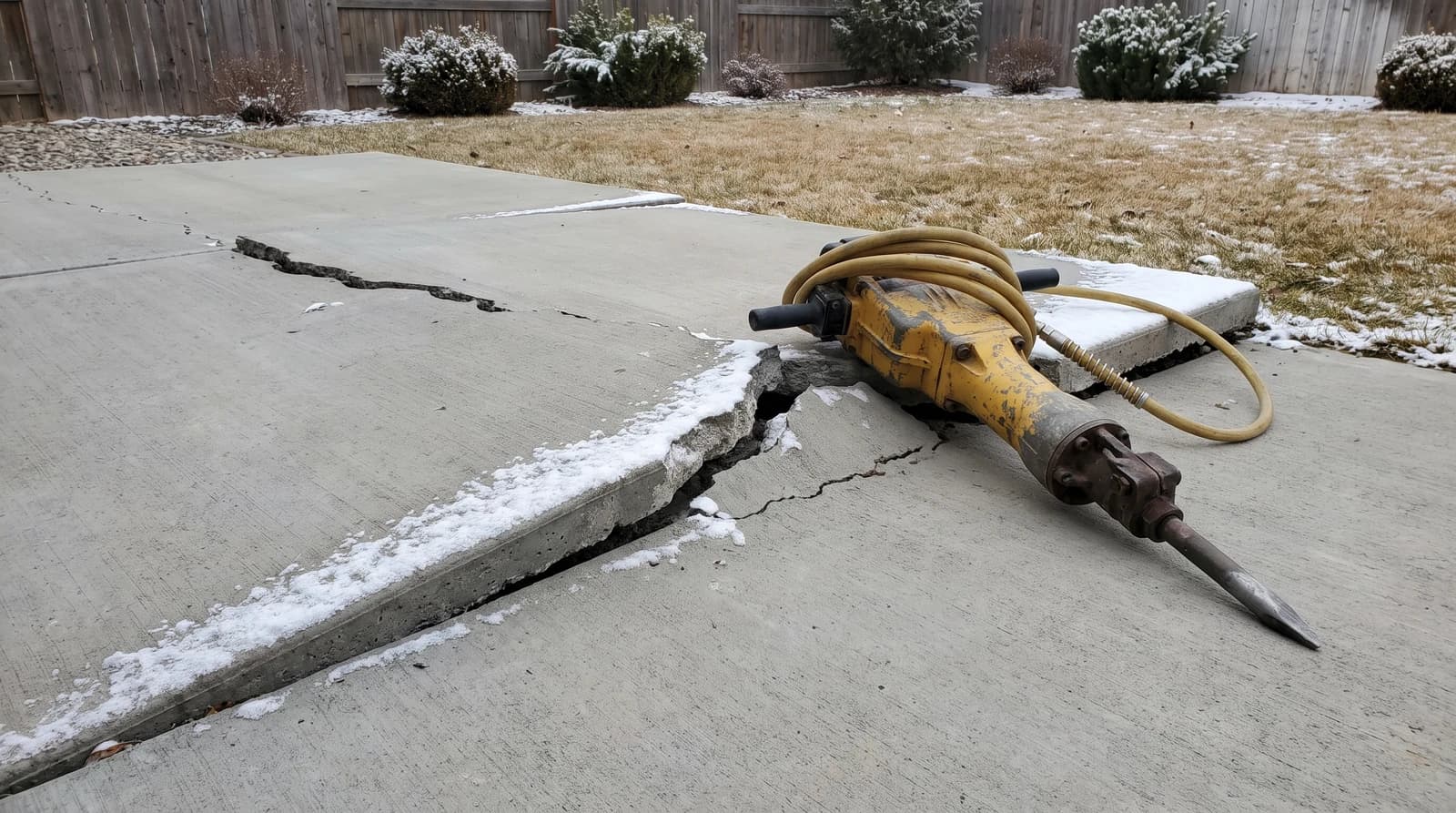
When we get there, we walk the slab with you and mark what we know. Then we work the edges by hand, or with a smaller breaker near anything flagged, instead of driving equipment straight across. Slower on those few feet. Cheaper than a repair.
What happens if a line gets cut anyway
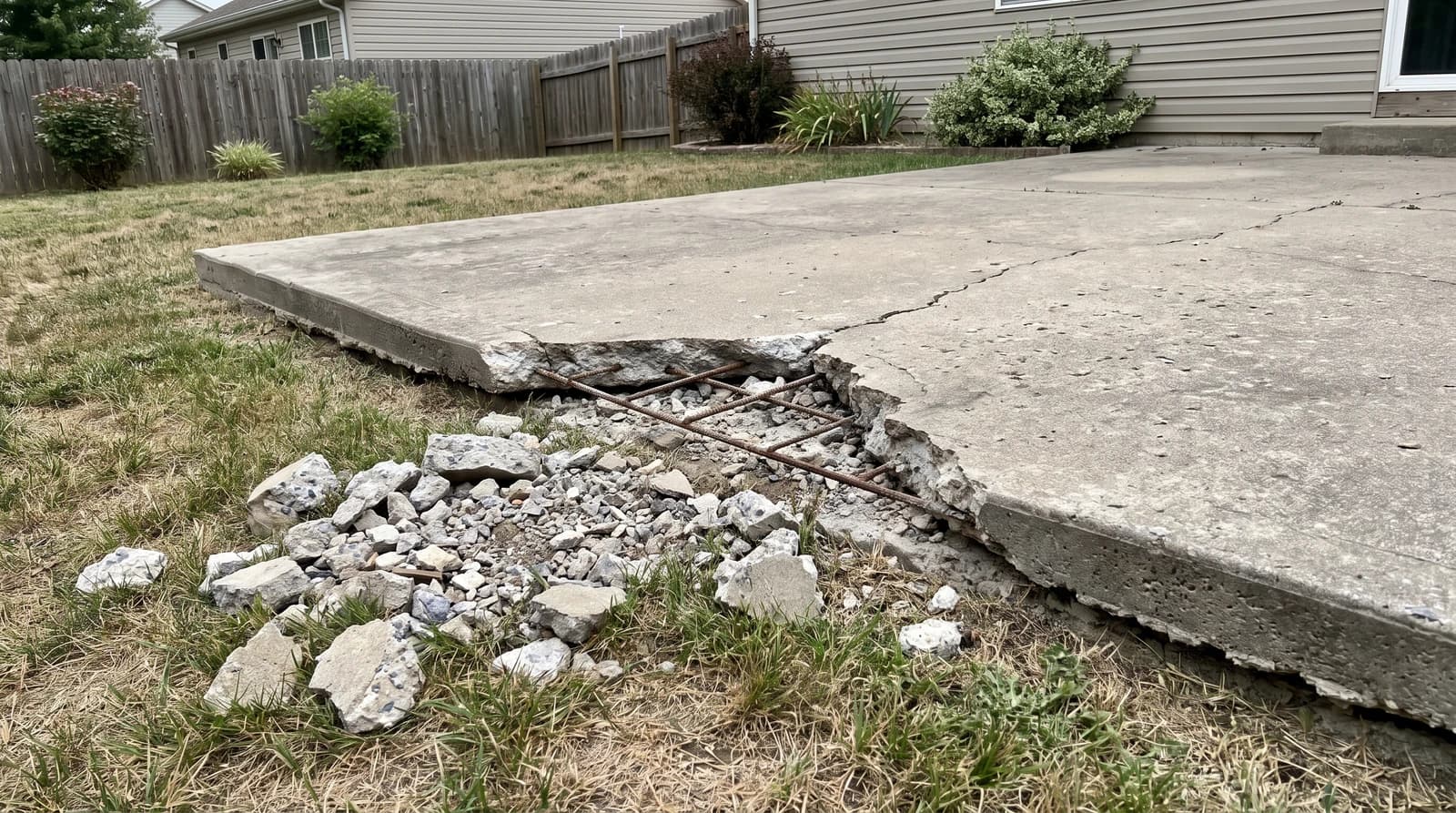
Sometimes it happens. A line runs at an angle nobody expected, or it's stuck to the underside of the slab and comes up with the concrete. We say that up front. Yes, we'd love the job, but you should know the real odds before we start.
The good news is that most sprinkler repairs are small. A cut in one-inch poly or a PVC lateral is a coupling, some primer and glue, and twenty minutes of work. Have a licensed sprinkler tech handle it and you're usually looking at $75 to $200 for a single break around Boise and Meridian. Plenty of homeowners just fix it themselves with about $12 in fittings.
Here's what we do on our end when we hit one:
- ✓Tell you right then, not at the end of the day
- ✓Expose the break so you can see both ends of the pipe
- ✓Cap it so you can run your system without flooding the yard
- ✓Leave that section open and loosely backfilled so the repair is easy
- ✓Mark where it is, because a buried repair you can't find later is worse than the break
A mainline hit is a different conversation. Those run under constant pressure, and on district irrigation they move a surprising amount of water fast. If we spot one before breaking, we'll usually tell you to shut the system down at the valve for the day and get a sprinkler company scheduled for after we're out.
Timing it with the rest of your project
Pulling a slab and putting something new in that spot? Get the concrete out first, then do the sprinkler work. New heads and fresh pipe under a demo zone just get wrecked.
Season matters too. From about November through March your system is blown out and dry, so a nicked line is an annoyance instead of a mess. We got into that more in our take on concrete removal in winter, and it's one of the few real arguments against waiting for spring.
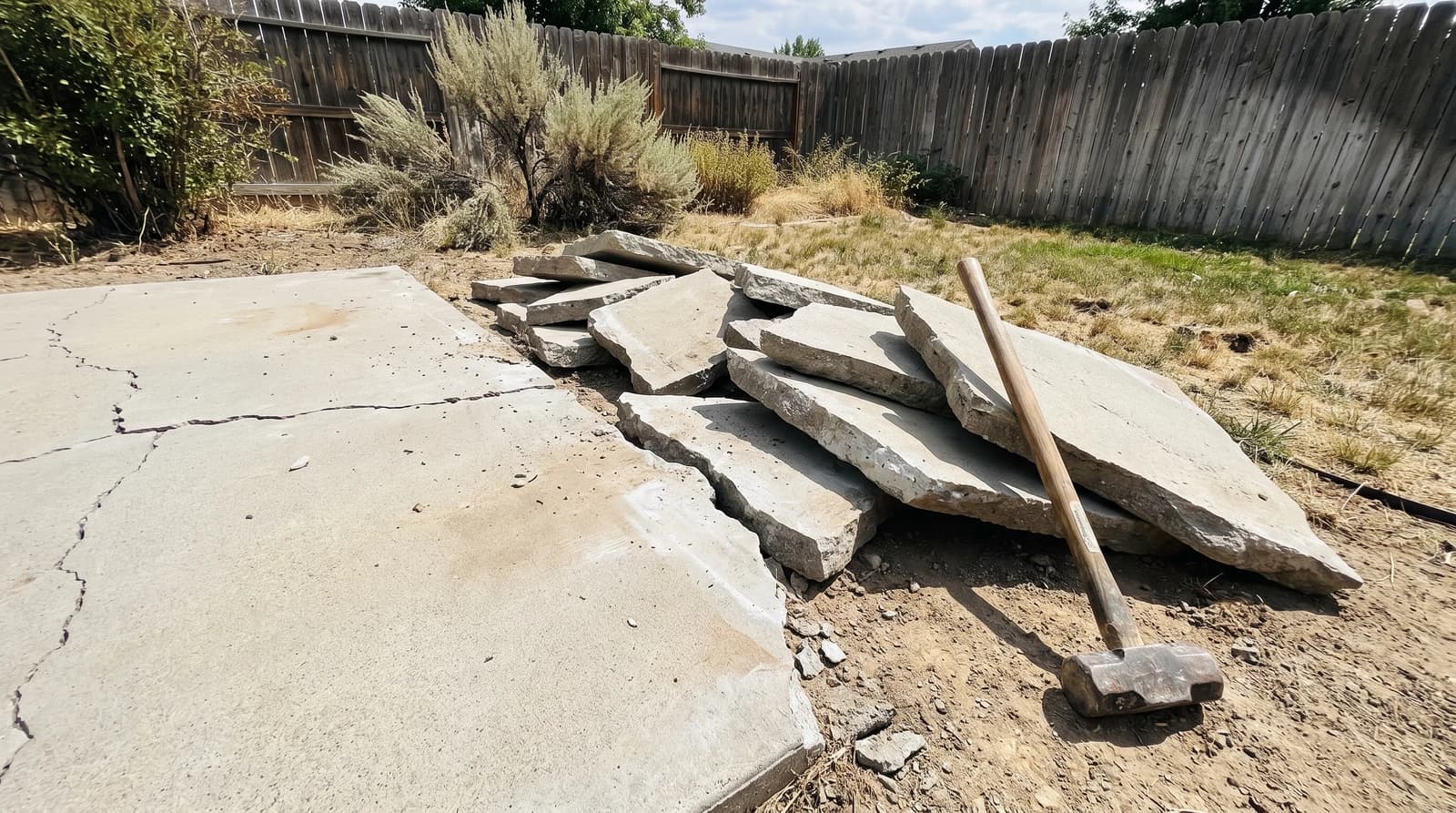
One more thing. If we break the slab and leave the pieces onsite as fill or a base layer, that material needs to stay off your irrigation runs. Broken concrete sitting on a poly line will work its way down and pinch it eventually. There's a full rundown on whether the slab can stay onsite if you're weighing that against hauling it off to a recycler.
Bottom line
Sprinkler lines under concrete are normal in the Treasure Valley, not a disaster. Flag your heads, point out the valve boxes, and let the crew slow down around the edges. Breaks are usually cheap and quick when somebody handles them honestly.
Got a slab you want gone and no idea what's underneath it? We do concrete removal around Boise, Meridian, Nampa, and the rest of the valley, and we're glad to walk the yard with you first. Call or text (208) 593-2877 and we'll give you a straight answer on what it'll take.
Need Help With Concrete Removal?
Top Shelf serves Boise and the Treasure Valley with professional junk removal, cleanouts, and demolition services.