
Removing Carpet Staples From Subfloor: The Best Tool to Remove Each Staple
By Eric Hinderager, owner of Top Shelf Junk Removal and Demolition · Updated
Removing carpet staples from subfloor? Learn which pullers and scrapers work, when tack strips must go, and how clean the floor needs to be next.
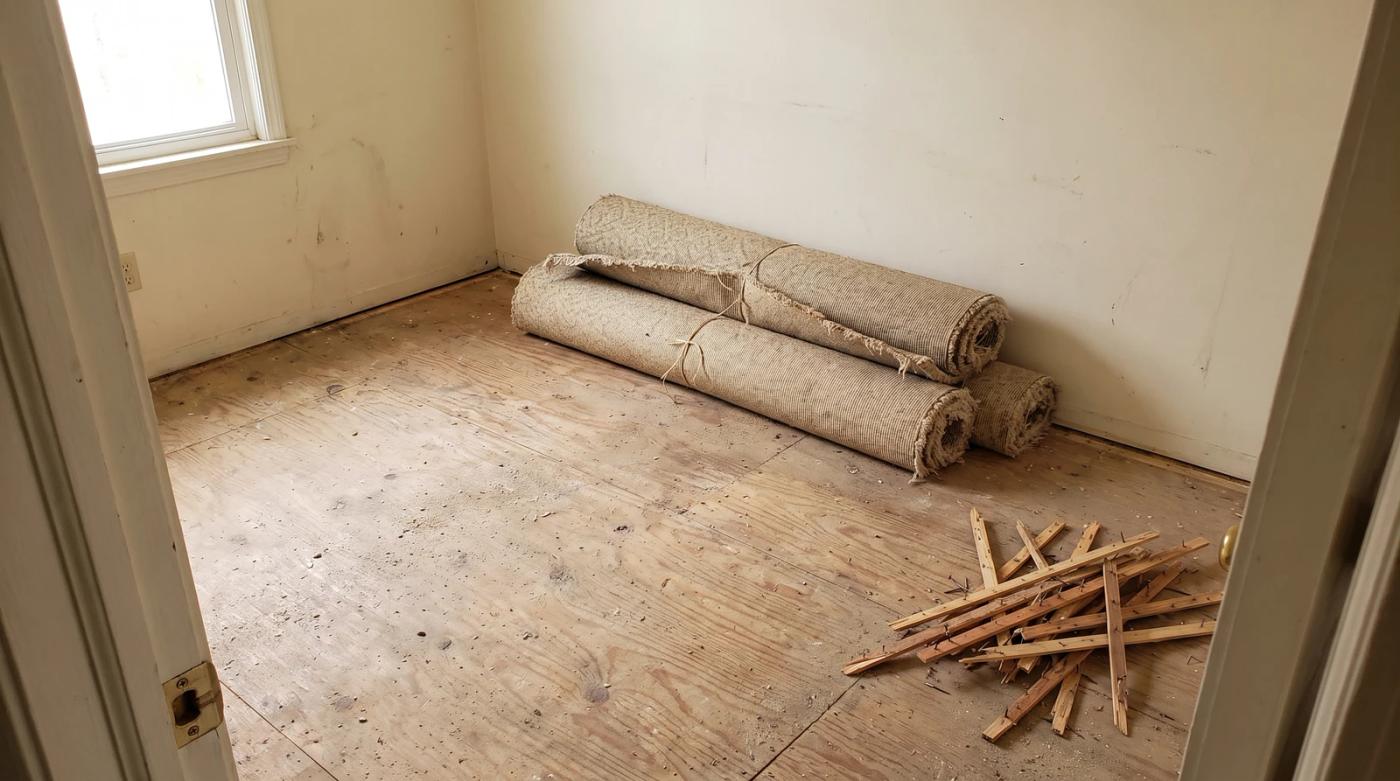
Removing carpet staples from subfloor is slow, kneeling work, but it's simple once you know which puller fits the job and how clean the next flooring needs the plywood to be. Pull the pad, work them out row by row, and sweep for strays. The top layer comes up fast. The leftovers are what eat the day.
Removing carpet staples from subfloor, step by step
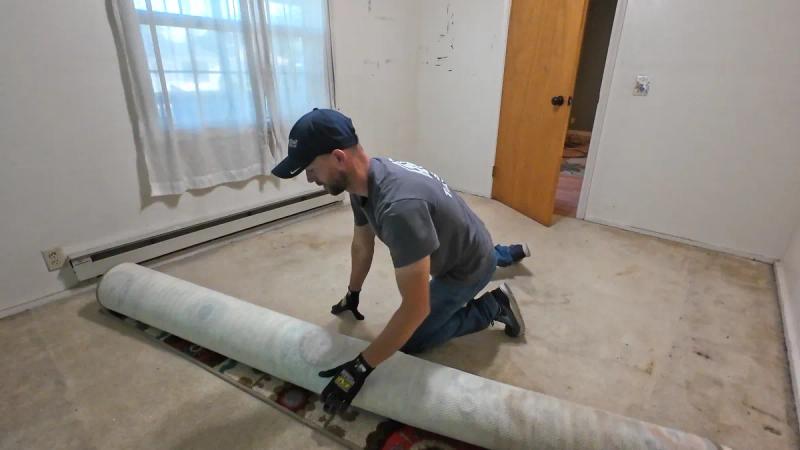
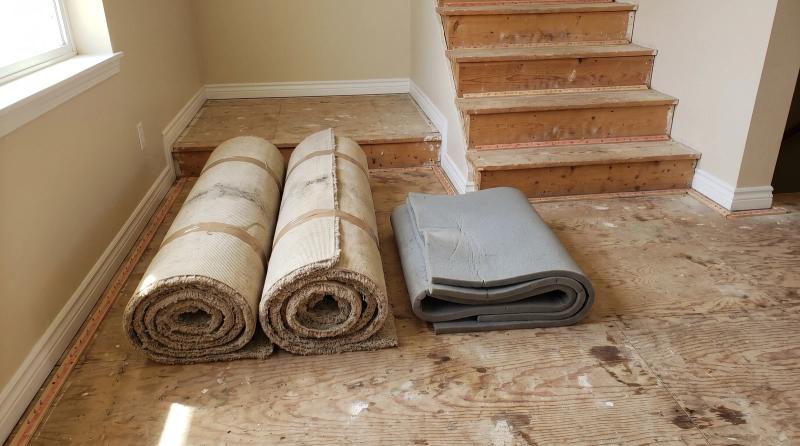
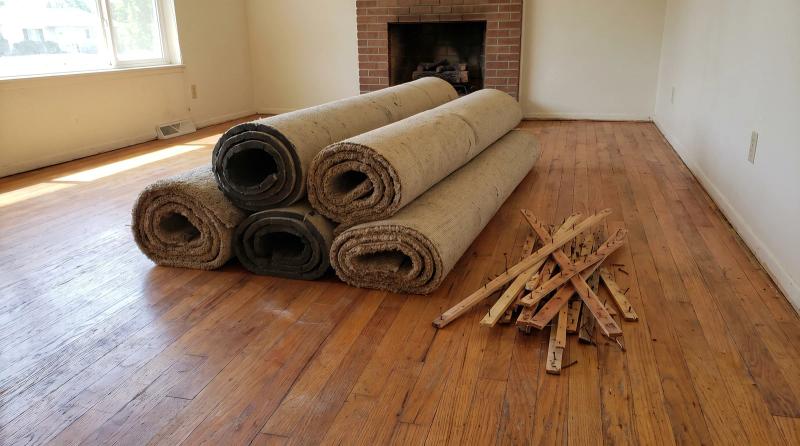
Cut the old covering into three-foot strips, roll them and carry them out. In an empty bedroom it goes quickly, and you'd swear carpet removal is the simplest job in the house.
Then you look down. The foam pad underneath was stapled to the plywood every few inches. Not glued, not tacked at the corners. Stapled over and over by someone paid to make sure it never moved.
Plenty of Boise-area homes are built on plywood or OSB sub floors, which is why even one bedroom can hold a surprising number of them.
Here's the order that works:
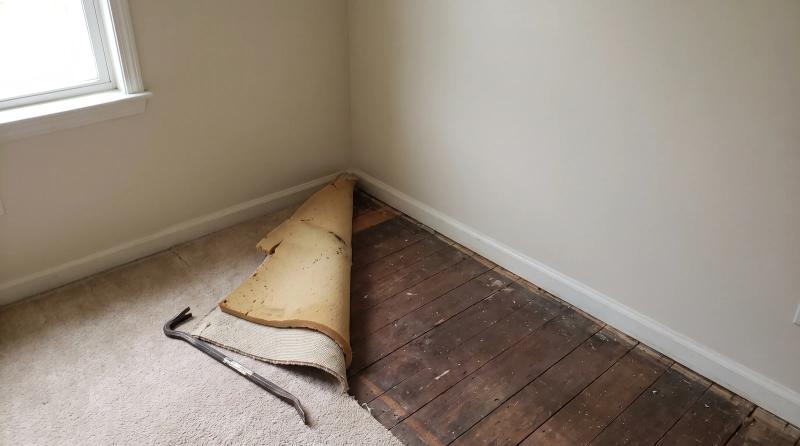
- Pull the pad in sections. Most of it tears free and leaves the metal behind with little tufts of foam stuck under each crown.
- Pick off the foam tufts. You can't pull what you can't see, and the tufts hide the crowns.
- Work in rows from the far wall toward the door. That way you're never kneeling on ones you haven't reached yet.
- Pull or scrape each one. More on picking a puller below.
- Sweep with a magnet, then vacuum. Strays hide in the grain and along the walls.
Good light helps more than you'd think. A work light set low on the plywood throws a shadow off every crown, so they're easier to spot.
They don't all come out clean. Some snap off. Some sink flush, and you end up digging at them with a nail set or the corner of a putty knife.
If your place is on a slab, the pad was probably glued instead of stapled. That's its own kind of miserable, and concrete calls for scraping and adhesive work rather than the pulling you do on plywood.
Needle-nose pliers or a scraper: which tool works best?
There isn't one best tool for every house. The tool used should match how many there are, how deep they sit and how flat the new surface has to be.
End-cutting nippers or needle-nose pliers pull the cleanest. Needle nose pliers work well when a crown stands up a little, since the thin jaws slip under it. Clamp onto the staple, then rock back on the curve of the jaw instead of yanking straight up. That rolling, wiggling action pops both legs loose without snapping them.
Fence pliers are the other favorite. They have a hammer face on one side and a hooked claw on the other, which makes fence pliers perfect for long staples driven deep into the plywood. Hook the claw under the crown and lever against the large head of the pliers.
A long handle scraper saves your back and moves a lot faster. Set the blade flat on the plywood, just slide it under a row and keep pushing. It skips some and leaves bent stubs, especially on the longer ones, so plan on a second pass with pliers.
Look for one with reversible blades or replaceable blades. Metal dulls an edge fast, and a dull blade rides over the crowns instead of under them. When one edge goes, flip it or swap it rather than pushing harder.
Hand staple removers, sometimes sold as staple pullers, look like a small flat pry with a notch in the end. They're handy in closets and corners where a scraper won't fit. Slide the notch under the crown and gently lift.
Then there's the oscillating multi-tool with a flush blade, which shears stubs off level with the surface. That's fine under a new pad and most LVP. It's not great under sheet vinyl, where every stub eventually shows.
Whatever you pick, wear gloves and safety glasses. A leg that snaps under a scraper can flick up fast.
| Option | Best for | Downside |
|---|---|---|
| Nippers or pliers | Getting every last one | Slow and hard on knees |
| Long scraper | Open rooms, lots of rows | Misses some; needs reversible or replaceable blades |
| Hand puller | Closets, corners, doorways | One at a time |
| Oscillating multi-tool | Snapped or flush stubs | Leaves metal in the plywood |
Good to know: A lot of DIY pulls end up using two of these. A scraper for the open areas, then pliers to clean up what it missed.
Do the tack strips have to come out too?
It depends on what's going down next.
New carpet in the same space, and the strips are still solid, dry and not rusted? Leave them. Your installer can usually swap the few that need it, and that saves everybody time.
Going to LVP, laminate, engineered wood or tile? Remove all of it. A quarter-inch strip with nails in it will telegraph up through floating planks and chew the underlayment over time.
Doorways and closets are where it gets fussy, since the strips are nailed in tight against the jamb. Concrete slabs are worse. Those nails are hardened and often snap off below the surface, so you grind the stub flat instead of fighting it.
Quick tip: Slip a wide drywall taping knife or a scrap of plywood under your pry bar before you lever up a tack strip. It spreads the load so you don't crush the subfloor, and it keeps the bar from punching through the drywall above the baseboard. That's a patch job you don't want to add to the list.
How clean does the subfloor need to be?
So how perfect do you need to be? Again, it comes down to what goes on top. New carpet and padding swallow a few stubs without complaining. Floating vinyl plank will find every one and click at you for years.
For tile, hardwood or anything glued down, removing staples completely is the safe call. A stub that stands up can rock a tile or keep adhesive from bonding flat.
If you're refinishing original wood that was hiding underneath, pull every last one before a sander touches it. A hidden one tears sandpaper and can gouge the boards.
Run your palm across the plywood when you think you're done. Anything you can feel, the new floor will feel too.
A handful of things that genuinely help on a DIY pull:
- Real knee pads, not folded-up towels
- A 5-gallon bucket for everything you pull, so it doesn't end up in a tire or a dog's paw
- A cheap magnetic sweeper for the final pass
- Spare blades for your scraper, if it takes reversible / replaceable blades
- A shop vac, because the dust under old pad is a whole thing
That last one sneaks up on people. Old pad breaks down into a fine orange grit that gets into everything, and it's rough on allergies.
What moves the cost if you hire it out. It's rarely the tear-out itself. Square footage matters, and so do stairs, since every tread has strips on two edges. Glued areas take longer than stapled ones. The biggest swing is how clean the plywood needs to be: a quick scrape before a new install is far less labor than pulling staples one by one for tile. Disposal volume counts too.
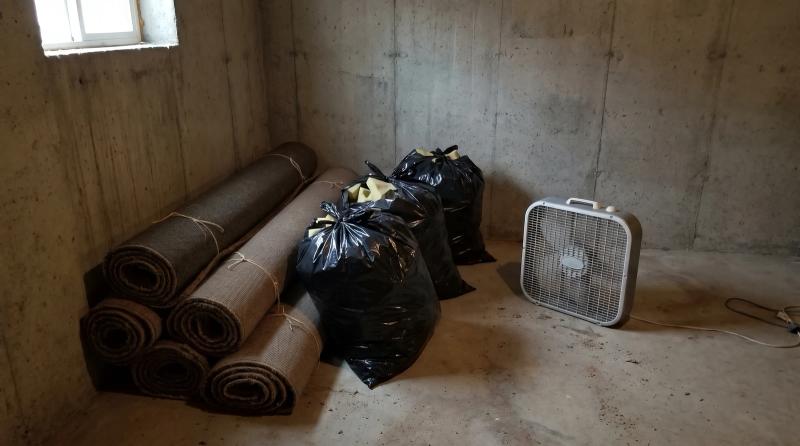
Old pad and covering can be hard to recycle, so a lot of it ends up at the Ada County Landfill's Hidden Hollow site. If you're hauling it yourself, budget a real trip. Even a single bedroom's worth takes up more of a pickup bed than you'd guess.
If you'd rather skip the dump run, Top Shelf can haul away the old carpet, padding and tack strips once they're pulled up, anywhere in the Treasure Valley. Pricing is based on how much truck space the load takes. Call (208) 593-2877 and we'll give you a free estimate.
Worth asking: Before anyone starts, ask whether the price includes pulling the fasteners and tack strips or just the top layer and pad. That's where quotes tend to differ.
Frequently asked questions
Do you have to pull them all before new pad goes down?
Not always. Flush ones under a new pad usually won't matter, so pull only what's needed: anything standing up, bent over or loose.
How do you get old glue off a wood subfloor?
Scrape off as much as you can first, then soften what's left with a remover made for that adhesive. Test a small spot, since some solvents stain or swell the boards.
Is a leftover stub okay under vinyl plank?
It's better not to leave one. A single stub can show through thin plank or click underfoot, so pull it or shear it flush.
Is this a good DIY job?
The Demolition page covers what the service includes and how the estimate works.
Related reading: Concrete Slab Demolition: Can You DIY It, or Should You Hand It Off? and Chicken Coop Removal in Boise: Dust, Wire and Old Posts.
Yes, if your knees and back are up for it. The work isn't tricky, just slow, and the right puller makes most of the difference.
Need Help With Carpet Removal?
Top Shelf serves Boise and the Treasure Valley with professional junk removal, cleanouts, and demolition services.