
Mobile Home Demolition Permit: What You Need Before the Teardown
By Eric Hinderager, owner of Top Shelf Junk Removal and Demolition · Updated
What a mobile home demolition permit takes in the Treasure Valley: who to call, the asbestos check, utility shutoffs, the title, and what moves the cost.
A mobile home demolition permit is the sign-off you need from your city or county before an old home on a steel frame can come down, and in most cases you can't skip it. That sign-off is one piece of a short list. You'll also need an asbestos check, utility shutoffs and a plan for the title.
Get those lined up and the teardown itself goes fast. It's still a bigger job than tearing down a shed. There's paperwork, health rules and a lot of material to haul.
What does a mobile home demolition permit cover?
The approval tells your local building department that a home is coming down, who's doing the work and how the lot will be left. In most cases, tearing down any structure requires this kind of sign-off. A home on a steel frame is no different.
People often think of these homes as vehicles because they have titles. Once one sits on a lot, though, the county usually treats it like other homes. That's why the form you file is often a residential demolition permit, the same kind a house would need.
Older units are usually called mobile homes. Newer ones built to the HUD code are called manufactured homes. For a teardown, the steps are the same either way. If you're not sure when yours was manufactured, look for the data plate or HUD label.
Homes usually come down for one of these reasons:
- Age and condition: Units built before 1976 don't meet current HUD standards. They often cost more to fix than they're worth.
- Property sale: Buyers want a clean lot, not an old home.
- Building a new home: The old unit was a stopgap during construction, or you're bringing in a replacement.
- Abandonment: Past tenants left and the home fell apart.
- Insurance: Some insurers won't cover older units.
Whatever the reason, the process is the same.
Do you need a permit to tear one down in Idaho?
In most cases, yes. Here's what goes into it.
The paperwork: In most cases, you'll need sign-off before a teardown. In Ada County, you file with your city's building department, or with the county if the lot sits outside city limits. Canyon County works the same way. In some towns the same desk is called community development instead. The fee depends on where you are and the size of the job, so check with your local office.
Rules for mobile structures and permits vary widely from place to place. One office may want a site plan. Another may want proof the utilities are off before the permit review starts.
Idaho has no township government. If you read a guide from a state that has one, skip the part about the township office. Your county, or your town's building or community development office, handles it here.
Worth asking: Before you file, ask the office what they want with the permit application. One missing page can hold up the whole thing.
Asbestos inspection: Many offices want an asbestos inspection before a teardown, so ask yours what it requires. Homes built before 1980 often have asbestos in:
- Floor tiles and backing
- Insulation, especially around pipes and ducts
- Siding and roofing
- Ceiling texture
A certified inspector tests samples first. If asbestos turns up, a licensed abatement company takes it out before the teardown. It adds cost, but it's about everyone's health and safety.
Utility shutoffs: Electric, gas, water and sewer all need a formal disconnect. Call each provider yourself. Scheduling depends on how busy each one is, so call early. Before a crew touches the frame, any structure requires live lines to be shut off and capped. A line left live is a fire and safety risk.
Title and VIN: These homes have titles like cars. You'll usually either turn in the title at the DMV or show proof that the unit was torn down, so ask the DMV what they need.
Rented lots: If the home sits on a rented lot in a park, talk to the manager first. The lease may have its own rules for removal and cleanup.
What comes next: If you plan to build on the lot later, that's a separate building permit. The teardown approval doesn't cover new construction.
How does the teardown work, step by step?
Here's how a typical demolition project goes:
- Paperwork first: The asbestos check is done, and the county paperwork is filed.
- Asbestos abatement (if needed): A licensed crew takes out the hazardous material.
- Utility shutoff: Every line is confirmed off and capped.
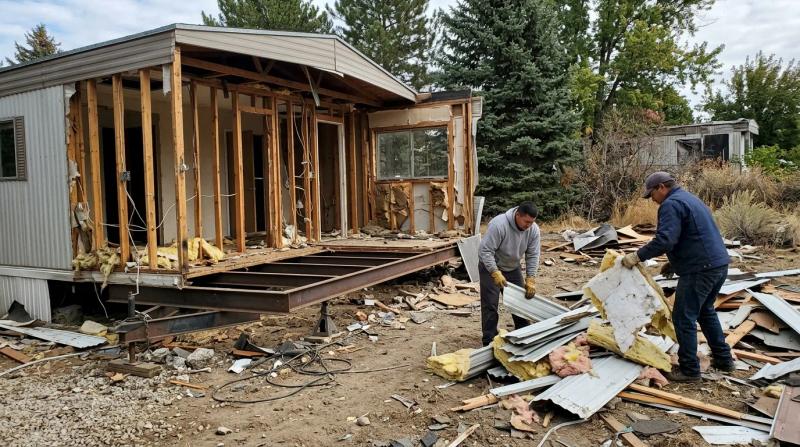
- Soft strip: Cabinets, fixtures and inside materials come out.
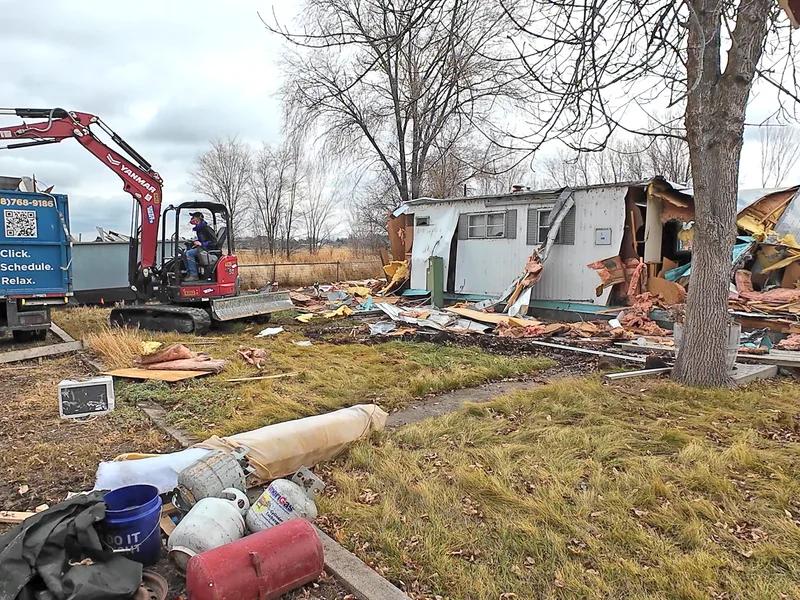
- Teardown: An excavator or other heavy equipment takes down the frame, walls and roof.
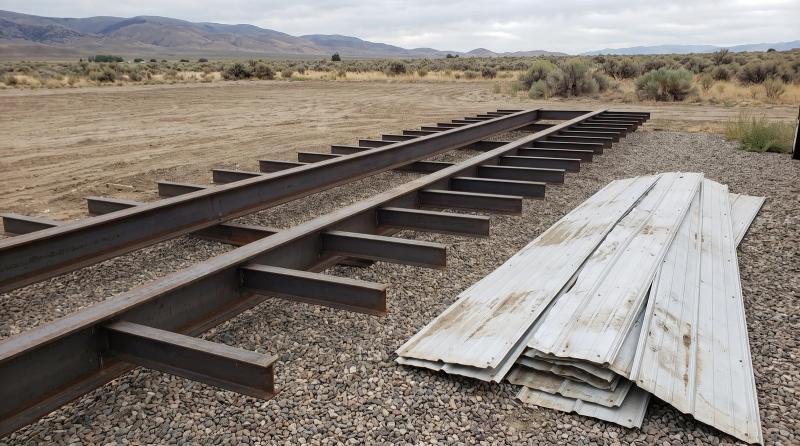
- Sorting: The metal frame goes to scrap. Wood and the rest go to the right disposal spot.
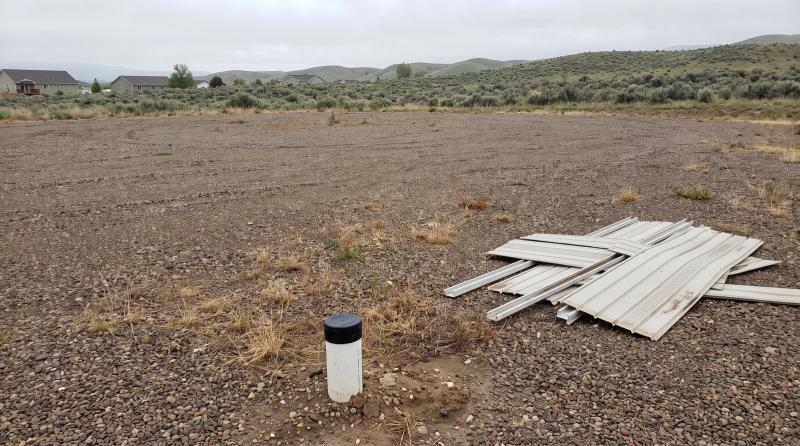
- Cleanup: Piers or foundation come out, and the area gets graded.
- Final sign-off: Some counties want a final inspection.
The teardown is the quick part. The overall timeline depends mostly on how fast the county signs off, whether abatement is needed and how soon the utilities can be scheduled.
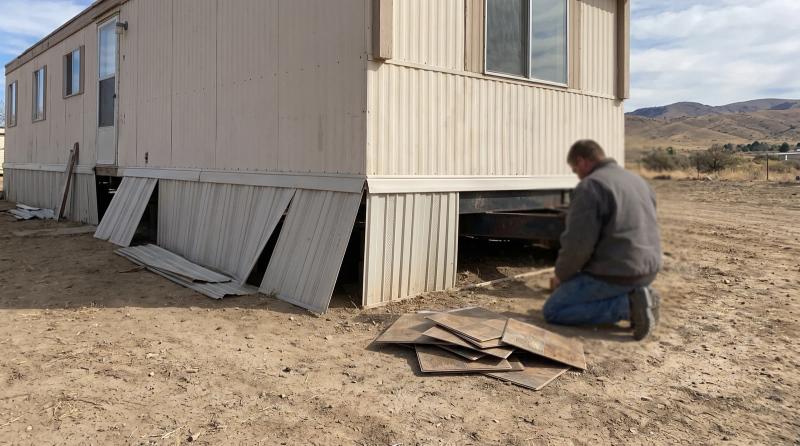
Look under the skirting before you ask for quotes. Tie-downs, piers, a porch slab or an old septic line all change what the cleanup takes.
Keep kids and pets away from the demolition site while work is going on. Loose nails, sharp metal and open piers are easy to get hurt on.
Don't burn the debris to save on hauling. Burning old siding and insulation is a fire hazard, and it can send asbestos into the air.
Quick tip: Call the utilities the same week you file. Waiting on a disconnect is one of the easiest delays to avoid.
Scrap helps a little. These homes hold a lot of metal. The steel frame, axles and aluminum siding have scrap value. How much it offsets the cost depends on how much metal is in the unit and what scrap prices are doing at the time.
What moves the cost up or down?
The cost comes down to a few things:
- Size: A double-wide is more house and more debris to haul than a single-wide.
- Asbestos: If testing finds it, abatement adds cost.
- Site and access: How easy it is to get equipment in and debris out.
- Add-ons: Alterations like a built-on porch, deck or carport mean more material to take down.
Compared with a site-built house, a mobile home usually has less under it. There's often no basement, just piers, tie-downs and skirting. That's part of why home demolition on a single-wide or double-wide can be a lighter lift than tearing down a house, though the asbestos and paperwork steps still apply.
What's usually included:
- County paperwork and inspection coordination
- Teardown labor and equipment
- Debris hauling and disposal
- Scrap metal recycling, which can offset some cost
- Basic site grading
What might cost extra:
- Asbestos abatement
- Septic system removal
- Concrete foundation or slab removal
- Heavy grading or fill dirt
Here's who usually handles each part:
| Task | Who usually handles it |
|---|---|
| Paperwork with the county | Your contractor, or you |
| Asbestos testing and abatement | A certified inspector and a licensed abatement company |
| Utility shutoffs | Each utility, after the owner calls |
| Title | The owner, at the DMV |
| Teardown, hauling and debris removal | The crew doing the teardown |
When you compare demolition services, ask what each quote includes. Some leave out hauling, grading or the county paperwork. Check the licensing and insurance of any residential demolition services you talk to.
Many residential demolition services will handle the county filing for you, so ask up front. And ask whether the crews you're comparing bring in their own abatement company or expect you to hire one.
If you've got an old home that needs to come down in the Treasure Valley, Top Shelf Junk Removal and Demolition can walk you through the process. We handle the permit application and utility disconnects, then the teardown, hauling and cleanup. Ask for a free estimate when you're ready.
Frequently asked questions
How much does it cost to tear one down?
It depends on size, asbestos, access and what sits under the home. Scrap metal can offset part of it. A free estimate is the only way to get a real number for your lot.
Who files the paperwork?
You can file with the county yourself, or your contractor can do it. Either way, the owner usually handles the utility calls and the title.
Can I tear it down myself?
It's not a good idea. Asbestos rules, the size of the frame and the heavy equipment make this a job for licensed pros. One wrong move with asbestos can cause a real health hazard and legal trouble.
What happens to the title?
Related reading: Concrete Slab Demolition: Can You DIY It, or Should You Hand It Off? and Chicken Coop Removal in Boise: Dust, Wire and Old Posts.
Usually you'll turn it in at the DMV or show proof the unit was torn down, so check with the DMV on what they need. Keep the papers that show the removal was done, in case a buyer or the county asks.
Need Help With Mobile Home Demolition?
Top Shelf serves Boise and the Treasure Valley with professional junk removal, cleanouts, and demolition services.