
How Much Does Pool Removal Cost? What Drives the Price in Boise
By Eric Hinderager, owner of Top Shelf Junk Removal and Demolition · Updated
How much does pool removal cost in Boise? Learn what moves the price, partial vs. full removal, permits, and whether taking out your pool is worth it.
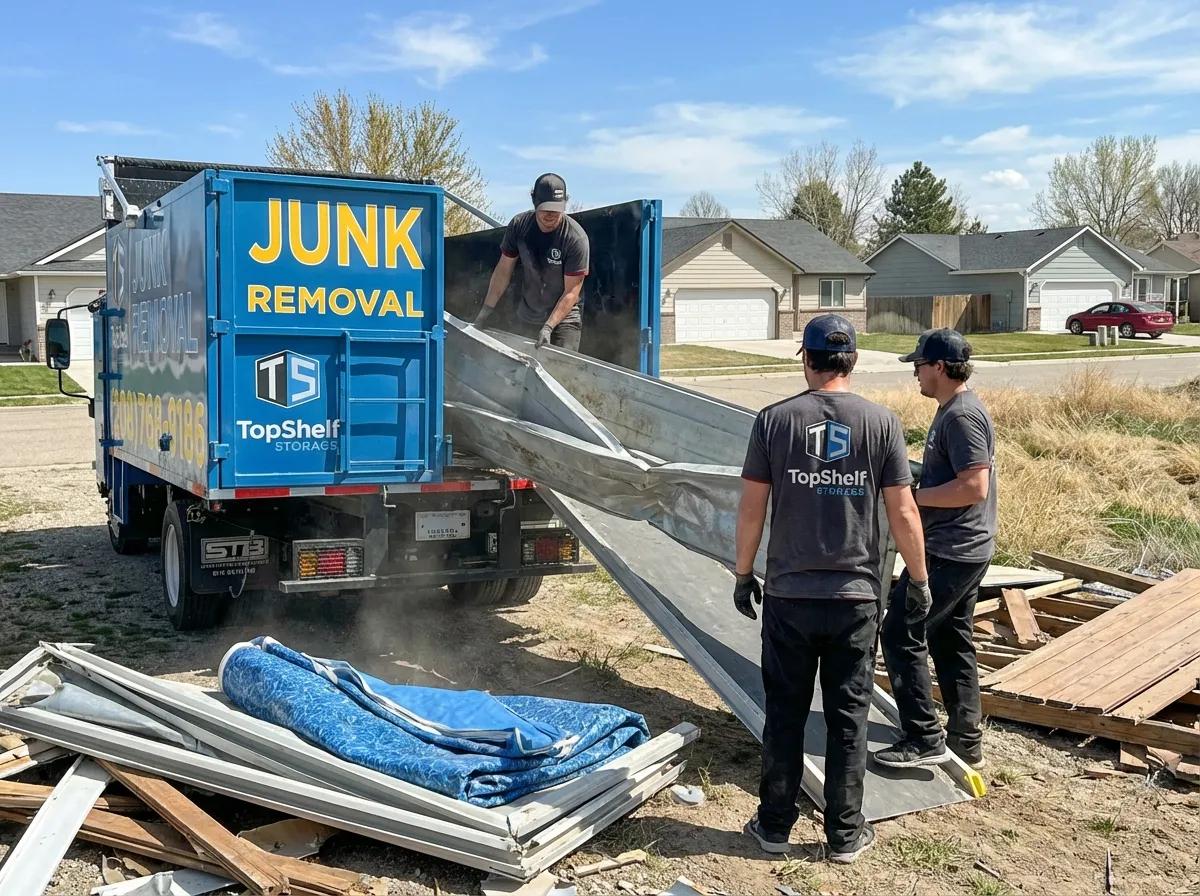
The answer to how much does pool removal cost in Boise comes down to four things: the pool's size, what it's made of, how much of it comes out, and how easy your yard is to reach. There's no single pool price, because no two jobs are alike.
A small fiberglass pool in an open yard is a very different job from a big concrete pool behind a narrow gate. Below, you'll see what moves the price, how the work goes, and how to tell if it's worth doing.
How Much Does Pool Removal Cost in Boise?
It depends on the job. Here's what pushes the price up or down, so you can read a quote with clear eyes.
What Moves the Pool Demolition Cost Up or Down
- Size and depth. A bigger, deeper pool has more concrete to break up and needs more dirt to fill the hole.
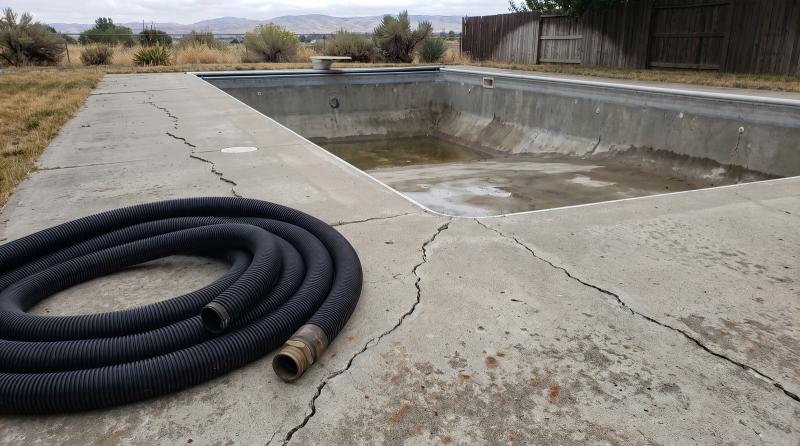
- Pool material. A concrete pool takes heavy breaking, and gunite does too. Vinyl liners come out easier, but the walls and frame behind them still have to go.
- Partial vs. full removal. Hauling out the whole shell takes more equipment, more loads and more fill.
- Access. Can equipment get into the backyard? Or does the crew have to work around fences, gates and trees?
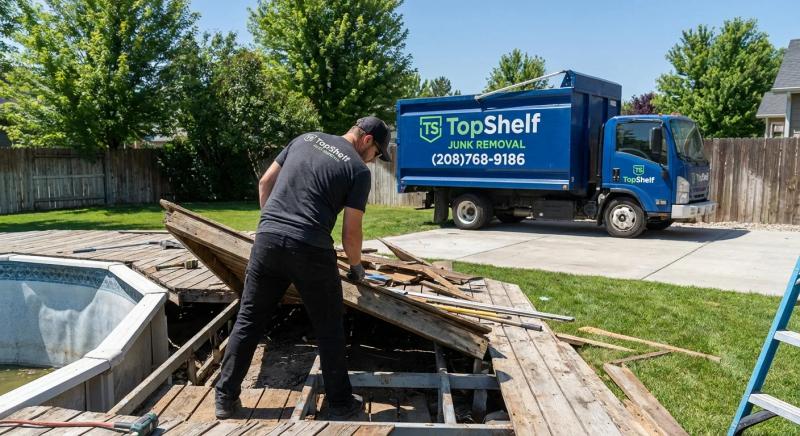
- Decks and extras. A concrete deck, diving board, slide or pool house adds time. Deck removal is often its own line on the quote.
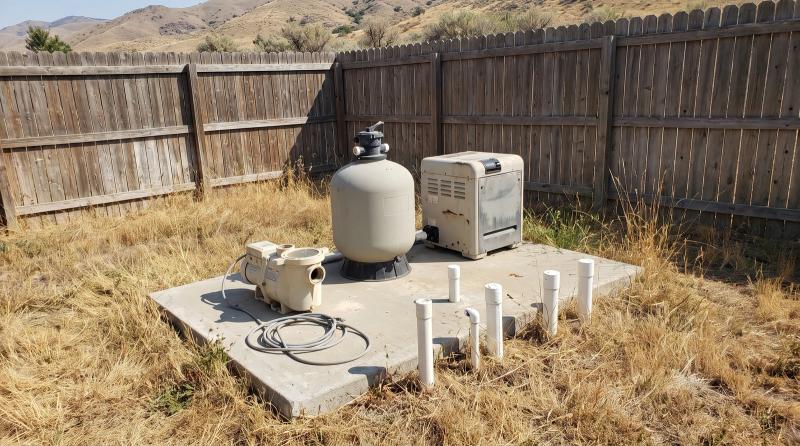
- Buried equipment. The pump, filter, heater and any lights have to be disconnected, and their lines pulled or capped.
- Fill dirt and compaction. How much dirt it takes, and whether your city wants the fill tested.
- Season. Dry ground in summer and early fall packs better than wet spring soil, so timing can change how the fill goes.
- Permits. Each city sets its own permit rules and fees.
A good quote should cover permits, demolition, debris hauling, fill, compaction and basic grading. Ask what it covers before you sign. Landscaping is usually separate.
Worth asking: Does the quote include hauling the broken concrete away, or just breaking it up? Some removal contractors price those two things apart.
You'll find plenty of numbers online, plus loose phrases like "low five figures." Most are national averages that don't know your yard, your soil or your city's rules. An on-site look is the only way to get a real quote for your pool.
What to Check Before You Book
A little prep makes the quote more accurate and the job smoother.
- Find your property survey. It shows where the pool sits and where lot lines and easements run.
- Think about buried lines. Gas for a heater, power for the pump and lights, and water lines all run under the yard somewhere.
- Measure the gate. Equipment needs a clear path. A wider gate, or a fence panel that comes off, can make a big difference.
- Decide what's next. If you might build on the spot later, say so up front. That one question often decides between a fill-in and a dig-out.
- Ask about the deck. Some people keep the patio around the shell and only take out what's below it. Others want it all gone.
Partial Removal vs. Full Removal: Which Pool Removal Fits?
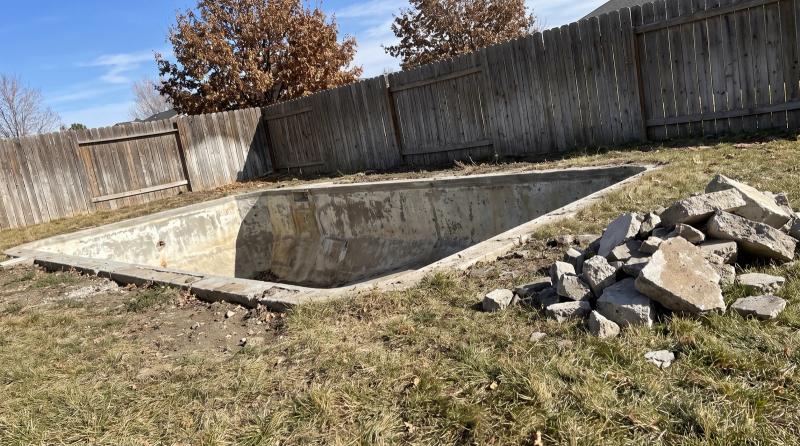
Most pool removals come down to choosing between two options. A partial fill-in is the simpler job, with less equipment and less hauling. Full removal takes the whole shell out of the ground, so nothing stays buried in your yard.
How a Fill-In Works
A partial pool removal leaves the bottom of the shell in place and buries it.
- The pool is drained.
- The top part of the pool walls is broken down.
- Holes are punched in the floor so water can drain.
- The pool is filled with clean dirt and packed down.
- Topsoil and sod or plants go on top.
Pros: Less work, faster, less mess. Cons: You may not be able to build on that spot later. You'll also likely want to tell buyers about it when you sell.
How Full Pool Removal Works
The whole pool comes out of the ground.
- The pool is drained.
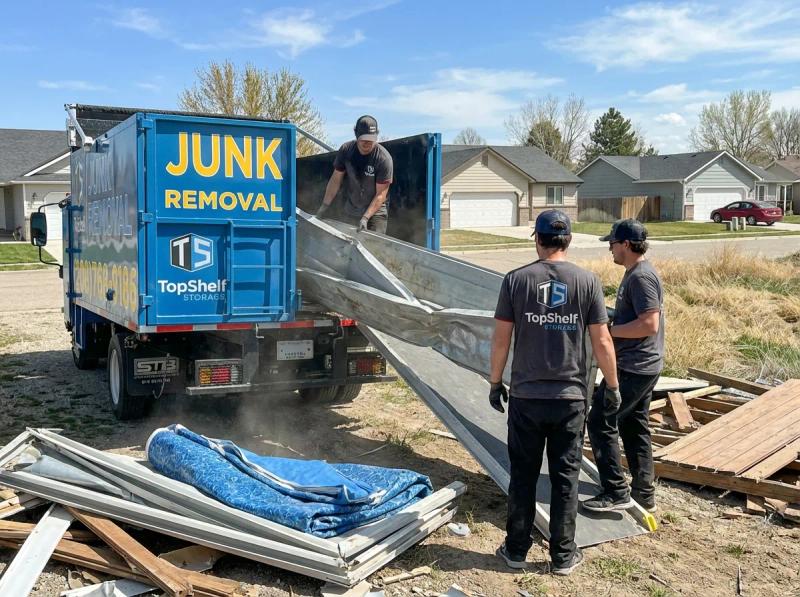
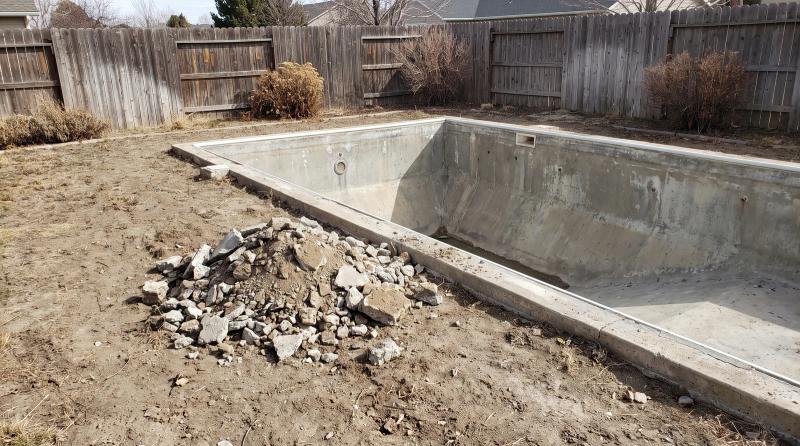
- All the concrete or gunite is broken up and hauled away. This is where most of the demolition happens. Vinyl walls and steel frames come out too.
- Plumbing and power lines are pulled out.
- The hole gets backfill, packed down in layers.
- Topsoil and landscaping finish the yard.
Packing the fill in layers matters. If the dirt goes in all at once, it can keep sinking and leave a low spot in the lawn.
Pros: Fewer limits on building later and a clean slate. Cons: More equipment, more hauling and more time.
| Partial removal | Full removal | |
|---|---|---|
| What comes out | The top of the walls | The whole shell |
| Building on the spot later | May be limited | Usually open |
| Tell future buyers | Plan to | Good to share records |
| Price | Lower | Higher |
Heads up: Wet ground, especially clay, doesn't pack well. Spring mud can slow down either kind of pool demolition.
Is Removing an Inground Pool Worth It?
Taking out an inground pool is a real construction project, not a weekend job. So why do people do it?
- Upkeep. The cost of chemicals, repairs, winterizing and water for a swimming pool adds up every year.
- Safety. Older pools without good fencing are a risk. Updating safety features costs money too, and some owners find removal makes more sense.
- Unused space. Idaho's swimming season is short. A lot of families find they barely use the pool. Pool removal gives that space back.
- Insurance. A pool can raise your homeowner's insurance. Removing it may lower that cost.
- Selling. Some buyers skip homes with pools. Taking one out before you list can widen your pool of buyers (no pun intended).
It isn't the right call for everyone, though. If your family swims a lot and the shell is in good shape, a repair or resurfacing may make more sense. Taking it out makes the most sense when the pool sits unused, needs big repairs, or stands between you and the yard you actually want.
A few mistakes come up a lot. Some people fill a pool without punching drain holes, so water collects and the ground goes soft. Others use mixed fill with rocks and junk in it, which settles over time.
Another one is skipping the permit. A fill-in that was never inspected can cause trouble when you sell, because buyers and lenders may ask for the paperwork. Keep the permit, the inspection results and a sketch of what's buried together in one folder.
Quick tip: Idaho law requires a call to 811 before digging, so buried utility lines get marked first.
Permits, Backfill and Inspections
In most Treasure Valley cities, pool demolition usually needs a few things:
- A demolition permit. Most cities ask for one. Check with yours.
- Utility shutoff. Gas (if the pool is heated), power and water lines have to be shut off the right way.
- Inspection. Some cities test the compaction of the fill.
- Disclosure. A partial removal is worth sharing with future buyers. Your agent can tell you what has to be disclosed.
Permit fees vary by city, so check with yours before you set a budget. Your contractor can often handle the permit application as part of the job.
What Happens to the Space?
- Lay sod. A common choice. You get usable yard back.
- Build a patio. Room to host friends without the upkeep.
- Plant a garden. Fresh topsoil over clean dirt grows things well.
- Add a shed or shop. Only after a full dig-out. A partial fill may not hold up a building.
Whatever you pick, give the new ground time to settle before you lay pavers or pour a slab.
Getting a Real Number for Your Pool
Every pool removal is different, so the price for your pool is too. Call (208) 593-2877 or ask for a free estimate. We'll look at your yard, walk through your options and give you a clear quote.
Frequently Asked Questions
How hard is it to take out a pool?
It's heavy demolition work. You need equipment to break the concrete, trucks to haul the debris and a lot of clean dirt to fill the hole. Most homeowners hire it out.
Does removing a pool increase home value?
It can, but not always. Some buyers see an old pool as a chore. A full dig-out is easier to explain to buyers than a fill-in you may need to disclose.
How much does above ground pool removal cost?
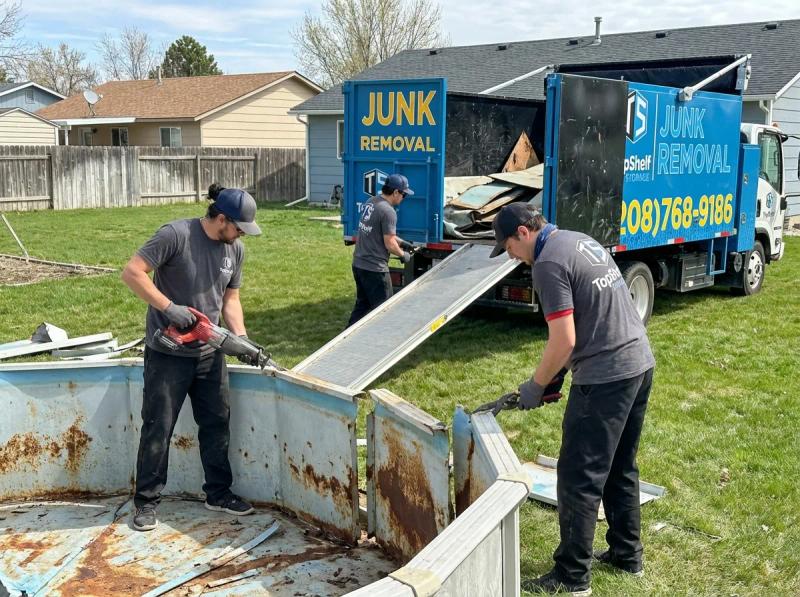
Usually less than an inground job, since there's no concrete shell to break. It's mostly taking it apart and hauling it off. Size, access and any deck still move the cost.
Can you scrap a pool for money?
The Demolition page covers what the service includes and how the estimate works.
Related reading: Concrete Slab Demolition: Can You DIY It, or Should You Hand It Off? and Chicken Coop Removal in Boise: Dust, Wire and Old Posts.
An above-ground pool's steel walls, frame or pump may have some scrap value. Concrete and dirt don't. Any scrap value is small next to the cost of the job.
Need Help With Pool Demolition?
Top Shelf serves Boise and the Treasure Valley with professional junk removal, cleanouts, and demolition services.