
Backyard Ideas After Pool Removal: What to Do With the Space
By Eric Hinderager, owner of Top Shelf Junk Removal and Demolition · Updated
Backyard ideas after pool removal, from lawn and gardens to a patio or shed, plus how long to let the soil settle and what's safe to build on.
The best backyard ideas after pool removal depend on two things: how the pool came out, and how long you let the ground settle.
Lawn, gardens, a patio, a shed or a play space can all work. The trick is to match the plan to what's under it and give the soil time.
Here's what Treasure Valley homeowners tend to do with the space after pool removal. There's also one key thing to know before you build on it.
What should you do with the yard after pool removal?
First, let it settle. Even well-packed fill settles a little in the first year. Don't rush it.
Plan your first season around that. It's the year for lawn, not for pouring a patio slab.
Think of that first season as landscape restoration. Get the soil, grass and drainage healthy before anything permanent goes in.
Water the area through the dry months. Top off any low spots that show up. After a full freeze-thaw winter, the ground tells you it's ready.
Keep an eye on the area left by the old pool walls. Dips there mean the soil is still moving. Add topsoil and keep watering.
Good to know: Old pool sites often stay softer near the edges, where the deck met the wall. Walk the edges after a hard rain and look for dips.
Sprinklers and utilities
The yard is torn up right after pool removal, so it's the cheapest time to do the hidden work. Extend irrigation lines, run power to a future shed corner, or fix that drainage problem you've been ignoring.
Trenching through a construction zone beats trenching through new sod.
Before anyone digs a trench, call 811 so buried gas, power and cable lines get marked. It's free, and Idaho law requires it before digging.
Think about where water goes, too. A yard that used to drain toward a pool needs a new path for runoff. Grade it so it slopes away from the house.
What moves the cost of the new landscaping?
The cost of what comes next depends on a few things:
- Topsoil. How much you bring in to level dips and give roots something good to grow in.
- Sod or seed. Sod costs more up front but gives you green right away.
- Access. A narrow side gate means more hand work with wheelbarrows.
- Hardscape. Pavers, concrete and walls cost more than plants and mulch.
- Sprinkler changes. Moving heads or adding a new zone adds labor.
Timing matters too. Spring and fall are easier on new grass than the heat of a Boise summer.
Backyard ideas after pool removal
Most transformation ideas fall into a few groups. Here's how they compare at a glance.
| Option | When to start | Best for |
|---|---|---|
| Lawn or ground cover | First season | Kids, dogs, quick green |
| Garden beds | First season | Food and flowers |
| Paved patio | After the first winter | Hosting and evenings |
| Shed | After it settles | Storage |
| Shop or garage | Full removal only | Real foundations |
Lawn and ground cover
Lawn. It's the default for a reason. Families with kids and dogs get the yard back right away. Sod works fine over settled soil.
Seed is the slower choice. It needs steady water to get going, but it fills low patches as it grows.
Would you rather not mow? Low creeping plants like clover or creeping thyme spread out and use less water than grass.
Create a butterfly garden with native plants
An old pool footprint is a big, open, sunny spot. That makes it a good place to create a butterfly garden.
Native plants make it easy. They're used to Idaho's dry summers and cold winters, so they need less water once they take hold. Showy milkweed, yarrow and rabbitbrush all draw butterflies and bees.
Add a few flat rocks for sunning and a shallow dish of water. Now you've got a quiet corner that mostly takes care of itself.
A sun-loving garden or raised beds
Boise's growing season is better than people think. With no trees shading it, that open space is a natural fit for a sun-loving garden.
Raised beds don't care what's deep down, either. An old pool footprint has plenty of room for a serious vegetable plot.
A paved patio and fire pit
Patio and fire pit. A great use of the space. Just wait through that first settling year for anything with pavers or concrete.
Tell your contractor it sits over an old pool. Then they can prep the base the right way. A slab over soil that's still moving can crack or sink.
Want something sooner? A gravel fire pit area with loose chairs can go in the first season. It can also move if the ground shifts.
Outdoor living zones
Big pool sites have room to split into outdoor living zones. You might put a seating area by the house, lawn in the middle and a garden at the back.
Zones help create a yard space that feels planned, not empty. They also let you build in stages while the soil settles.
Shop or shed
Here's where the removal type matters most. Read the next section before you plan anything heavy.
Building over it: partial vs. full removal
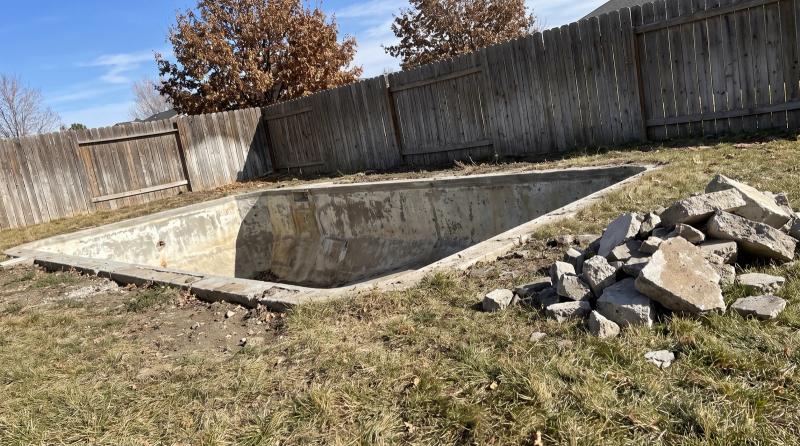
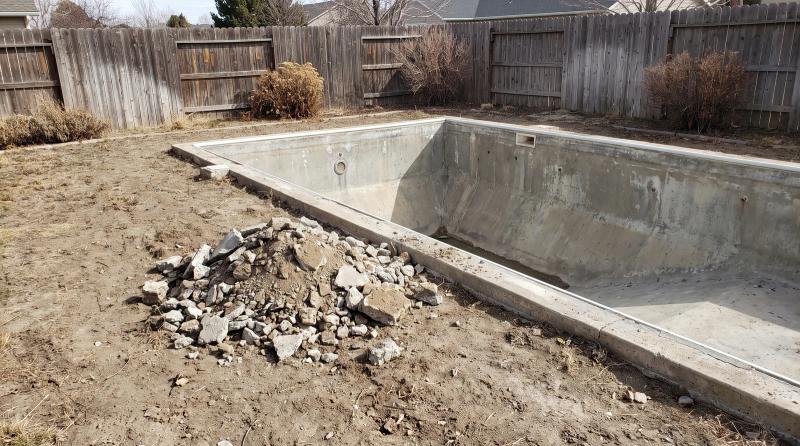
With a full removal, everything was hauled out. Clean fill was then packed in layers. That ground can generally hold future building.
With a partial removal (a fill-in), the old pool shell is still down there. Sheds and patios are usually fine.
Anything with a real foundation is different. A shop, garage or addition generally isn't a good idea, at least not without engineering work.
| Full pool removal | Partial pool removal | |
|---|---|---|
| What stays buried | Nothing | The lower shell |
| Lawn and gardens | Yes | Yes |
| Sheds and patios | Yes | Usually |
| Shop or garage | Generally yes | Not without engineering |
This is why the choice matters early. Demolition is the step where it gets locked in.
Rules differ by city, and some Treasure Valley cities want a permit before this kind of demolition starts. Check with your city's building department, and ask whoever does the work to handle the permit application.
Is there any chance of a future shop in that corner? Tell your pool removal company up front. They can suggest the right removal type, and that costs far less than digging it all back up later.
Worth asking: Ask how the soil was packed and what was left in place. Keep that with your house papers, since a future buyer or builder will want to know.
A few common mistakes to skip:
- Pouring a slab the first summer, before a full winter has passed.
- Planting deep-rooted trees over a partial pool removal, where roots can hit the old shell.
- Forgetting to tell the next contractor the yard used to hold a pool.
- Skipping the drainage fix, then finding a soggy patch the next spring.
- Topping the site with heavy clay, which drains poorly and starves new roots.
- Flooding new sod so the soil turns soft and sinks unevenly.
What are good backyard ideas after removing an above ground pool?
An above ground pool is a simpler project. There's no deep hole, just a flat ring where the pool sat.
After above ground pool removal, you're usually left with dead grass, packed sand or pavers. There may also be some old wiring for the pump.
Renovating yard patches like this comes down to a few steps:
- Rake out the sand or base layer, or save it to use under a patio.
- Loosen the packed soil so roots and water can get in.
- Level any dips with good topsoil.
- Seed, sod or plant.
Check under the sand for leftover pieces, like a foam pad, liner scraps or old pavers. Those should come out before you plant.
The grass around the ring is often fine. The circle in the middle needs the most help, since it went a long time without sun or water.
Quick tip: Have an electrician cap or remove old pump wiring before you dig. It's easy to forget once grass covers it.
There's little to settle, so the space is ready much sooner. Most of the backyard ideas above work right away.
The takeaway: give the soil a season to settle, match your plans to your removal type, and run any pipes and wires while the dirt's still open. Then enjoy the backyard. That's what the whole project was for.
Frequently asked questions
How long should the fill settle before I build?
Give it at least one full freeze-thaw winter after pool removal before you pour concrete or set pavers. Lawn and garden beds can go in right away.
Can I plant a garden where my pool was?
Yes. Raised beds work over any removal type. For beds planted right in the soil, ask your pool removal crew to top the site with good topsoil, not just packed soil.
How soon can I use the spot where an above ground pool was?
Usually right away. An above ground pool leaves no deep hole, so the backyard is ready once the soil is loosened and leveled. Lawn, a patio, a play area or a garden bed all fit.
Does Top Shelf handle pool removal?
Related reading: Concrete Slab Demolition: Can You DIY It, or Should You Hand It Off? and Chicken Coop Removal in Boise: Dust, Wire and Old Posts.
Yes. Top Shelf handles pool removal around the Treasure Valley and can help you choose full or partial based on your backyard plans. A free estimate is an easy first step.
Need Help With Pool Demolition?
Top Shelf serves Boise and the Treasure Valley with professional junk removal, cleanouts, and demolition services.