
How Long Does Pool Demolition Take in Boise? What Sets the Timeline
By Eric Hinderager, owner of Top Shelf Junk Removal and Demolition · Updated
How long does pool demolition take in Boise? Learn what sets the timeline: permits, 811 locates, draining, demo, haul-off, backfill and weather.
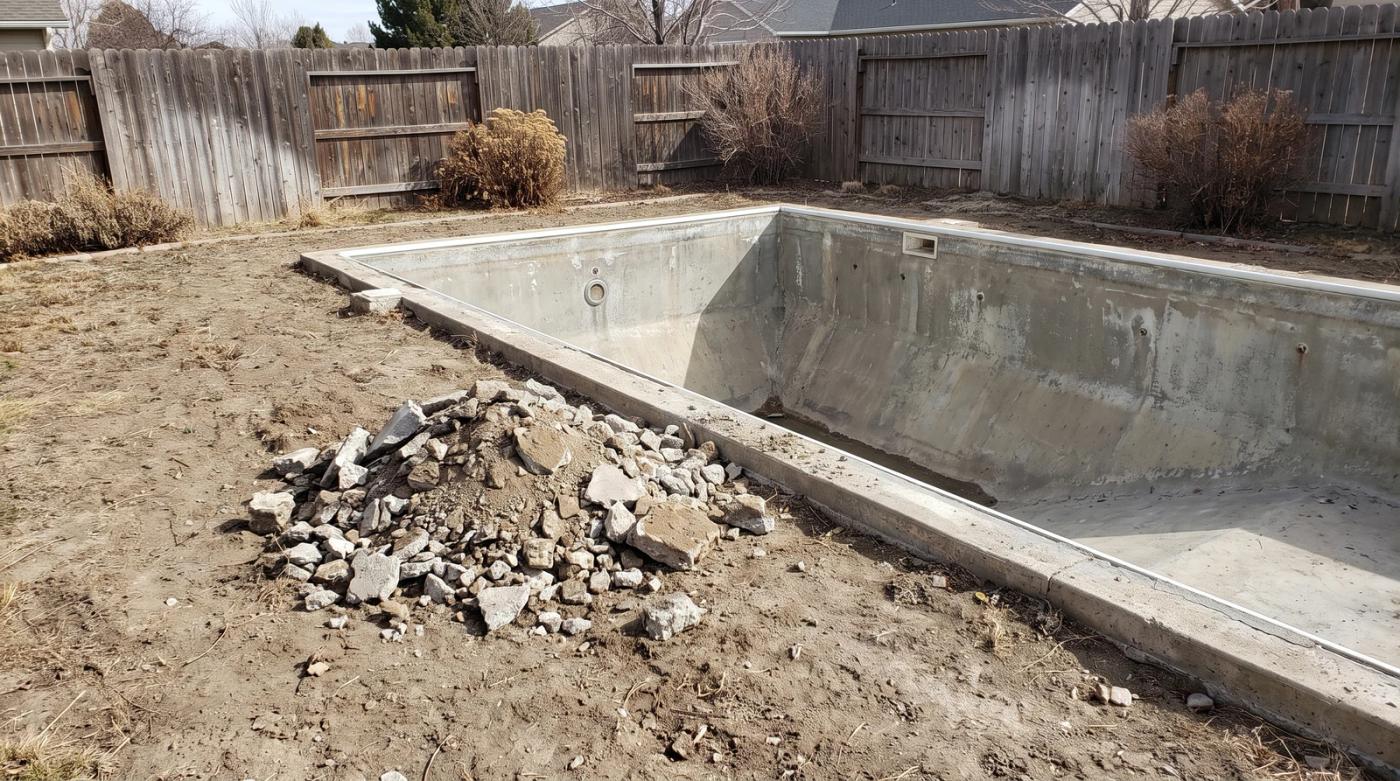
The answer to how long does pool demolition take is that the demolition itself is fairly quick, and everything stacked around it is not.
Breaking up the shell and hauling it away is the short part of pool demolition. Permits, utility locates, draining, inspections and backfill take up most of the calendar.
Here's an overview of each stage of pool removal and what pushes it longer or shorter.
How long does pool demolition take from start to finish?
There's no single number that fits every yard. The timeline depends on what the pool is built from, how big it is, how a machine gets into the backyard, how fast the city moves on the permit and what the weather does.
Answers you see online are rough guesses about somebody else's yard. Plan one stage at a time instead.
Most pool demolition work around the Treasure Valley follows the same order: permit, locates, draining, breaking and hauling, then backfill.
The demolition part is shorter than you'd guess
Once the water's gone and equipment is in the yard, an inground pool comes apart quickly.
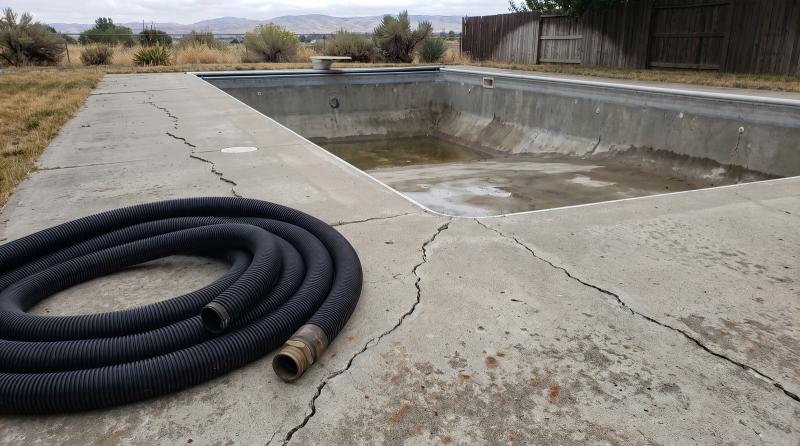
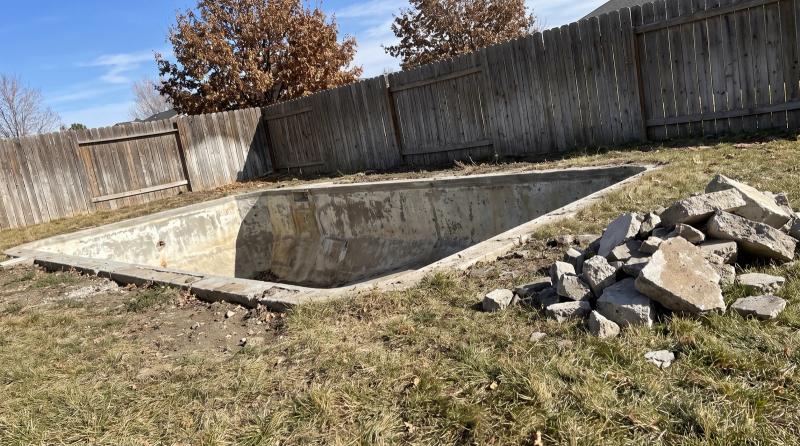
A partial demolition on a typical gunite pool means punching drainage holes through the bottom, breaking the top of the wall down into the shell, then backfilling and compacting. It's the quicker of the two options. How long it takes depends on the size of the pool, how thick the shell is, and how easy access is for a bobcat or mini excavator.
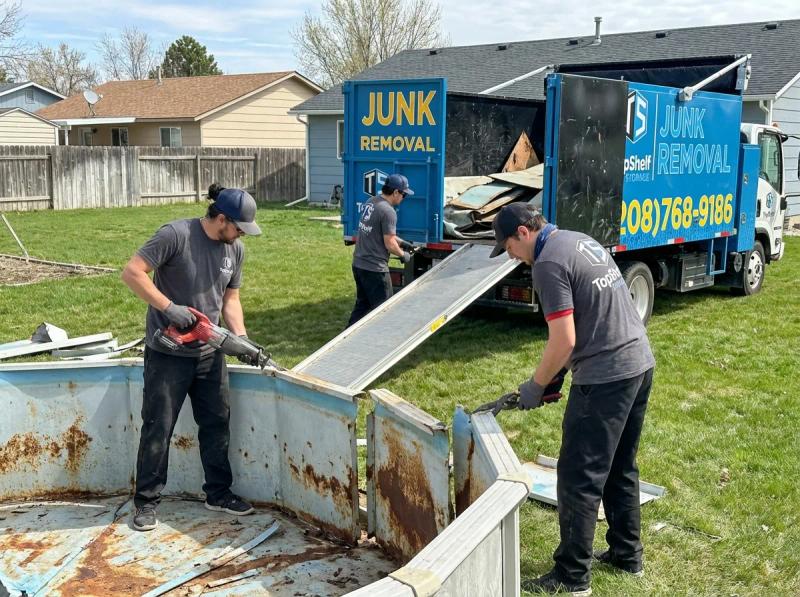
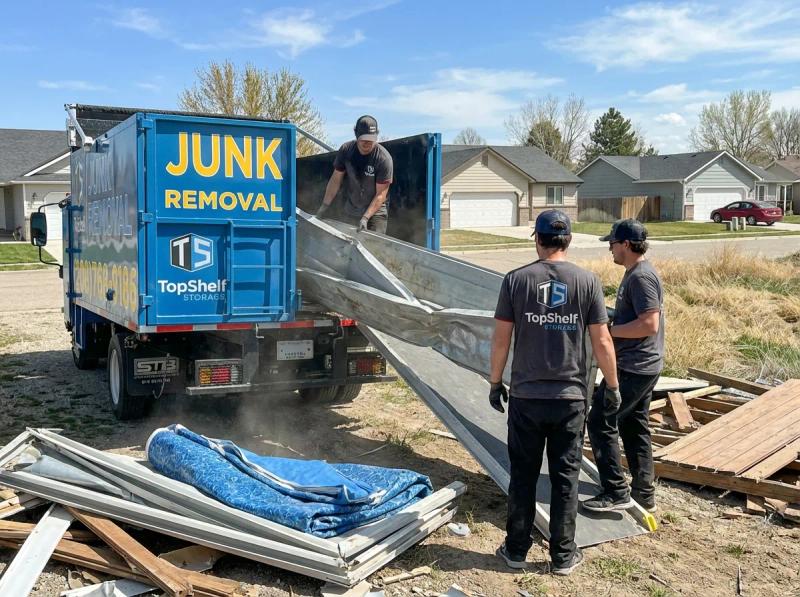
Full pool removal takes longer. Every piece of concrete and rebar comes out, which means more loads of construction debris hauled to the landfill, scrap steel taken to a metal recycler, and clean fill dirt trucked back in. That deeper pool removal excavation leaves a bigger hole, so backfill grows too.
Vinyl liner pools are the quickest of the bunch. Fiberglass pool shells move along too, as long as the shell can be broken down and walked out without taking a section of your fence with it.
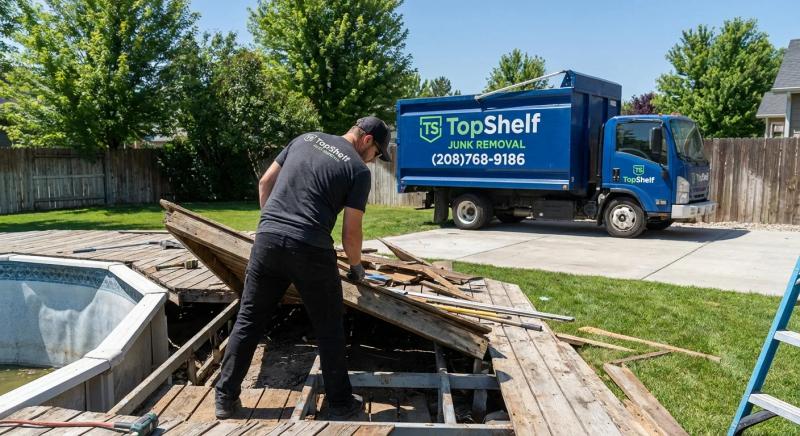
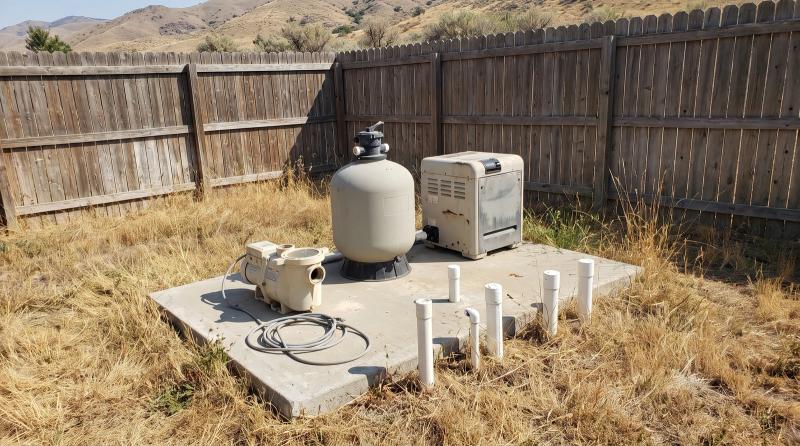
Before demolition, pool equipment has to be dealt with. Crews remove the pumps, filters, heater and plumbing once the gas and electric services are shut off. Pavers or a poured deck around the edge mean more breaking and hauling.
What stretches out the pool demolition process
From first call to finished yard, most of the time goes to scheduling and paperwork, not labor.
- Permit approval. Boise, Meridian and Nampa each run their own process. Turnaround depends on the project and how backed up the counter is.
- Utility locates. Call 811 and wait the two working days. The gas line to the heater, the pool's electrical run and your sprinkler mains all get marked before a bucket touches dirt.
- Draining. Getting the water out of the pool is its own small project. The chemistry has to check out first, and the pace depends on the drain setup and where the water is allowed to go. Check with your city before any water heads for the street or a storm drain.
- Inspection. Some cities want eyes on the open pool shell before it gets filled. That's a scheduled visit, not a quick phone call.
Worth asking: Before you book anything, call the permit office and ask, "How long does the review take right now?" That answer shapes the rest of your pool demolition schedule.
Quick tip: If you're planning to sell, pull the permit and hang onto the final inspection paperwork. Buyers and their agents can ask for it, and a documented pool removal holds up better at closing than your word.
A realistic schedule for swimming pool removal
Your yard might move faster at one stage and slower at another, but the order stays the same.
| Stage | What's happening | What drags it out |
|---|---|---|
| Permit and utility locates | Paperwork goes in, 811 marks the yard | A busy permit counter, missing details |
| Draining the pool | Slow discharge once the chemistry checks out | A large pool, a slow drain setup, rain |
| Demo and haul-off | Breaking concrete, loading debris, pulling equipment | Full removal, a thick shell, tight access |
| Backfill and grading | Clean material placed in layers, compacted, graded out | Wet or frozen ground, a deep pool |
One thing swings the demo days more than anything else: how a machine gets back there. A wide side yard with a gate that comes off its hinges is a very different pool demolition than a narrow gap between the house and the neighbor's fence.
If the only way in is across the driveway, plan where the truck will sit while it's loaded, and ask about protecting the driveway from heavy equipment.
Retaining walls, sheds, decks or trees close to the pool slow things down too, because the machine has to work around them.
Does a partial fill speed up the filling process?
Yes. Just not as much as people hope.
The savings come out of haul-off. Less concrete removal means fewer truck trips and fewer hours. On a mid-size pool that can make a real difference in cost, and it buys back a little time.
What you don't skip is the permit, the locates, the drain or the compaction. Those happen either way, and a pool demolition crew still punches through the floor so water can drain out of the buried shell. The filling process still needs clean material placed in layers and packed down so the yard doesn't sink later.
What goes back in matters too. Clean fill without sod, roots or trash packs down better than mixed debris. The size of the hole sets how much fill gets trucked in, and a deeper hole means more layers to compact.
If the spot is going back to lawn, a layer of topsoil on top gives grass roots something to grow in. Packed backfill on its own is hard on new sod.
Short version: partial is cheaper and faster, while complete demolition is cleaner if you ever want to build there, and it's simpler to disclose when you sell. If a garage, addition or other construction might go on that spot someday, plan to remove the whole pool shell.
How weather and construction season affect the schedule
Spring is the sneaky one. Treasure Valley clay holds water, and a wet April yard turns into ruts the second a bobcat rolls across it. We'll still do the work. We might just wait several days after a good rain instead of tearing up your lawn. A muddy site is also harder to compact the right way.
Deep winter is a different problem. You can't properly compact frozen fill, and frost in the ground makes for uneven settling once it thaws. That's how a soft spot shows up where the pool used to be, a couple of summers later.
Late June through October is the good stretch. Dry ground, workable dirt and enough season left for grass or gravel to settle in.
Catch is, everybody wants that same window. It's peak construction season, and calendars for demolition services tend to book up early. If you're thinking about a fall pool removal, calling early is a good idea.
Heads up: Final grading matters as much as the demo. Once the old pool site is filled and packed, the surface should slope away from the house so rain doesn't sit against the foundation.
Bottom line
The machine work is the short part. The calendar around the pool is the long part.
Planning a pool demolition around a hard deadline like a listing or a party? Build in plenty of time beyond the demo itself and you'll be in good shape.
Want a real timeline for your project? Give us a call at (208) 593-2877. Top Shelf can handle the permit application for demolition work and walk you through the process with honest dates instead of a guess.
Frequently asked questions
How long does it take to take down a pool?
Breaking and hauling is the short part of the pool demolition. The timeline depends far more on permits, utility locates, draining, inspection and backfill.
How much does it cost to demo a pool?
There's no flat answer. Cost moves with the pool type, partial or full pool removal, how much decking comes out, how easy it is to get equipment in, how much material gets trucked back and the permit. A free on-site estimate is the way to get a real number.
Does removing a pool decrease home value?
It depends on the buyer and the neighborhood. Some buyers want a swimming pool and some see a pool as upkeep. What helps at sale time is a permitted, inspected job with paperwork you can hand over.
How do I pick a demolition contractor?
The Demolition page covers what the service includes and how the estimate works.
Related reading: Removing a Deck From a House: Where All That Lumber Ends Up and Concrete Slab Demolition: Can You DIY It, or Should You Hand It Off?.
Look for a licensed and insured demolition contractor who pulls the permit and explains partial versus full pool removal in plain words. Ask the contractor, "How long does the work take on a swimming pool like mine?" Then ask what the services include, like equipment disconnects, driveway protection and site cleanup.
Need Help With Pool Demolition?
Top Shelf serves Boise and the Treasure Valley with professional junk removal, cleanouts, and demolition services.