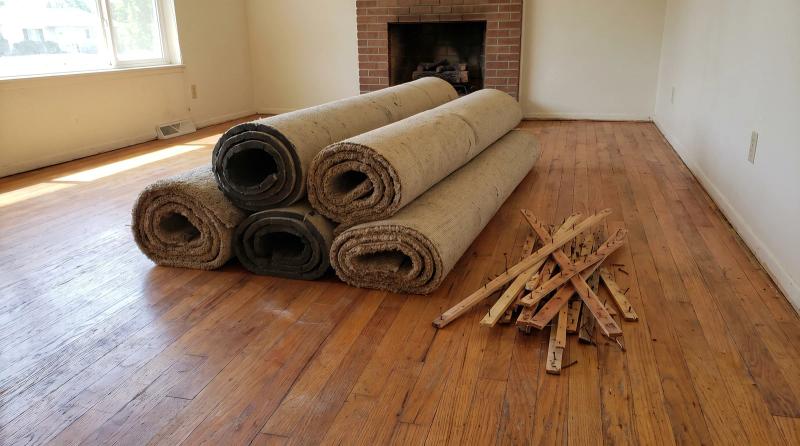

Glued Down Carpet Removal: Why Carpet on Concrete Takes Longer
By Eric Hinderager, owner of Top Shelf Junk Removal and Demolition · Updated
Glued down carpet removal on a concrete slab: how to cut and pull it, the tools that get the glue off, and what moves the cost up or down in Boise.
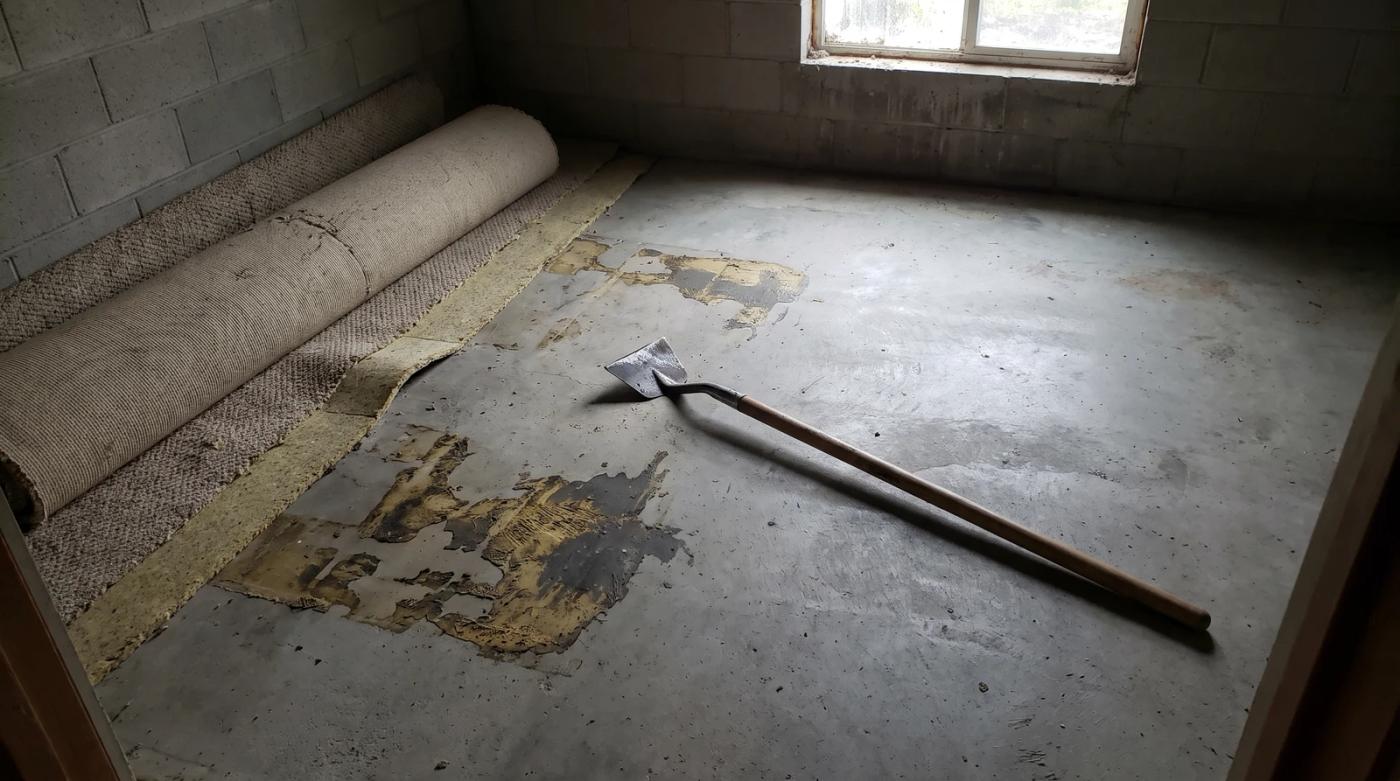
Glued down carpet removal on a concrete slab takes longer than pulling carpet off tack strips, because the adhesive and bonded pad stay behind after the carpet comes up. The carpet is the easy part. Scraping the glue and subfloor residue off the slab is what eats the time and drives the cost.
Here's how to tell what you've got, the tools that work, what moves the cost around the Treasure Valley, and when it's worth handing off.
Why glued down carpet removal takes longer
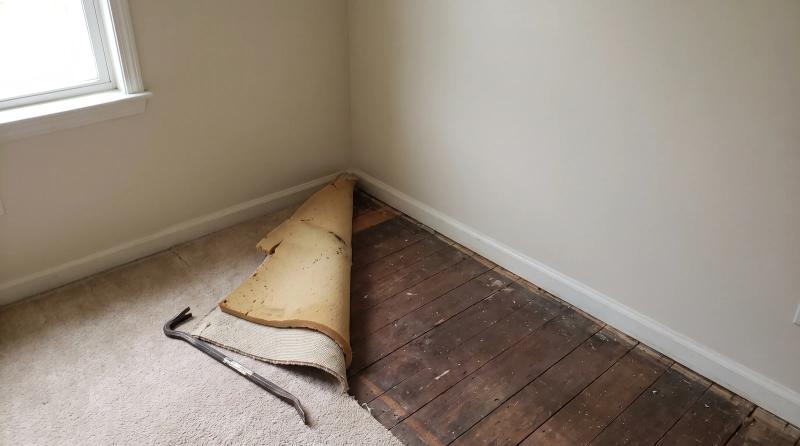
A lot of houses in Boise, Meridian, and Nampa have tack strips around the edges with a loose foam pad underneath. Grab a corner with pliers, pull, and the whole sheet releases. Staples come out with a scraper.
Glue down carpet plays by different rules. It shows up most in basements and older commercial spaces. The installer either glued the carpet straight to the slab with no pad at all, or glued the pad down and then glued the carpet to the pad. That second method is the one that ruins afternoons.
Pull on it and the carpet backing separates from the pad. The pad shreds. Now you've got a floor covered in foam patches and a layer of adhesive that's had years to cure, and it isn't coming off with a shop vac and good intentions.
Heads up: If the carpet is old, don't grind or power-sand the old glue. Some black and dark-brown mastics used in older buildings contain asbestos, and grinding puts fibers in the air. Cut a sample, get it tested, and scrape wet instead of dry until you know what you've got.
How do you remove glued down carpet from concrete?
The short answer: cut it into strips, pull it up, then scrape what's left. Working in small sections goes faster than fighting the whole room at once.
Before removing anything, take off the transition strips at the doorways and move everything out of the room. You'll want clear floor space to roll and stack strips.
Cut a test square first
A quick test saves you from guessing. Take your knife, cut a two-foot square out of the middle of the room, and pull it up.
- Lifts clean off bare concrete? You got lucky. That's a straight pull.
- Foam left behind that scrapes off dry? Normal, and manageable with a decent scraper.
- Glue smears, gums up your blade, or stays tacky in July heat? You're dealing with heavily glued carpet. Budget real time, or make a phone call.
If you find something hard and brittle under the pad instead, it may be old tile adhesive from a floor that was there before the carpet. That's a different scrape, and the same asbestos caution applies.
Cut strips and pull
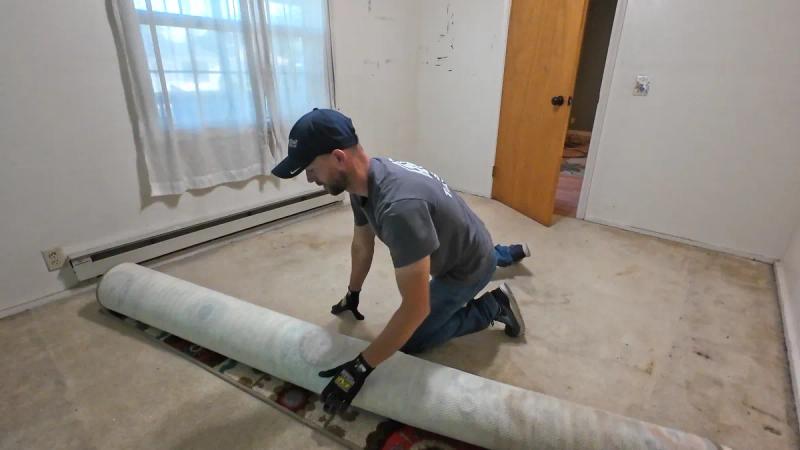
Once you know what you're dealing with, take your knife back to one wall. A utility knife or a razor blade in a holder does the job, as long as you swap blades often. Cut strips narrow enough to roll up and lift with one hand, then peel each one back toward you.
Cutting strips is slower at the start but faster overall. A full-width sheet of heavily glued carpet won't budge, and a damp one is too heavy to drag up the stairs. Narrow pieces also keep the backing from tearing off and staying stuck to the pad.
If the pad stays behind, cut strips through it with your scraper and lift what you can. Glue down carpet tiles come up the same way, one square at a time.
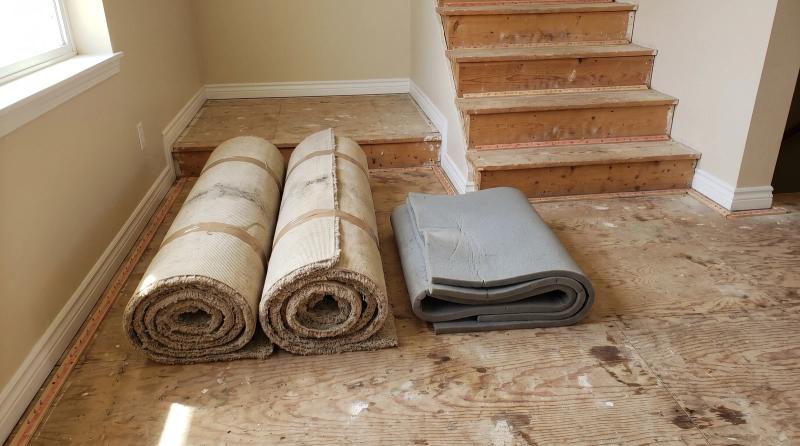
Quick tip: Bag or roll the strips as you go. A pile of loose carpet hides the spots you still need to scrape.
What's the best way to clean the adhesive off the slab?
Once the carpet is removed, sweep and vacuum so you can see what's left. For most homeowners, a long-handled scraper, a bucket of warm water, and a good pair of knee pads cover it. You don't need a garage full of carpet tools.
A long-handled floor scraper with replaceable blades does most of the work. Not a putty knife. An 8-inch blade on a steel handle you can put your weight behind. In tight corners and along the baseboard, use a paint scraper or a stiff spackling knife.
For rubbery glue, a citrus-based remover, left to soak as long as the label says, can soften it enough to push off in sheets. Soak one section while you scrape the next. Ventilate the room. Basements hold fumes longer than you'd think.
Good to know: Skip brake clean, paint thinner and other harsh solvents. Brake clean is flammable, the fumes build up fast in a closed basement, and it can leave a film your new floor won't stick to.
| Option | Best for | Trade-off |
|---|---|---|
| Hand scraper | Most rooms, dry or crumbly adhesive | Hard on your back and knees |
| Citrus remover that dissolves carpet glue | Rubbery, gummy adhesive | Needs soak time and airflow |
| Steamers and heat guns | Small stubborn spots | Slow across a whole room |
| Walk-behind scraper or powered pullers | Big open rooms | Heavy, and can gouge the slab |
Rental yards around Boise carry bigger tools too. A walk-behind scraper often takes self-scoring blades that slice the carpet as they push it up. It's faster across big open areas, but it's heavy, it chatters, and it'll gouge a slab if you fight it. For a small basement room, skip the rental.
Think about what's going down next, too. Luxury vinyl plank and engineered wood need a flat slab with no ridges, and tile is even pickier. Ask your installer how clean the slab needs to be before you buy flooring.
What moves the cost of removing carpet that's glued down?
The cost comes down to one question: is the job just hauling carpet out, or scraping a slab clean enough for new flooring? Here's what pushes a Boise-area job up or down:
- How the carpet was installed. Tack strips over plywood come up fast. Glue-down carpet straight on a slab takes more cutting and pulling.
- How stubborn the glue is. Adhesive that crumbles off dry is the low end. Adhesive that's still rubbery, or a pad glued under the carpet, is the top.
- How clean the slab needs to be. Pulling carpet and leaving the residue is one job. Scraping off every bit of adhesive for a new floor is another, and it sometimes takes two passes.
- Size and access. A big basement with a tight stairway means more trips with heavy rolls.
- Disposal. Carpet is heavier than people expect, and heavier still once the pad has picked up moisture.
Nobody knows the real number until somebody pulls a test square. A firm price over the phone, sight unseen, is a guess. Ask whether glue removal is quoted separately from removing the carpet itself.
Hauling it away
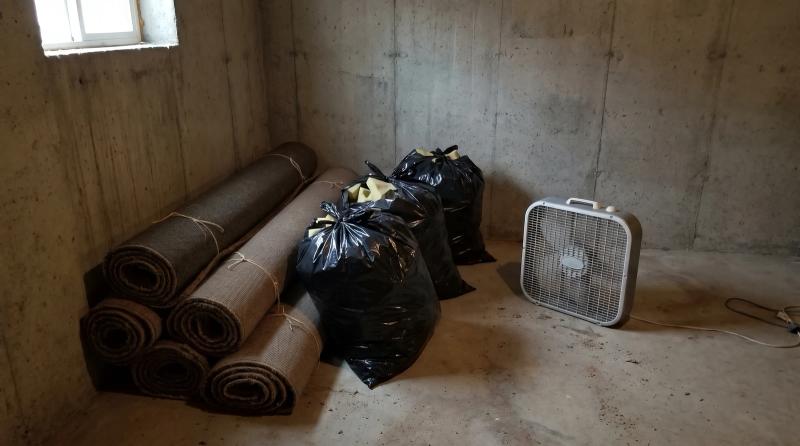
A whole basement's worth of carpet won't fit in your curbside cart. Ada County's Hidden Hollow Landfill takes it and charges a disposal fee, so check the current rates before you go. Tarp and strap the load, because loose carpet in an open bed is a ticket waiting to happen on the connector.
Recycling options are thin here. Post-consumer carpet has few local outlets, if any. Carpet with pet damage is landfill-bound either way, so check the slab for stains and odor before you cover it back up.
If you hire it out, ask whether disposal is folded into the quote, so there's no separate landfill run on your end.
Frequently asked questions
Does old carpet glue contain asbestos?
It can. If the carpet went in decades ago, get a sample of the adhesive tested before you scrape, sand or grind.
How do you get a glued down pad off concrete?
Pull the loose foam first, then scrape the rest with a long-handled scraper. If it smears, soak it with warm water or a citrus remover and come back once it softens.
Is scraping the slab worth paying for?
If a new floor is going down, it often is. Scraping is the slowest, hardest step of the whole job, and your installer will want the slab flat and clean.
Should you do it yourself or hire it out?
If your test square lifts clean, you can remove carpet yourself and keep the money. If the adhesive won't cooperate, paying for the labor usually beats a string of wrecked weekends and a slab your installer refuses to work over.
The Demolition page covers what the service includes and how the estimate works.
Related reading: Concrete Slab Demolition: Can You DIY It, or Should You Hand It Off? and Chicken Coop Removal in Boise: Dust, Wire and Old Posts.
Hauling out old carpet and pad is part of our junk removal work, and we cover the Treasure Valley from Boise out to Caldwell. Want a real number instead of a guess? Call us at (208) 593-2877 or text a photo of your test square, and we'll tell you straight which way to go.
Need Help With Carpet Removal?
Top Shelf serves Boise and the Treasure Valley with professional junk removal, cleanouts, and demolition services.