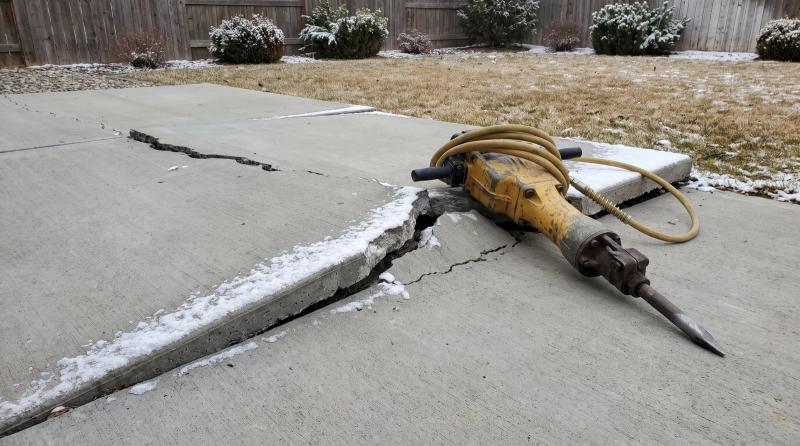

Concrete Removal: What About the Dirt Underneath Boise Concrete Work?
By Eric Hinderager, owner of Top Shelf Junk Removal and Demolition · Updated
Concrete removal: what about the dirt underneath? Boise owners learn what's under a slab, why the ground sits low, and what fill each new use needs.
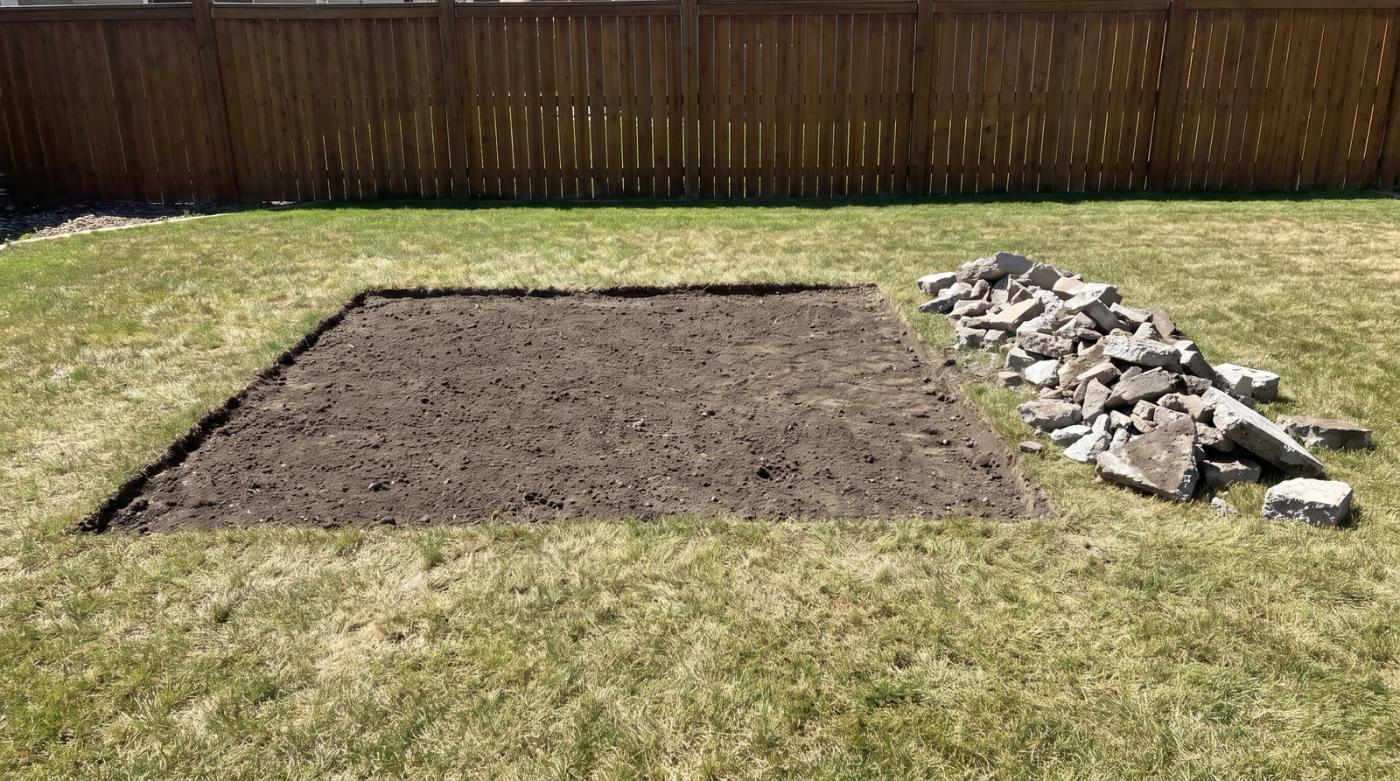
The question after concrete removal, what about the dirt underneath Boise slabs, has a plain answer: the ground sits low and packed hard, and what it needs depends on what goes in that spot next.
Plenty of people knock out their own back patio and get the concrete removal part handled, more or less. Then they're standing over a rectangle of chewed-up dirt sitting below the lawn with no clue what comes next.
That's the part almost nobody plans for.
Concrete demolition services help property owners remove old concrete, like tired patios or unwanted concrete slabs. Shopping for professional cement removal services? Ask what happens to the ground, not just the slab. That's where a lot of surprise cost hides.
What's under a concrete slab in the Treasure Valley?
Most residential slabs around the Treasure Valley sit on a layer of compacted gravel, and that gravel sits on native soil. Around here, southwest Idaho soil is usually silty loam with enough clay to hold water and enough rock to dull a shovel.
In older Boise neighborhoods you also get whatever fill the builder had lying around decades ago. Old brick, buried construction debris and rocks can all turn up for crews that help Boise property owners remove old patios.
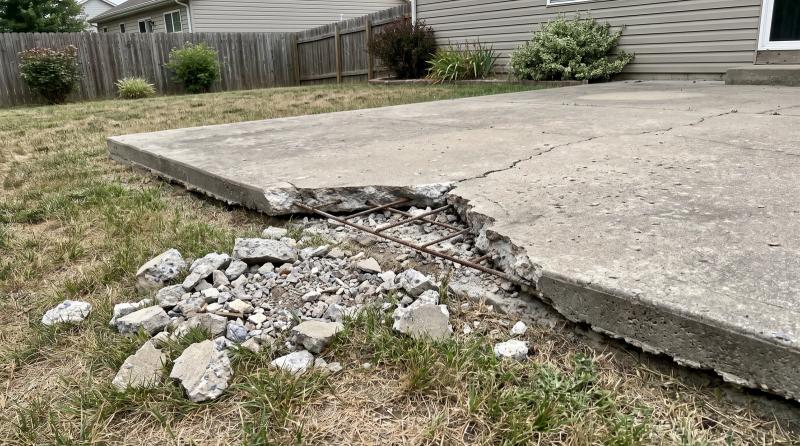
When the concrete breaks up, a good chunk of that gravel base comes with it. Pieces ride out stuck to the chunks, and the rest gets scooped up when the area is cleaned out.
Add it up and you're often short the full thickness of the slab plus a good part of its base once everything's on the truck and headed to the recycler. How deep that goes depends on how thick the slab was and how much gravel sat under it. That's a real hole, not a scuff.
Basement floors are their own job. A basement slab that's structural, carrying posts or tied into the footings, needs the building's support sorted out before it comes out.
Quick tip: Before anyone backfills, shoot a couple of photos of the open ground with a tape measure laid across it. If you're putting in grass, pavers, or a shed a year from now, knowing exactly how deep the old base ran keeps you from ordering short.
Why the ground on site sits low after concrete removal
People expect the dirt to come up flush with the lawn. It rarely does.
Depth is only part of it. The soil directly under an old slab has been squeezed flat for decades with no water or roots working through it. It's dense, dead, and usually a different color than the topsoil around it. Rake it smooth and it still reads as a scar for a season.
Then there's settling. Loose fill dropped in a hole sinks some more after the first few good soaks, and a Boise winter's freeze-thaw does its own compacting.
Fill exactly to grade in the fall and you can end up with a shallow dish there by spring. That's why a careful crew crowns the fill a little high and lets it settle, and why tamping dirt in thin layers beats dumping one big pile.
Concrete removal: what about the dirt underneath your Boise yard?
What you put in the hole depends on what's going on top. Here's how that breaks down on most concrete removal jobs, from Boise, ID concrete patios to Nampa, ID concrete driveways:
| What's going there next | What the dirt needs |
|---|---|
| Grass or sod | Fill dirt to a few inches below grade, then screened topsoil |
| Garden beds | Fill plus compost-amended soil, dug a little deeper |
| Gravel, bark, or rock | Fill and rough grade only, no topsoil |
| New concrete or pavers | Nothing. Leave it low and let the concrete crew build their own base |
| Shed or playset pad | Compacted fill in lifts, then gravel base |
Fill dirt, often raw excavated dirt screened for big clods, is usually the cheaper of the two, and screened topsoil costs more. What you actually pay depends on the supplier, how much you order and how far it has to be delivered.
To size an order, multiply length by width by depth, all in feet, then divide by 27 to get cubic yards. Run that math first, or you'll be making a second trip to the gravel yard.
Good to know: If you're pouring new concrete in the same footprint, don't fill anything. The new pour needs its own compacted base, so paying to haul dirt in and then paying somebody to dig it back out is money set on fire.
Sometimes dirt has to leave instead, like when new pavers need a deeper base. That's soil removal, so ask whether soil removal is in the quote. Dirt is heavy, and weight moves the cost.
Not every hole is a clean rectangle, though. The things that trip people up most:
- Old footings around the edges. Patios tied to a house or an old porch often have a thickened edge running deeper than the slab itself, a common detail in older Meridian, ID concrete work. That comes out too, and it leaves a trench along the perimeter that needs its own fill.
- Sprinkler lines. They love to run right along the slab edge, sometimes under it. Worth knowing where yours are before anyone starts swinging.
- Buried utilities. Call 811 before anyone digs. Near marked lines, crews may hand dig or use an air spade, a tool that utilizes supersonic compressed air to loosen soil without nicking what's buried.
- Tree roots. Big roots under an old slab are common in the North End and in the older parts of Nampa. Cut them clean, don't yank them, or you could end up with a leaning tree to deal with later.
Worth knowing too: broken concrete makes decent fill in the right situation, so you may not need to pay to haul all of it off.
Who handles the dirt: concrete demolition contractors or a landscaper?
Depends on who you hire and what you asked for. That's the honest answer.
A lot of professional cement removal services default to break it, load it, haul it, and leave the site raked out and reasonably level. That's the debris removal part, and it's what many quotes cover. Bringing in a load of topsoil and finish-grading it for sod is landscaping, and it usually shows up as its own line item.
Concrete demolition services exist to safely remove concrete structures. Some add concrete slab cutting services, since cutting concrete along a saw line helps keep the existing concrete next to it from cracking, and concrete sawing leaves a cleaner edge than a breaker. Grinding is different: grinding shaves down a lifted edge and doesn't take the slab out.
Excavating contractors handle deep cuts, basement digs and site grading, and concrete contractors pour new construction. Crews that help property owners remove old concrete sit in between: break it, remove debris, leave the hole ready.
Some removal crews will also spread fill and rough grade the spot, or bring dirt in so it's all one trip. Ask about that while you're collecting quotes, because it's a different job from finish grading. Want a laser-flat lawn or a designed bed layout? Hire the people who do that every day.
A tight side yard means more hand work than an open construction site, and that moves the cost. Anyone pricing concrete removal should be able to tell you in plain English where the ground will sit when they pull out of the driveway.
Got a patio, sidewalk, or old slab you're thinking about? At Top Shelf Junk Removal and Demolition, we help Boise property owners remove old patios, driveways or unwanted concrete slabs. Call (208) 593-2877, tell us what's going there next, and we'll talk through what the ground needs. No pressure either way.
Frequently asked questions
How can I fill voids under a concrete slab?
If the slab is staying and it's hollow underneath, that calls for slab lifting with grout or foam, not fill dirt. In Idaho yards, check for a downspout or sprinkler washing the base out first. Fixing that water source helps keep the hollow spot from coming back.
How do I remove a small amount of concrete?
A small pad comes out with a rented breaker, a pry bar and patience. For part of a slab, concrete slab cutting services give a clean line, and grinding can take down a raised lip. Steps tied to the house call for a crew that can safely remove concrete structures near a foundation.
Can I just pour concrete over dirt?
Related reading: Removing a Deck From a House: Where All That Lumber Ends Up and Concrete Slab Demolition: Can You DIY It, or Should You Hand It Off?.
Not well. Loose or soft dirt settles, and the concrete on it tends to crack, so a new pour goes on a compacted gravel base. That's why you skip the fill when new concrete is going in.
Need Help With Concrete Removal?
Top Shelf serves Boise and the Treasure Valley with professional junk removal, cleanouts, and demolition services.