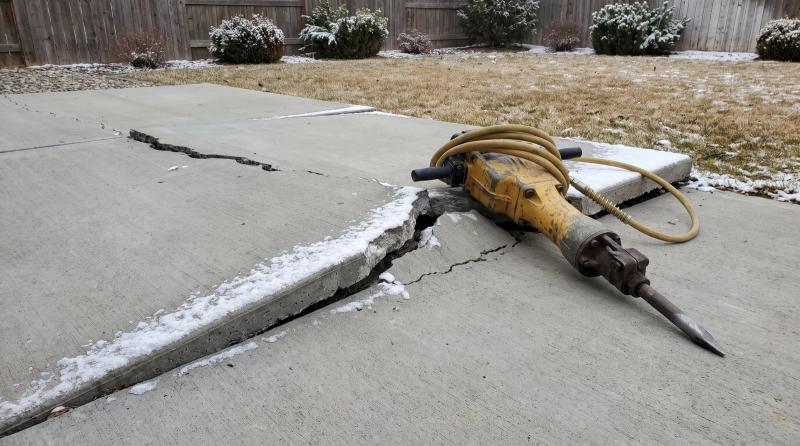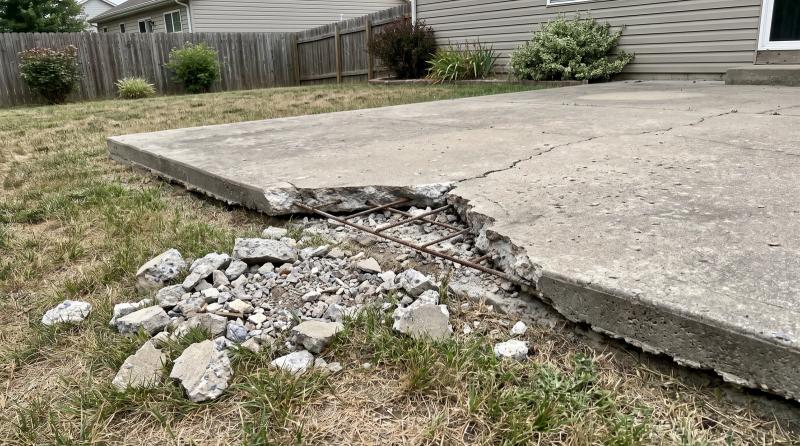

Concrete Removal Over Sprinkler Irrigation Lines in Boise
By Eric Hinderager, owner of Top Shelf Junk Removal and Demolition · Updated
Concrete removal over sprinkler irrigation lines in Boise: how lines get found before the slab breaks, what happens if one is cut, and how to time it.
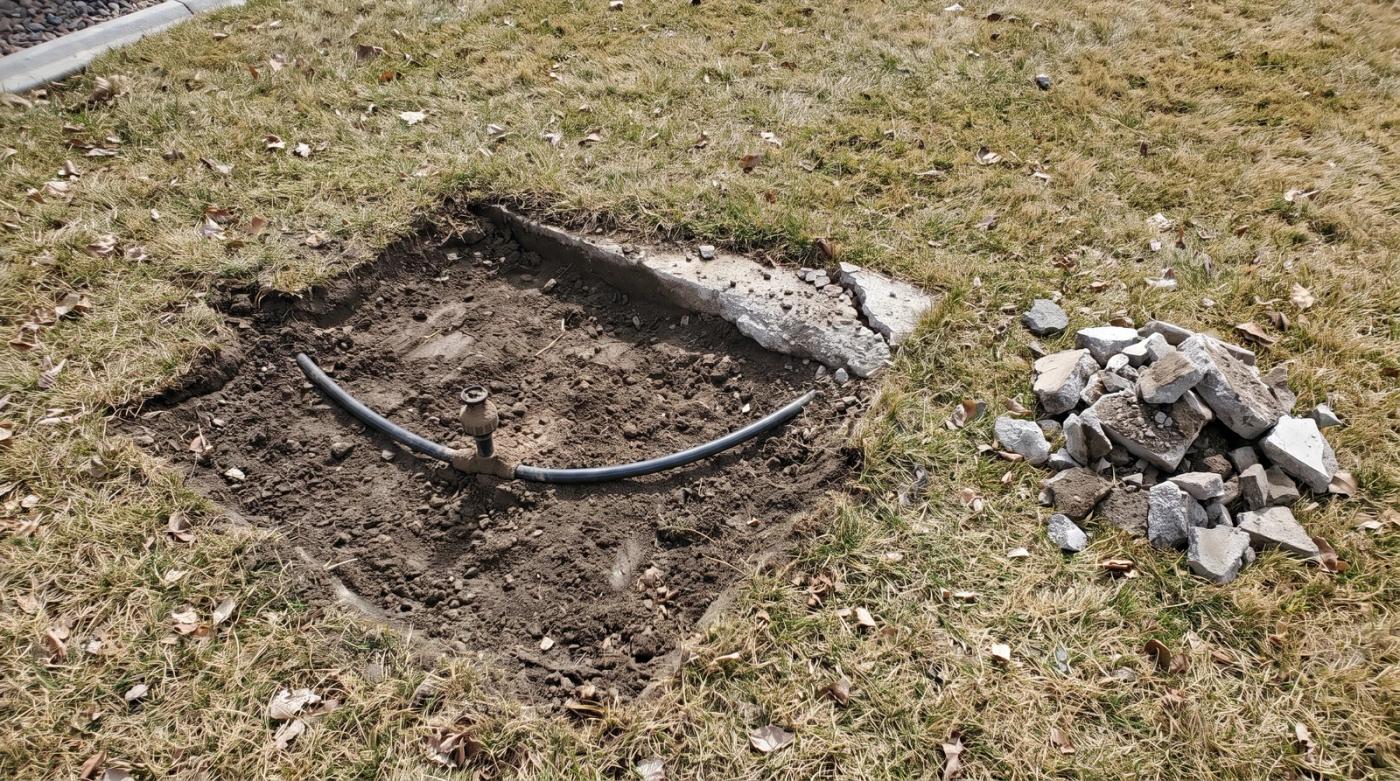
Concrete removal over sprinkler irrigation lines in Boise comes down to three things. Find the lines before the slab breaks. Work slowly near them. And deal with a break honestly if one happens.
Say you lift the last corner of an old patio. A poly line sits a few inches down, taking a bend right where the slab ended. Whoever poured that patio went right over it.
Why concrete removal in Boise so often hits sprinkler irrigation lines
A lot of the Treasure Valley sits on old farm ground with pressurized irrigation. Irrigation systems get added, moved and patched over the years.
First the house goes in, then the lawn. A patio, hot tub pad, RV slab or something similar comes a few years later. The easy move was to run the line under the new concrete, sleeved if done right. Plenty of people skipped the sleeve.
If you're on Nampa & Meridian, Settlers or Boise Project water, an irrigation supply line may cross your property. It's separate from the lines that feed your heads. Those lines are usually bigger and deeper, and harder to fix.
Spots that surprise people:
- Where a walkway crosses from the side yard into the back, often with a bend right under the edge
- Between the house and the fence, the natural path for a main line heading to the valves
- Along the front edge of a driveway, where a zone makes a bend and loops back
What we do before concrete removal starts
We call 811 (Dig Line in Idaho) any time the job goes past surface breaking. It's free. It takes a couple of business days.
811 marks utility-owned lines only: gas, power, cable, and city water to the meter. It won't mark your lawn lines or private irrigation. Those belong to you.
Quick tip: Run each zone the day before and flag every head near the concrete. Mark any spot where the heads hint at a bend, since pipe doesn't always run straight. Point out your valve boxes and the main valve too.
We walk the slab with you. Then we work the edges by hand or with a smaller breaker, not with equipment driven straight across. It's slower, but it beats a repair.
What happens if a line gets cut anyway?
A line can take a bend nobody expected. Or it can stick to the underside of the slab and come up with the concrete.
Many line repairs are small. Poly will bend a little, so there's often slack to splice in a coupling and clamps. PVC takes a coupling, primer and glue.
A repair bill depends on how deep the line is and how easy it is to reach. It also turns on whether it's one of the laterals that supply sprinkler heads or a sprinkler main. Plenty of homeowners fix a simple break themselves.
Here's what we do when we hit one:
- Tell you right then
- Expose both ends of the pipe
- Cap it so you can run your sprinkler system without flooding the yard
- Leave that section open and loosely backfilled
- Mark the spot so the repair is easy to find
Heads up: A mainline hit is different. Mainlines stay under constant pressure. A break on the irrigation supply side moves a lot of water fast. If we spot one first, we'll usually ask you to shut the main valve. Then you can book a company specializing in irrigation sprinkler repair for after we leave.
Is it safe to pour concrete over sprinkler lines?
It can be, if the line runs through a sleeve. That's a bigger pipe the line slides through, so it can be fixed later without breaking concrete. A bare line under a slab is the next person's problem.
Pulling a slab and putting something new there? Get the concrete out first, then do the irrigation work. If not, the fresh pipe can get wrecked.
Once the system is blown out for winter, a nicked line is usually a small hassle, not a mess.
If broken concrete stays onsite as fill, keep it off your irrigation runs. Pieces resting on a poly line can press down until the pipe starts to bend and pinch.
Top Shelf Junk Removal and Demolition does concrete removal around Boise, Meridian, Nampa and the rest of the valley. We're glad to walk the yard with you first. Call or text (208) 593-2877 for a free estimate.
Frequently asked questions
How much does it cost to remove a sprinkler system?
It depends on how many zones and heads there are and how deep the pipe runs. It also matters whether the pipe sits under concrete or lawn. Irrigation systems with long runs and lots of bends take more digging.
How do you drain a lawn sprinkler system?
Shut off the water to the system. Then open any drain valves, or have the lines blown out with compressed air. Low spots and bends can hold water, so a blowout is safer before a freeze.
Can you run sprinkler lines above ground?
Related reading: Removing a Deck From a House: Where All That Lumber Ends Up and Concrete Slab Demolition: Can You DIY It, or Should You Hand It Off?.
Yes, in some cases. Drip tubing and similar small lines often sit on the soil under mulch. Poly will bend around beds, but pipe above ground takes sun and freeze damage. That's why most mains stay buried.
Need Help With Concrete Removal?
Top Shelf serves Boise and the Treasure Valley with professional junk removal, cleanouts, and demolition services.