
What Is Behind Deck Ledger Board Lumber? Flashing, Rot, Siding
By Eric Hinderager, owner of Top Shelf Junk Removal and Demolition · Updated
Wondering what is behind deck ledger board lumber? Learn about the flashing, sheathing and rot you may find, and how to close up the wall after removal.
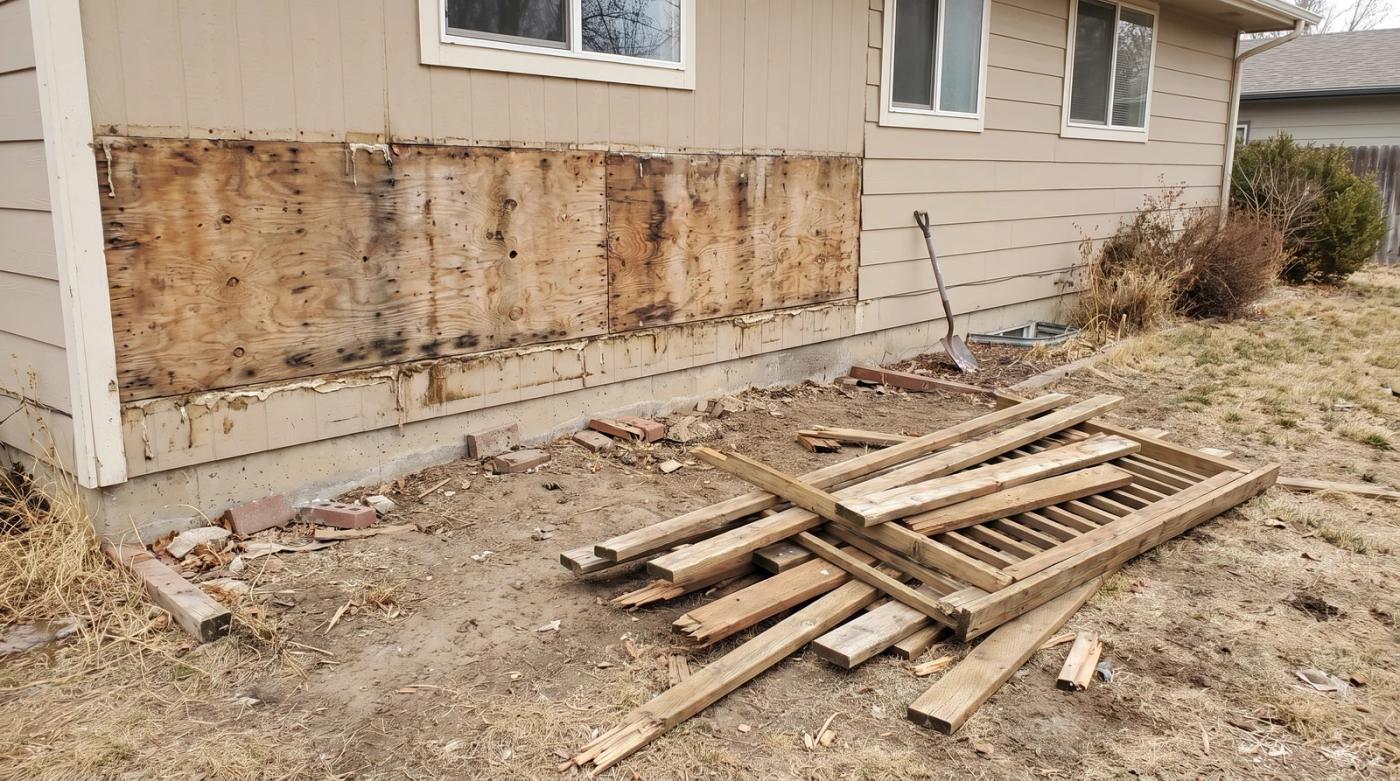
What is behind deck ledger board lumber on an attached deck comes down to four layers: flashing, house wrap, sheathing and the framing of your house. The deck ledger board sits on top of them. It's the horizontal piece of lumber that physically connects your deck to the building.
If the flashing was done right, you'll find dry wood when the deck comes off. If it wasn't, you'll find rot, and that changes the job.
What is behind a deck ledger board?
A ledger is any horizontal structural member attached to a building to carry a load. Here, the ledger acts as the connection point between the house wall and the deck's joists. Out at the far edge, a beam, another horizontal piece, sits on posts.
A deck ledger is bolted through the sheathing into the rim joist of the building. Because it's the lumber that physically connects your deck to the home, it takes the load of people, furniture and snow on that side. It passes that weight into the wall's vertical frame of studs and sheathing.
That leaves a seam right where water likes to run. Taking it apart is the easy part. What's behind the ledger is where these jobs get interesting.
From the outside in, you'll usually find:
- Flashing that sheds rain over and away from the seam
- House wrap, the weather barrier over the sheathing
- Sheathing, OSB or plywood nailed to the wall studs
- Rim joist, the framing the bolts bite into
Siding should be cut back so the ledger and its flashing sit tight to the sheathing. Bolting right through the siding traps water behind the board.
If you're rebuilding, the same stack goes back behind the new ledger: sealed sheathing, lapped house wrap, then new flashing on top.
Good to know: On vinyl-sided homes, a careful installer will remove vinyl siding where the ledger goes. Vinyl flexes, and a ledger bolted over it can loosen and let moisture in.
How flashing protects the wall behind the ledger
Flashing decides whether you find dry wood or rot. Its job is to protect the sheathing and framing from the water running down your siding, and a well-built deck often uses more than one kind.
| Flashing type | What it does |
|---|---|
| Z-flashing or drip cap | Sheds rain off the top of the board |
| Self-adhered flashing tape | Seals the sheathing around bolt holes |
| Back flashing | Sits behind the ledger and laps under the wrap above |
Order matters. The tape goes on first, so each connection point is sealed. The top flashing laps under the siding and house wrap above, so rain running down the vertical frame of the wall sheds out over the ledger.
Some crews call this a wall flash. Get the laps backward and the flashing funnels water into the house.
When ledger flashing is missing, water sits against the sheathing every time it rains or snow melts. Over years, that rots what's behind it.
Newer homes built with modern flashing details often come off dry. On some older homes, the flashing was skipped, and you may find dark, soft OSB or plywood. The damage can be a small soft spot, or it can run through a whole section of wall.
Home inspections, city inspections on a new deck and private deck inspections all look hard at this spot. Inspectors want flashing above the ledger, sound wood, and solid ledger fastening with bolts or structural screws, not nails. To them, any horizontal structural member attached to the home has to be flashed and fastened right.
Heads up: If you're selling, deal with a failing deck before you list, not after inspections turn it up. Rot found during home inspections can turn into a price concession, and how big depends on the damage.
What attached removal involves, from railings to substructure
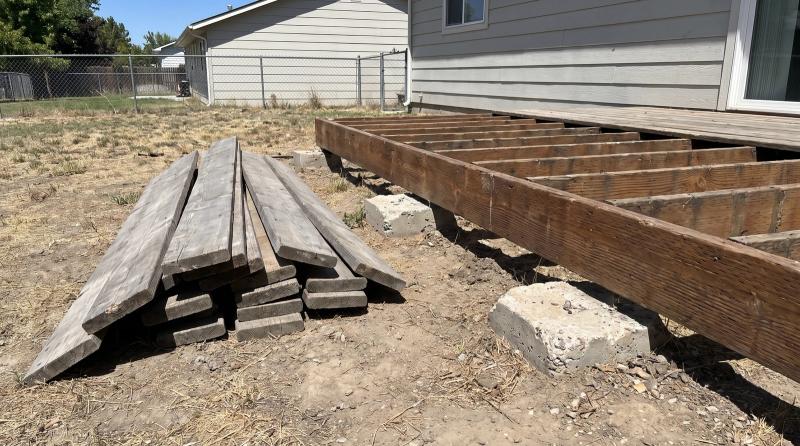
Deck components come off in this order, whether we're doing it or you're spending a Saturday on it yourself:
- Railings and stairs
- Decking boards
- Joists and beams, which takes down the deck frame
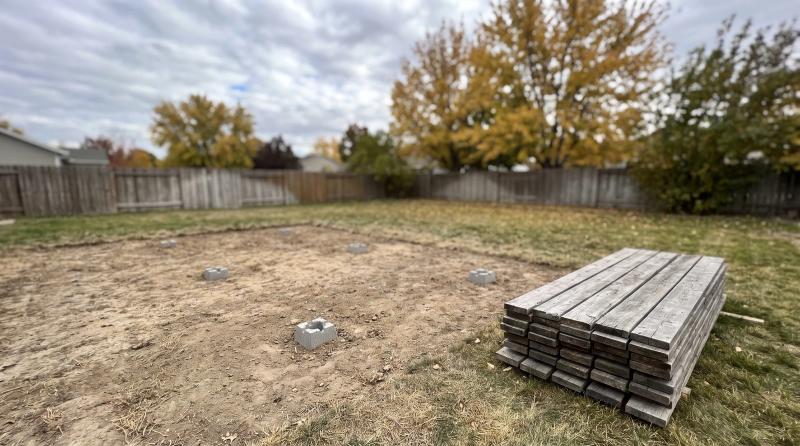
- Posts, pulled from the deck's foundation
- The ledger board, last, because it's still carrying load until then
Taking the substructure down in that order keeps the ledger from tearing loose under load and ripping sheathing off with it.
Once the ledger is pulled, you've got a raw stripe across the back of your house with a row of bolt holes in it. That stripe has to get closed up before the next real rain:
- Bolt holes sealed with exterior-grade sealant
- Soft or blackened sheathing cut out and replaced
- House wrap patched and lapped so water sheds down and out
- Flashing added where the old seam won't be covered right away
- Siding pieced in to match, or the whole run replaced if the match is hopeless
- Paint or stain on anything raw, because Idaho sun chews up bare wood fast
We handle the demo and the haul-off. Getting that wall sealed to protect the framing until siding goes back on is a step to plan for with whoever is doing the repair or rebuild. Matching old cedar lap siding is a siding contractor's job, and we'll say so.
Deck removal falls under our Demolition service. It's about getting the structure gone and hauled off, not repainting your home.
Where the wood and metal end up
Most deck framing is pressure-treated wood. You can't burn it, and it doesn't go into wood recycling. It typically goes to the landfill: the Ada County Landfill at Seaman's Gulch, or Canyon County's Pickles Butte landfill on the Nampa and Caldwell side.
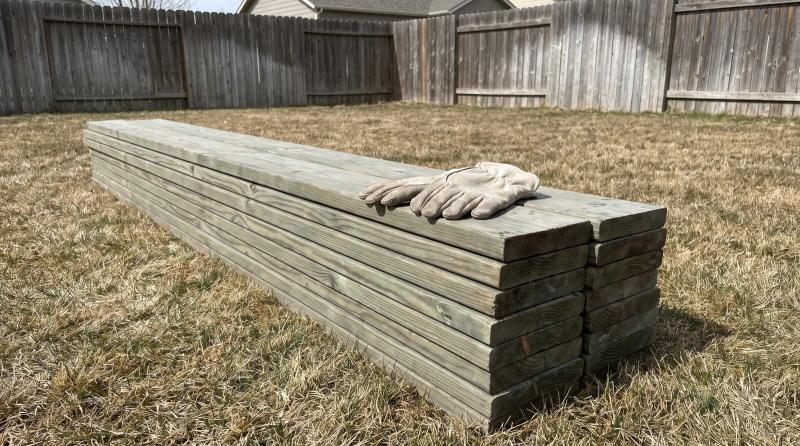
Metal handrails, brackets and joist hangers go to a scrap metal recycler. Composite decking is landfill material too. Clean, dry 2x6s worth saving can be set aside for reuse or donation.
What moves the cost when ledger flashing has failed
Nobody knows what's behind the wall until the deck is off, so here's what pushes the cost up or down:
- Height. A second-story deck takes more staging, and debris has to come down instead of getting dragged to the truck.
- How the ledger was attached. A clean, bolted ledger connection comes off faster than one nailed or buried behind siding.
- How much rot is behind it. A soft spot is a quick patch. Rot into the framing means more sheathing out and more time.
- Siding type. Crews can often remove vinyl siding panels and snap them back on. Older stained cedar or T1-11 is a coin flip, and sometimes the whole section gets redone so it doesn't look patched.
- Flashing. If you're rebuilding, new flashing goes in with the new ledger.
- Permits. Size, height and rebuilding plans decide whether the city gets involved. We handle the permit application for demolition work.
Should you repair it instead?
Sometimes. If the ledger is solid and only the walking surface is shot, a resurface is a much smaller job.
Look at the ledger and joists and ask: is this material right to keep carrying a deck? If the wood around the bolts is soft, split or black, it isn't.
Poking around the bolts with an awl or a screwdriver tells you a lot before anything comes apart. Firm and dry is a good sign. Soft and crumbly means it's time to plan for more.
From under the deck, look for dark streaks or staining on the wall below the seam. That's often a sign water has been getting past the flashing for a while.
Leaving a failing deck up because you're nervous about what's behind it doesn't help. If water's getting in, it's already getting in.
Bottom line
With an attached deck, you're opening a wall on your property, not just removing a deck. Plan for sheathing, flashing and siding, and get everything buttoned up as soon as the deck comes down.
Want a real number instead of a guess? Call (208) 593-2877 for a free on-site estimate, with a firm price before anything is touched. We do deck removal across the Treasure Valley, and we'll tell you if you don't need us yet.
Frequently asked questions
What does a deck ledger attach to?
It bolts to the band of framing at the floor line of the home, through the sheathing, with flashing behind and above it. The ledger acts as the main tie between the deck and the building.
Can you build a deck without a ledger board?
Yes. A freestanding deck carries its own load on an extra beam and posts along the house side, so nothing bolts to the building. It needs more footings but skips the ledger seam.
Can I use 2x8 for deck ledger?
Usually. Under the residential building code most cities adopt, 2x8 is generally the smallest deck ledger allowed, and it should be as deep as the joists it carries. Check with your city's building department first.
Can the old ledger be reused?
Related reading: Concrete Slab Demolition: Can You DIY It, or Should You Hand It Off? and Chicken Coop Removal in Boise: Dust, Wire and Old Posts.
Related reading: Concrete Slab Demolition: Can You DIY It, or Should You Hand It Off? and Chicken Coop Removal in Boise: Dust, Wire and Old Posts.
Usually not. Old ledger boards hold years of bolt holes and moisture, so ask: is this material right for a new deck? A fresh board with new flashing gives it a solid foundation.
Need Help With Deck Removal?
Top Shelf serves Boise and the Treasure Valley with professional junk removal, cleanouts, and demolition services.