
Small Structure Dismantling vs. Demolition: When DIY Demolition Works
By Eric Hinderager, owner of Top Shelf Junk Removal and Demolition · Updated
Small structure dismantling explained: which sheds, fences, decks and walls are safe DIY demolition, which need a demolition service, and what moves the cost.
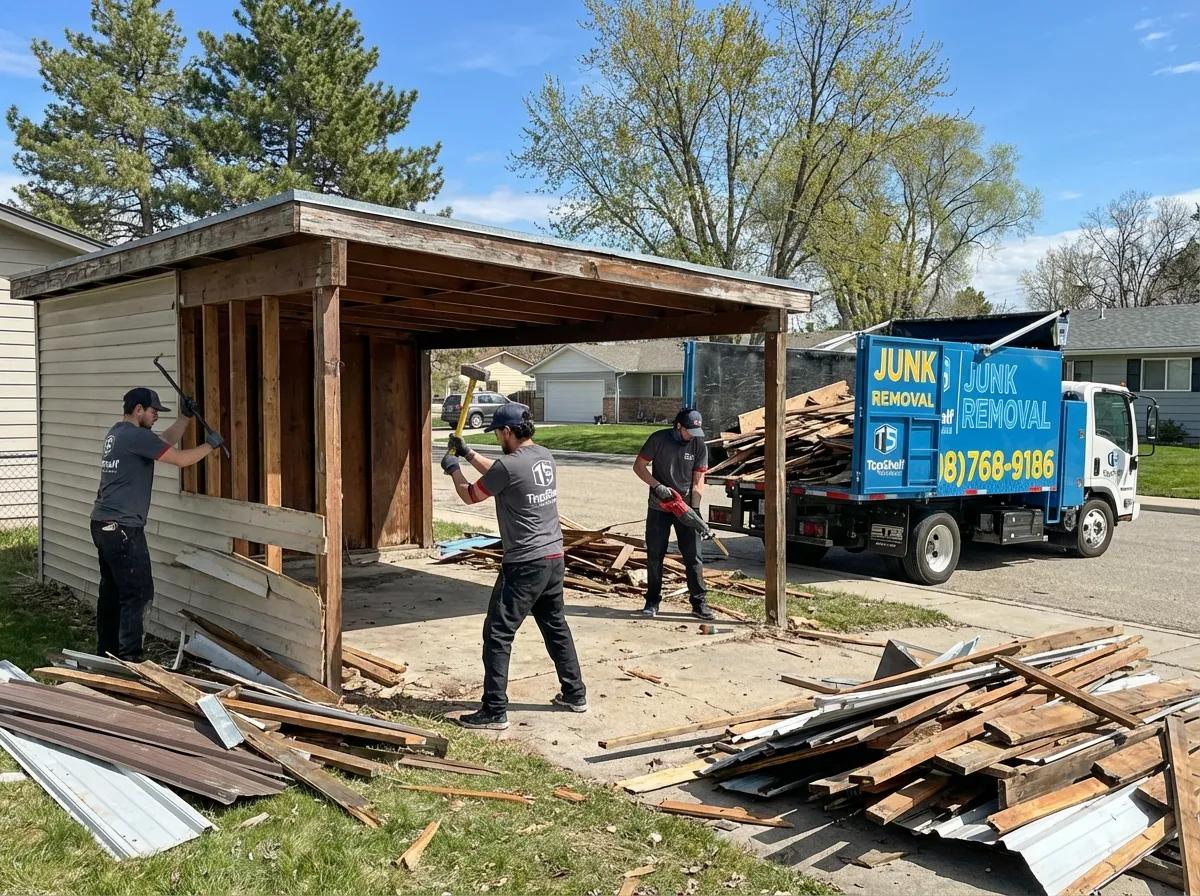
Small structure dismantling means taking apart a shed, fence, deck, balcony or interior wall piece by piece. The real question is which demolition jobs you can do yourself, and which demolition work needs a demolition service.
Low wood structures in good shape are fair game for weekend demolition. Any demolition near utilities, or demolition with height, concrete, rot or possible asbestos, belongs to a licensed and insured demolition service.
Here's which demolition is DIY, what moves demolition service cost, and how to split demolition work with a demolition service.
Small structure dismantling you can handle yourself
DIY structure removal works best on demolition jobs that are low, light and simple, where the demolition is the easy half.
The hard half is the demolition debris. Demolition debris is heavier and bulkier than you expect, and your regular trash pickup service usually won't take demolition waste.
Good DIY candidates
- Wood fences. Cut the rails, rock the posts, done. Fence demolition is often the easiest first demolition project, though fence demolition gets harder when posts sit in concrete footings that have to be broken out or dug up.
- Small sheds in good shape. Shed demolition works top-down: roof, walls, floor. Kit shed demolition is mostly unscrewing, since the shed comes apart the way it went together.
- Ground-level decks. Boards up, joists out, posts last. Deck demolition at ground level has far less fall risk than balcony removal off a house.
- A non-load-bearing interior wall. Interior wall demolition can open up a room, but it's only DIY demolition if the wall carries no weight and has no wiring, plumbing or ductwork inside.
Plan demolition disposal before you swing anything. A shed or fence demolition pile is a lot bigger lying down than it looked standing up, and a haul-off service or demolition service can take that demolition debris.
Quick tip: Before any demolition, walk the demolition area. Note what's inside it (wire, pipe, gas, insulation) and what's under it (concrete footings). That demolition checklist tells you if the demolition is yours or belongs to a demolition service.
Which jobs need a demolition service?
Some demolition is not a weekend DIY demolition project. Here's where a demolition service earns its keep.
- Demolition near electricity or gas. Wired sheds, hot tub hookups, old gas lines. Gas service and power get shut off first, and a careful demolition service confirms that before any demolition starts.
- Structures taller than you. A falling roof doesn't tell you which way it's going. Garage demolition, balcony demolition and two-story anything are demolition service work, and balcony removal is a job to hand to a demolition service.
- Concrete and block. Concrete demolition is hard, and hauling concrete demolition debris is worse. Concrete demolition takes heavier demolition tools than most people own, and a demolition service brings them.
- Anything leaning or rotted. Demolition of half-fallen structures is the most dangerous, because the frame is already weak. Balcony removal on a sagging, rotted deck should go to a demolition service.
- Old buildings with possible asbestos. Pre-1980s structures can have asbestos in siding, roofing or flooring. A demolition service will want asbestos testing done before demolition, not after.
- Load-bearing or unknown interior walls. If you can't tell whether an interior wall holds up the floor or roof, don't open it. Demolition on a bearing interior wall needs support put in first, so that demolition goes to a demolition service working with whoever designs the fix.
Heads up: Some demolition work in the Treasure Valley needs a demolition permit. Check with your city before demolition starts, and ask any demolition service if it handles the demolition permit application.
A demolition service quote can cover some mix of these demolition steps:
- A site visit to check the structure, access and utilities before demolition.
- The demolition permit application, when the demolition needs one.
- The demolition itself, by hand or with demolition tools.
- Hauling the demolition debris away.
- A cleanup service after demolition so the spot is ready for what's next.
What a balcony removal involves
Balcony removal shows why height changes demolition. A demolition service takes the balcony down in a set demolition order, and the ledger board, where it ties into the house, has to come off without tearing up the wall.
Balcony removal also means lowering heavy demolition debris safely, and a demolition service sets that up before any demolition happens.
Done right, balcony removal by a demolition service leaves the house wall ready for repair or a new balcony. Done wrong, the demolition damages the very wall you meant to save.
What moves the cost up or down?
There's no single price for demolition. A demolition service usually prices the demolition from what it sees on site, and these factors push demolition service cost up or down:
| Factor | Pushes demolition cost down | Pushes demolition cost up |
|---|---|---|
| Size | A short fence demolition or small shed demolition | A garage demolition, big deck demolition or full balcony removal |
| Materials | Wood and light framing | Concrete, block, brick or metal demolition |
| Access | Open yard with room for demolition | Tight backyard, stairs or height |
| Utilities | None | Wiring, plumbing or gas to shut off before demolition |
| Condition | Solid structure, simple demolition | Rot, leaning or possible asbestos |
| Permits | No demolition permit needed | Demolition permit required |
| Prep | The demolition area is already clear | The demolition service clears stuff out first |
| Disposal | Clean wood demolition debris | Mixed demolition debris and concrete |
A demolition service also looks at how much demolition you've already done, since partial demolition can mean less demolition labor. Finish a fence demolition down to the posts, and the demolition service only has the posts and footings left.
Worth asking: Ask every demolition service if hauling and disposal are part of the demolition quote or billed apart. Two demolition service quotes only compare fairly when both cover the same demolition work.
What's the difference between demolishing and dismantling a building?
Demolition means bringing a structure down fast to clear the spot. Dismantling is careful demolition in a set order, so parts can be reused, recycled or kept away from whatever stays standing. Many demolition services do both.
Small structure dismantling sits in between: a shed by your house or an interior wall in a room you're keeping can't just be knocked over, so a demolition service takes that demolition apart carefully.
- Demolition fits best when nothing nearby needs protecting and the demolition debris is headed for disposal.
- Dismantling fits demolition that touches your house, a neighbor's fence or a room you're keeping, like most balcony removal.
- Most real demolition jobs mix both. A demolition service dismantles the parts near your house, then the demolition service uses faster demolition on the rest.
For a fence demolition along a property line, demolition service work by hand keeps the neighbor's side intact. For interior wall demolition, careful demolition protects the floor, the ceiling and the walls on either side.
The middle path most people miss
You don't have to choose between all-DIY demolition and a demolition service for the whole demolition. Plenty of people do the fun part of the demolition, like a fence demolition or small shed demolition, then a demolition service or junk removal service handles the demolition debris and haul-off.
A demolition service can also step in partway. If your DIY structure removal stalls at the concrete footings or a shed's last wall, a demolition service can finish the demolition and haul the demolition debris away.
The real question
It's not "can I tear this down?" It's "can I handle this demolition safely, haul off heavy demolition debris and still enjoy my weekend?" If not, an estimate from a demolition service is worth getting.
Frequently asked questions
Can I take out an interior wall myself?
Only if it's non-load-bearing with nothing running through it. Cut a small hole first to check for wire, pipe or ductwork before demolition. If you're not sure, interior wall demolition goes to a contractor or demolition service that does interior work.
Is taking down a balcony a DIY job?
Rarely. Balcony removal means demolition up high without damaging your house. A demolition service handles balcony removal with the right setup and a safe way to get the demolition debris down.
Is a fence easier to take down than a shed?
Usually, yes. Fence demolition is low and simple, though fence demolition with posts in concrete takes more work. Shed demolition adds a roof and a floor, and wired shed demolition should go to a demolition service.
Who handles the permit?
Your city decides if the demolition needs a permit, so check before demolition. If you hire a demolition service, ask if it files the demolition permit application.
Related reading: Concrete Slab Demolition: Can You DIY It, or Should You Hand It Off? and Chicken Coop Removal in Boise: Dust, Wire and Old Posts.
The takeaway: fence and small shed demolition, have at it. Height, utilities, concrete or rot? Call a demolition service instead. Top Shelf Junk Removal and Demolition is a licensed and insured demolition service in the Treasure Valley. We handle the permit application for the demolition work we do, and the demolition estimate is free.
Need Help With Demolition?
Top Shelf serves Boise and the Treasure Valley with professional junk removal, cleanouts, and demolition services.