
Repair or Replace Deck: How to Tell Which One Makes Sense
By Eric Hinderager, owner of Top Shelf Junk Removal and Demolition · Updated
Repair or replace deck? Learn the signs of rot and frame trouble, how to check your deck, what moves the cost, and what tearing out an old deck involves.
Whether to repair or replace deck parts comes down to one question: is the frame under the boards still solid? If the posts, beams and joists are sound, you can usually fix the top layer and move on. If the frame has rot, a whole new deck is often better than repairing the existing one.
Boise is hard on outdoor wood. Hot, dry summers bake the surface of the decking, and freeze-thaw winters push water into every crack. Here's how to tell which way your deck is headed.
Should I repair or replace my deck?
Start with what you can see, then check what you can't. Most problems fall into one of two groups: surface damage you can fix, or trouble in the structural members that hold it all up.
Signs a deck repair is enough
These problems are usually fixable:
- A few loose, cupped or warped boards
- Wobbly railings, often just loose fasteners
- Stains, fading or gray wood on the surface
- Nail pops that catch your shoe
- Small spots of rot in a few planks, with a solid frame below
If the joists, beams and posts are solid, fixing the deck's top layer makes sense.
The stomp test: Walk across it and stomp a bit. Does it feel solid? Good sign. Does it feel bouncy or soft? That can point to a problem in the framing. Bounce near the middle of a span can mean the joists are getting weak.
Signs the whole thing needs to go
These problems are bigger and cost more to fix:
- Rot in the joists or beams, not just the top layer
- Posts that sink, lean or crack
- A deck pulling away from the house
- Soft or split boards across most of the deck
- Code problems from when it was first built
Age matters too. After enough years, old lumber dries out, splits and stops holding nails well. When an older deck shows several of these signs at once, replacement is usually the smarter financial decision.
Heads up: The ledger board is where the deck bolts to your house. If it's rotting or was put on wrong, the whole thing can pull loose. That's a safety problem, so don't wait on it. Missing flashing above the ledger is a common reason water gets in behind it.
How do you check how bad the damage is?
All you need is a screwdriver, a flashlight and a little time underneath:
- Poke the wood. Push a screwdriver into the joists, posts and ledger. If it sinks in easily, that spot is soft.
- Look at the ends. Board ends and places where wood touches wood hold water the longest. They tend to go first.
- Check the posts. Look for lean, cracks, or dirt piled up against the wood.
- Check the metal. Nails, screws and joist hangers rust over the years and can fail even when the lumber looks fine.
- Push on the stairs and rails. They shouldn't move.
- Look at the footings. Concrete that has cracked, heaved or sunk can pull the posts out of line.
If the soft spots are only in the decking, you can likely repair deck boards one at a time. If the screwdriver sinks into the framing in several places, you've got a failing deck, and replacing it is the safer call. A contractor can confirm what you found.
Good to know: Pressure-treated wood holds up to rot well, but water still gets in. Cut ends and notches are the weak spots, so check those first.
What moves the cost of deck work?
There's no one price that fits every deck, but you can see what pushes the cost up or down.
Deck repair costs depend on:
- How many boards need replacing, and what they're made of
- Whether railings need new fasteners or whole new sections
- How many posts are failing and how they're set
- Whether you want a fresh stain or seal after
- How easy it is to get under it to work
Full deck replacement depends on:
- Tearing out the old deck: its size, how high it sits, how easy the yard is to reach, and whether the footings come out
- The new deck's size, design and material, like composite or cedar
- Custom touches like built-in benches, curves, extra stairs or a second level
- Whether your city wants a permit and plan review for the new build
The material you pick changes both the cost and the upkeep:
| Option | Up-front cost | Upkeep |
|---|---|---|
| Pressure-treated wood | Lower | Stain or seal every few years |
| Cedar or other natural wood | Higher | Stain or seal every few years |
| Composite boards | Higher | A wash now and then, no stain |
Composite decking is made from wood fiber and plastic. It doesn't break down the way wood does, but the frame under it is still lumber. So the framing has to be sound before composite goes on top. Many people put composite planks on new joists and skip the old ones.
A common mistake is putting new boards on an old, soft frame. The top looks great, but the problem under it keeps growing. Another is using screws or hangers that aren't rated for treated material, which can rust out early.
The break-even point: If the fix-it list gets close to the cost of a new deck, a whole new deck is often better than repairing the existing one. You get new joists, new boards and more years of use.
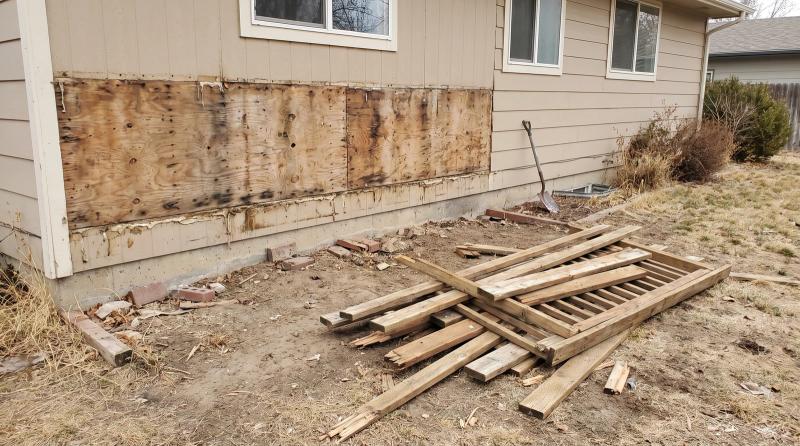
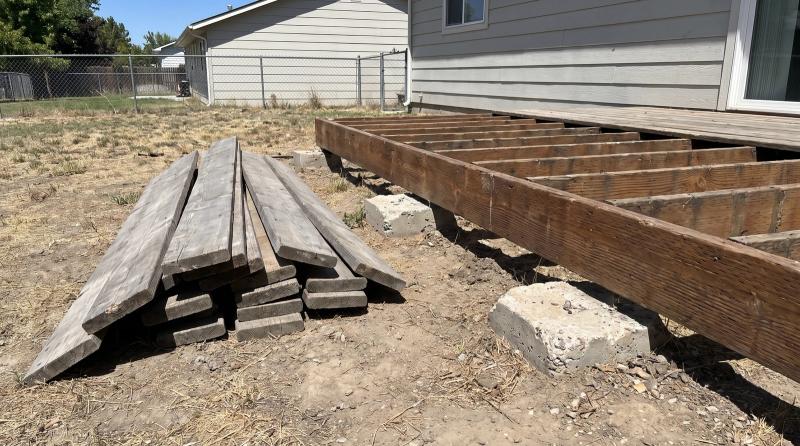
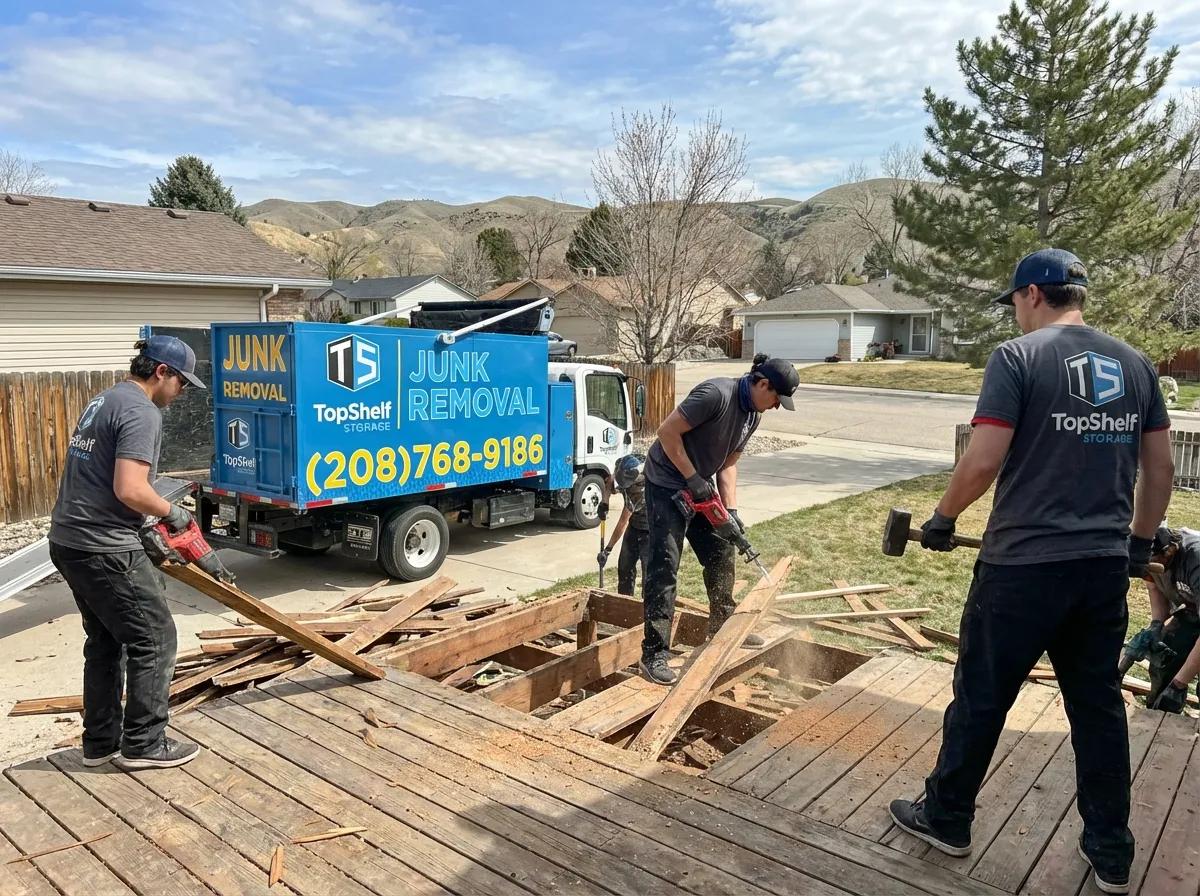
What deck demolition involves
If you decide to tear it all out, here's the usual order:
- Disconnect it from the house. The ledger comes off with care so the siding isn't hurt.
- Remove the railings and decking. One piece at a time.
- Take down the framing. Joists, beams and the rest of the support.
- Pull the posts. These are often set in concrete.
- Remove the concrete footings. Sometimes they stay if they sit below grade.
- Haul away the debris. Old planks, nails and concrete make a lot of heavy debris.
Before anyone digs out footings, call 811 so buried gas, power and water lines get marked. Idaho law asks for that call before digging, and it's free.
How long does it take? It depends on the size and height, how it's attached to the house, and whether the footings come out. Tight side yards, steep slopes and a lot of concrete all slow it down.
Some tear-outs need a permit, depending on your city and the job. We can handle the permit application for you. Rules differ between Boise, Meridian, Nampa and the other Treasure Valley cities, so it's worth checking before work starts.
Quick tip: Tearing out a deck is harder than it looks. Heavy lumber, hidden nails and getting rid of it all make pro help worth a thought.
After demolition: what's next?
If you're rebuilding: Have your builder look over the old footprint. Code rules may have changed since the first deck went in. Builders often square the new corners with the 3-4-5 rule: measure 3 feet along one side and 4 feet along the other, and if the diagonal between those marks is 5 feet, the corner is square.
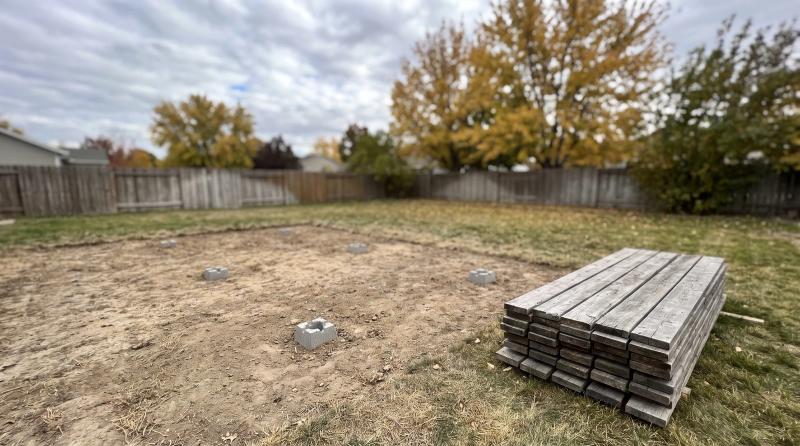
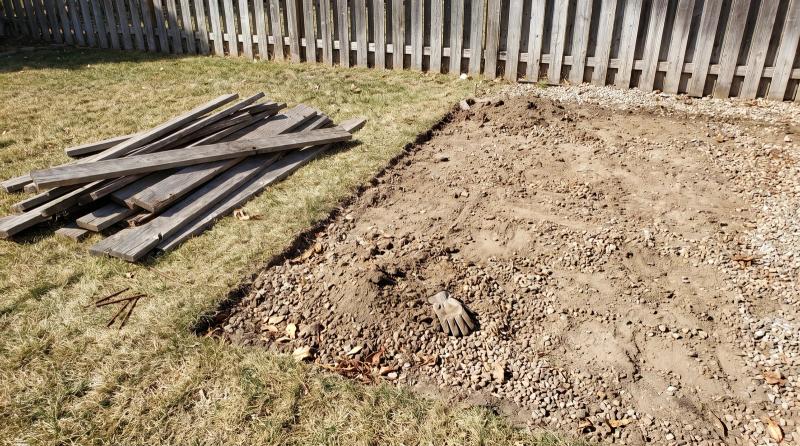
If you're not rebuilding: The area usually needs grading once the deck is gone, and then it can be seeded or covered with gravel. Some homeowners turn the space into a patio or garden beds.
Top Shelf Junk Removal and Demolition takes out old decks across the Treasure Valley. If you're weighing replacing deck boards against replacing the whole thing and the old one needs to come out, we're happy to take a look and give you a free estimate on the tear-out.
Frequently asked questions
How often should decks be replaced?
There's no set number of years. It depends on the material, how well it was built, how much sun and snow it gets, and how often it's sealed. A well-kept deck lasts longer than one that's ignored, so start replacing it when the posts and joists start to fail, not by the calendar.
Can I just flip old planks over?
Sometimes. If a plank is solid but worn on top, flipping it gives your deck a fresh face. The old screw holes still show, and new fasteners need fresh spots to bite. If it's cupped, split or has rot, flipping won't help, and many composite boards have only one finished side.
How long does it take to swap out planks?
It depends on how many there are, how they're fastened, and whether the joists under them need work too. Replacing a handful goes much faster than redoing all the decking.
Is a custom design worth it?
Related reading: Concrete Slab Demolition: Can You DIY It, or Should You Hand It Off? and Chicken Coop Removal in Boise: Dust, Wire and Old Posts.
It can be, if the old deck's layout never worked for you. Custom features add cost and time, so pick the ones you'll really use. Composite planks hold up to weather well, but the joists under them still need to be solid.
Need Help With Deck Removal?
Top Shelf serves Boise and the Treasure Valley with professional junk removal, cleanouts, and demolition services.