
Removing Concrete Fence Posts: How to Remove the Footings, Too
By Eric Hinderager, owner of Top Shelf Junk Removal and Demolition · Updated
Removing concrete fence posts is mostly about the footing. Learn the tools, the steps, what moves the cost, and how to backfill the holes in Boise.
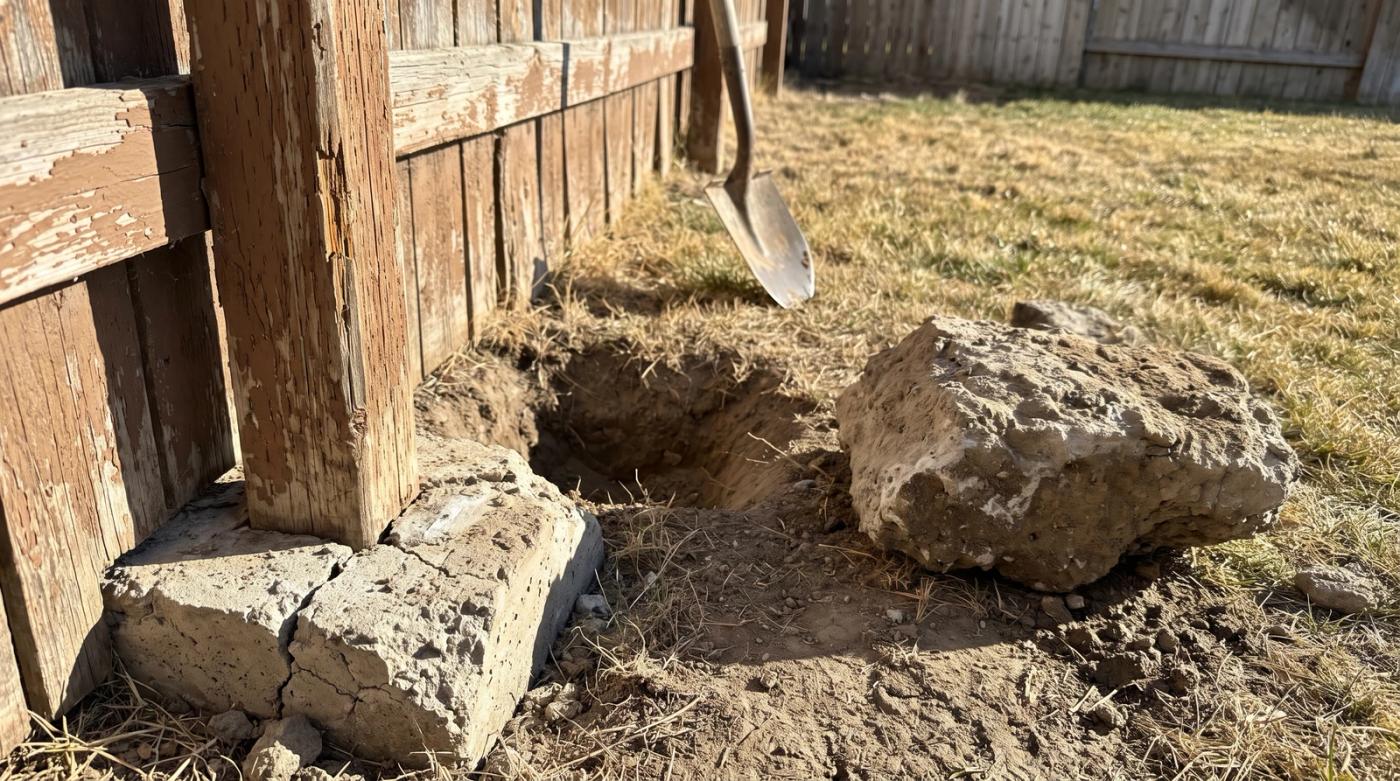
Removing concrete fence posts comes down to the footing, not the post. The wood or steel is the easy part; the lump of concrete holding it in the ground is the real work. You can cut the post off, pull the whole thing out, or break it apart, and the right pick depends on what goes in that spot next.
Why removing concrete fence posts is really about the footing
A lot of fences around the Treasure Valley went in the same way. Bore a hole, drop the post, dump in a bag of concrete, add water, move to the next one.
Depth and diameter vary wildly, though. Older fences in the North End or up on the Bench can have wide, deep footings, sometimes belled out at the bottom so they fight you the whole way up.
Newer builder-grade fences in Meridian and Kuna? Sometimes it's a thin, shallow collar of concrete and the post practically hands itself to you.
Soil plays a part too. Clay grips concrete hard once it dries, and rocky soil can lock a concrete base in place almost as well as the concrete itself.
You won't know which kind you've got until the first one comes out. Either way, there is no easy way around the weight: every chunk of concrete has to come up and go somewhere.
The real question is what's going in that spot next: new fence on the same line, grass, a patio or a garden bed. Each answer points you somewhere different.
Your three options for the old posts
Leave them in place. Cut the post flush at grade and walk away. You remove the part you can see and leave the rest.
Cheapest and fastest, and if nothing's ever happening on that ground again it's honestly fine. Just know you're leaving a surprise for whoever puts a shovel there years from now.
Pull them whole. Lever the whole footing up in one piece with a jack or a bar. You're left with a clean hole to backfill and a heavy chunk of concrete to haul off.
Break it up. This one's for the big monolithic footings, or when a new post has to land in the exact same spot. Slower, dirtier, and where a lot of DIY weekends go sideways.
| Option | Best for |
|---|---|
| Cut flush, leave the footing | Ground that won't be worked again |
| Pull the footing whole | Chain link, vinyl and shallow sets |
| Break up and haul | Deep or belled footings, or a post replacement in the same spot |
Heads up: Call 811 (Digline) before anybody puts a shovel in the ground. It's free, and Idaho asks for at least two business days' notice. It only marks public utilities, though, so your sprinkler mainline, low-voltage lighting and any gas line out to a fire pit are yours to flag before a crew shows up.
How do you remove concrete posts by hand?
You can remove them without a machine if you've got patience and a strong back. The same method works whether you need to remove wooden fence posts, steel ones or old precast concrete posts, and you'll learn a lot from the first one about how stubborn the rest will be.
What tools you'll need
You don't need much, but the right gear saves a lot of grunting:
- A spade and a steel pry bar to loosen soil around the footing
- A fence post extractor, or a hilift jack and a length of chain
- A sledgehammer and a concrete chisel for breaking up big footings
- A hammer drill with a masonry bit, if you want to split a footing along a line
On a long run, the jack is the one tool worth renting or borrowing.
Soak the soil at each post the night before. Wet clay lets go, while dry ground grips concrete like it was glued in, so skip that step and you'll feel it. Then dig round it on one side, about halfway down the footing, so it has room to tip.
What to do once the concrete footing is exposed
Once the concrete footing is exposed on one side, here's the order that works:
- Chain it. Wrap the chain low on the post, then take one more wrap round the chain so the loop cinches tight. Hook it to a high-lift jack and lift slowly.
- Work it up. Lift a bit, rock the post, then lift again until the soil lets go.
- No jack? Use the fulcrum technique. Set a cinder block beside the post, lay a steel bar across it, chain the short end to the post and push down on the long end. The fulcrum technique works best on small, shallow collars.
- Roll it out. If it won't come straight up, push it toward the side you cleared and roll it out of the ground. Then roll it up a board into the wheelbarrow instead of lifting it.
- Split the big ones. A deep, belled footing can stall even a hilift jack. Dig a trench on the low side so it has somewhere to go, or crack it into manageable pieces with the sledge and chisel. Trying to remove concrete in one huge chunk just wears you out.
What moves the cost of post removal?
The cost of a teardown comes down to how much ends up in the truck, which depends on the length of the run, the material, the height, and whether we can get a truck near the line. Footings add to the job, because concrete removal is a completely different kind of work.
Post removal adds up one footing at a time, since each one has to come up, get cracked into manageable pieces if it's big, and get hauled off.
- How many posts, and how deep. More concrete means more labor and more weight to haul.
- Access. A back fence you reach through a narrow gate means every chunk gets carried by hand, while a side yard we can back a trailer into costs less.
- Leave or pull. Cutting posts flush costs less than full concrete removal.
- How stuck they are. With deep or belled footings, there is no easy way to skip the shovel work. On a long run, some people dig a trench along the whole line instead of fighting each post alone.
Good to know: Clean concrete and mixed fence debris don't go to the same place. Concrete recyclers take clean footings, while rotted cedar and rusted wire usually go to the Ada County Landfill as mixed debris. Each charges differently, so check their current rates. Sorting on site can keep disposal costs down, so if you remove the footings yourself, sort as you go.
How should you backfill after you dig the footings out?
Here's a common mistake. Someone pulls a row of footings, shoves the dirt back in loose, rakes it smooth and calls it done.
Give it a season and that soil settles, leaving a row of shallow divots marching across the lawn.
Backfill old post holes in layers instead. Six inches of soil, tamp, water, repeat.
Then overfill a little, because it's going to drop no matter what you do. That last step is the one people skip.
Quick tip: Spring and fall are the easiest windows for this out here. By mid-July, dry ground in the valley bakes hard as a brick, which makes pulling footings slower and harder. February isn't much better.
The fence is the quick part. The concrete decides your budget and how that stretch of yard looks six months later.
Want a straight answer for your yard? Top Shelf Junk Removal and Demolition does fence removal all over Boise, Meridian and Nampa, footings included. Call or text (208) 593-2877, tell us how many posts you're dealing with, and we'll give you a free estimate.
Frequently asked questions
How do you get concrete off a fence post you want to reuse?
When you remove wooden fence posts, the wood stuck in concrete is rarely worth saving. A steel post can be: lay it on its side and hit the collar with a sledgehammer until it cracks away, with eye protection on.
How do you pull a chain link post?
Chain link posts sit in narrower footings, so they're usually easier to remove. Wrap the chain low, take one more wrap round the chain so it can't slide up the smooth pipe, and lift with a jack or a fence post extractor. If it fights you, dig round it on one side and lever it over.
Can I leave the old footing and dig a new hole beside it?
Related reading: Removing a Deck From a House: Where All That Lumber Ends Up and Concrete Slab Demolition: Can You DIY It, or Should You Hand It Off?.
Yes, and for a simple post replacement it's often the easiest route. Set the new post just off the old footing, as long as your panel spacing still works.
Need Help With Fence Removal?
Top Shelf serves Boise and the Treasure Valley with professional junk removal, cleanouts, and demolition services.