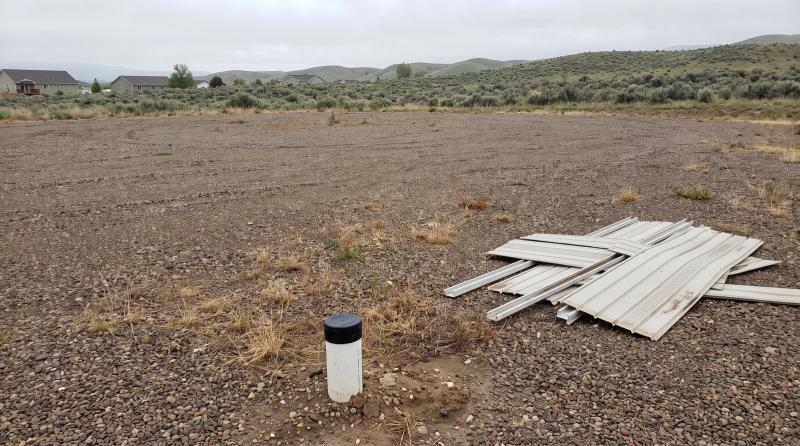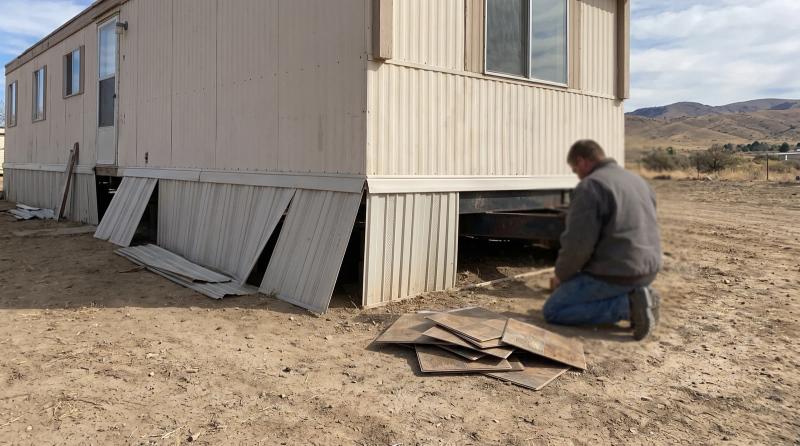

Remove Mobile Home Tie Downs: Where the Anchors, Steel and Concrete Go
By Eric Hinderager, owner of Top Shelf Junk Removal and Demolition · Updated
Learn how to remove mobile home tie downs, then where the steel, concrete, skirting and leftovers go: scrap, recycling, donation or the landfill.
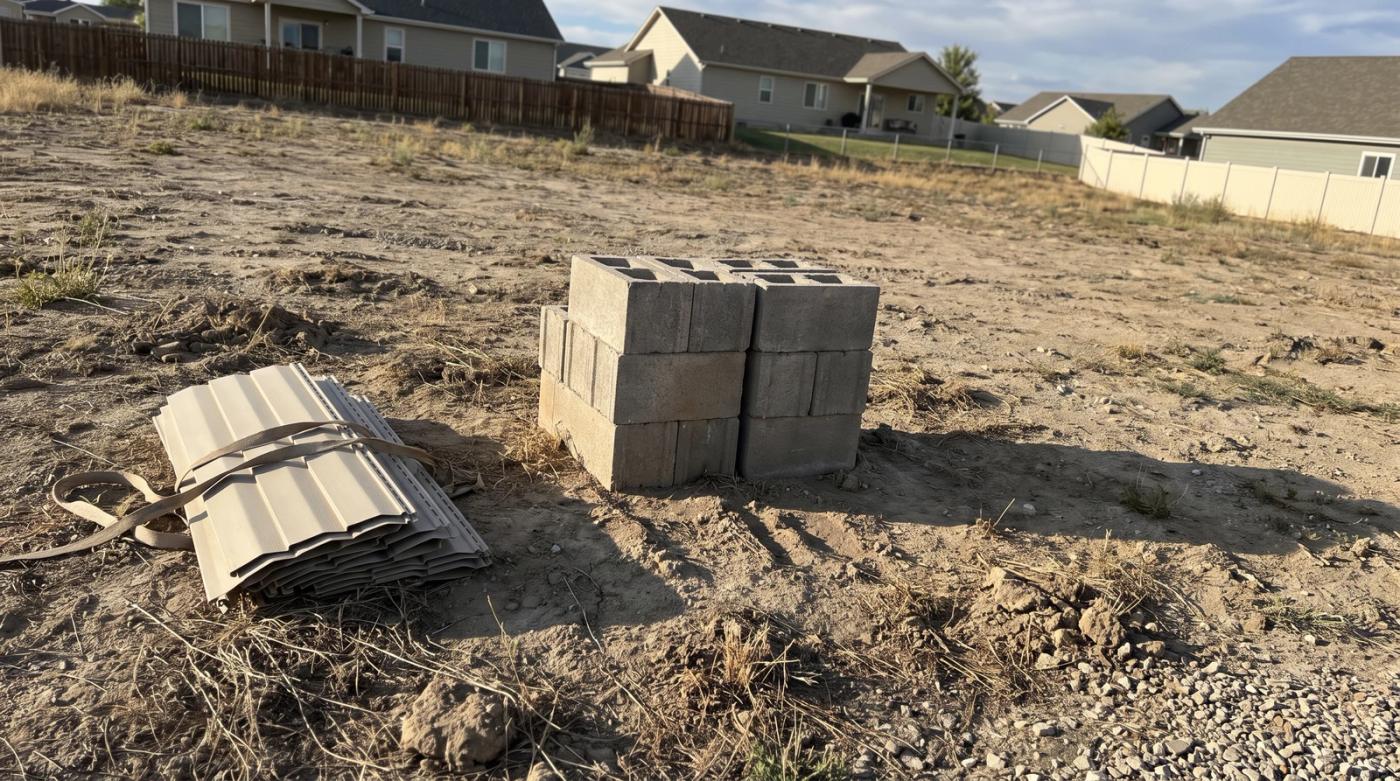
When you remove mobile home tie downs, you end up with a pile of rusty steel, broken concrete and odds and ends, and every piece of it has to go somewhere.
That second half of the job gets less attention than it should. Pulling anchors is the sweaty part. Sorting what comes out of the ground decides how much gets buried at the landfill and how much gets used again.
Here's how the anchoring system comes apart, and where each piece usually ends up around the Treasure Valley.
What's actually holding the home down
Manufactured homes don't sit on a poured foundation like a stick-built house. They rest on piers, and a set of steel ties keeps the mobile home from shifting in the wind. That whole system stays at the location after the home is hauled off or torn down.
The tie-downs manufactured homes use mostly fall into a few groups:
- Auger anchors: steel shafts with a spiral plate at the bottom, screwed into the soil. A lot of mobile home anchors are this type.
- Frame anchors and diagonal ties: steel straps that run at an angle from the anchor head to a frame member. They hold down the frame and resist side-to-side movement. On a double-wide, each half has its own ties, and every tie needs a solid frame member to grab.
- Roof tie-downs: some older single-wides have straps running over the roof and down the exterior walls. They're easy to forget once the roof comes off.
- Stabilizer plates: flat pads set beside the anchor head so it doesn't tip in soft ground.
Each strap is snugged up with a tension bolt. Keep that in mind, because a tight strap can snap back when it's cut.
Around all that you'll usually find skirting, stacked concrete pier blocks with wood shims, concrete runners or a slab, and exterior extras like steps up to the doors, a small porch or an AC pad.
How to remove mobile home tie downs and anchors
It's a fair DIY job on a small home with a handful of anchors. A double-wide with rusted shafts in hard ground is a different story.
Moving the mobile home instead? Talk with the mover before you remove any tie-downs. Removing ties under a mobile home that's still standing means working on your back in tight space, so plan for that.
- Find the septic tank and well first. On rural lots out toward Star, Kuna or Canyon County, a tank can sit close to the home with its lid buried in the grass. Flag it before anyone digs or drives a machine over it.
- Flag every anchor. Walk both long sides of the footprint, check the ends, and look for roof straps if the home is still standing.
- Back off the tension. Loosen the tension bolt on each tie before cutting. Stand to the side and keep people clear.
- Cut the straps. Bolt cutters or a grinder will do it. Drop the clips, bolts and loose hardware into a bucket as you go.
- Turn the augers out. Slide a steel bar through the eye at the top and turn it counterclockwise. A length of pipe over the bar adds leverage.
- Dig out the stubborn ones. Rusted shafts in rocky soil sometimes won't budge. Dig around them or pull them straight up with a machine.
- Fill the holes. Pack dirt back in as each tie and anchor comes out.
Quick tip: Don't cut the straps at ground level and just tape them off. The shaft is still down there, and a steel stub hidden in the grass is what a mower or tiller finds later. Pull the whole anchor, stabilizer plate included.
Sorting the pile: what goes where
Once everything is out of the ground, you've got a mixed heap. Sorting it is what keeps the disposal side of the job reasonable. A landfill treats everything as trash, but scrap yards and recyclers don't.
| Material | Where it usually goes |
|---|---|
| Anchors, straps, tension bolts and hardware | Scrap metal recycling |
| Steel frame, if the home is torn down on site | Scrap metal recycling |
| Clean concrete runners, slab and pier blocks | Concrete recycling |
| Metal skirting | Scrap metal recycling |
| Vinyl or foam-panel skirting | Landfill |
| Wood shims, steps and porch lumber | Landfill, unless it's sound enough to reuse |
| Furniture, appliances and household goods left inside | Donation when usable, recycling or landfill when not |
Steel and hardware
This is the easy part. The anchors, the straps and that bucket of clips are all steel, and scrap yards take it. Rust doesn't matter much. What matters is keeping it separate from dirt and wood.
Concrete
Concrete is the heaviest thing on the lot. Clean concrete, with no dirt, wood or trash mixed in, can go to a recycler that crushes it for reuse instead of filling space at the Ada County landfill. Rebar makes a slab harder to break up, but it doesn't stop the concrete from being recycled.
Pier blocks in good shape sometimes get reused by someone setting a shed or a new home, so it's worth asking around before you break them.
Skirting and what's left inside
Metal skirting goes with the scrap. Vinyl and those fake-rock foam panels are light, bulky and crumble when you touch them, so they usually head to the landfill.
If the home is being demolished rather than moved, look at what's still in it. Usable furniture and household goods can often be donated, and dead appliances can usually be recycled for their metal. Only what's left has to make the dump run.
Good to know: Older manufactured homes can contain materials that should be tested before demolition. Ask the permit office what it wants checked before the walls come down, not after.
What moves the cost
Cleanup like this is priced by what's involved, and a few things push it up or down:
- Number and condition of anchors. A few in soft soil come out fast. A double-wide's worth of rusted shafts in hard ground takes longer.
- Type of tie-downs. Hold down anchors in open soil turn out on their own. Ties bolted into a concrete runner or slab usually come out with the concrete when it's broken up.
- Concrete thickness and rebar. Thin runners break up quickly. A thick reinforced slab takes bigger equipment.
- How well things sort. Clean concrete and clean scrap are easier to place than one mixed pile.
- Access. A tight lot, fences or a long carry to the truck add time.
- Season. Frozen ground in a Treasure Valley winter makes digging harder, and hot, dry summers bake clay hard around old anchors.
Also decide what's happening to the land next. If a new home is going on the same spot, the setup crew may reuse some of the piers or concrete, so ask before removing everything. Selling a bare lot, building a shop or turning it into pasture usually means taking it all out.
Worth asking: If the home is staying and only the old straps are failing, that's not a removal job. You must replace tie-down straps with new rated ones and re-tension them, and that's work for a manufactured home setup crew.
A few tips before demo day
- Mark the septic tank, well and any buried propane or water lines.
- Confirm the utility disconnects are finished.
- Pull out anything you want to keep or donate yourself.
- Settle the scope up front: remove every tie and anchor only, or add concrete, skirting and backfill.
If you'd rather hand it off, Top Shelf Junk Removal and Demolition does mobile home demolition across the Treasure Valley, with permits and utility disconnects handled, and you can ask about pulling the anchoring system as part of the same service. Pricing is based on volume, and the on-site estimate is free, with a firm price before anything is touched.
Mobile home tie-down FAQs
Can I cut the straps and leave the anchors in the ground?
You can, but if you cut them and just tape them off, the shafts stay hidden in the soil. If the lot will be mowed, tilled or built on, remove the tie down anchors too.
Do old tie-downs go to scrap or the landfill?
They're steel, so they belong with the scrap metal.
Can concrete runners be recycled?
Usually, if they're clean. Keep dirt, wood and trash out of the concrete pile so a recycler will take it.
Do I need a permit to remove a mobile home?
Related reading: Concrete Slab Demolition: Can You DIY It, or Should You Hand It Off? and Chicken Coop Removal in Boise: Dust, Wire and Old Posts.
Demolition generally needs a permit, plus finished utility disconnects. The rules differ between cities and counties in the Treasure Valley, so check with yours before work starts.
Need Help With Mobile Home Demolition?
Top Shelf serves Boise and the Treasure Valley with professional junk removal, cleanouts, and demolition services.