
File Cabinet Removal in Boise: Drawers, Desks and Office Cleanouts
By Eric Hinderager, owner of Top Shelf Junk Removal and Demolition · Updated
File cabinet removal made simple: how to take the drawers out, move a full cabinet, what moves the cost, and what to do with old office furniture.
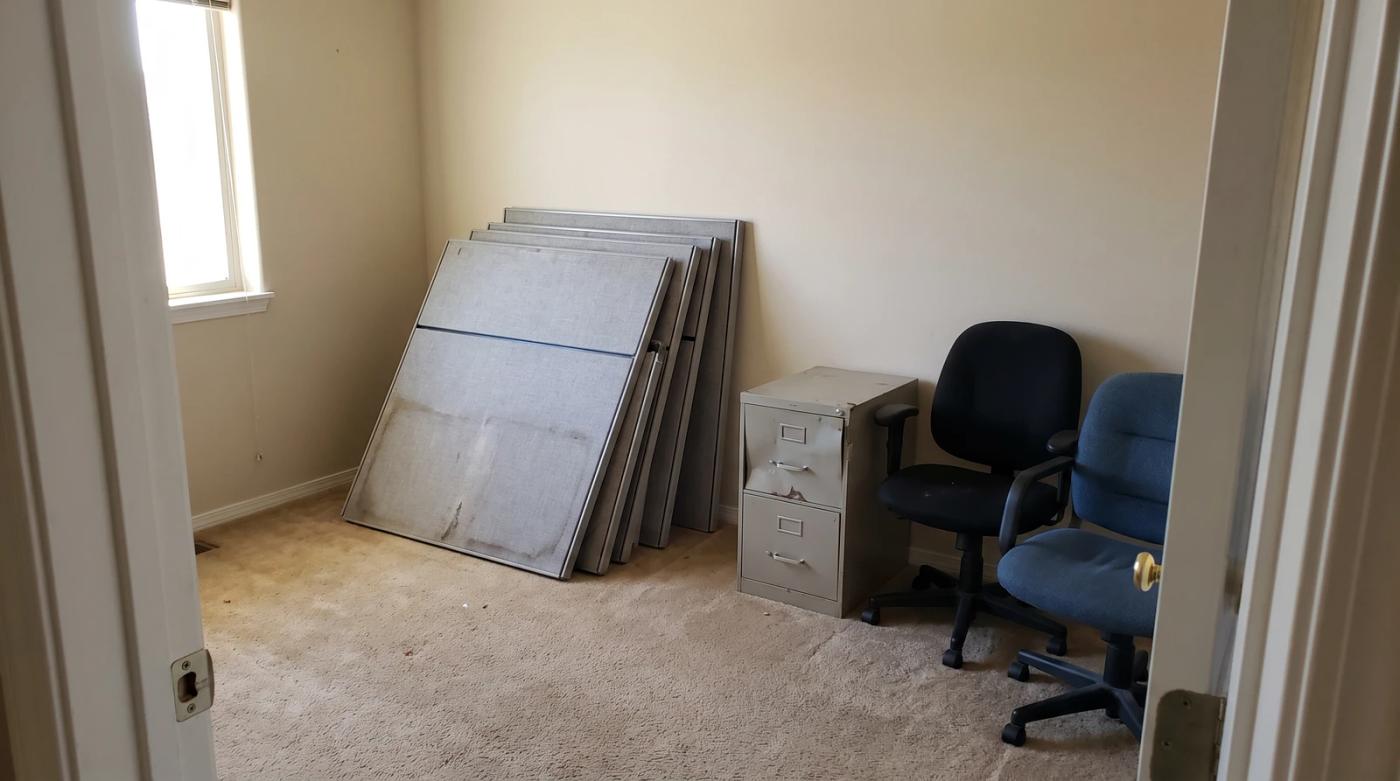
File cabinet removal comes down to three steps: empty the drawers, take them out if you can, and decide where each cabinet ends up. Metal ones can be sold, donated or scrapped. Whatever's left can go out with a junk removal pickup.
It's rarely just one cabinet, though. It's usually a back room full of filing cabinets nobody's opened in years, plus desks, chairs, cubicles and other furniture. And the lease ends sooner than anyone would like.
If that job just landed on you, here's what actually matters.
What should you do with old file cabinets?
You've got four choices: sell, donate, scrap or haul. Make a few phone calls before you pay anybody for a pickup.
Used office furniture dealers in the Treasure Valley often buy name-brand stuff in good shape. Think Herman Miller or Steelcase chairs, newer sit-stand desks, and matching cubicle systems they can resell as a set. A clean steel lateral filing cabinet with all its keys may catch their eye, too.
They're picky, though. A mixed batch of old panels with coffee stains isn't what they want.
Donating is harder than most people expect. Idaho Youth Ranch and the Habitat ReStore may take some things, like a solid wood desk or a decent bookshelf, so check what they're accepting. Cubicle panels, giant conference tables and dented metal are a different story. A lot of thrift stores pass on them because they just don't sell.
Here's a quick look at your options:
| Option | Works best for | What to know |
|---|---|---|
| Sell to a dealer | Name-brand furniture in good shape | They're picky and often want a matching set |
| Donate | Solid wood desks, bookshelves, good chairs | Many places won't take dented metal or cubicle panels |
| Scrap metal | Steel file cabinets, desk frames, chair bases | You still have to load it and haul it in |
| Junk removal pickup | Whatever nobody else wants | Priced by truck space, so less stuff means a lower price |
Tip: Call furniture buyers and donation spots as early as you can. Some donation spots offer a pickup service of their own, but their schedules can fill up. That doesn't help much when the landlord wants the keys Friday.
Whatever's left after that goes out with the removal crew. Often, that's a good chunk of it.
Is there a way to remove filing cabinet drawers?
Yes, on most metal ones. With the cabinet drawers out, the frame is lighter, safer to tip onto a dolly and easier to carry down stairs or across a room.
Here's how it usually goes:
- Empty every drawer. Box up the filing you're keeping. Paper is heavier than it looks.
- Open the drawer all the way. Slide it out until it stops.
- Locate the release mechanism. On most models it's a small tab or lever on each side rail, near the back of the drawer. Some older ones use one clip in the middle.
- Press the tabs and lift. The drawer should lift free of the rails. If it sticks, look for a lock bar or a screw holding the slide.
- Set the drawers in another room, against a wall. Keep them out of the path you'll use to move the frame.
Lost the key to a locked filing cabinet? Don't pry the drawers open. A locksmith can help, or you can tell your hauler before pickup so they can plan for it.
Full drawers are the big tip-over risk. Many filing cabinets only let one drawer open at a time for this reason. If that lock fails and two slide open at once, the whole thing can fall forward.
Tall cabinets are sometimes bolted to the wall or to each other. Check behind them before you move anything. One that's anchored to the wall won't budge, and forcing it can tear up the drywall.
Why cubicles slow things down
Cubicles look simple. They aren't.
The panels are held together with connectors and brackets, and some have power running through the base. Some panels are also screwed into a wall. A few brands come apart quickly. Others were clearly built by a crew that figured nobody would ever take them down.
The short version: unplug everything and clear out personal stuff, but leave the panels up unless you know the system. If the panels are hard-wired into the building's power, that's a job for an electrician, not a screwdriver.
What does file cabinet removal cost?
There's no one price for every job, because no two offices are the same. A lot of junk removal is priced by how much room your stuff takes up in the truck. Office jobs can add time, like taking things apart and long carries down hallways.
Here's what moves the price up or down:
- How many cabinets, and how big. A short one takes up less room in the truck than a tall or wide one.
- Full or empty. Empty means less weight and a faster pickup. Full of old filing means more of both.
- Access. A ground-floor room by the parking lot goes fast. A third-floor office with one tiny elevator takes longer.
- What else is going. Standing cubicles, old printers and loose junk all add time.
- Where it ends up. Clean metal headed for scrap is simple. Mixed loads take longer to sort.
A single filing cabinet pickup is a small job. A whole office takes more room in the truck and more hands.
And if a dealer will take your good chairs for free, let them. That's less to haul, a smaller pickup and less for you to pay.
Curbside pickup or in-home pickup?
Removal companies tend to offer one or both of two kinds of service. With curbside pickup, you bring everything outside first. With an in-home pickup, the crew comes into each room, takes things apart and does all the lifting.
That second kind is often called full-service removal. The extra labor can show up in the price, but for heavy metal furniture on an upper floor, it's usually worth it. Even a curbside pickup service goes faster when everything's empty and the drawers are out.
Your building has rules, and they matter
This is the part people miss until the morning of the pickup.
Office buildings downtown and the bigger complexes out in Meridian often have move-out rules in the lease. Before you book a pickup, ask property management about:
- A certificate of insurance (COI) naming the building and the management company
- Freight elevator reservations, and whether wall pads have to go up
- What hours crews are allowed to work
- Which door or loading area you're supposed to use
The COI trips people up a lot. Some management companies won't let a crew past the lobby without one on file. Some want time to review and approve it.
Get their exact wording and send it to whoever's hauling your stuff. Getting one issued takes a little lead time, so don't leave it until the building manager is standing at the door.
Heavy steel is hard on hallways, too. Ask if the building wants corners and wall edges covered during the pickup.
Where old office furniture goes
Fair question. Nobody likes picturing a whole office's furniture going straight into Hidden Hollow, the Ada County landfill.
We sort as we load. Metal filing cabinets, desk frames and chair bases go to a scrap metal recycler. Good chairs and solid wood furniture go to donation when someone will take them.
Worn-out fabric panels and particleboard desks mostly end up at the landfill, because nobody wants them.
Old computers and printers are their own thing. Wipe or pull the hard drives before anything leaves the office. That part's on you, and it's the one step you really don't want to skip.
Go through the filing one last time, too. Old files can hold names, account numbers and tax records. Shred anything private before pickup so each cabinet leaves completely empty.
Bottom line: file cabinet removal goes a lot smoother when you start early. Sell or donate the good pieces, empty the cabinet drawers, and sort out the COI and elevator rules before you pick a pickup date.
If you're clearing out an office anywhere in the Treasure Valley, Top Shelf Junk Removal and Demolition can help. Call (208) 593-2877 for a free on-site estimate, and you'll get a firm price before anything is touched.
Frequently asked questions
How do you get rid of a metal filing cabinet?
A metal filing cabinet in good shape can go to a used office furniture dealer. If it's dented, take it to a scrap metal recycler. If you can't move it yourself, book a pickup and the hauler can take it to scrap for you.
How do you move a full file cabinet?
Take the drawers out first and move them on their own. Then tilt the empty file cabinet onto a hand truck, strap it on and roll it out slowly. Moving it full risks a tip-over and a hurt back.
Can you haul a lateral filing cabinet?
Related reading: Junk Removal in Boise: Old Lawn Mowers, Grills and Yard Tools and Junk Removal Estimate in Boise: What the Walkthrough Covers.
Yes. Those wide cabinets are heavy, so empty them before pickup day. If they're bolted together or to a wall, let us know so we can plan for it.
Need Help With Furniture Removal?
Top Shelf serves Boise and the Treasure Valley with professional junk removal, cleanouts, and demolition services.