
Furniture Removal When It Won't Fit Through the Door
By Eric Hinderager, owner of Top Shelf Junk Removal and Demolition · Updated
Furniture removal won't fit through door frames? Learn how to measure, take pieces apart, and get a stuck couch out safely, plus what moves the cost.
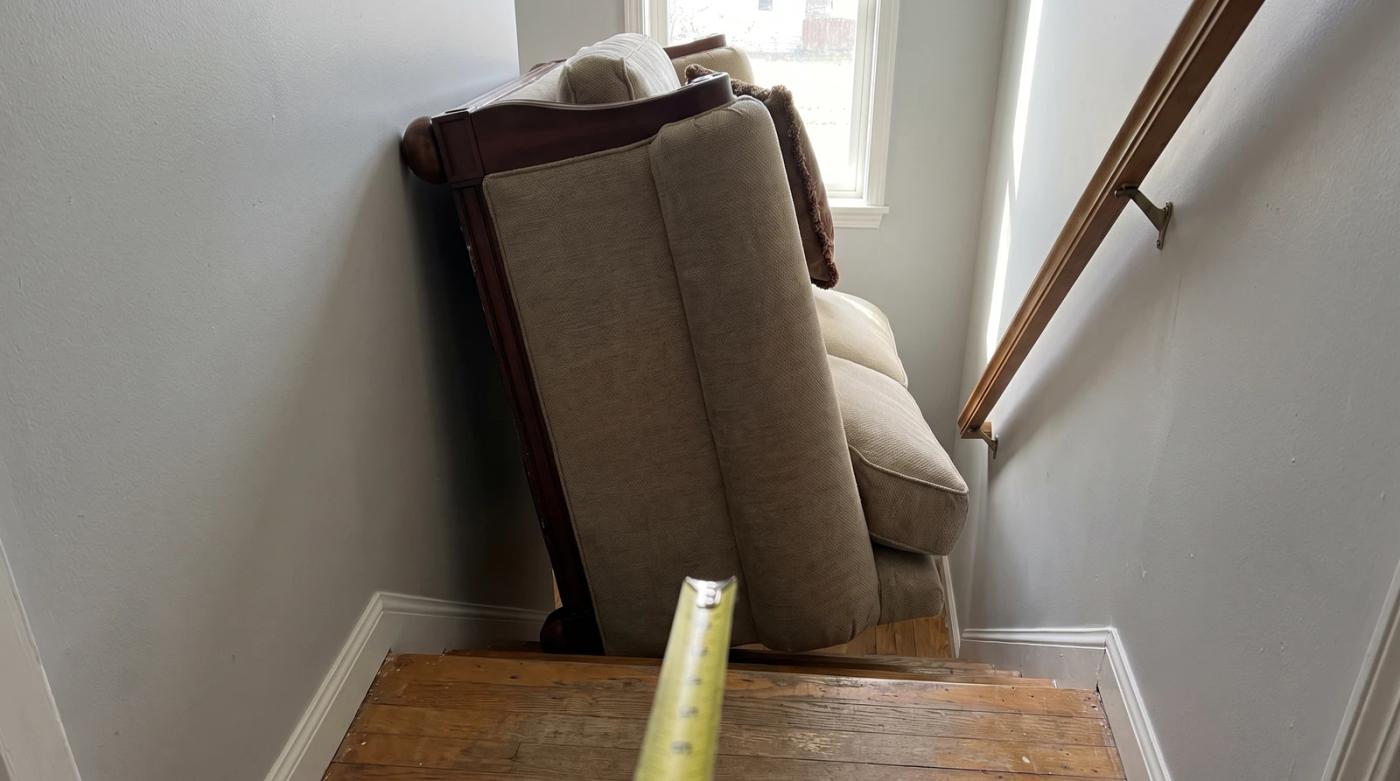
When furniture removal won't fit through door frames, hallways or stair turns, the fix is nearly always the same: measure first, then plan take-apart work, and only bring in extra muscle for pieces that truly won't come apart.
Most couches, beds and dressers can make the move out in one piece or a few. You just need the right numbers before anyone lifts.
Furniture removal when it won't fit through the door
Here's the thing people don't plan for: getting the old dresser or couch out of the house is the tough part. Getting rid of it once it's on the curb is easy.
So let's talk about the pieces that don't fit and the stairs that fight back.
Why older Boise homes make it harder
A lot of houses around here went up before anyone owned a giant reclining sectional. Doors in the North End, the Bench, and older parts of Nampa tend to run narrow. Stairwells turn tight, with a landing sitting right at the point where you'd want to pivot a long piece.
Then there's the furniture itself. A sleeper sofa hides a steel frame and a folding mattress, so a couch that looks manageable can be a lot heavier than you'd guess.
Here's what nobody tells you: the item did fit through the door once. It just came in before the room was full of stuff, or a delivery crew carried it and knew exactly how to angle it. Reversing that move solo, with furniture in the way, is a different job.
Heads up: Before the move, clear every item off the whole path. Prop the doors open, roll up the rugs, and get the cars out of the driveway. An easy way to get hurt is shuffling backward and tripping on something you forgot was behind you.
How do you measure a tight doorway before a move?
Want to know ahead of time whether that couch is coming out in one piece? Before you move anything, grab a tape measure. A few minutes of measuring now saves a lot of grunting later.
- Measure the width, height and depth of the furniture at its widest spots. Depth is usually the smallest number on a couch, so it's a good starting point.
- Take the diagonal depth too. Lay a straightedge from the top of the back to the front edge of the seat, then measure from the back bottom corner up to it. That diagonal measurement tells you how small the piece gets when you tilt it.
- Check the door width, then the actual clear opening with the door swung open. The door slab and the trim both eat into the space.
- Measure the tightest point on the whole route, not just the front door. Usually that's a stairwell turn or a hallway corner.
If the piece's depth or its diagonal is smaller than the opening, you can usually move it through on its side. The diagonal is the number most people forget.
If neither number clears, it won't fit as-is. At that point, you're looking at taking it apart or finding another way out.
Good to know: A tight doorway gets wider when the door comes off. Pull the hinge pins, lift the door away, and you get back the space the slab was eating.
How to take a couch apart so it gets out
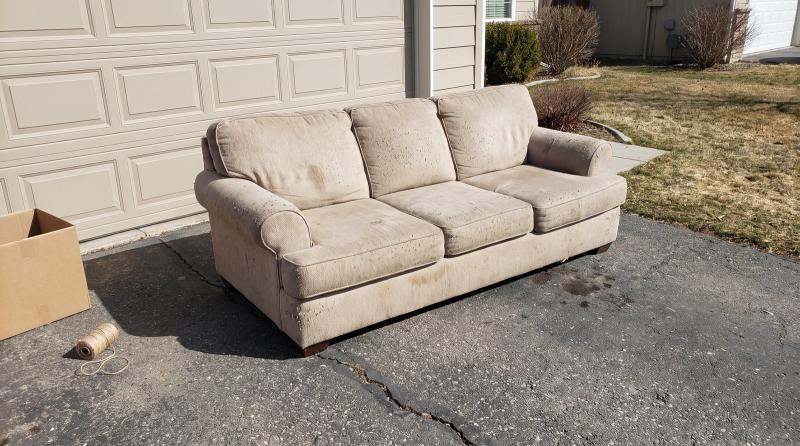
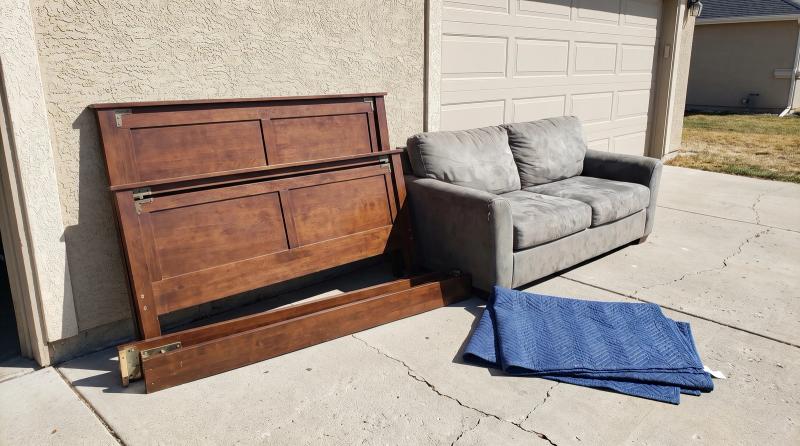
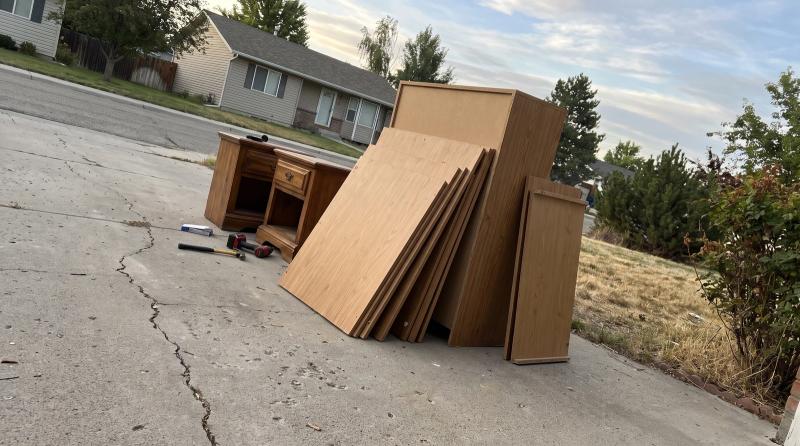
A surprising number of pieces come apart with a screwdriver and some patience. Sofa legs, bed frames, table tops, home office desks and cheap particle-board dressers are all fair game. Solid wood and welded steel frames are the ones you might lose to, and that's often the point where calling in help makes sense.
For a couch, the usual steps look like this:
- Unscrew the legs. Most legs twist off or come out with a few bolts, and that bit of clearance can be all you need.
- Pull the cushions and any back pillows that lift off.
- Look under the dust cover on the bottom. Some long sectionals unbolt into sections, and some couches have a split frame built to come apart for tight stairs.
- Take the drawers out of dressers so the depth and the weight both drop.
Before you decide a sofa fit is hopeless, try every angle. Stand it on end, tip it back, and walk it through on the diagonal. Turn it slowly at the pinch point of a tight door instead of forcing it.
If the sofa diagonal is still too big and the frame won't come apart, the real options are a different exit, like a slider or a wider back door, or cutting it down when it's headed for disposal anyway. A rigged lift through a window is something professional services handle for big furniture in a household relocation. For something you're getting rid of, a rigged lift is rarely worth the trouble or the cost of those services.
What can you use to slide heavy furniture?
Furniture sliders are the cheap win. Hard plastic ones glide on carpet, and felt ones work on wood or tile. They let one person move heavy furniture across a room, and a thick blanket under the piece pads the frame against the door jambs.
For long pieces on stairs, a lifting strap or a hand truck keeps the weight low and under control. Keep one person on the downhill end to steer, and lower it safely onto each step.
What moves the cost up or down?
Furniture removal services don't all price the same way. Ours is based on volume, meaning the space your stuff takes up in the truck. Here's what moves the number:
| What's going on | What it does to the job |
|---|---|
| A straight shot to the curb | Quick and simple |
| Stairs, tight turns or a second-story pickup | More time and more hands |
| Pieces that have to come apart first | Adds time |
| Heavy pieces like sleeper couches or solid wood | More crew effort |
| A whole bedroom, office or house of furniture | A bigger load and a longer day |
Stairs and take-apart time decide how long it runs. A good crew should look at the pieces and the path first, then price the job. Tell us what you've got, and we'll look at it and then price it with a free estimate.
Where it all ends up
Not every piece of furniture belongs in the Ada County landfill.
If a couch or dresser is still in decent shape, it can be donated. Idaho Youth Ranch takes gently used furniture, and a solid piece finding a second home beats watching it get crushed. When something's genuinely done, metal parts like frames and box-spring steel can often be recycled instead of going to the dump.
We keep usable stuff out of the landfill whenever the piece is worth saving. It feels wrong to toss a good dresser just because it got heavy.
When to call for help with the move
Honestly? Not every job needs a company. If you've got a buddy, a pickup, and a straight shot to the curb, do it yourself and keep your money, as long as you can lift it safely.
Call for furniture removal help when the math tips the other way:
- The piece is heavy and the path has stairs or tight turns
- You don't have a truck or a second set of hands
- There's a pile of it, not just one thing
- You'd rather not move something that heavy down a staircase, and deep down you know it
A professional crew brings the muscle, the truck, and the experience to work heavy pieces through tight spots with care. That's the kind of job a Junk Removal crew earns its keep on.
The bottom line
The hard part of furniture removal is almost never the disposal. It's the door, the stairs, and the weight. Get your numbers, take the easy pieces apart, and be straight with yourself about what you can safely carry.
If that old couch has you stuck, give us a call at (208) 593-2877. Tell us what you've got and where it's parked in the house, and we'll let you know what it'll take to get it out. No pressure either way.
Frequently asked questions
What if your couch won't go out the door?
Take the door off its hinges, unscrew the legs, and try it on its side. If the frame still won't clear, look for bolts that split it into sections.
Can a 40 inch wide sofa get through a 36 inch door?
Usually, yes. A sofa goes through on its side, so what counts is whether its depth or diagonal is smaller than the open space in the door frame.
How do you remove an interior door frame?
Pry the trim off with a flat bar, cut the nails holding the jamb, and pull it out. It means patching later, so try taking the door off its hinges first.
What is the 2/3 rule for a sofa?
Related reading: Junk Removal Boise Prices: What Your Quote Actually Includes and Junk Removal in Boise: Old Lawn Mowers, Grills and Yard Tools.
It's a decorating guideline: a couch should run about two-thirds the length of the wall behind it. When you shop for a replacement, check that and whether it'll fit through your front door.
Need Help With Furniture Removal?
Top Shelf serves Boise and the Treasure Valley with professional junk removal, cleanouts, and demolition services.