
Estate Cleanout Before Probate in Idaho: What's Allowed?
Wondering if you can start an estate cleanout before probate in Idaho? Here's what Boise-area families can legally clear out early and what to leave alone.
Here's a situation that comes up a lot. A parent has passed, the house needs to go on the market, and a realtor has already said to "get it cleared out." But someone in the family keeps insisting you can't start an estate cleanout before probate is done.
So who's right?
Honestly, both of them, a little. This question comes up on almost every estate cleanout we do around the Treasure Valley, and the answer isn't as scary as it can sound. There are a few real rules worth knowing before you start filling bags.
Can You Start an Estate Cleanout Before Probate in Idaho?
Short version: usually yes, but it depends on who you are and what you're touching.
Probate is the court process that confirms who has legal authority over the estate. In Idaho that person is called the personal representative, though plenty of folks still say "executor." Until the court names one, nobody technically has the green light to distribute or sell the deceased person's property.
That sounds like it means don't touch anything. It doesn't.
You're allowed to clean, sort, secure the home, and haul away obvious trash and junk. Nobody's driving to a courthouse to argue over a broken recliner, spoiled food, or a garage full of empty paint cans. What you want to hold off on is giving away or selling things that have real value before authority is settled.
Heads up: The line isn't "old" versus "new," it's "trash" versus "asset." A rusted lawnmower is junk. Grandma's ring, the coin jar, the paperwork, the firearms, and anything a family member might claim later are assets. Set those aside until the personal representative says go.
What an Estate Cleanout Before Probate Can Cover
Most of what fills a house isn't valuable in the legal sense. It's just stuff, and letting it sit for months while probate crawls along helps nobody, especially if the mortgage or utilities are still running.
Here's what families usually clear early:
- ✓Spoiled food, expired medicine, and bathroom clutter
- ✓Obvious trash, broken furniture, and worn-out mattresses
- ✓Yard debris, old fencing, and garage chemicals
- ✓Heavy items nobody wants and no one's disputing
- ✓Anything that's a safety or code issue, like hoarding-level buildup
The rule of thumb we give people: if you'd be comfortable explaining the decision to every heir at a dinner table, you're probably fine. If a sibling might raise an eyebrow, wait.
One more thing that can change your timeline. Small estates in Idaho can sometimes skip full probate through a small-estate affidavit, which speeds everything up. It's worth a quick call to the estate attorney to find out which path you're actually on before you plan the cleanout.
What to Leave Alone Until You Have Authority
This is the part people get wrong, usually out of good intentions.
Someone finds a box of jewelry and hands it to a cousin "because Mom would've wanted her to have it." Later another sibling asks where it went. Now it's a mess, and it's a mess that could've been avoided.
Until a personal representative is officially in place, don't distribute, sell, or donate anything with value. That includes:
- Jewelry, collectibles, cash, and firearms
- Vehicles and titled property
- Financial paperwork, wills, deeds, and account statements
- Anything an heir has specifically asked about
Box those up, label them, and store them somewhere secure inside the house. When we run an estate cleanout, we flag anything that looks like it belongs in that pile instead of the truck. If we're not sure, we ask. You'd rather field one extra question from us than lose track of something that mattered.
How the Timing Usually Shakes Out
So what can you actually do, and when? Right after someone passes, you can secure the home, toss the trash, and clear out spoiled food. Keep your hands off valuables, paperwork, and titled items for now.
Once those first few days are behind you but before probate formally opens, a general cleanout of junk and debris is usually fine. Selling or gifting anything of value still needs to wait.
After a personal representative is appointed, you've got authority. Full cleanout, donations, distributions, all of it. And if the estate qualifies for a small-estate affidavit, you can often handle the whole thing without formal probate, though I'd confirm that with the attorney first.
None of that is legal advice, by the way. It's just the pattern we see on real jobs across Boise, Meridian, and Nampa.
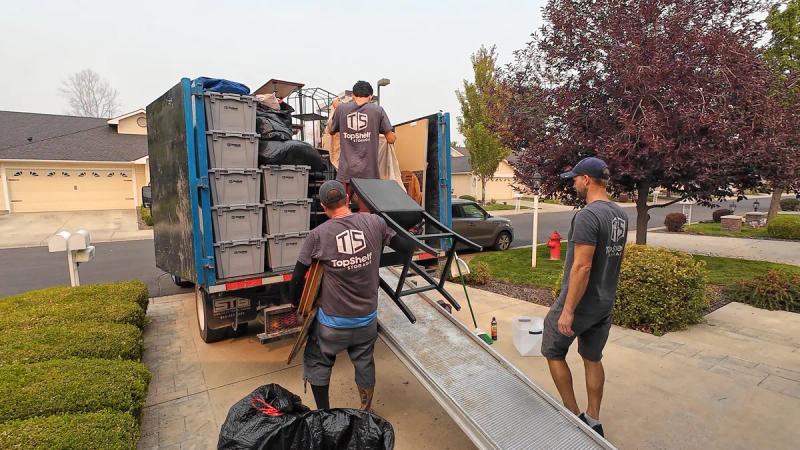
When the house is ready to clear, not everything has to end up in the landfill. Donations go to Idaho Youth Ranch when they'll take them, recyclables head to Western Recycling, and the rest goes to the Ada County landfill. What a full-home estate cleanout costs depends mostly on volume, plus how heavy the items are and how easy they are to get out of the house. You can see how our [estate cleanout service](/cleanouts/estate-cleanout) works.
The Bottom Line
You don't have to sit on your hands until probate wraps up. Clean, secure the place, and get the junk out, that part's almost always fine. Just leave the valuables, paperwork, and anything an heir might claim untouched until someone has the legal authority to make those calls.
When you've got the go-ahead and want the heavy work off your plate, give us a call at (208) 593-2877. We'll walk the house with you, flag anything that looks important, and clear out the rest. No pressure, and no charge to take a look.
Need Help With Estate Cleanout?
Top Shelf serves Boise and the Treasure Valley with professional junk removal, cleanouts, and demolition services.