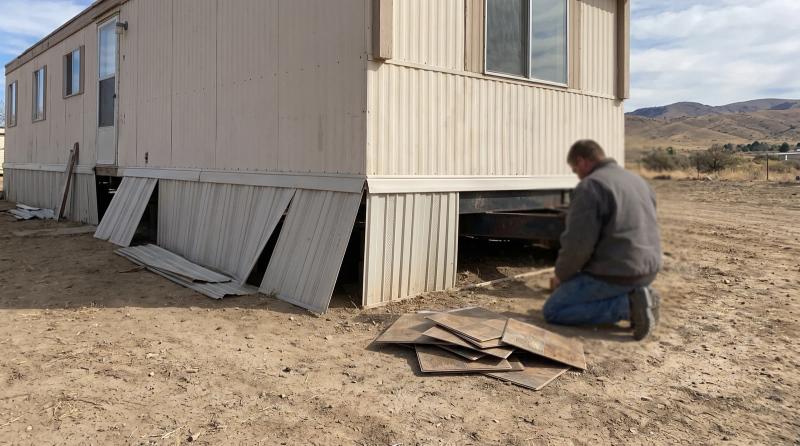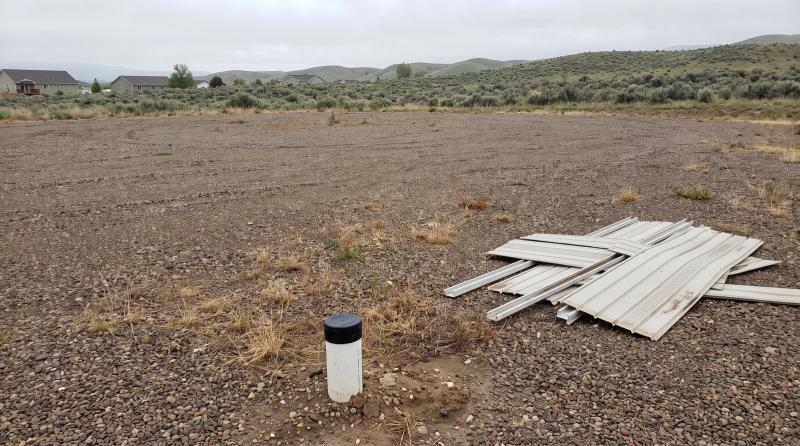

DIY Mobile Home Demolition in Boise: Is It Worth It?
By Eric Hinderager, owner of Top Shelf Junk Removal and Demolition · Updated
DIY mobile home demolition near Boise: permits, utility disconnects, asbestos testing, steel frame and what moves the cost up or down vs. hiring a crew.
DIY mobile home demolition near Boise is doable. But it's more sorting, paperwork and heavy steel than most people expect.
You can tear down a single-wide yourself. Just get the permit, the disconnects and the testing done first. Whether it's worth your time depends on the home, your equipment and how much debris you're ready to haul.
There are many legal and logistical steps involved before the first wall comes down. Skip one and the whole project can stall.
What does DIY mobile home demolition actually look like?
People picture a sledgehammer and a free Saturday. The reality is a lot more sorting and a lot more paperwork.
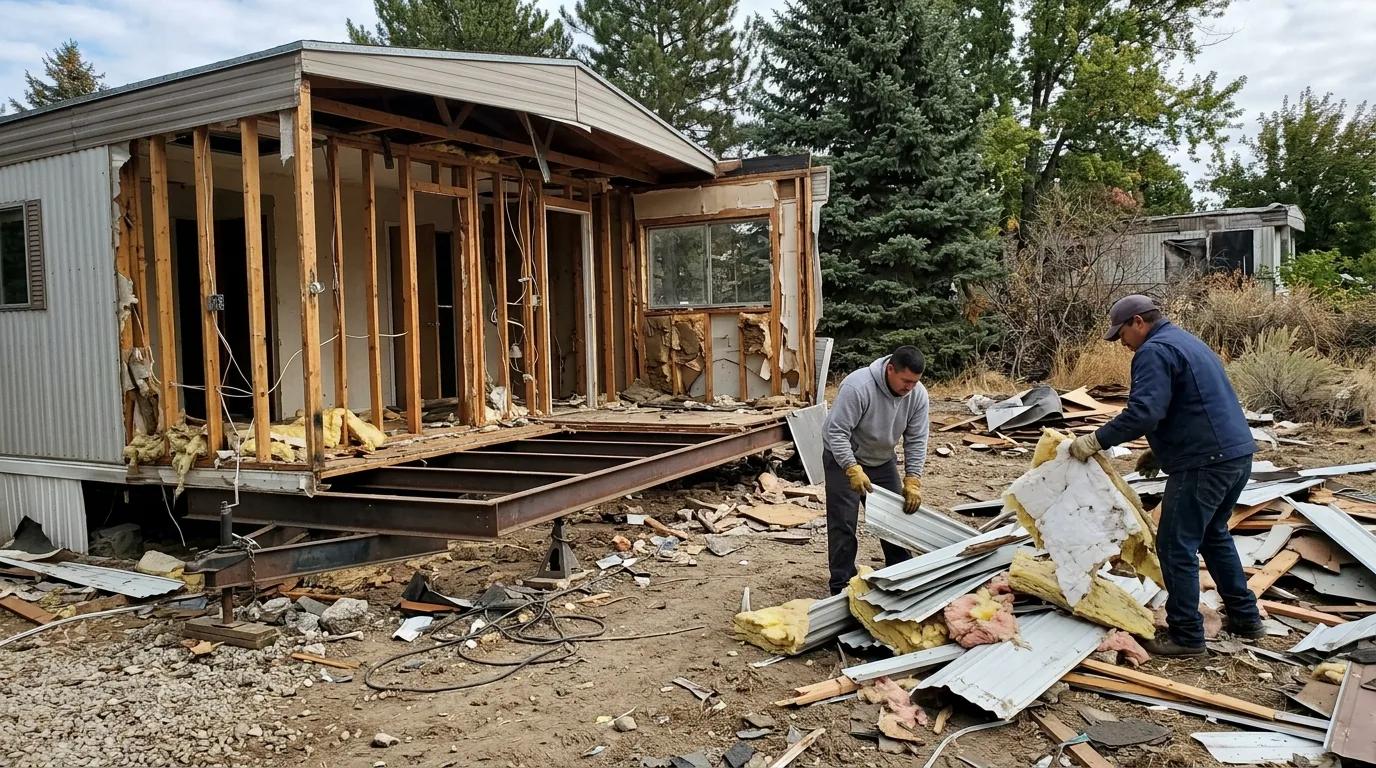
A mobile home isn't built from one thing. It's a steel chassis, wood framing, aluminum or vinyl siding, fiberglass insulation, drywall, wiring and plumbing. The roof is often layered tar and metal.
Each of those goes somewhere different. So the demolition process is mostly careful sorting, not smashing.
Hazardous materials to check first
Before any demolition starts, find out what's in the walls and floors. Hazardous materials are the one thing you can't sort out later.
Heads up: Mobile homes built before the early 1980s can contain asbestos in floor tiles, insulation and glue. Many building departments want an asbestos survey before demolition, even on a DIY job, so check the rules where you are. Skip it and you're the one on the hook if it turns up.
Old vinyl flooring and the glue under it are common trouble spots. Test before you pry anything up. If the survey comes back positive, that part of the home usually needs a licensed abatement contractor first.
Pull a few other things out early too: fluorescent bulbs, old thermostats and any appliance that holds refrigerant. Those don't belong in a demolition load.
Taking apart the mobile home frame
The steel chassis under the floor is the part that stops most DIY demolition jobs. It's heavy and awkward. It doesn't come apart with hand tools.
Most people get the walls and roof down, then stall out on the mobile home frame. Here's the usual order for taking it apart by hand:
- Strip the inside first: cabinets, fixtures, carpet, trim and drywall.
- Pull the siding and roof sheeting, then cut the wall sections loose and lay them down in pieces.
- For the floor deck, set blade depth to the deck's thickness. That keeps you off the steel underneath. Then cut it into strips.
- Keep each cut width narrow enough that one or two people can carry the piece to the right pile.
- With the wood off, cut the steel into lengths with a torch or a metal-cutting saw.
Quick tip: Mark your cut width on each panel before you start. Set blade depth again every time you move from roof to wall to floor. The layers aren't the same thickness.
The mobile home frame is also the one piece with real scrap value. A salvage yard will often take clean steel. Some scrap buyers advertise free removal if the frame is cut to their length, so call ahead and ask.
Do you need a permit to tear down a mobile home?
Usually, yes. To the building department, tearing down a mobile home is still construction work. This is where most weekend plans fall apart.
You'll likely need a demolition permit from your city or county building department. That goes for Boise, Meridian, Nampa or out in the county. Each city sets its own steps, so call before you start.
Before anything comes down, the utilities have to be properly disconnected, not just flipped off at the breaker. Power, gas, water and sewer or septic all need to be handled the right way. Gas especially needs to be capped by someone who knows what they're doing.
So plan on permits and utility capping before the first swing, not after. Some departments ask for proof of disconnects before they sign off on a demolition.
A DIY permit doesn't make the job faster. You still wait on inspections and set up disconnects. And you squeeze it all in around your real job.
If the home is titled, the title may also need to be surrendered once it's gone. Ask the county or the DMV before the trailer home is hauled away. That way the paperwork matches what's left on the lot.
How much does it cost to demolish a mobile home?
Sometimes DIY makes sense, especially if you own a skid steer and have time to spare. But look at what moves the bill on a demolition before you commit.
What pushes the cost of a mobile home teardown up or down:
- Size: a double-wide means more of everything than a single-wide.
- Additions: porches, carports, skirting and extra roof layers add weight and haul trips.
- What's still inside: a house full of furniture adds trips before demolition even starts.
- Testing results: a clean survey keeps it simple, and a positive one adds abatement.
- Access: a tight lot or soft ground slows down equipment and loading.
- Disposal: the Ada County landfill charges disposal fees, so every load costs you something.
- Scrap value: steel and aluminum can offset part of the bill when they go to a salvage yard instead of the landfill.
| DIY teardown | Hiring a crew | |
|---|---|---|
| What you pay for | Bins, landfill fees, tool and equipment rental | One quote for labor, hauling and disposal |
| Your time | Many weekends, often more than planned | You mostly stay out of it |
| Utility disconnects | You arrange each one | Coordinated for you |
| Testing and abatement | Your responsibility and liability | Ask the crew how it's handled before demolition starts |
| Site left clean | Only if you keep hauling | Debris hauled off as part of the job |
That DIY column looks cheaper until you count the weekends and the trips to the landfill. Add those up and the savings can shrink fast. You pay for them with Saturdays spent covered in fiberglass.
Debris removal and dumpster management
A single-wide mobile home produces a lot of mixed waste. How much depends on its size, how many roof layers it has and what's still inside.
Good dumpster management matters more than people think. Rented bins have weight limits and placement rules. A bin parked in the wrong spot may have to move once it's full.
Efficient debris removal comes down to sorting as you go: steel in one pile, clean wood in another, mixed waste in the bin. Mix them and you end up sorting twice.
Efficient debris removal also means knowing where each pile goes before demolition starts. Steel heads to a salvage yard. Most other materials go to the landfill.
Doors, windows, cabinets and working appliances can go to scrap or donation instead of the landfill.
When DIY is the right call (and when it isn't)
DIY mobile home demolition can work if a few things line up:
- The home is newer, so asbestos is less likely
- You've got equipment, not just hand tools
- You've got real time, not just good intentions
- You're comfortable arranging your own permits and utility capping
If even two of those feel shaky, hiring out usually pencils out better. Count the dump runs and the risk too. A professional crew brings the equipment and the hauling, so the demolition doesn't drag on.
If you've already started and hit a wall, that's fine too. Handing off a half-finished demolition project is common. Nobody should lecture you about it.
The stuff inside is its own question. If the home's packed with old furniture and junk, it has to clear out before demo either way. Furniture removal can be part of the demolition job or a separate cleanout first. Ask which keeps your bill down.
Some charities offer free removal of furniture in good shape. It's worth a call before you pay to haul it.
Mobile home demolition services are there if you'd rather skip the whole thing. But the tools exist and the permits are gettable if you want to do it yourself. Still, think about the testing rules, the disconnects, the steel frame and the dump fees. The money you save often doesn't match the time and hassle.
We demolish mobile homes across the Treasure Valley, and we can handle the permit application for you. If DIY doesn't pencil out, call Top Shelf Junk Removal and Demolition at (208) 593-2877. You'll get a straight quote, no pressure either way.
Frequently asked questions
How long does the demolition process take?
It depends on the home's size, what's still inside, the permit wait and how much help you have. A demolition crew with the right equipment moves faster than one person with hand tools. Even when we demolish mobile homes with a full crew, the permits and disconnects take the same time.
Is it worth taking it on yourself?
A DIY teardown can be worth it if the home is newer and you have equipment. You also need to be fine with permits and hauling. If not, get a couple of quotes before you buy a single crowbar.
What happens to the materials after demolition?
Related reading: Concrete Slab Demolition: Can You DIY It, or Should You Hand It Off? and Chicken Coop Removal in Boise: Dust, Wire and Old Posts.
Steel usually goes for scrap, and usable items go to scrap or donation. The rest goes to the landfill. Western Recycling is one local option for metal, so call ahead and ask what they take.
Need Help With Mobile Home Demolition?
Top Shelf serves Boise and the Treasure Valley with professional junk removal, cleanouts, and demolition services.