
Deck Removal Permits in Boise: What You Actually Need
Do you need a permit for deck removal in Boise? Here's when the city actually cares, when it doesn't, and why utilities and old footings matter more.
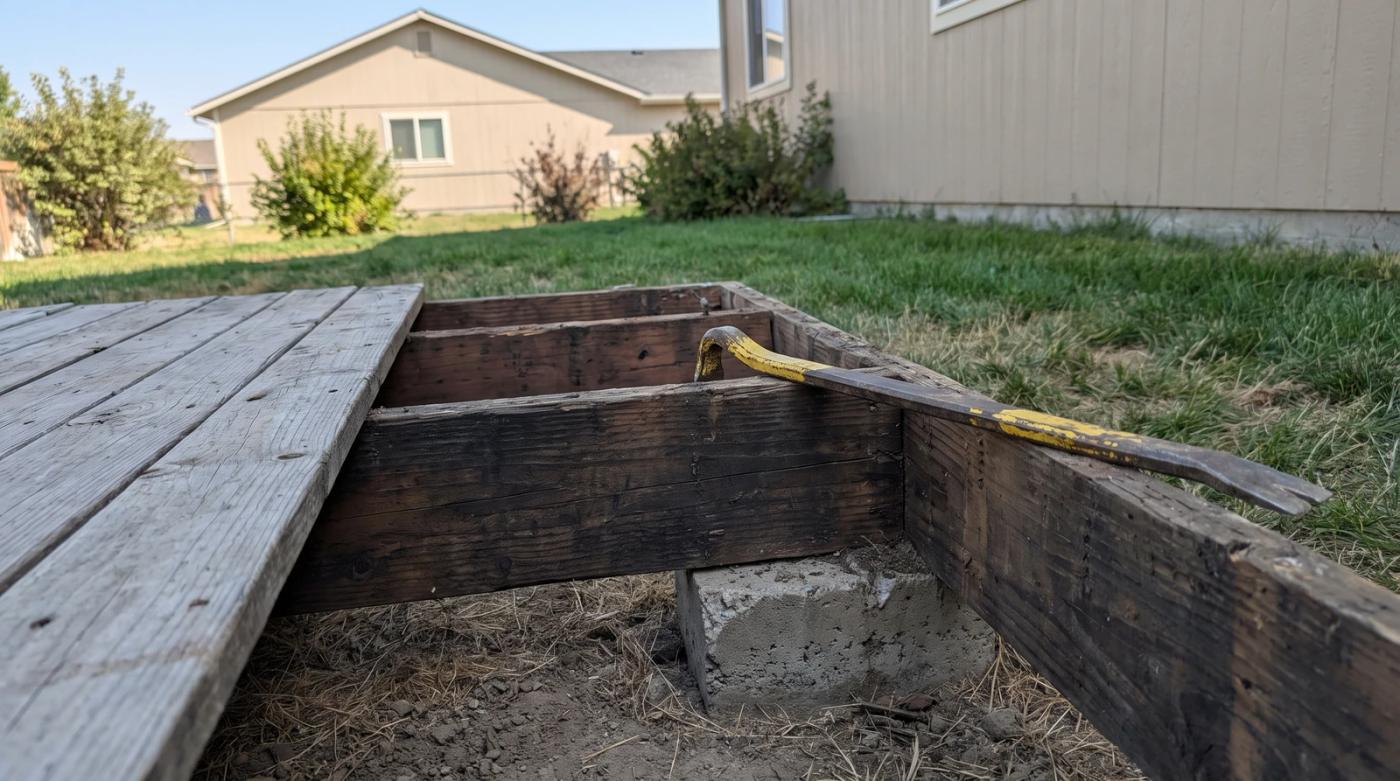
Here's a situation that's easy to land in. You start a deck removal yourself, prying boards off an old backyard deck, and a neighbor tells you that you need a permit or you'll get fined. So you stop cold, deck half-gutted, wondering if you've broken some rule.
You probably haven't. But it's a fair question, and it comes up more than you'd think.
So let's clear it up. Does deck removal in Boise actually need a permit? Most of the time, no. But there are a few situations where it does, and a couple where the permit isn't the real issue at all.
When deck removal doesn't need a permit
Here's the short version. Tearing down a standard wood deck, freestanding or attached, usually doesn't require a demolition permit in the Boise area. Ada County and the City of Boise care a lot more about what you build than what you take away.
Pulling up a ground-level deck? Hauling off a raised one with nothing going back in its place? You're generally fine to get started. Same goes for most of Meridian and Nampa. Nobody's sending an inspector out to watch you unscrew joist hangers.
Where people trip up is assuming demolition follows the same rules as construction. It doesn't. Building a new deck over a certain height or size needs a permit and an inspection. Removing that same deck usually just needs a dumpster and a free Saturday.
Heads up: The permit question flips the second you plan to rebuild. If you're tearing down an old deck to put a new one in the same spot, the new deck likely needs a permit, and the city may want to see the old footings or the exposed ledger before you cover anything up. Plan for that before you demo.
When you actually do need to check with the city
There are a handful of cases where a quick call to your local building department is worth it. Don't guess on these.
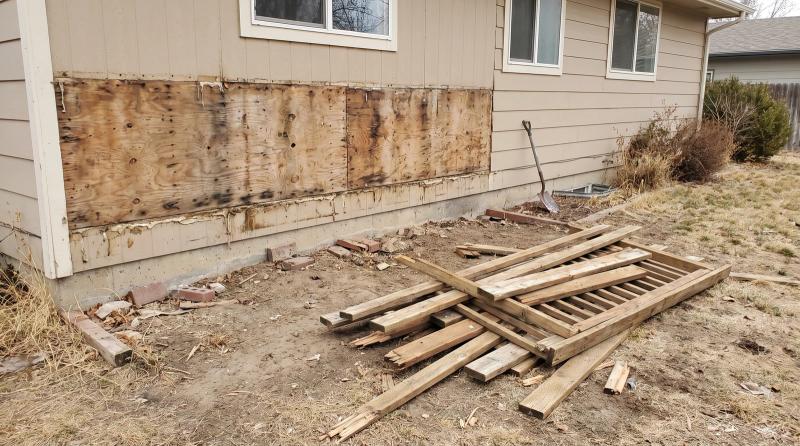
- Second-story or elevated decks attached to the house. When a deck ties into the structure well above grade, taking it off can affect the wall, the siding, or a door that now opens onto nothing. Some jurisdictions want eyes on how you close that up.
- HOA neighborhoods. Not a city permit, but plenty of Treasure Valley subdivisions have rules about exterior changes. Your HOA might not care that the deck is gone, or they might want the patch to match the house. Check your covenants.
- Decks over or near utilities and easements. If your deck sits on top of a gas line, a sewer cleanout, or backs up to a utility easement, that changes things fast.
That last one is the big one, and it's less about permits than about not hitting something expensive underground.
The thing that matters more than the permit
Honestly? For most deck removals, the permit is the least of your worries. The footings and the utilities are what'll actually cause you a headache.
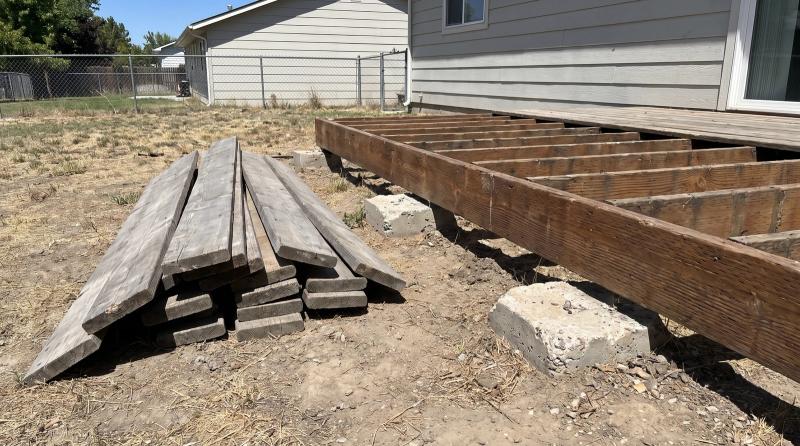
Old Boise decks were often set on concrete footings poured well below the surface. Some are little pier blocks you can pop out with a pry bar. Others are full posts sunk in a bag of concrete that fight you the whole way.
Before anyone digs those out, call Digline at 811. It's free, it's the law in Idaho, and it gets your gas, power, and water lines marked so you don't clip one.
Footings can end up sitting a lot closer to a gas line than a homeowner ever realized. That's not a permit problem. That's a call-the-fire-department problem. So we locate first.
Here's roughly how the pieces break down on a typical job:
| Part of the job | Permit needed? | Real concern |
|---|---|---|
| Removing deck boards & framing | No | Disposal and haul-off |
| Digging out concrete footings | No | Utility lines (call 811) |
| Rebuilding a new deck | Usually yes | Inspection & footings |
| Patching siding or door after | Sometimes | Weatherproofing |
Not every deck needs to come out, by the way. Sometimes what looks like a total loss just needs a few new boards and a coat of stain. But if it's soft, wobbly, or rotting where it meets the house, a full [deck removal](/demolition/deck-removal) is usually the cheaper call over the long run.
What a deck removal actually involves
On a [deck removal](/demolition/deck-removal), the permit question is one of the first things to sort out. If a job needs a call to the city or a utility locate, it's better to know up front than to find out halfway through.
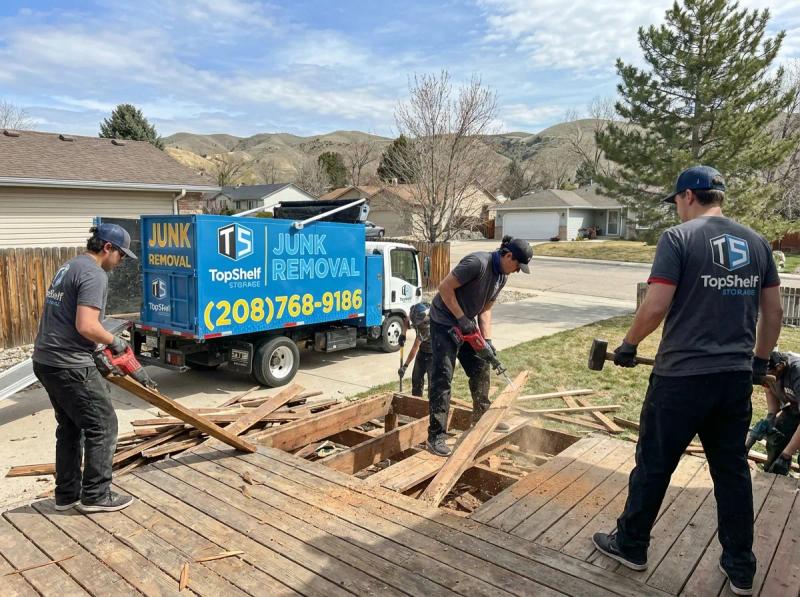
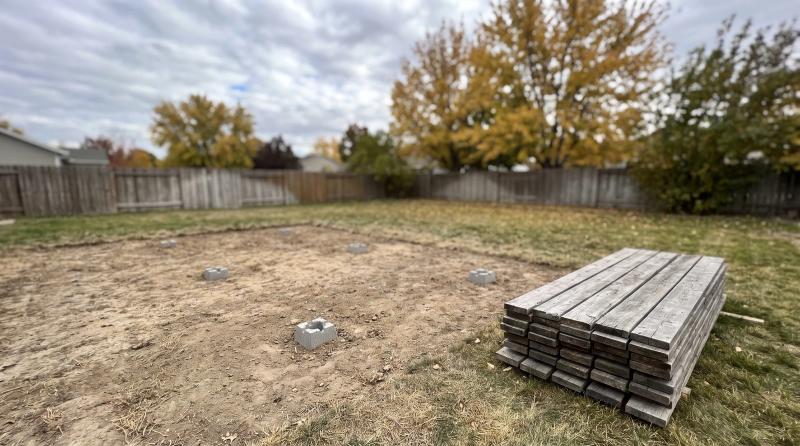
We pull the whole thing, boards, joists, beams, and railings, right down to the footings. Those posts set in concrete get dug out clean, not snapped off at grade and left for you to trip over later. The Digline locate happens before anybody puts a shovel in the ground.
Then it all gets hauled to the Ada County landfill or Western Recycling, so nothing's left sitting on your property. We rake the spot on the way out, so it's ready for grass, gravel, or whatever's going there next.
What a deck removal costs comes down to size, height, how much material there is to haul, and how stubborn those footings are. A small ground-level deck comes down fast. A big two-story with concrete-set posts takes longer and costs more, but you'll know the number before we start.
Bottom line
For a straight deck removal in Boise, Meridian, or Nampa, you almost never need a permit. What you do need is a utility locate before you dig out footings, and a heads-up to your HOA or the city if you're rebuilding or the deck ties into the house up high.
Not sure which bucket your deck falls into? Give us a call at (208) 593-2877. We'll ask a couple questions, tell you straight whether the city needs to be involved, and quote it if you want. No pressure either way.
Need Help With Deck Removal?
Top Shelf serves Boise and the Treasure Valley with professional junk removal, cleanouts, and demolition services.