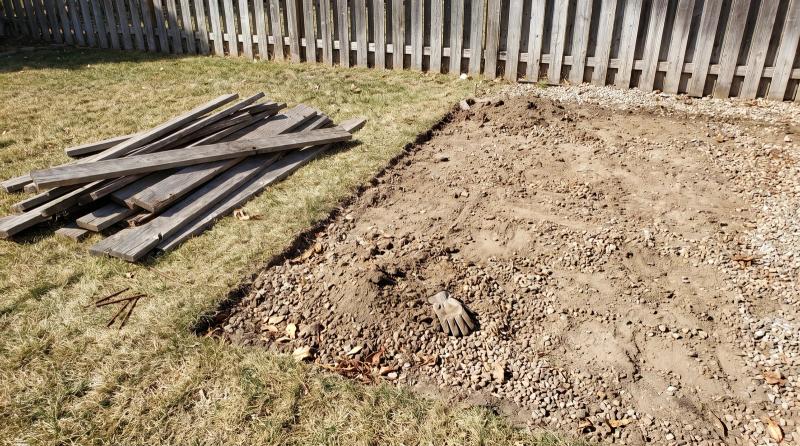

Do Deck Removal Footings Come Out? A Boise Guide to Deck Footings
By Eric Hinderager, owner of Top Shelf Junk Removal and Demolition · Updated
Do deck removal footings come out? Boise guide to what's under your deck, what pulling piers involves, what moves the price, and when to leave them.
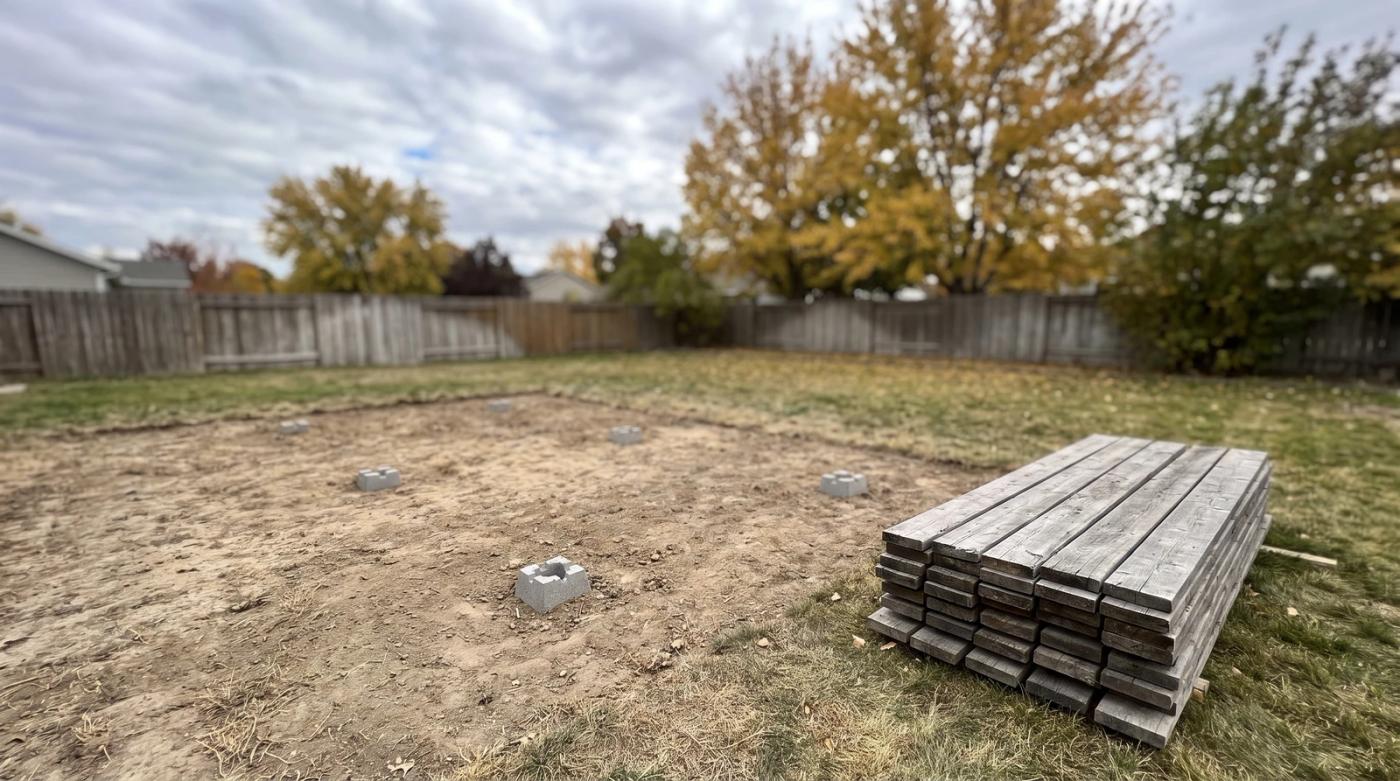
On a typical deck removal, footings come out, Boise yards included, because concrete left in the ground gets in the way of whatever you put there next.
The decking and framing are the easy part. What's left is a row of gray stumps where the posts used to be, and whether those go too depends on what's down there and what you've got planned for the yard.
First, figure out what's under the posts
Not all deck footings are the same, and around Boise and the rest of the Treasure Valley there are a few common setups.
Older builds in older neighborhoods, like the Bench and the North End, often sit on precast pier blocks. Those little pyramid-shaped blocks just rest on the dirt. You can usually lift one out by hand.
Newer ones in Boise, Meridian, Nampa, and the Eagle subdivisions are more likely to be on poured piers. Somebody dug a hole, dropped in a cardboard footing tube, filled it with concrete, and set a metal footing post base on top.
Code in Boise means getting below frost depth, so those tubes go deeper than most people expect and run wider than the post sitting on them. Some are reinforced concrete with rebar down the middle. They're basically small foundations, one under each post.
Some newer builds skip concrete and use helical pile footings engineered for the load. Those are steel shafts screwed into the ground, and they come out differently than concrete, so mention them when you call.
Then there's the last category: whatever the last guy felt like doing that weekend.
Posts set in five-gallon buckets of concrete turn up. Bare 4x4s buried straight in the dirt with nothing under them, rotted off at ground level, show up more often than you'd think. Some just rest on stacked patio pavers.
A raised balcony or second-story deck is its own animal. Those posts carry more weight, so the piers under them tend to be bigger and deeper, and the whole thing is often bolted to the house wall too.
Quick tip: Before you call anyone, take a shovel and scrape two inches of dirt away from one post base. A flat block sitting on the surface usually means a simpler job. If the concrete keeps going down past the shovel blade, you've got poured piers, and that's worth saying when you call so the quote actually matches the job.
Do the footings come out during deck removal in Boise?
Usually, yes, and on our jobs it's worth talking through before the crew starts. Here's why.
A pier that stops an inch below grade in a backyard is invisible until you find it with a mower blade or a tiller. If you're laying sod, pouring a patio, digging a garden bed, or setting a play structure, that concrete is in the way of all of it.
Pulling piers while the crew is already there is also simpler than coming back for them after new sod or gravel is down. A balcony coming down for good tends to leave bigger piers, so those are often the most worth pulling.
Removing them is more physical than complicated. Here's how it usually goes:
- Pull the decking and framing first so there's room to work.
- Dig a collar around each pier.
- Rock the piers back and forth until they're loose.
- Lift the small ones out whole. Big ones, or reinforced concrete with rebar through the middle, get broken up and hauled out in pieces.
- Fill the holes and tamp the dirt so the spot doesn't sink later.
Boise-area soil changes the job, too. Hard, rocky ground or caliche on some lots grips a pier tight, while softer ground gives it up easier.
Good to know: Before anyone digs around old piers in your yard, a call to 811 gets the buried gas, power and cable lines marked. Private lines, like your sprinklers, usually aren't part of that.
Times it clearly makes sense to pull them:
- You're re-sodding, seeding, or landscaping where it stood
- A patio, shed, or hot tub pad is going in the same footprint
- The new deck won't line up with the old post spacing
- The piers stick up out of the dirt and you'd be mowing around them forever
Replacing the piers for a new build is a two-step job: the old ones come out or get cut down, then the builder sets new ones where the new posts need them. Check with the City of Boise on depth and permit rules before the new ones go in.
How much does it cost to have a deck removed?
There's no single price, because what's in the ground can change the cost a lot. Here's what's usually under a Boise deck and what each setup does to the price.
| What's under the posts | What it takes | What it does to the price |
|---|---|---|
| Precast pier blocks | Lift and haul by hand | Barely moves it |
| Poured piers | Dig a collar, rock loose, lift | Adds labor for every post |
| Deep piers with rebar | Break up, haul in pieces | Adds more labor and weight |
| Full concrete pad underneath | Slab breakout and haul | Gets scoped as its own concrete removal |
Beyond the piers, a straightforward teardown depends on size, height, and how easy it is to get to. That's why we'd rather hear about the piers before we quote than after.
A few other things push the price up or down:
- Height. A low build near the ground comes apart faster than a second-story balcony that has to come down in stages.
- Access. A side gate and a clear path to the driveway beat hauling everything around the house or up a slope.
- What else is going. An old porch, a pile from a remodel cleanup, or stuff from garage cleanouts can ride in the same load.
- Permits. Bigger tear-downs can need one, and we can handle the permit application for you.
When it's fine to leave them in the ground
We take things apart for a living, but there are still times when digging piers is money you don't need to spend.
Building a new deck in the same footprint with the same post spacing? A good builder may reuse those piers outright, as long as they were installed right and still sit solid. Have them look before anyone digs.
If the area is just going back to gravel or bark, like a lot of yards around here, a pier cut off flush with the ground disappears under a couple inches of material and nobody's the wiser.
And when the deck or balcony is attached to the house, the piers are honestly the small problem. The ledger board and the siding on that wall are where the careful work happens, since the ledger on an attached balcony holds up a whole side of it.
Heads up: Sprinkler lines and low-voltage outdoor lighting wire often run right past old posts. A deep hole finds them in a hurry, so walk the yard and flag what you know about before anyone starts on the piers and has to dig them out.
Still not sure it needs to come down at all? Tearing it out versus fixing it usually comes down to the framing, not the boards. Rotten joists or posts point to a full teardown, while tired boards on solid framing can often just be swapped.
Top Shelf Junk Removal and Demolition takes out decks, balconies and the piers under them around Boise, along with the junk removal, remodel cleanup, construction debris hauling and jobsite clearing that often come with it.
Want a straight number? Call (208) 593-2877 for a free on-site estimate. A photo of one post base ahead of time helps show what's down there.
Frequently asked questions
How can I remove concrete deck footings?
Dig a collar around the pier, rock it until it breaks free, and lift it out. Removing concrete that's deep or full of rebar is a bigger job, since it has to be broken up first. Ground baked hard by a Boise summer also digs slower than spring soil.
Will tearing it out lower my home's value?
Not usually when it was in rough shape, since a rotting or unsafe deck tends to count against a house. A solid, well-kept deck or balcony can be a selling point, though. If you're selling soon, ask a local real estate agent before you tear out one that's still sound.
Where does the concrete and old wood go?
Related reading: Removing a Deck From a House: Where All That Lumber Ends Up and Concrete Slab Demolition: Can You DIY It, or Should You Hand It Off?.
Clean broken concrete can often be recycled locally, so check with area concrete recyclers on what they take. Old pressure-treated framing and decking shouldn't be burned or chipped for mulch, so it usually ends up at a landfill like Ada County's, the same as most construction debris hauling.
Need Help With Deck Removal?
Top Shelf serves Boise and the Treasure Valley with professional junk removal, cleanouts, and demolition services.