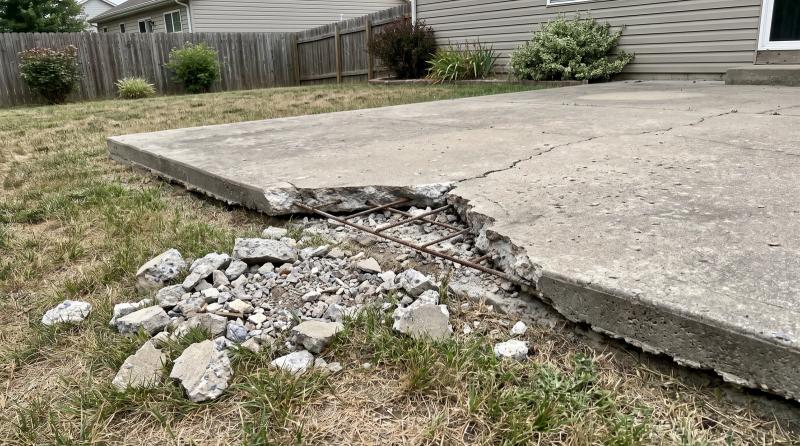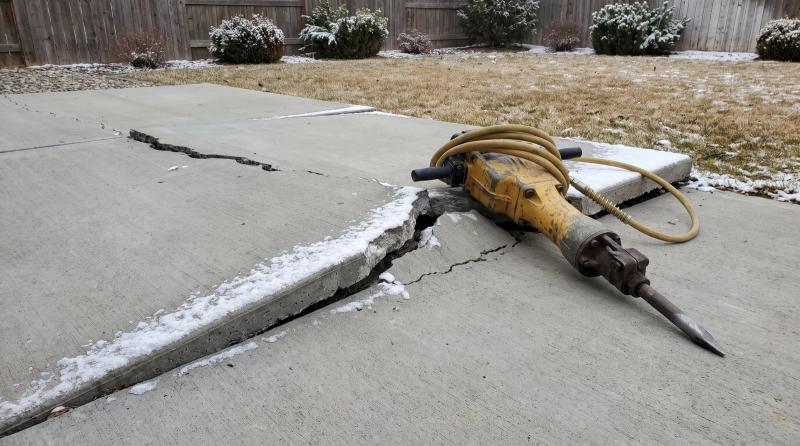

Concrete Removal: Does It Have to Be Hauled Away in Boise?
By Eric Hinderager, owner of Top Shelf Junk Removal and Demolition · Updated
Concrete removal in Boise: does it have to be hauled away? Learn when broken slab can stay on your lot, when it should go, and what moves the cost.
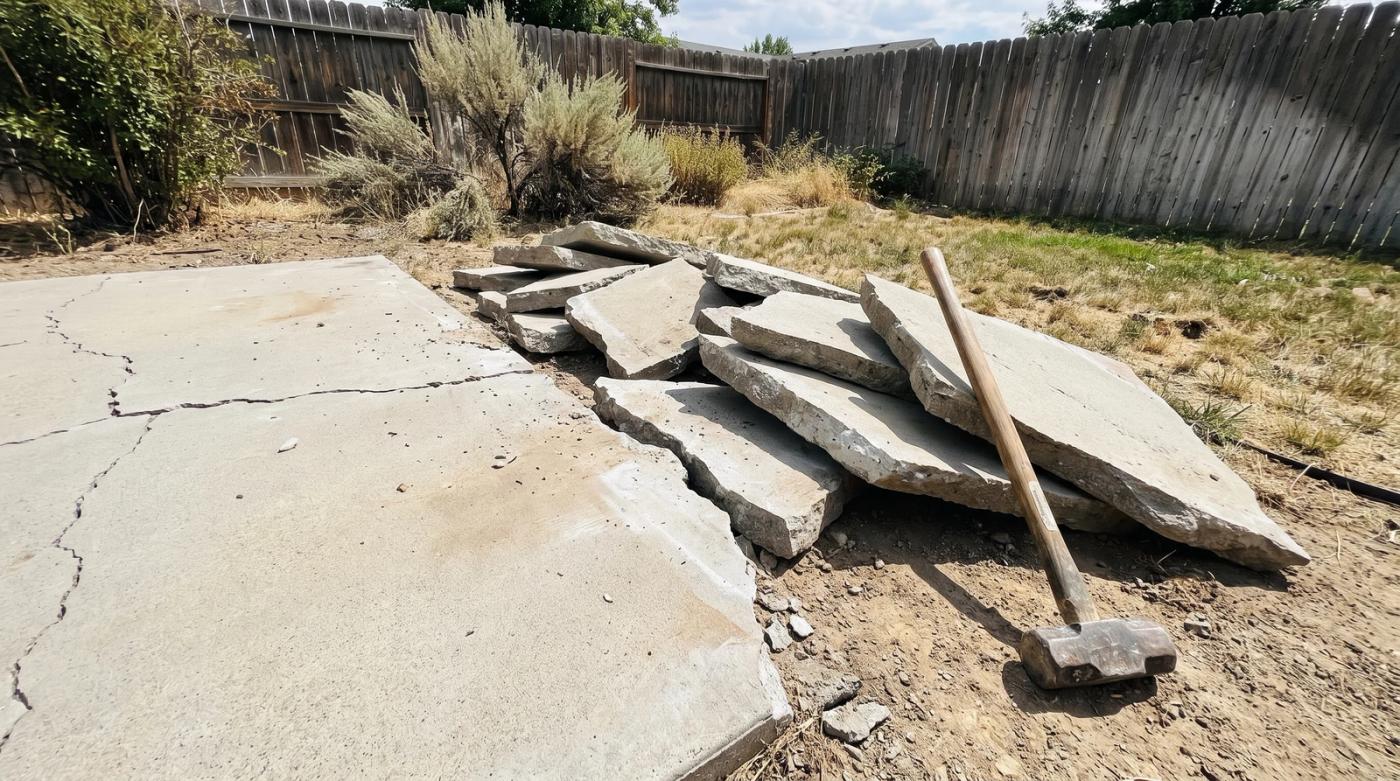
Concrete removal in Boise doesn't always mean the slab has to be hauled away; it does when the broken concrete has no real job to do on your lot. That's the short answer most Boise concrete jobs come down to.
Breaking a concrete slab is only part of the job. Loading the concrete debris and paying for concrete waste disposal add to the bill too, which is why so many people ask if the pieces can just stay.
Sometimes they can. Other times it's a problem you pay for twice.
Concrete removal: does it have to be hauled away in Boise?
People who ask about leaving the concrete usually have one of three pictures in their head.
Bury it in a low spot in the yard. Use it as base under a new driveway or shed pad. Or stack it along a slope as a rough wall.
The first one is usually a bad idea. The second depends. The third works more often than people expect.
The removal work itself doesn't change either way. Breaking out the slab takes the same effort whether the concrete rubble stays or goes. A concrete removal service still has to break and load every piece, so the labor side looks about the same. What changes is where the concrete waste ends up, and that's where the money moves.
If it does leave, whether you haul it or hire a service, there are two main paths. Clean concrete can go to a concrete recycling center, where it gets crushed and reused as base rock. Mixed loads of concrete debris, with dirt, wood or other junk in them, are more likely to end up as landfill waste.
When can broken concrete stay on your property?
Plenty of broken concrete does stay put, as long as it has work to do.
Rip rap on a slope. Big flat concrete pieces stacked along an embankment or ditch bank hold soil back and slow erosion. Old sidewalk and patio sections work best, since they break into slabs instead of concrete rubble. Concrete chunks with flat faces stack tighter and shift less.
Crushed base under a new pour. Replacing a driveway with another driveway? Crushed concrete makes a solid sub-base. The key word is crushed. Concrete chunks the size of a car hood won't compact, and a new slab poured over them tends to crack.
Drainage fill. Broken concrete does fine in a dry well or the bottom of a French drain, where a little settling doesn't bother anyone.
The honest test: is there a real job this concrete would do, or are you just dodging a disposal bill? If it's the second one, haul it.
Before you decide, walk the yard and look for:
- A specific spot with a specific job, not just "the back corner"
- Clean concrete, meaning no paint, no sealer, no sod and mud caked on the bottom
- Room for a wheelbarrow or a mini skid to reach the spot
- Nothing downhill that water could get pushed toward
Don't skip that last one. Sending runoff onto the neighbor's grass is how saving on disposal can turn into a letter from somebody's attorney. Worth a look at your CC&Rs too, since some subdivisions say plenty about concrete fill and grading.
Why burying concrete in the yard usually backfires
I get the appeal. There's a dip in the back corner and a pile of concrete debris sitting a few steps from it. Feels like a match.
Here's what goes wrong. Broken concrete is lumpy and doesn't compact. You get big voids between the concrete chunks, and after a few freeze-thaw cycles those voids close up unevenly, so the ground above sinks in patches.
Then there's everything you might want to do later. Plant a tree, trench a sprinkler line, set a fence post. Now you're swinging a digging bar into a field of concrete rubble. Any concrete you leave in the ground stays yours to dig around.
Hitting an old buried concrete slab a few inches down is a common surprise on older lots around Boise, and nobody enjoys it.
Drainage matters too. Fill that changes how water moves across a property can run into local rules, so check with your city or county before you bury any concrete. If you sit uphill of a neighbor or near a drainage swale, that's not a technicality.
Heads up: If you might sell in the next few years, buried concrete waste can turn into a disclosure conversation. Inspectors can notice soft spots and settled turf, and buyers may ask what's underneath. A free fix today can become a price negotiation later.
Concrete hauling and the recycling center: what moves the cost
When the concrete is going to leave, a few things decide how big the job gets. Concrete disposal is a real part of the total, and how big a part depends on the volume, the weight and whether the concrete is clean.
| Option | What it takes | Best for |
|---|---|---|
| Stays onsite | Breaking, stacking and placing the concrete yourself | Rip rap, crushed base, drainage fill |
| Concrete recycling | Clean concrete with no dirt, wood or junk mixed in | Patios, walks and pads that break clean |
| Landfill disposal | Mixed loads with dirt, sod, tar or other junk | Concrete debris that can't be sorted |
| Full haul-off service | A crew breaks, loads and sorts the concrete waste for recycling or disposal | Most patio, walk and small pad removal |
Clean concrete is easier to place at a recycling center than mixed loads. That's the part people miss. Rebar, wire mesh, roofing tar, a bunch of sod stuck to the bottom: any of that can push a load out of concrete recycling and into general waste, which is one reason thickness and rebar can move a quote, not just square footage.
Hauling concrete is heavy work, because concrete is dense and adds up fast. Other things that move the cost of hauling concrete:
- How thick the concrete slab is, and whether it has rebar or wire mesh
- How close the truck can get to the slab, and whether a gate, stairs or a slope is in the way
- How much other junk is mixed in with the concrete waste
- How many loads of concrete debris the job takes
A full concrete haul away service means a crew breaks, loads and sorts it, setting clean pieces aside for concrete recycling where they can. If you're clearing the yard anyway, old fencing, yard waste or other junk can go out on the same trip, kept separate from the clean concrete. A junk removal service that also does demolition can handle the concrete and the rest of the junk in one visit.
So yes, keeping concrete onsite cuts the disposal bill. But you own that pile of concrete now. Make sure you want it.
Quick tip: Ask yourself this. If you didn't already have the concrete, would you pay somebody to truck it in and place it there? If the answer is no, it isn't fill. It's concrete rubble in a nicer location.
Top Shelf Junk Removal and Demolition takes on concrete hauling around Boise, Meridian, Nampa and the rest of the Treasure Valley, and we'll tell you straight which way makes sense on your lot. If you'd rather not haul concrete yourself, ask for a free estimate and describe the concrete you're looking at.
Frequently asked questions
Can I recycle my own concrete waste?
Yes, if it's clean concrete waste. You can recycle concrete by taking it to a recycling yard that accepts it, but most want it free of dirt, wood, junk and other waste. Disposal rules for concrete vary from site to site around Boise, so check their current hours and rules before you load up.
Does rebar change the cost of removal?
It can. Rebar and wire mesh make a concrete slab slower to break and load during removal, and steel left in the concrete can limit where it goes for recycling or disposal.
What should I do before the removal crew shows up?
Move cars, furniture and planters away from the concrete slab, and mark any sprinkler lines or cables you know about. Before removal day, clear a path to where the truck can park so hauling concrete out goes smoothly.
Is dirty concrete harder to get rid of?
Related reading: Removing a Deck From a House: Where All That Lumber Ends Up and Concrete Slab Demolition: Can You DIY It, or Should You Hand It Off?.
Usually, yes. Many recycling yards won't recycle concrete with soil, sod, paint, tar or other junk on it, so dirty loads are more likely to end up as landfill waste and disposal gets harder. Keeping concrete clean and apart from other junk and waste gives it the best shot at concrete recycling.
Need Help With Concrete Removal?
Top Shelf serves Boise and the Treasure Valley with professional junk removal, cleanouts, and demolition services.