
Can You Burn Pressure Treated Wood? What to Do With Old Deck Wood
By Eric Hinderager, owner of Top Shelf Junk Removal and Demolition · Updated
Can you burn pressure treated wood? No. Here's why old CCA deck boards are risky to burn and where treated lumber can legally go in the Treasure Valley.
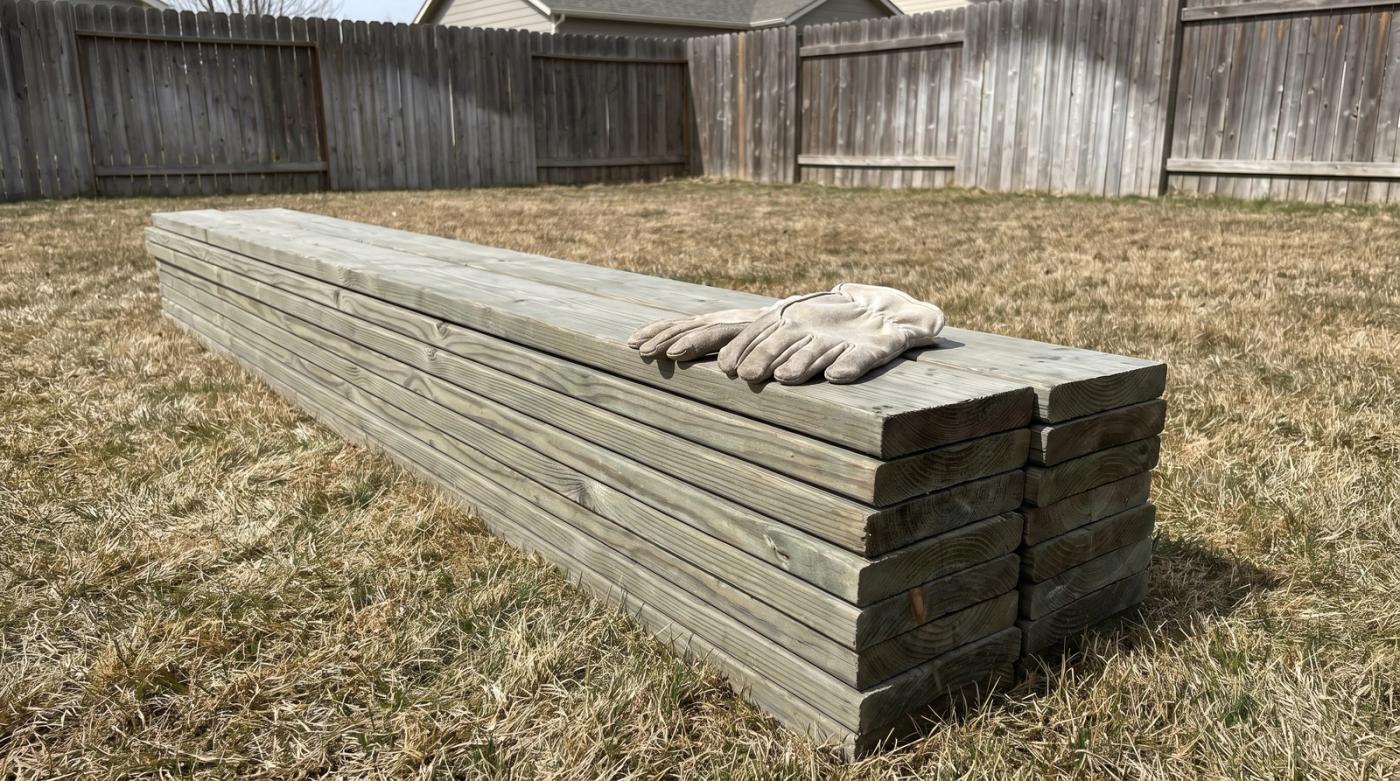
The answer to "can you burn pressure treated wood" is no: old deck boards don't go in fire pits, burn barrels, fireplaces or wood stoves. The chemicals that keep a deck from rotting don't vanish in the flames. They ride out in the smoke and settle in the ash, and older boards can carry arsenic.
Getting ready to tear out a deck? The demo gets all the attention, but you're also about to end up with a big pile of wood that comes with rules regular scrap doesn't. Here's what's in it, why it's risky, and where it can legally go around the Treasure Valley.
Can You Burn Pressure Treated Wood?
No. Idaho's open burning rules don't allow burning any pressure treated timber, and your backyard isn't an exception.
The rules aren't the only reason. Heat breaks the chemical bond holding arsenic, chromium and copper in the wood fibers, and all three head up in the smoke or stay behind in the ash.
That's why burning old pressure-treated wood is not recommended, even outdoors where the smoke seems to blow away. Old or new, treated wood should never be burned.
Why Pressure-Treated Wood Is Different
Pretty much every deck in the Treasure Valley sits on a pressure-treated frame. That's the posts, beams and joists for sure, and on older decks it's usually the boards you walk on too.
Pressure treated lumber is soaked in chemical preservatives so it won't rot or get eaten by bugs. Great for a deck. Not so great once it's a pile of scrap in your yard.
Here's the part that surprises people. Decks built before about 2004 were usually treated with CCA, short for chromated copper arsenate. Yes, that's arsenic.
Manufacturers stopped selling CCA lumber for residential use at the end of 2003 and switched to copper-based treatments that are less toxic. So if your deck went up in the '80s or '90s and nobody's rebuilt it since, there's a good chance that's what you've got.
Not sure? Here's what we look for:
- A faint green or olive tint, even under years of gray weathering
- Rows of little slits pressed into the faces of the boards
- A plastic or metal tag stapled to the end of a board, if it hasn't fallen off
- The age of the deck, which honestly tells you the most
Newer treated boards aren't as nasty. You still don't want to burn them or let them break down in your garden.
Health Risks: Is Today's Treated Wood Toxic?
The health risks come from three places: smoke, ash and sawdust.
Smoke is the obvious one. Burning CCA wood releases arsenic and chromium into the air, and these are toxic metals you don't want in your lungs or drifting into a neighbor's yard. Toxic fumes don't stay put just because you're standing upwind.
The ash is worse. Burning CCA wood releases arsenic into the smoke, but a lot of it also stays behind in the ash, and it's very toxic. That ash tends to get dumped in a flower bed, where it works into the soil.
Can one small pile really hurt anyone? It absolutely can. Ash from even small quantities of CCA wood holds arsenic in a concentrated form, which isn't something you want where kids dig or vegetables grow.
What about the newer stuff? Today's boards use copper-based treatments like ACQ and copper azole instead of arsenic. These are toxic to fish and soil life, and the treated wood can release toxic chemicals that are dangerous to breathe once it goes up in smoke.
So this type of wood is less risky than CCA, not risk-free. For your health and anyone downwind, the answer is the same: keep every scrap out of the flames, even small quantities of offcuts.
Sawdust is the quiet one. Cutting treated boards puts fine dust in the air and on your skin, and that's how harmful chemicals end up on your hands and then your lunch.
Good to know: No matter how long the boards have sat out in the sun, age doesn't make them safe to burn. Rain and time slowly wear at the chemical bond holding arsenic in place, so some leaches out over the years, but the boards don't come clean.
Safe Disposal Methods for Old Deck Boards in Boise
The disposal methods that work are a little boring, and that's fine. The wood goes to the landfill, the metal goes to recycling, and anything still useful can find a new home.
Some people assume pressure-treated lumber is considered hazardous waste. For homeowners it generally isn't, so you don't need a special drop-off. It goes to the landfill as construction and demolition waste.
| Option | OK for treated wood? | Why |
|---|---|---|
| Fire pit or burn barrel | No | Burning old pressure-treated wood is not recommended, and the chemicals end up in the smoke and ash |
| Compost cart | No | Treated boards can't be composted |
| Chipping it for mulch | No | Puts the preservatives right into your soil |
| Raised garden beds | Not a good idea | Especially old CCA wood around anything you'll eat |
| Landfill | Yes | The wood is not burnt, just buried with construction debris |
For most folks in Boise, Meridian, Eagle and Kuna, that means a trip out to the Ada County landfill on Seaman Gulch Road. If you're in Nampa or Caldwell, Pickles Butte landfill takes it on the Canyon County side. Check their current hours and fees before you load up.
Whatever you do, make sure the wood is not burnt, chipped or tossed in with yard waste first.
Not everything has to go to the dump, though. Metal railings, joist hangers and the coffee can of screws you'll end up with can go to Western Recycling as scrap metal.
Got patio furniture or planters still in decent shape? Idaho Youth Ranch will usually take those. They won't take lumber.
What about giving the boards away? If they're newer and still solid, sometimes. Just tell whoever takes them how old the wood is, so old CCA boards don't turn into someone's garden bed.
Still want a cozy night outside? Seasoned firewood or a gas or electric patio heater gets you there without the arsenic.
Handling the Wood During a DIY Deck Removal
Moving treated boards around for a weekend generally isn't where the risk is. The trouble comes from sawdust, splinters, and eating lunch with your work gloves still on.
Heads up: Pry boards up instead of cutting them whenever you can. If you do have to cut, do it outside with an N95 mask and gloves, and use an electric saw with a dust bag if you have one. Rake up the sawdust so it doesn't get worked into your lawn, wash your hands before you eat, and keep kids and dogs off the pile.
Also, plan on more wood than you think. Even a plain ground-level deck turns into more pickup loads than most people expect once the framing comes out, and older decks with doubled joists or built-in benches add even more.
Try not to let the pile sit for weeks, either. The nails point every direction, kids tend to find it, and the grass underneath turns yellow fast in an Idaho summer.
What We Do With It on a Boise Deck Removal
Yes, we'd love the job. But honestly, if you've got a small deck, a truck and a free Saturday, you can probably handle this one yourself. Just make sure the wood ends up at the landfill.
If you'd rather not, here's how it goes with Top Shelf Junk Removal and Demolition. We break the deck down, pull the metal for recycling, set aside any boards you want to keep, and haul the treated boards straight to the landfill.
Nothing gets burned, chipped, or left somewhere it shouldn't be. You get a firm price before anything is touched, with no hidden fees, so there's no surprise charge afterward.
What a deck removal costs depends on its size, its height, how much material comes out, and whether it's attached to the house. Pricing is by volume, and the on-site estimate is free. If you want the yard fully cleared, ask whether the footings come out too.
Old deck wood isn't firewood, mulch, or garden bed material, especially if the deck went up before 2004. If you'd rather have someone else handle the tear-out and the hauling, give us a call at (208) 593-2877. We'll come take a look and give you a straight price, no pressure either way.
Frequently Asked Questions
Can you burn pressure-treated lumber in a fire pit or log burner?
No. You should not burn pressure-treated lumber outdoors, in a fireplace or in a log burner, small offcuts included. Burning pressure-treated boards indoors is even worse, because the smoke and ash stay right where your family breathes.
Does treated wood become safe after 20 years?
No. Age doesn't remove the chemicals, and a deck built before 2004 likely still holds CCA. Treat old boards the same as new ones and haul them to the landfill.
When did they stop using arsenic in treated lumber?
Related reading: Removing a Deck From a House: Where All That Lumber Ends Up and Concrete Slab Demolition: Can You DIY It, or Should You Hand It Off?.
CCA was phased out of residential lumber at the end of 2003. Pressure treated lumber sold since then uses copper-based treatments, but this type of board still shouldn't be burned.
Need Help With Deck Removal?
Top Shelf serves Boise and the Treasure Valley with professional junk removal, cleanouts, and demolition services.