
811 Utility Locate Before Fence Work in Idaho: Timing Your Teardown
By Eric Hinderager, owner of Top Shelf Junk Removal and Demolition · Updated
811 utility locate before fence Idaho jobs: how the locate fits your teardown timing, what the paint marks mean, and what to line up before install day.
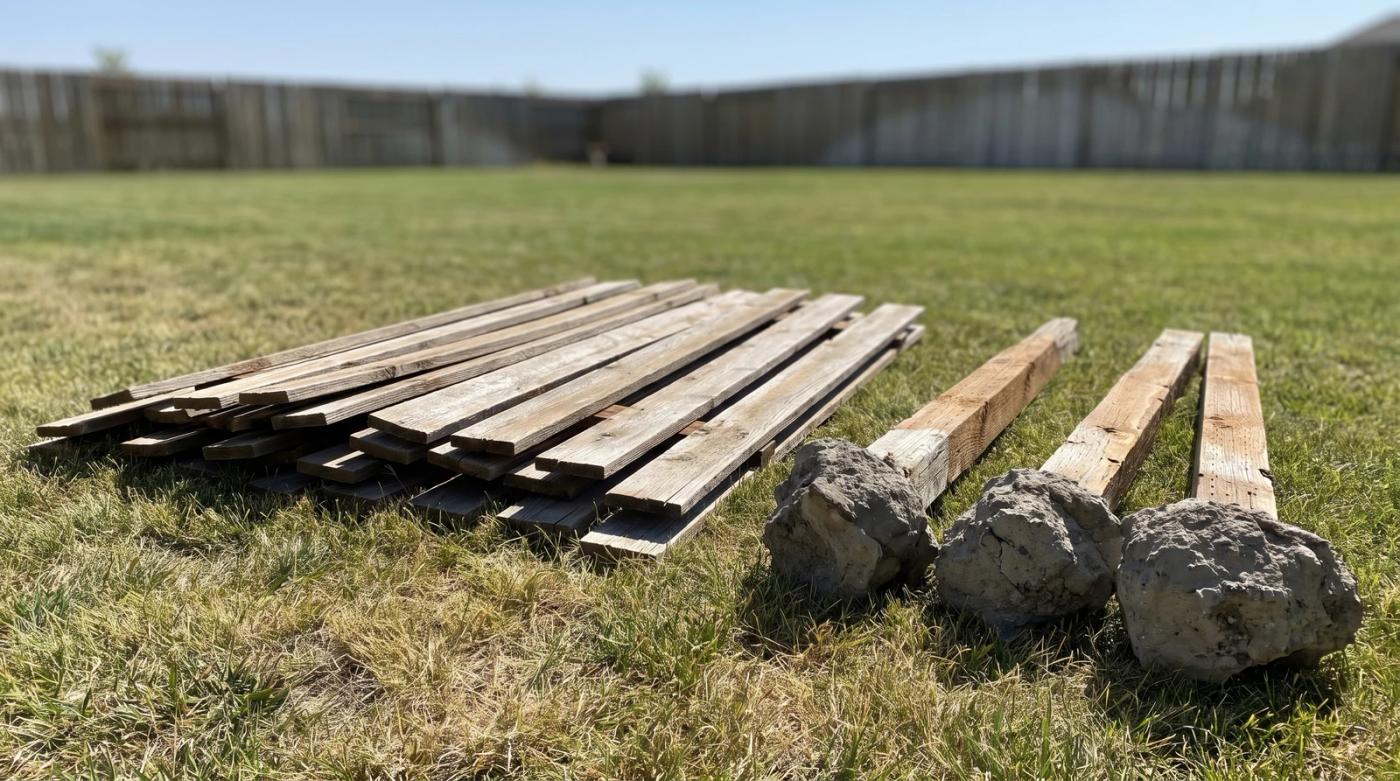
An 811 utility locate before fence work in Idaho is the first step of any fence job. The old fence teardown has to fit between that locate and your install date. Get the locate in early. Mark the new post spots. Then book the removal for the day before the installer comes.
If the teardown runs late, everything behind it slides.
Do you need an 811 utility locate before fence work in Idaho?
Yes. Pulling posts and concrete footings moves dirt. So does setting new ones. Idaho dig law asks for notice at least two business days before you dig, and calling 811 is free.
When you call or file online, you get a locate request ticket. It lists the address, where on the lot you'll dig, and your start date. That tells each utility where to send a locator. Wrong details mean wrong marks.
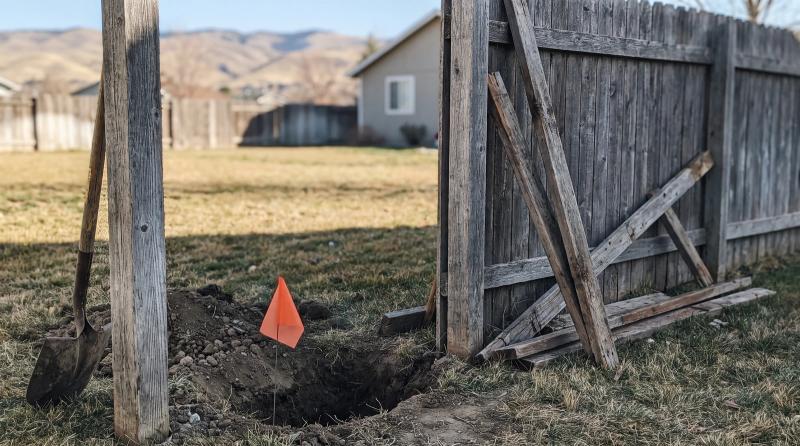
Each utility marks its lines with paint or flags. Red is electric, yellow is gas, orange is phone and cable, and blue is water. The tolerance zone is the strip on each side of a mark. Inside it, dig by hand or with another careful method. No machines.
Before work starts, check the positive response information on your ticket. It shows which utilities have marked or cleared the site.
When private locators make sense
811 only marks lines a utility owns. Lines you own often aren't marked. Think power run out to a shed, a sprinkler main, or gas to a grill. That's where private locators come in.
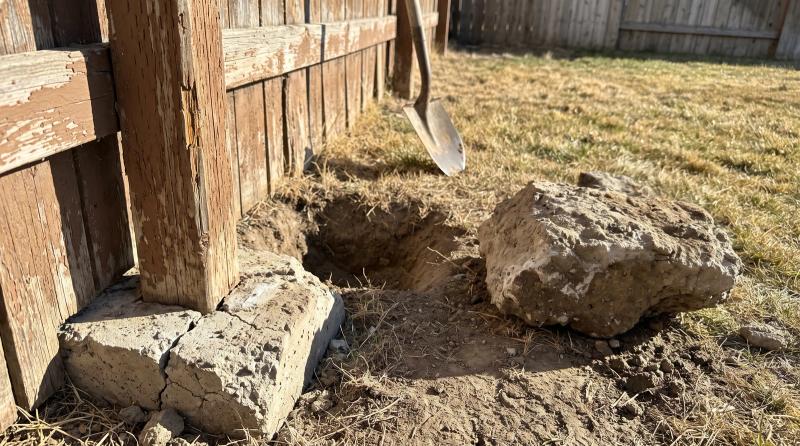
If a footing sits near a mark, crews dig small test holes by hand. That finds the line before an auger gets close. It's slow, but it's how you dig safe.
How long does fence removal take before the install?
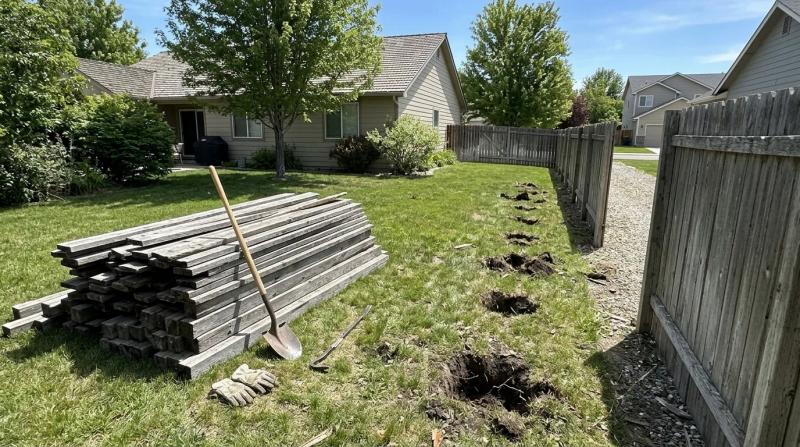
Some fence companies include the teardown in their bid. Others in Idaho don't. Then the yard needs to be clear and the old posts out before they set new ones.
Why so strict? New post holes rarely land where the old ones were. And a footing left in the ground turns a quick auger job into a jackhammer job.
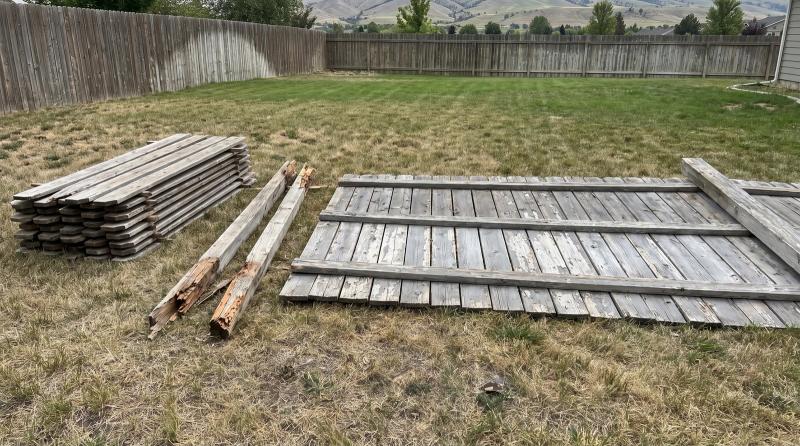
Teardown time depends on how long the fence is, what it's made of, how the posts are set, and how close the truck can get.
| Fence type | What slows it down |
|---|---|
| Chain link | Concrete footings, bottom rail buried in sod |
| Wood privacy | Deep footings, rot that crumbles instead of pulling |
| Vinyl | Steel post inserts, oversized footings |
| Wrought iron | Heavy sections, deep-set footings |
| Sloped or tight-access yard | Narrow gates, side-yard chokepoints |
Cost works the same way. Pricing is by volume, and the estimate is free. Footing removal and haul-away are big swing factors.
Book the teardown for the day before your install. If your yard is tight, make it two days before. That way two crews aren't tripping over each other.
Quick tip: Have your installer mark the new post spots before the old fence comes out. Once it's gone, the line is a lot harder to see.
What to line up before you dig
- Call 811 and get your ticket at least two business days before you dig
- Share the ticket number and marks with your installer so both crews use the same map
- Unhook anything tied to the fence: gate hardware, solar lights, hose reels, dog runs, trellises
- Move planters, patio furniture, and the trampoline back six feet or so
- Tell your neighbor if you share the fence
- Sort out truck access and where we can park to load
If the only way out of the backyard is a narrow gate, every panel goes out by hand.
Heads up: Paint fades and flags get pulled. If the marks are gone, ask for new ones. Don't trust memory or old notes.
When it makes sense to hire the teardown out
A DIY teardown is doable if you have a free weekend, a truck, and posts without much concrete. The deadline is where it flips. Idaho fence crews tend to get busy in spring. Running out of daylight the day before the installer shows up is what really costs you.
Where the old fence ends up
Chain link, wrought iron, and steel posts have scrap value. So those go to a metal recycler, not the dump. Clean, untreated wood can sometimes be recycled, so ask local recyclers what they take. Treated posts and anything painted or rotted go to the Ada County landfill. Burning treated lumber is a really bad idea.
Vinyl panels in decent shape? Sometimes they're worth listing for free online. Don't count on a thrift store or donation center taking fence sections. Call before you load them up.
Frequently asked questions
Should I call 811 before installing a fence?
Yes, and before pulling the old one too. People often skip the call before the teardown. Then they hit a buried electric or gas line while pulling a footing.
How long does 811 have to locate?
In Idaho, utility owners get two business days after your notice to mark or respond. Have the address, where on the lot you'll work, and your start date ready. They'll ask for all three.
What is the tolerance zone?
It's the strip on each side of a mark where the electric, gas or water line could really be. Inside it, dig by hand to find the line before any machine goes in.
Related reading: Concrete Slab Demolition: Can You DIY It, or Should You Hand It Off? and Chicken Coop Removal in Boise: Dust, Wire and Old Posts.
Top Shelf Junk Removal and Demolition handles fence teardowns and haul-away around the Treasure Valley. Have an install date and no plan for the old fence? Call (208) 593-2877. We'll tell you straight whether it's worth hiring out.
Need Help With Fence Removal?
Top Shelf serves Boise and the Treasure Valley with professional junk removal, cleanouts, and demolition services.