
Shed Demolition or Relocation? How to Decide in Boise
Not every shed needs to come down. Here's how Boise homeowners decide between shed demolition and moving the shed, plus real costs and what people forget.
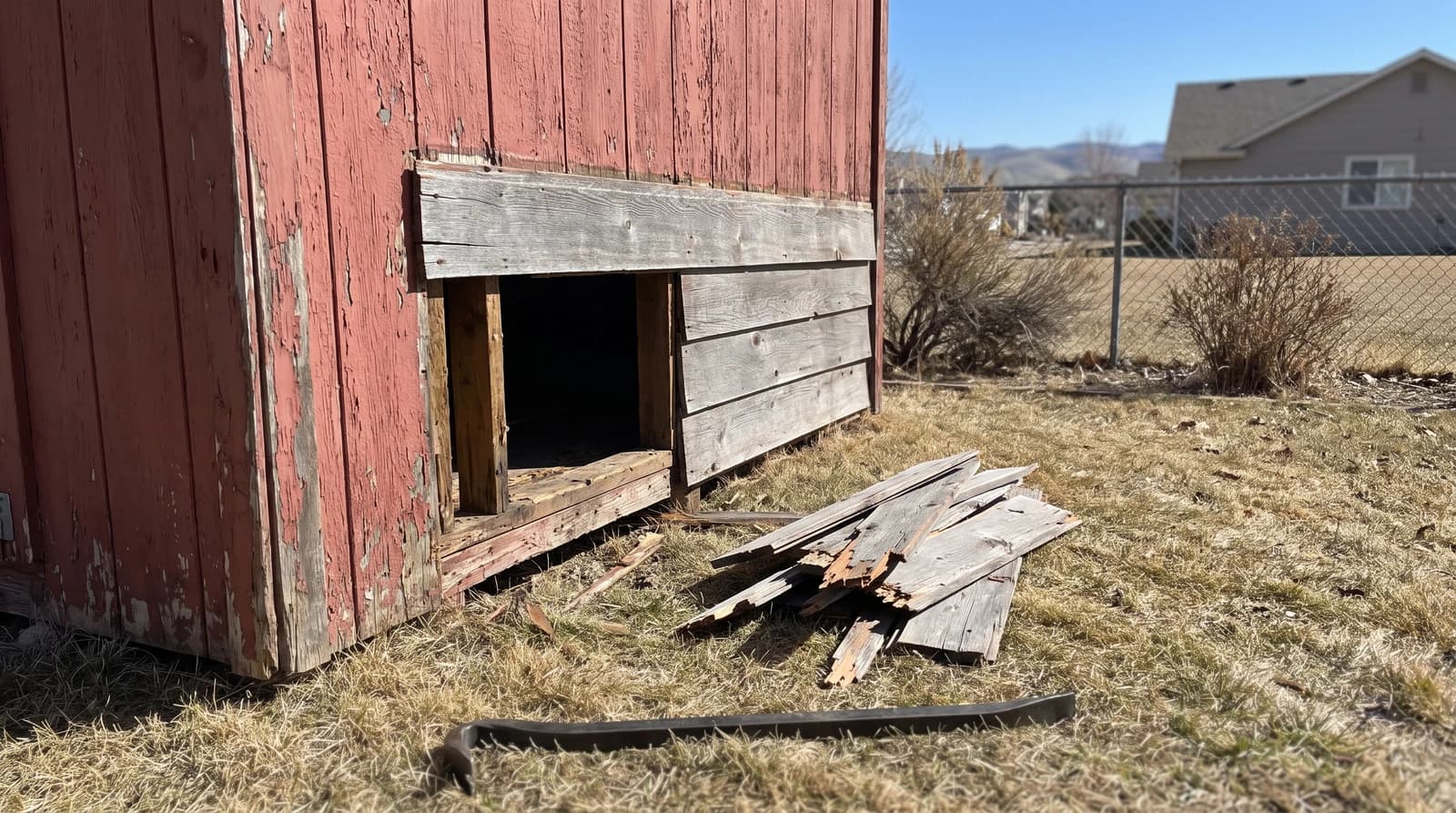
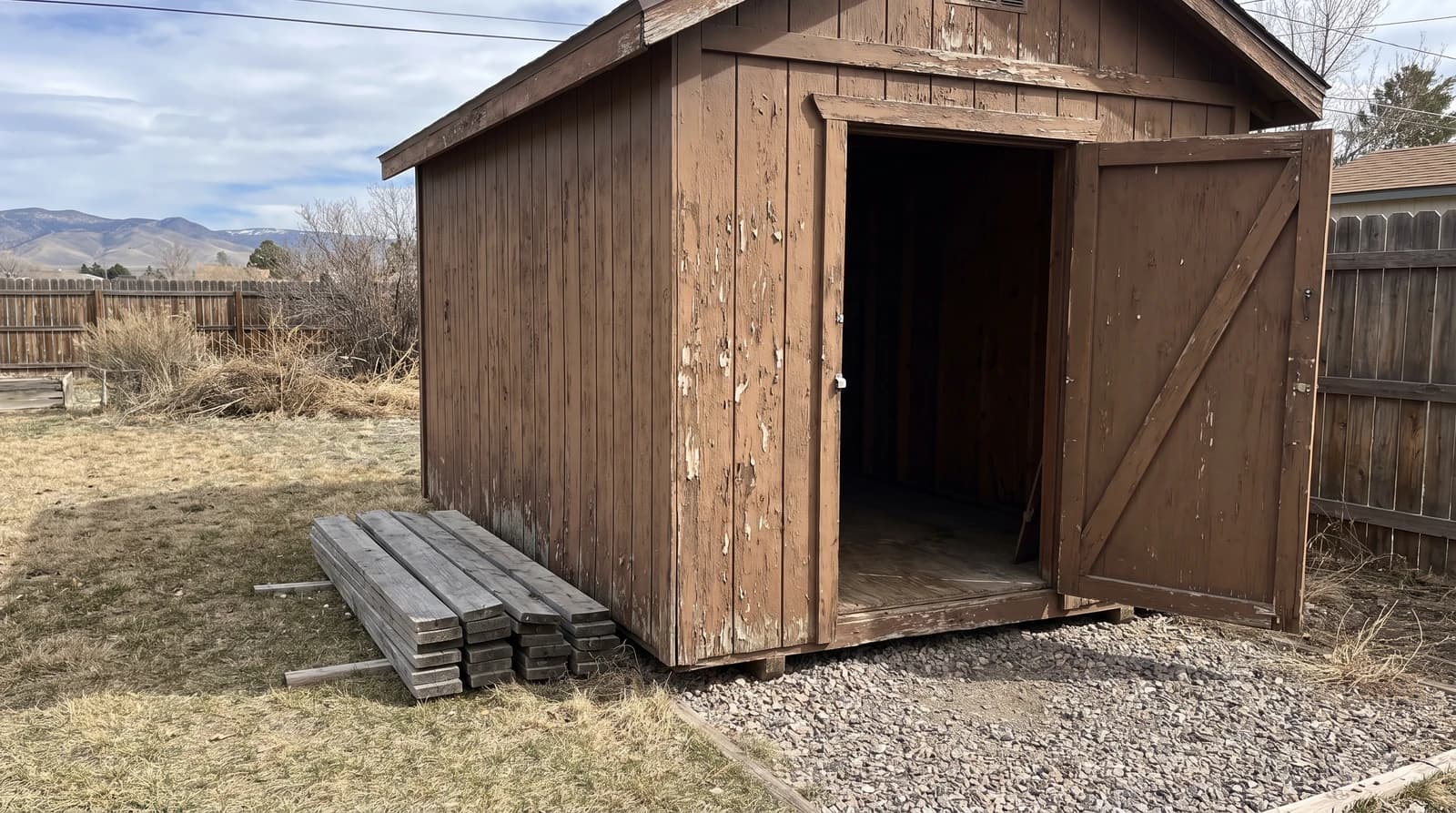
A homeowner out near Floating Feather Road called us last spring about shed demolition on a 10x12 barn-style shed. Roof was solid, floor seemed fine, but the thing was sitting right where his new patio was going.
His first question wasn't price. It was, "Can we just slide it over 30 feet instead?"
Fair question. Sometimes the answer is yes. We'd love the job, sure, but we'd rather say that out loud than knock down something you could've kept another ten years.
Here's how to tell which way your shed is headed.
Can the shed actually be moved?
Three things decide it: the floor, the frame, and the path to the new spot.
Sheds built on pressure-treated skids are the easy case. Those were made to be dragged. Two guys with pipe rollers, a come-along, and some patience can walk one across a flat yard in an afternoon.
A mini skid steer with forks cuts that time about in half.
Sheds fastened to a poured slab are a different animal. There's no floor structure underneath to pick up, just wall plates nailed or anchored straight into concrete. Lifting one means building a temporary frame under it first, and by then you've spent more than the shed is worth.
The path out matters just as much. Most Boise-area backyards have a gate somewhere between 36 and 48 inches wide, and a 10-foot shed doesn't care how strong your hinges are. If the only route runs between the house and a block wall, or through a sprinkler line and a 30-year-old maple, moving stops being realistic in a hurry.
When shed demolition makes more sense
Rot at the bottom plate is the number one reason we end up doing shed demolition instead of a move. Water wicks up out of the ground for years, and the bottom couple inches of every stud go soft.
By then the box is only holding its shape because the siding is stapled to it. Pick it up and it folds.
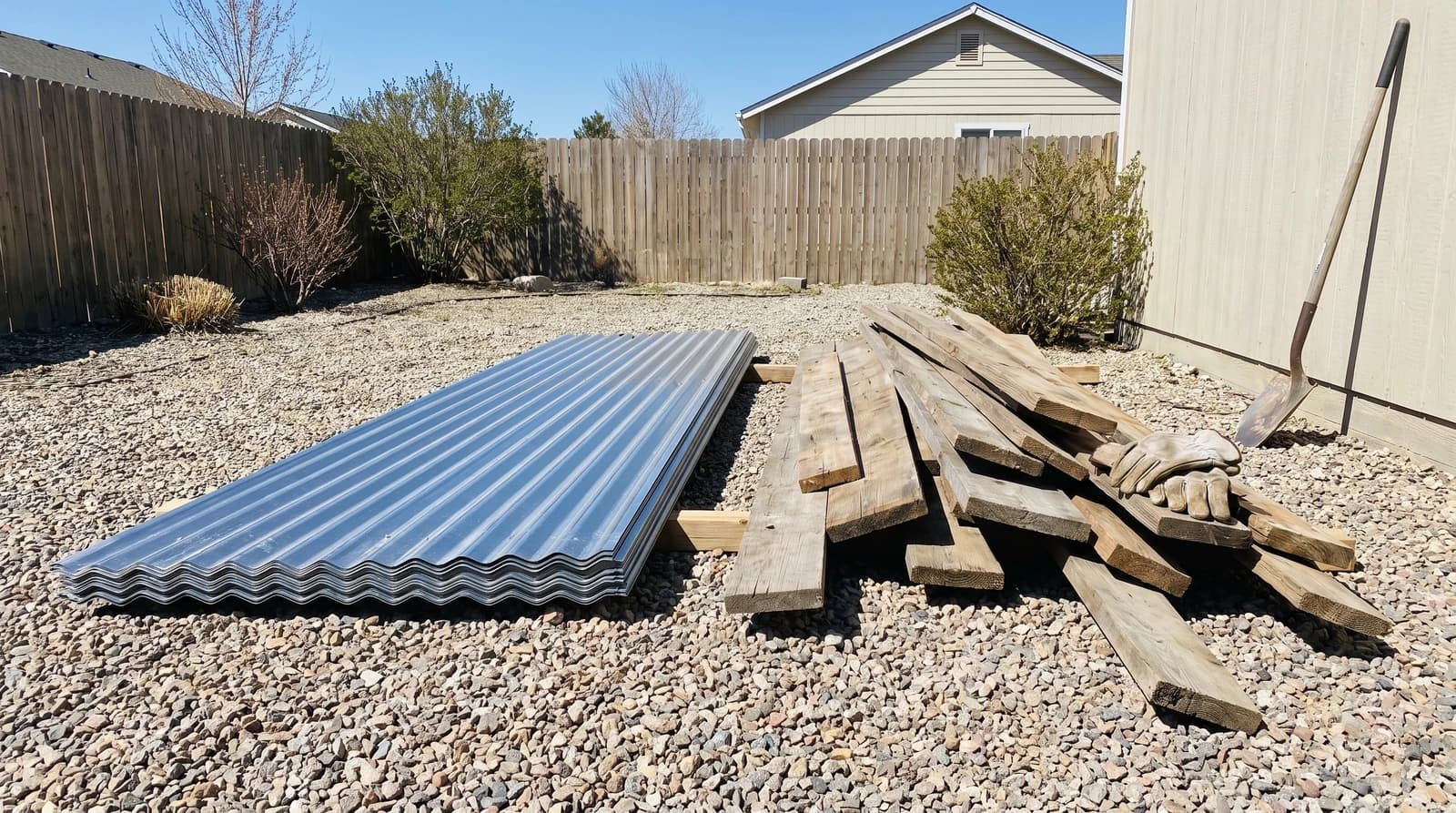
Metal sheds usually get torn down too. Once the panels rust through at the base and the screws strip out, you're not reassembling that thing anywhere in a way you'd be happy with. The good news is they come apart fast, and the steel is worth something at Western Recycling.
One thing worth knowing: if your shed went up before the mid-1980s and has hard, gray, cement-looking wall panels, don't start cutting. Older transite-style siding can contain asbestos. That's a testing conversation, not a sledgehammer conversation.
And sometimes the deciding factor has nothing to do with the shed's condition. You just don't want it anymore. Moving it only relocates something you were already tired of looking at.
What shed demolition costs around the Treasure Valley
Rough numbers for Boise, Meridian, and Nampa, based on what we actually run into:
| What you've got | Moving it | Tearing it down |
|---|---|---|
| 8x10 resin or plastic kit shed | $150–$400 with help and rollers | $250–$450 |
| 10x12 wood shed on skids | $500–$1,200 with equipment | $500–$900 |
| 12x20 wood shed on a slab | Rarely worth it | $900–$1,800 |
| Rusted metal shed, any size | Not practical | $250–$500 |
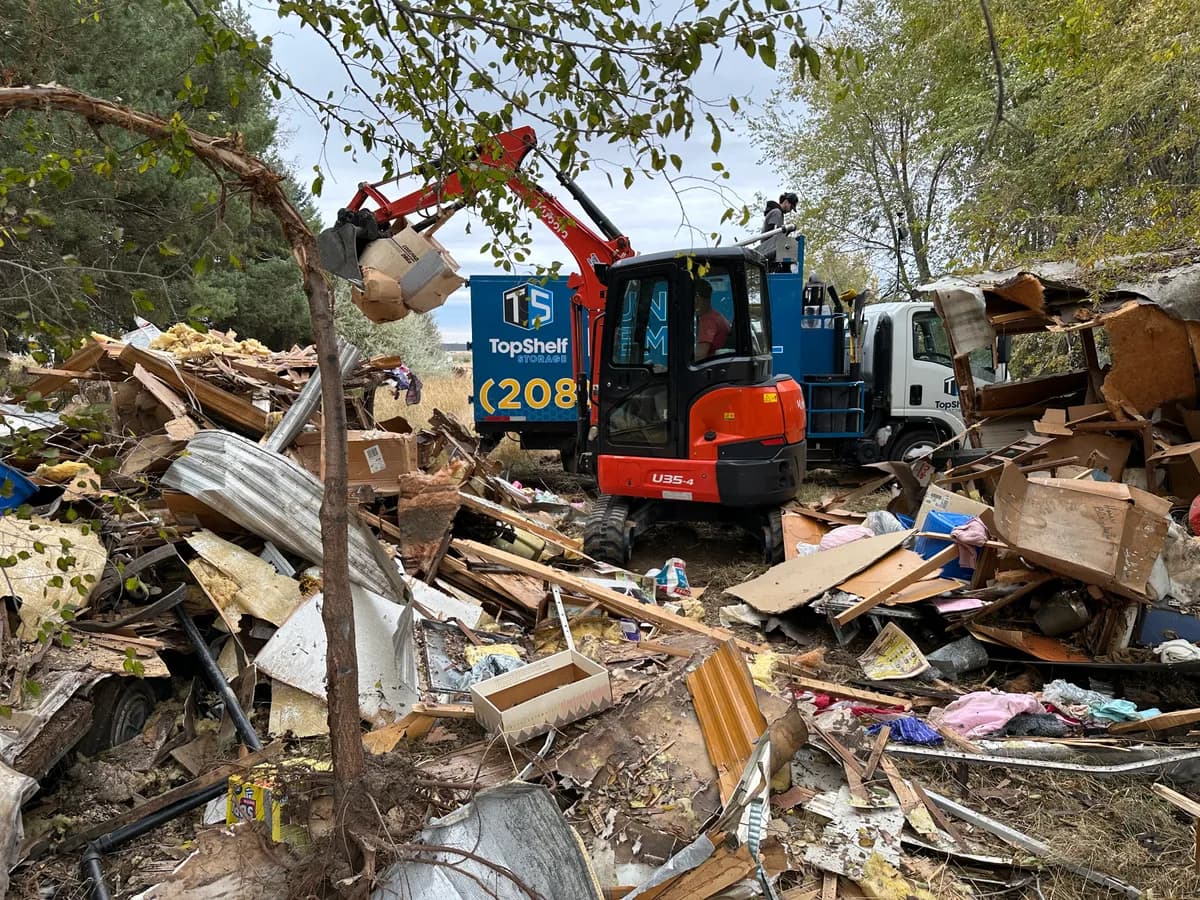
Teardown pricing swings on three things: how much material comes out, how far we carry it to the truck, and whether the slab stays or goes. Dump fees at the Ada County landfill are baked into that number, and shed debris eats space. A 10x12 with shingles, siding, and a plywood floor fills more truck than most people picture.
Moving costs are harder to pin down because access drives everything. Flat yard, wide gate, short haul? Cheap. Tight side yard on a slope? That's where the quotes climb.
The stuff people forget either way
Whichever direction you go, these are the ones that catch folks off guard:
- Power and water. Plenty of sheds around here have a buried extension circuit or a hose bib run out to them. Kill it at the panel and sort it out before anything else happens.
- What's holding it down. Auger anchors, rebar driven through the skids, straps into concrete piers. Miss one and the shed won't budge, or it racks and twists on the way.
- Permits. Small accessory structures often don't need one, but that depends on your jurisdiction and the square footage. We laid out the details in our shed demolition permit guide.
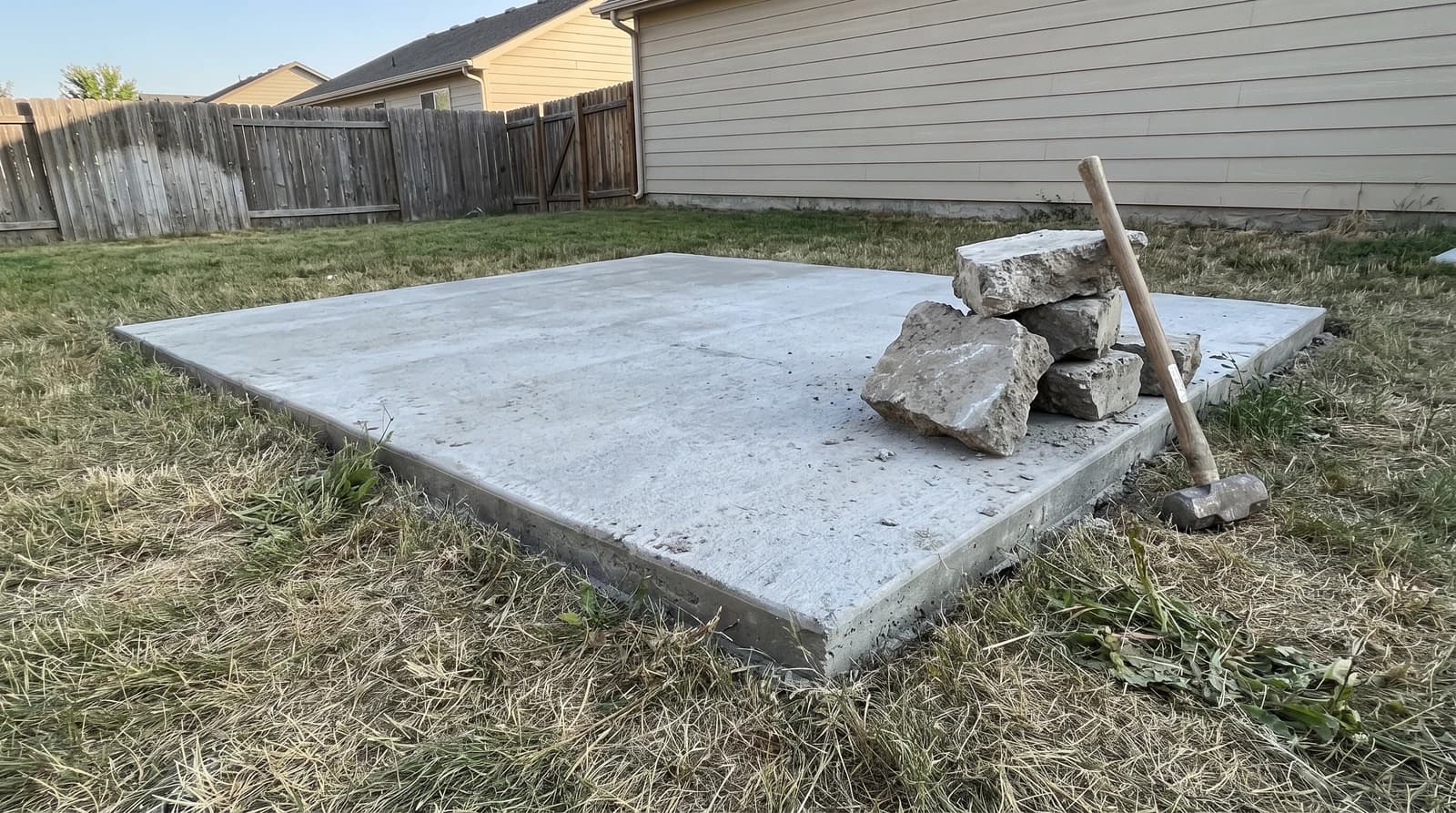
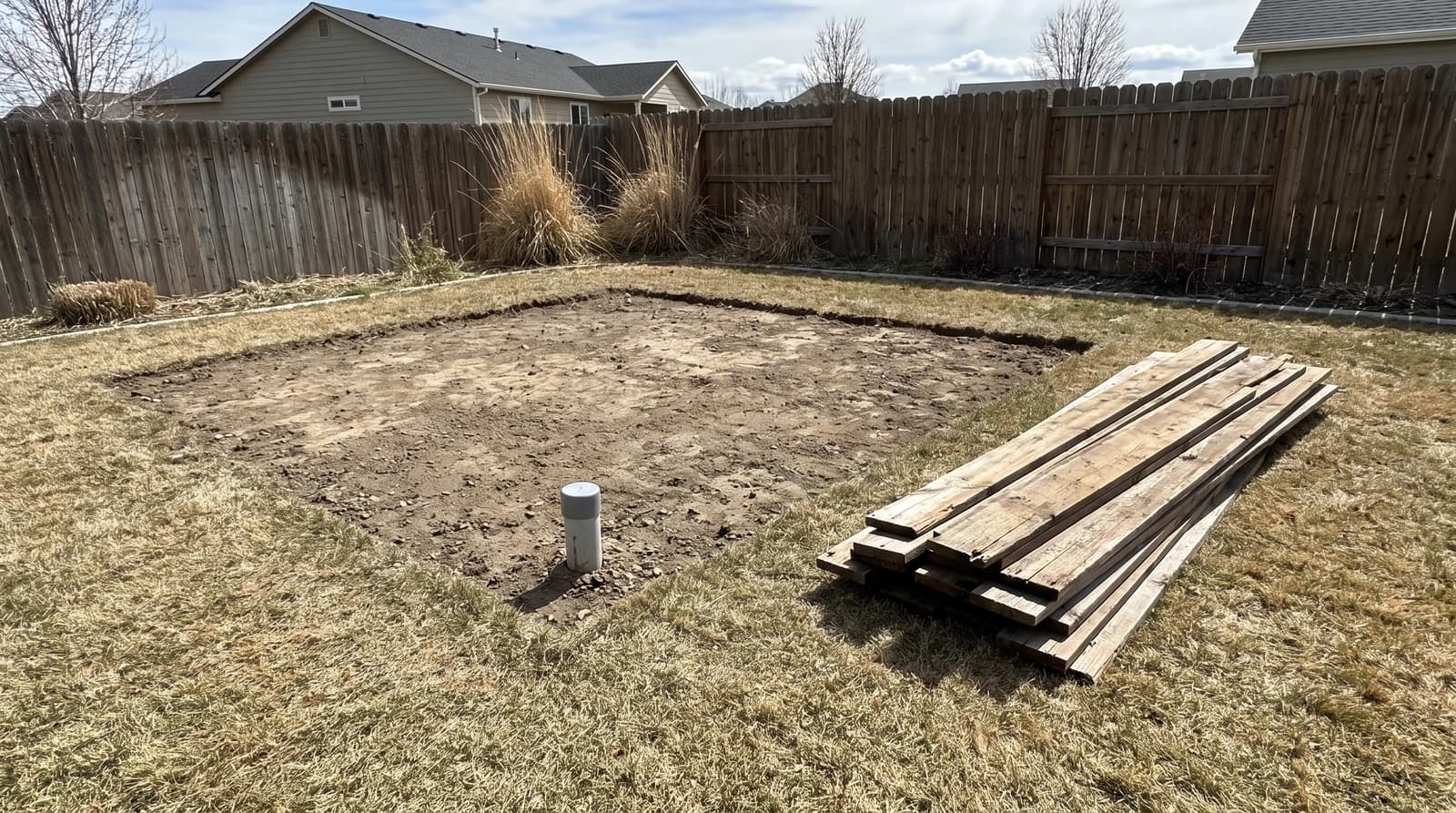
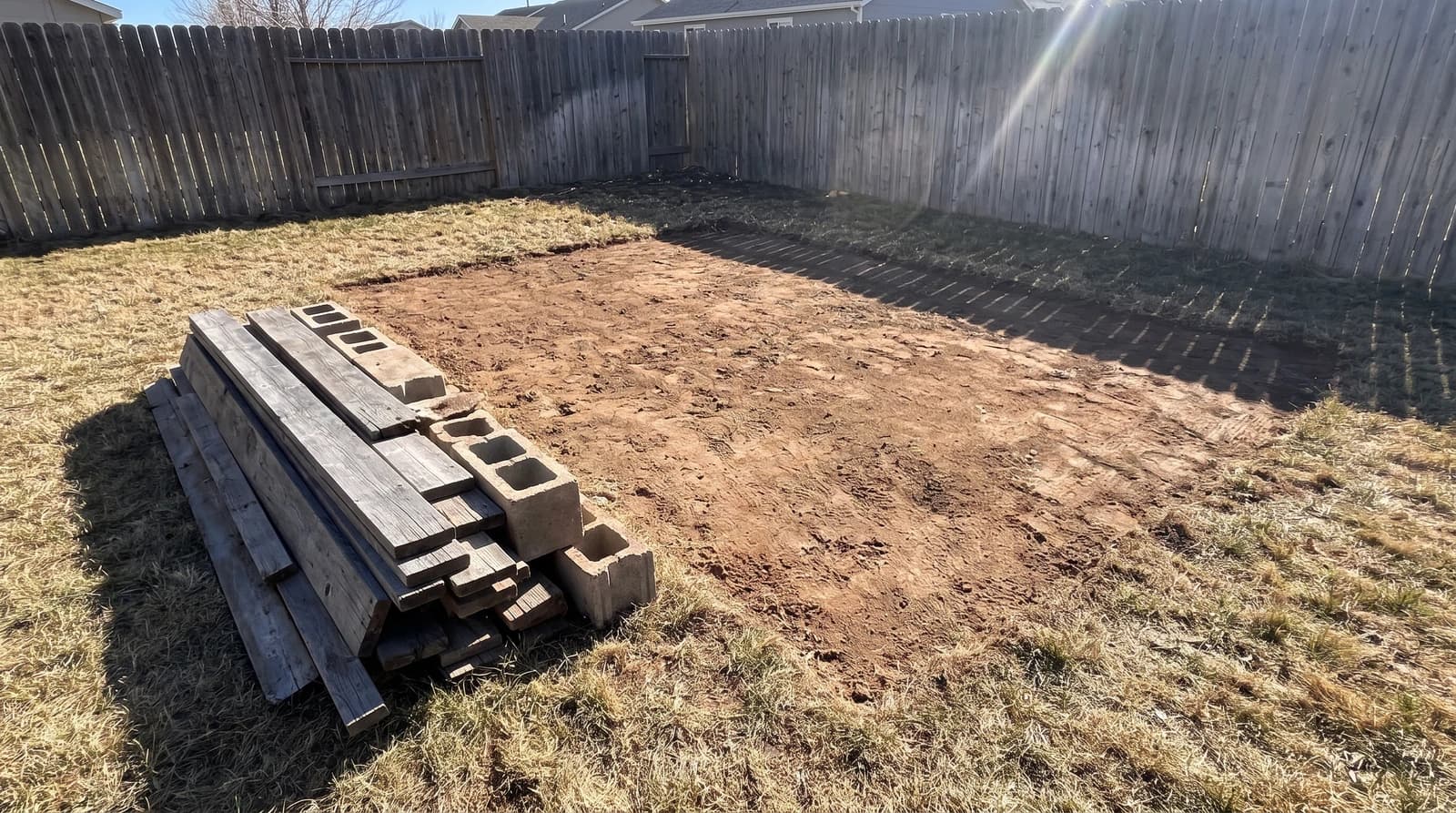
- The slab. If the shed leaves and the concrete stays, you've got a bare pad sitting in your yard. Decide early. We went through the options in what to do with the slab.
One more thing: empty it out first, either way. Nobody's lifting or demoing a shed with 400 pounds of paint cans, bike parts, and Christmas bins still inside. Shelving and hand tools in decent shape do fine at Idaho Youth Ranch.
Bottom line
Skids under it, frame still solid, clear path to the new spot? Moving it is usually the better deal. But if the bottom plate is rotted, it's anchored to a slab, or the panels are rusted through, shed demolition is the cheaper and faster answer, and you'll have your yard back the same day.
Not sure which one you've got? Send us a couple photos or call at (208) 593-2877. We'll tell you straight, even if the answer is that you don't need us yet.
Need Help With Shed Demolition?
Top Shelf serves Boise and the Treasure Valley with professional junk removal, cleanouts, and demolition services.