
Shed Demolition in Boise: What About the Power Run to It?
Planning shed demolition in Boise? Here's how to handle the electrical line feeding your shed, what an electrician costs, and what crews won't touch.
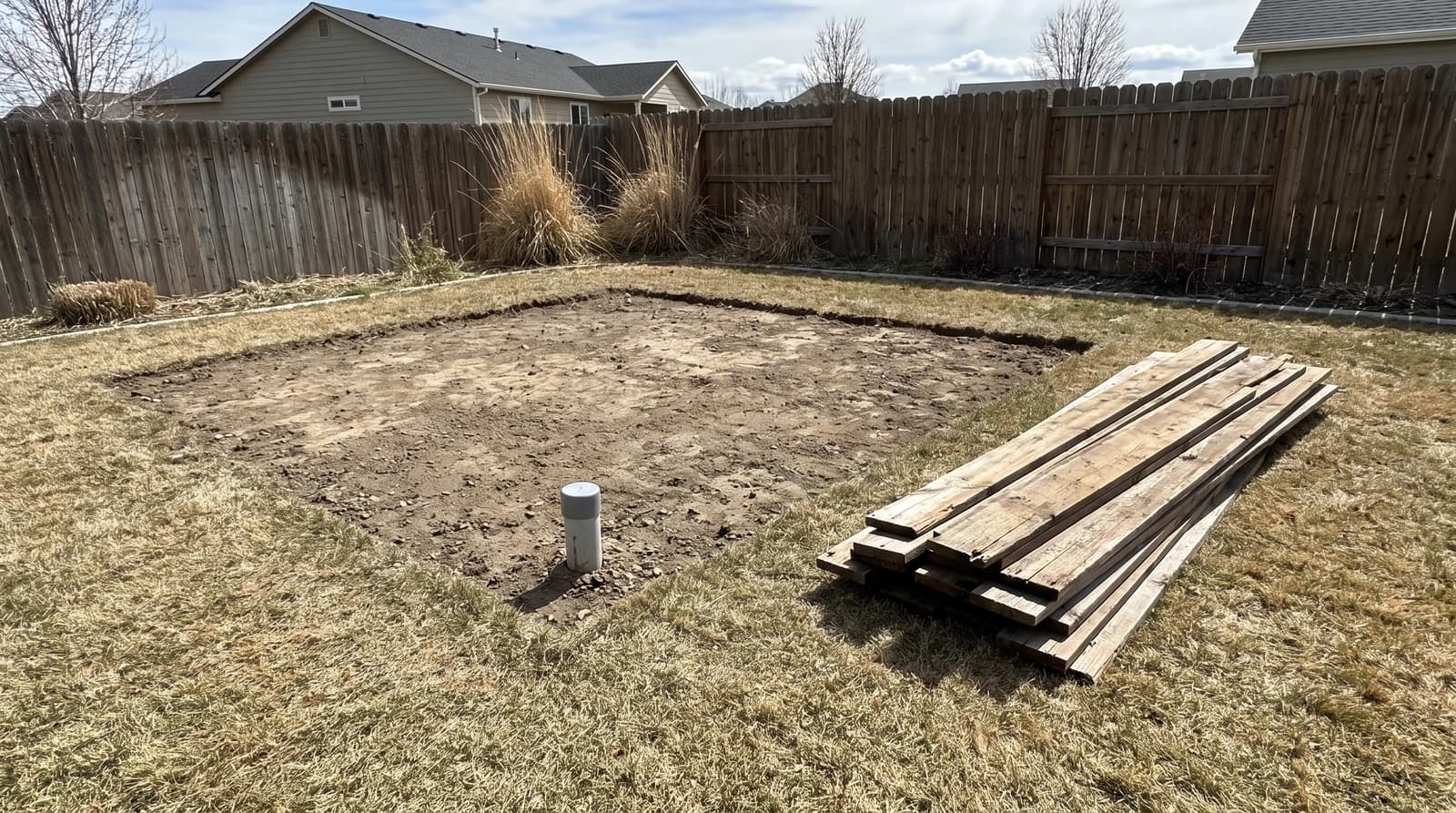
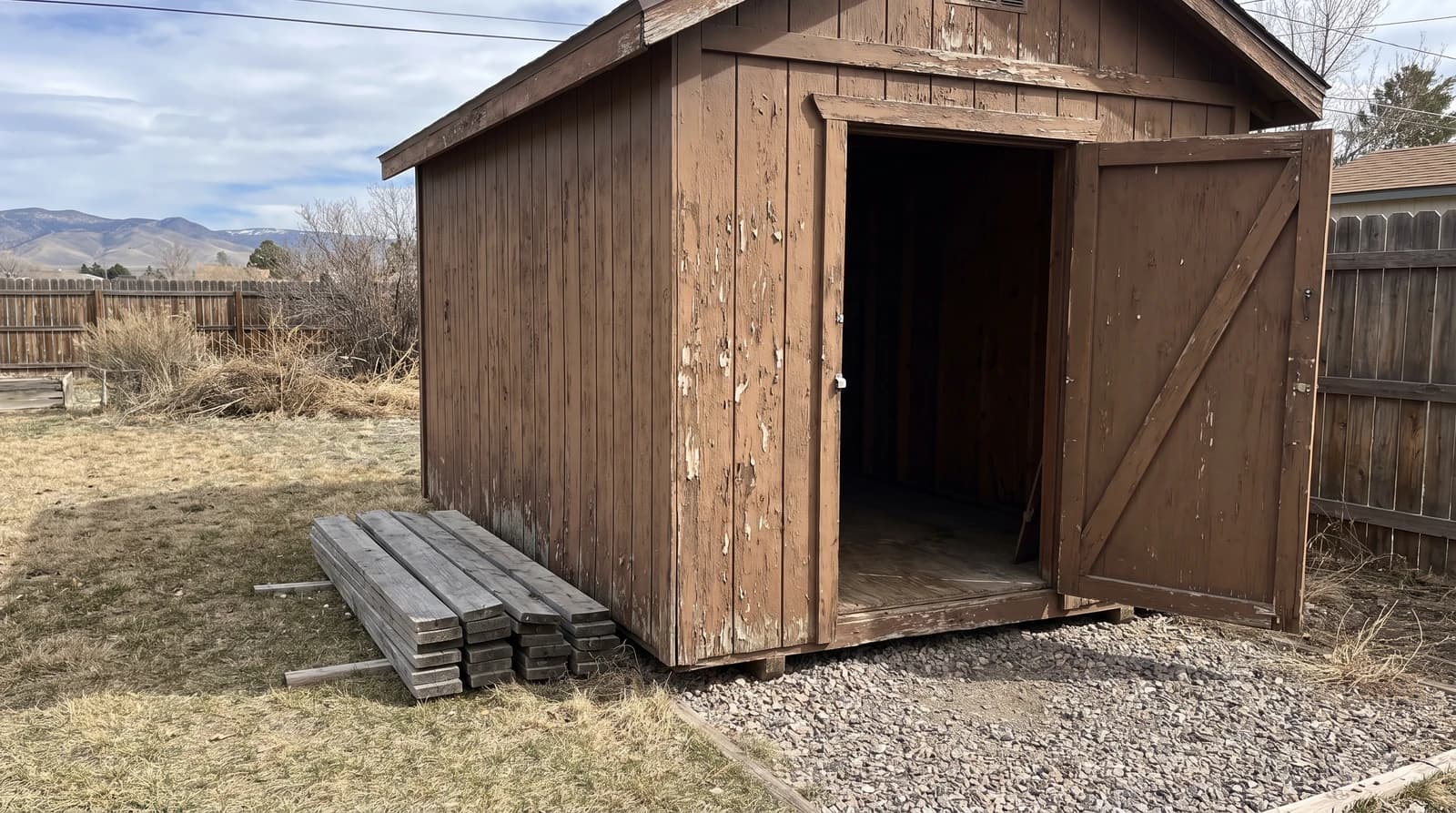
A guy in Meridian called us last spring about shed demolition on a leaning 10x12 in his back corner. Standard job. Then he mentioned, almost as an afterthought, that there was a light and a couple of outlets inside.
That one sentence changed the schedule. Shed demolition gets complicated fast when there's live power running to the building, and a lot of Treasure Valley sheds have it.
Maybe a previous owner ran a line out for a workbench. Maybe somebody wired up a chest freezer. Maybe it's one bulb on a pull chain. If there are wires in that wall, they have to be dealt with before anything comes down.
Here's how it actually works, what it runs around Boise, and what you can knock out yourself.
Where the power to your shed usually comes from
Three setups cover almost everything we see around here, and they're not equally serious.
The most common one on older Boise properties is an extension cord run from the garage, sometimes buried a couple inches under the lawn because somebody got tired of mowing around it. Not legal, not permanent, and honestly the easiest to deal with. Unplug it, pull it out of the dirt, done.
The second is a proper buried feeder off the main panel. Usually 12 or 10 gauge in gray PVC conduit, 18 to 24 inches down, ending at a small sub-panel or junction box inside the shed. That's real electrical work, and it has to be killed at the source.
The third shows up mostly on rural lots out toward Kuna and south Nampa: an overhead drop from the house or a separate meter. Rare. But when it's there, you're calling a licensed electrician and probably Idaho Power too.
Go look before you guess. Follow the cable inside the shed to wherever it enters the wall, then trace where it goes outside. Most people have their answer in about four minutes.
What to handle before shed demolition day
Short version of what makes a crew's day easy, and what keeps you from paying for a second trip.
- ✓Find the breaker that feeds the shed, flip it off, then confirm the outlets are dead with a $15 tester
- ✓Tape the breaker in the off position and leave a note on the panel door so nobody flips it back
- ✓Get a permanent feeder disconnected and capped at the panel end by an electrician
- ✓Pull any extension cords all the way out and coil them up
- ✓Clear everything out of the shed so the walls are actually reachable
That last one matters more than people expect. We wrote a whole separate piece on clearing out a shed before demolition, because stuff piled against the walls is the single biggest thing that slows a job down.
Do you need an electrician, or can you handle it?
Depends on the setup, and I'd rather tell you when you don't need one.
Extension cord? No electrician. Unplug it. That's the whole job.
Permanent feeder off your main panel? Get an electrician. Around Boise and Meridian, a disconnect-and-cap visit usually runs $150 to $350, depending on how much they have to do at the panel and whether they're pulling the abandoned conduit. It's typically under an hour of work. Some will fit you in the same week if they catch a gap between bigger jobs.
The permit question comes up a lot. A small disconnect like this usually doesn't rise to that level, but ask your electrician, since they deal with the Division of Building Safety constantly. The demo side has its own rules, and we went through those in our post on shed demolition permits in Boise.
One thing I'll push back on. I've had folks want to save the $200 by cutting the wire at the shed end themselves and taping it up. Please don't. Now there's a live buried cable in the yard with a taped stub on the end of it, waiting for whoever digs a fence post there in two years.
What shed demolition looks like once the power's off
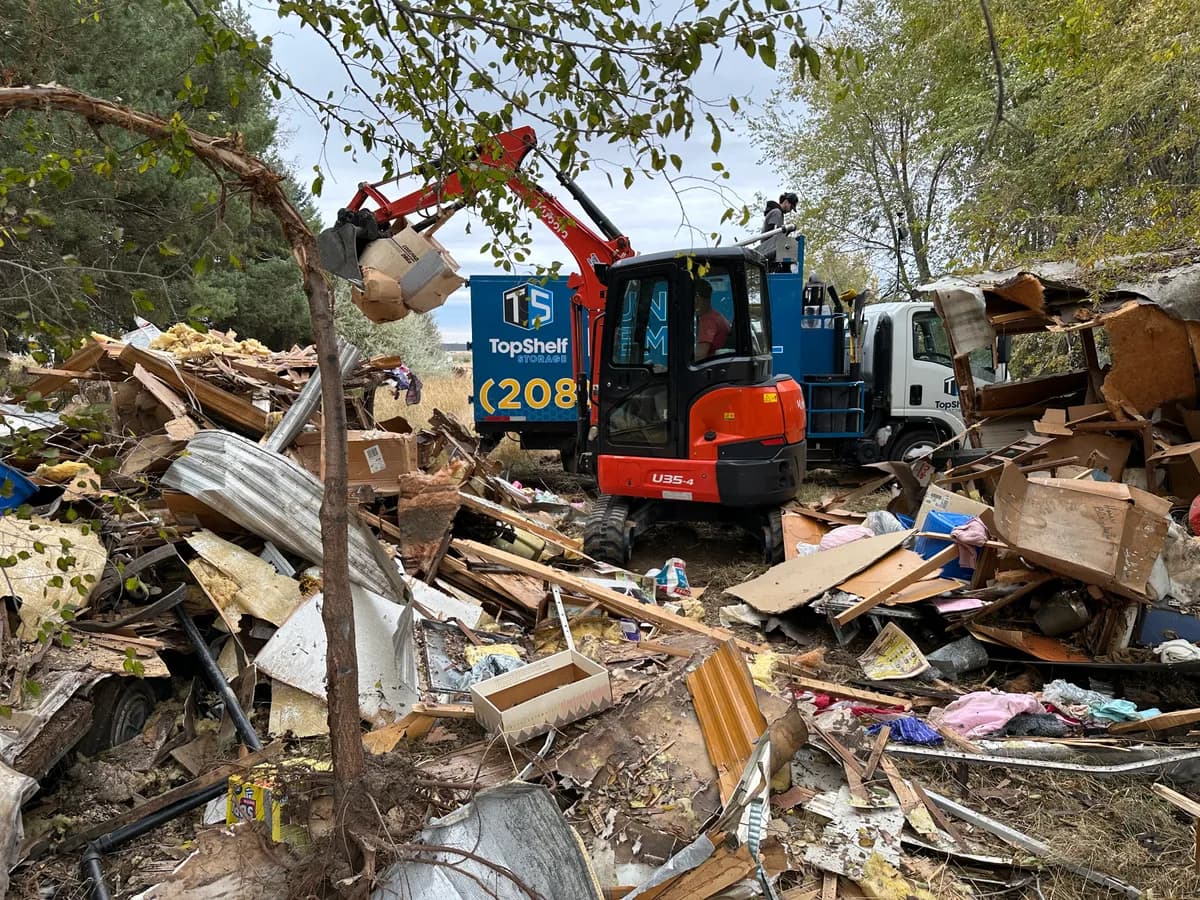
We handle the structure. Framing, siding, roof, floor, the whole shell, plus hauling it to Hidden Hollow, the Ada County landfill, or running the metal to Western Recycling if there's enough to bother with.
What we don't do is touch live electrical, and no crew should. If we roll up for shed demolition and there's an energized feeder in the wall, we stop. That's a reschedule, which costs you time and usually a trip fee.
Once the power's dead and capped, the wiring inside is just material to us. Romex comes out with the walls, the junction box goes in the metal pile, and the conduit stub in the ground gets cut flush or left alone for your electrician, whichever you'd rather.
A typical backyard shed takes us two to four hours. Add the electrical coordination on the front end and you're looking at about a week of lead time instead of a couple of days.
The bottom line
If your shed has power, deal with the wire first. Trace it, kill it, and get it properly disconnected if it's a permanent run. Two hundred bucks and one phone call keeps this from turning into two appointments.
Not sure what you've got? Snap a photo of the inside wall where the cable comes in and another of your breaker panel. We can usually tell you over the phone whether you need an electrician or just a good tug on an extension cord.
Call us at (208) 593-2877 when you want that shed gone, or if you just want a second opinion on the wiring. We book shed demolition all over the Treasure Valley, and yes, we'd love the job, but we're happy to just answer the question too.
Need Help With Shed Demolition?
Top Shelf serves Boise and the Treasure Valley with professional junk removal, cleanouts, and demolition services.