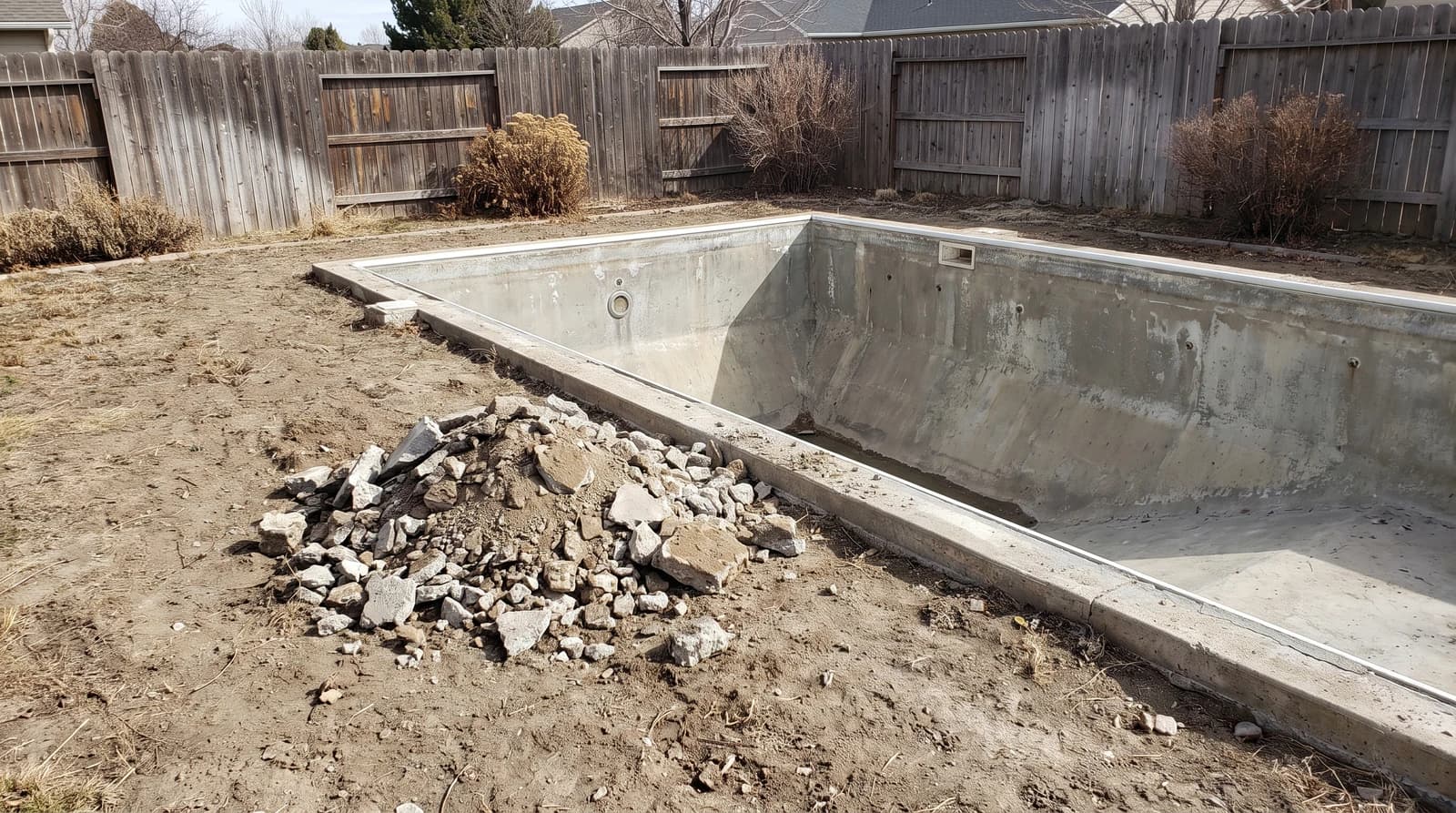

Pool Demolition in Boise: Can Equipment Even Reach It?
Narrow gate? Tight side yard? Here's how backyard access affects pool demolition in Boise, what fits where, and what it does to your price and timeline.
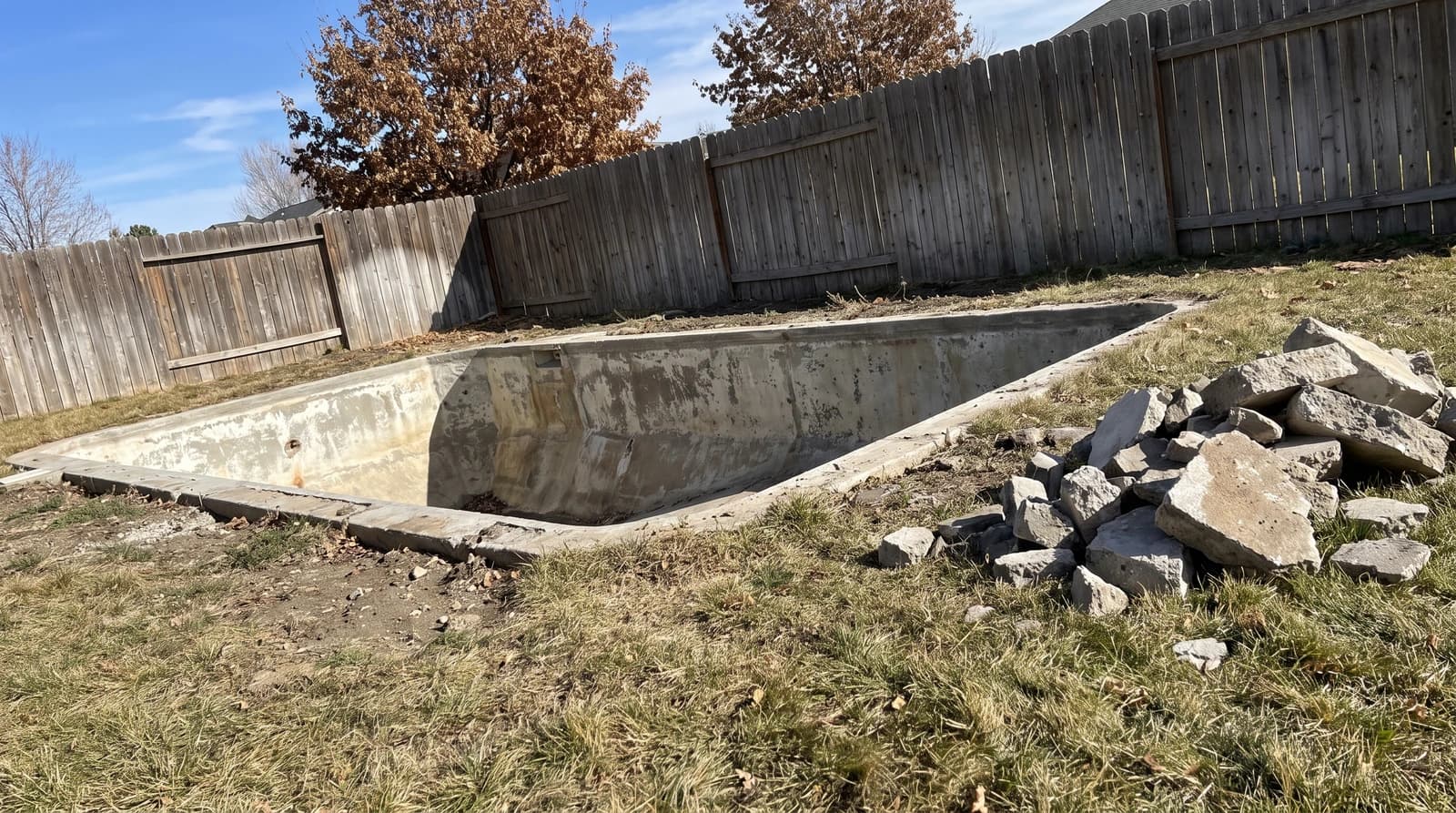
I spent ten minutes in a backyard off Ustick last spring with a tape measure while the homeowner stood there watching me. Forty-one inches at the side gate. She'd already called around for pool demolition quotes, and neither company she talked to had asked about that gate.
That one measurement moves the price more than almost anything else. Not the pool's size. Not how thick the shell is. Whether we can physically get a machine back there.
And if we can't? The job's still doable. It just turns into a different job with a different number attached to it.
Why access decides your pool demolition price
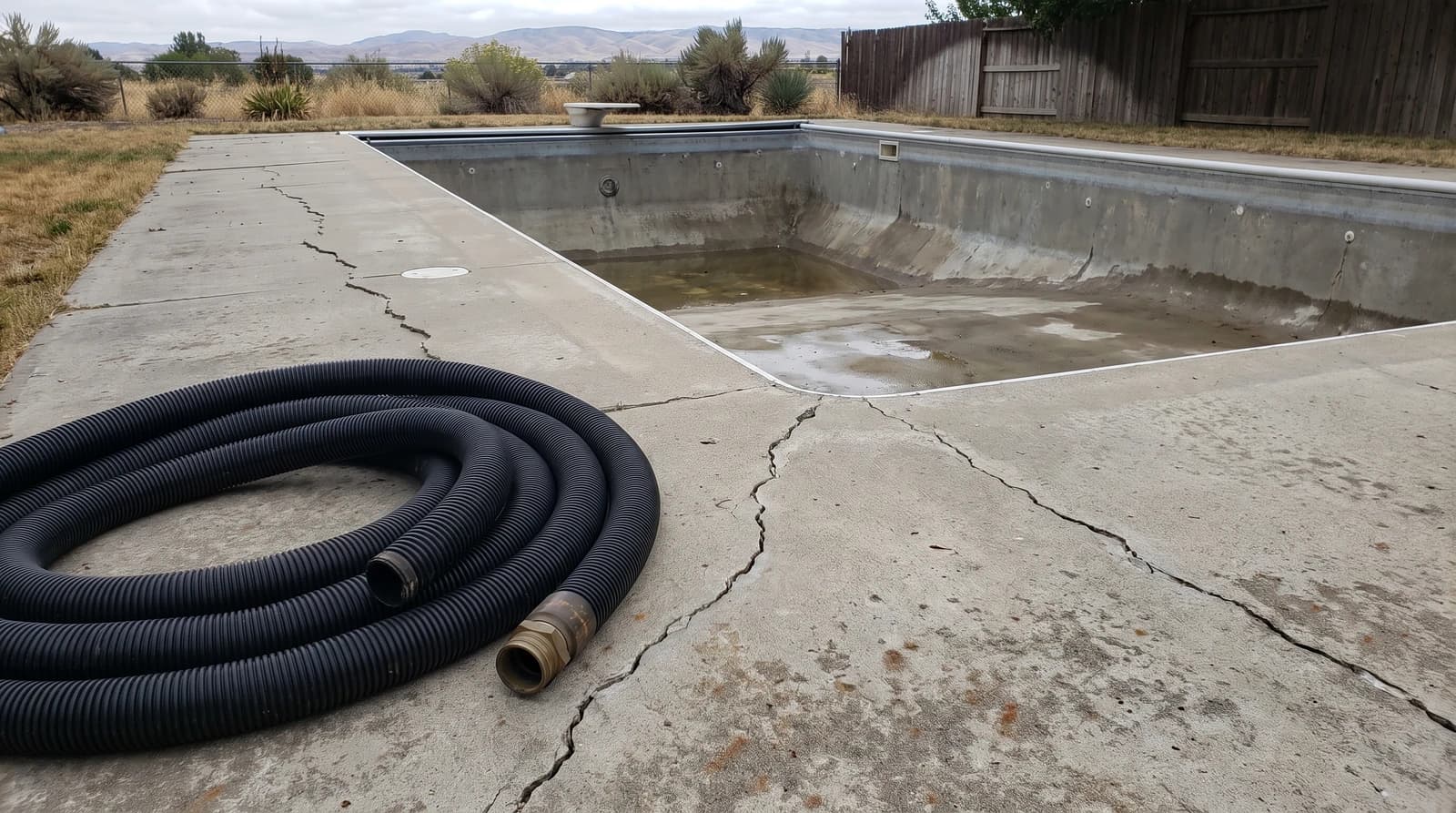
Two pools can be near twins. Same 16x32 footprint, same gunite shell, same mid-90s build. They'll still come in two grand apart on the estimate.
The difference is almost always a fence, a slope, or a property line.
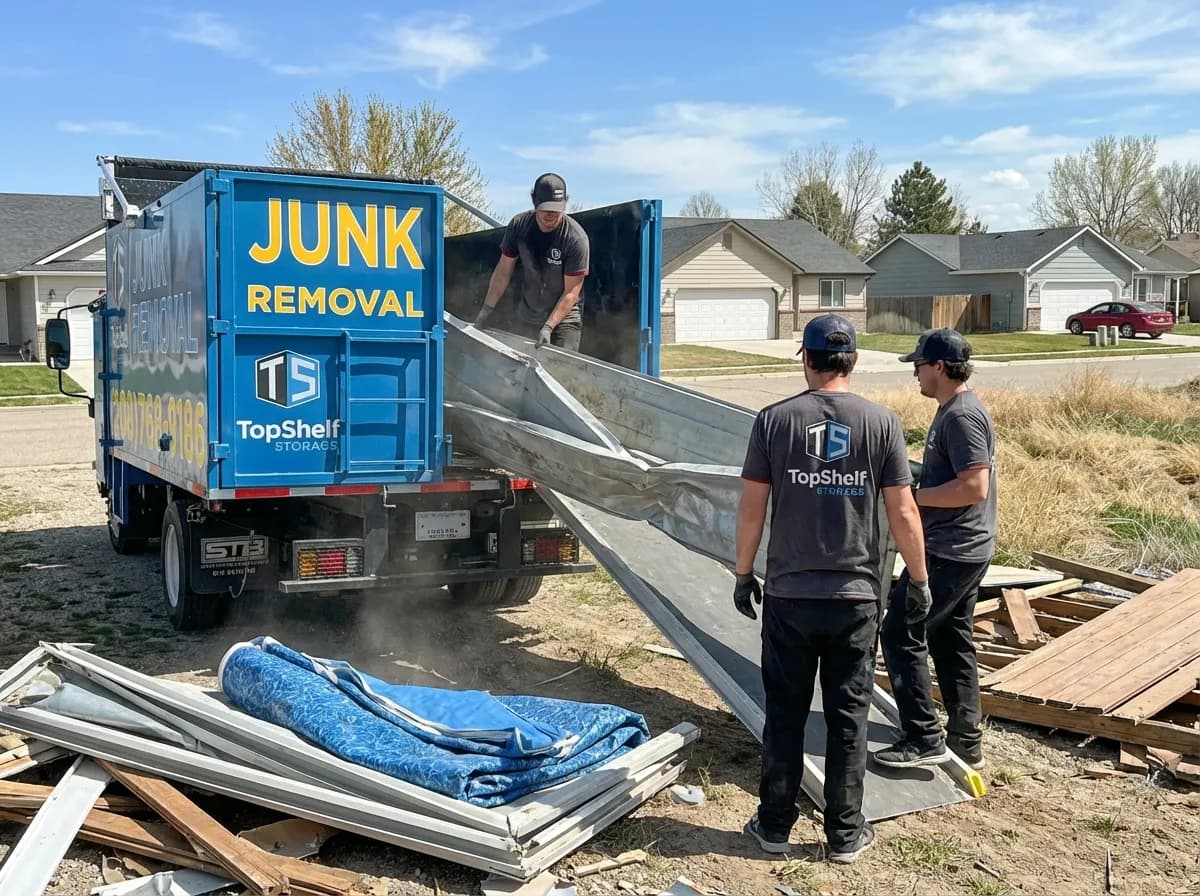
With clean access, a mini excavator rolls in, breaks the shell, and things move. Concrete gets loaded and hauled to a recycler like Western Recycling, and you're looking at one to three days depending on how much backfill the hole needs.
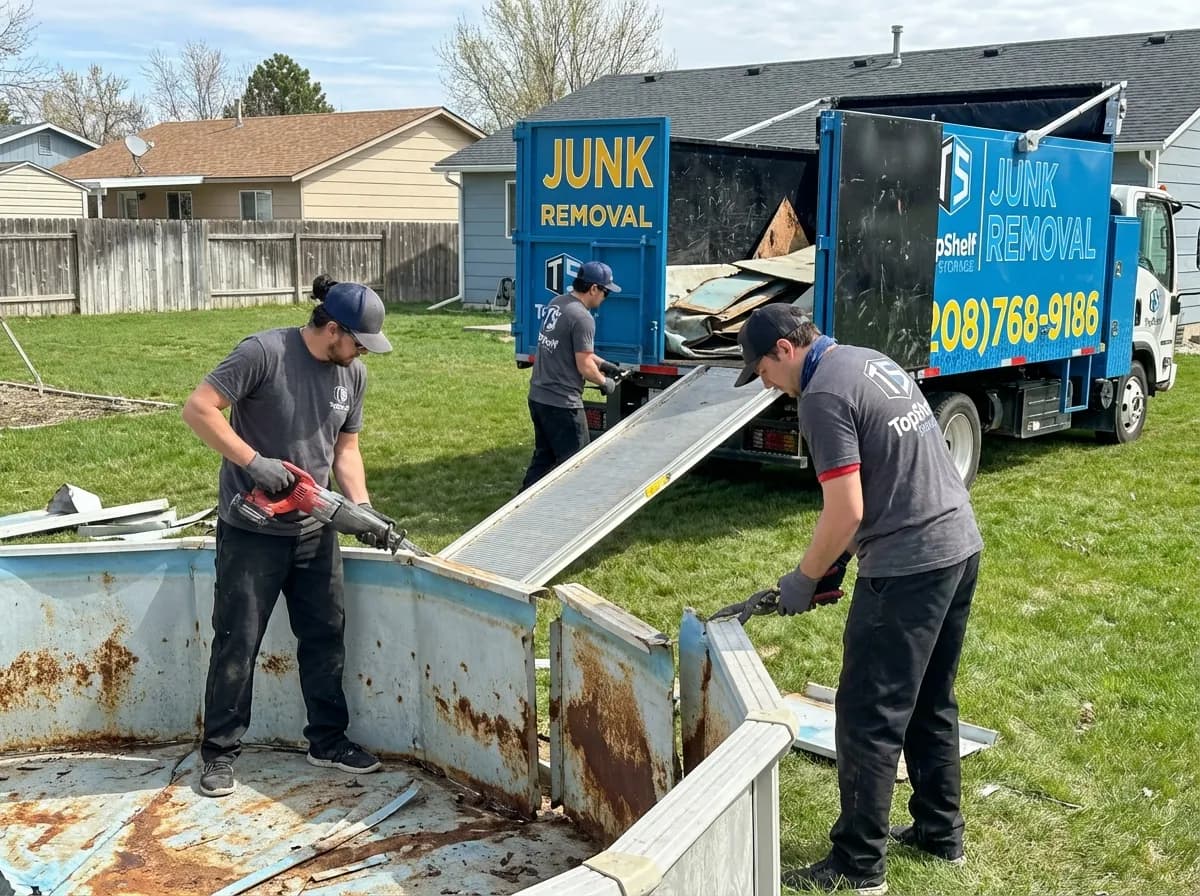
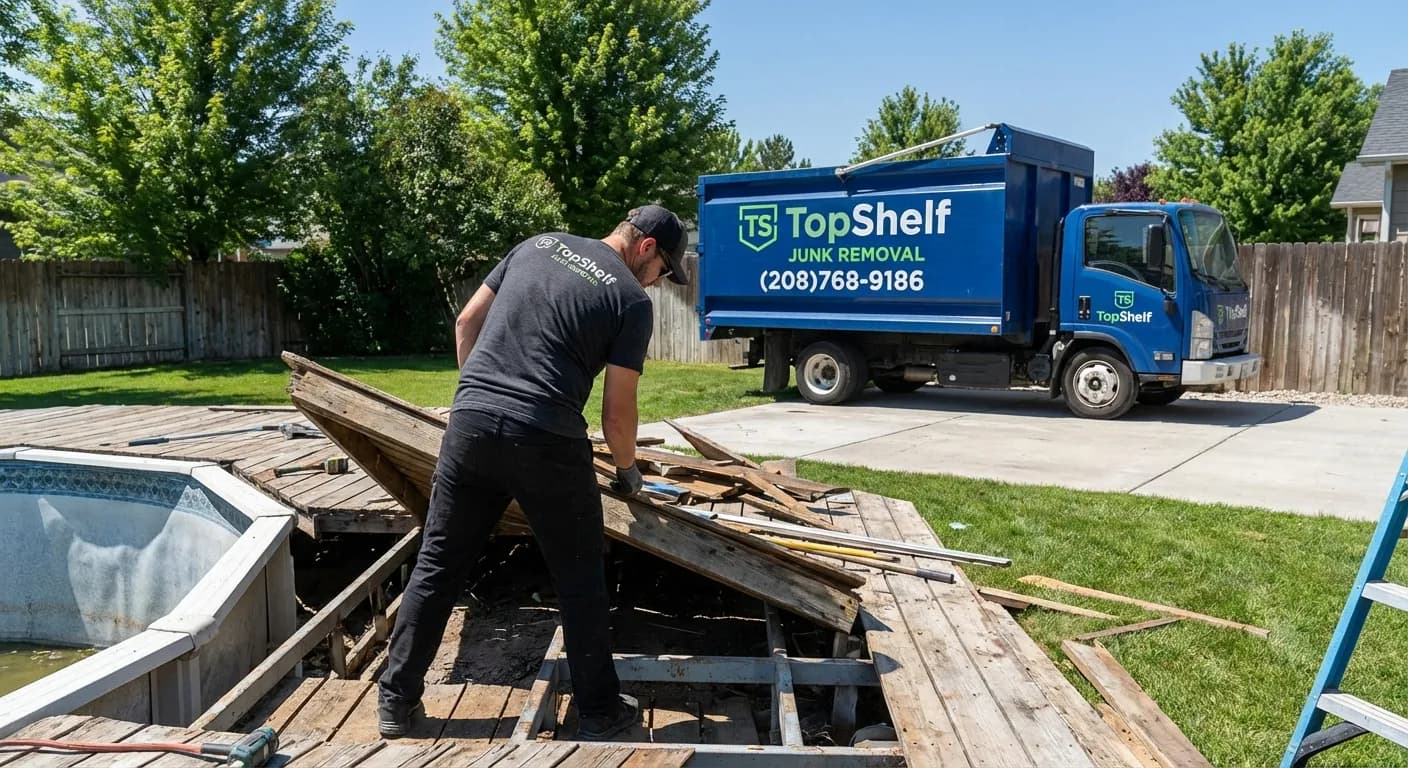
With bad access, it's hand demo, wheelbarrows, and sometimes a conveyor or a crane over the roofline. Labor hours pile up fast. That's how a job slides out of the usual $6,000 to $12,000 range and keeps climbing.
So when somebody quotes you over the phone without ever seeing the property, take it with a grain of salt. Nobody can price this from an address.
Here's the rough breakdown we work from on Treasure Valley properties. Slope and soft ground shift it, but it's close.
| Narrowest opening | What usually fits | What it does to the job |
|---|---|---|
| 36" or less | Hand tools and wheelbarrows | Adds days and real labor cost |
| 40–48" | Compact mini excavator, tight squeeze | Workable, slower loading |
| 60" or wider | Mini ex plus a small loader | Smooth, fastest timeline |
| No side access | Fence panels out, or overhead reach | Fence repair or crane cost added |
Overhead counts too. Low branches, a pergola, a power drop running out to a detached garage. We look up about as much as we look sideways.
Ground condition is the sneaky one. A soggy March side yard in Nampa will rut under a machine that would've floated across the same ground in August. Sometimes we lay plywood or mats. Sometimes the honest answer is wait three weeks.
When the fence has to come out
This one catches people off guard, but it's often the cheapest fix on the table. Pulling six feet of cedar panel and putting it back is a couple hours of work. Getting a pool out by hand is a couple of days.
Most fences around here are panel-built, so the panels lift off without touching the posts. Vinyl's even easier. Welded wrought iron and block walls are the tricky ones, and if that's what you've got, we'll hunt for another route first.
A few things worth sorting out before we show up:
- Give your neighbor a heads-up if the fence is shared. It's their fence too, and most people are fine with it when somebody asks first.
- Mark your sprinkler mainline and any low-voltage lighting runs.
- Move anything breakable out of the travel path. Planters included, even the ones you figure are heavy enough to stay put.
We'll also check whether the shortest route crosses a neighbor's yard. Sometimes it does, and sometimes they say yes. Worth asking before you assume the answer.
The part nobody warns you about: your lawn
Equipment leaves marks. Anybody who tells you otherwise hasn't run a machine on Idaho clay in April.
What you'll see is compaction down the travel lane and torn turf where we turned. The grass comes back on its own. Compaction takes longer, and that strip usually wants aeration and reseeding come fall.
We run one path in and out instead of wandering all over the yard, and we lay protection where it makes sense. Still, I'd rather tell you your side yard is going to look rough for a season than pretend it won't.
If you already know what's going back there, tell us. Sod, a patio, a shop pad, it changes how we grade and compact on the way out. There's more on that in our post on what to do with your backyard after pool removal.
What to ask before you book a pool demolition
Any outfit worth hiring will walk the access route with you in person. If somebody hands you a firm number without ever seeing the side yard, that number's going to move later, and not in your favor.
Ask what happens if the machine doesn't fit. Ask who repairs the fence. Ask whether hauling to the Ada County landfill or a concrete recycler is in the quote or billed on top of it.
Those three questions weed out a lot of people. We put a few more in our guide on questions to ask a pool removal company.
We do free onsite walkthroughs for pool demolition in Boise, Meridian, Nampa, and the rest of the valley. Yes, we'd love the job. You'll still get a straight answer either way, including "this one's going to be expensive, and here's exactly why."
Bottom line
Go measure your narrowest gate opening before you do anything else. That number tells you more about your pool demolition cost than the pool's dimensions do, and it's the first thing a decent contractor will ask about.
Want us to come look at it? Give us a call at (208) 593-2877. Takes about twenty minutes, and there's no pressure on the other end of it.
Need Help With Pool Demolition?
Top Shelf serves Boise and the Treasure Valley with professional junk removal, cleanouts, and demolition services.