
What to Do With the Water Before Pool Demolition in Boise
Before pool demolition in Boise, you have thousands of gallons to drain. Here's where the water can legally go in the Treasure Valley and how to time it.
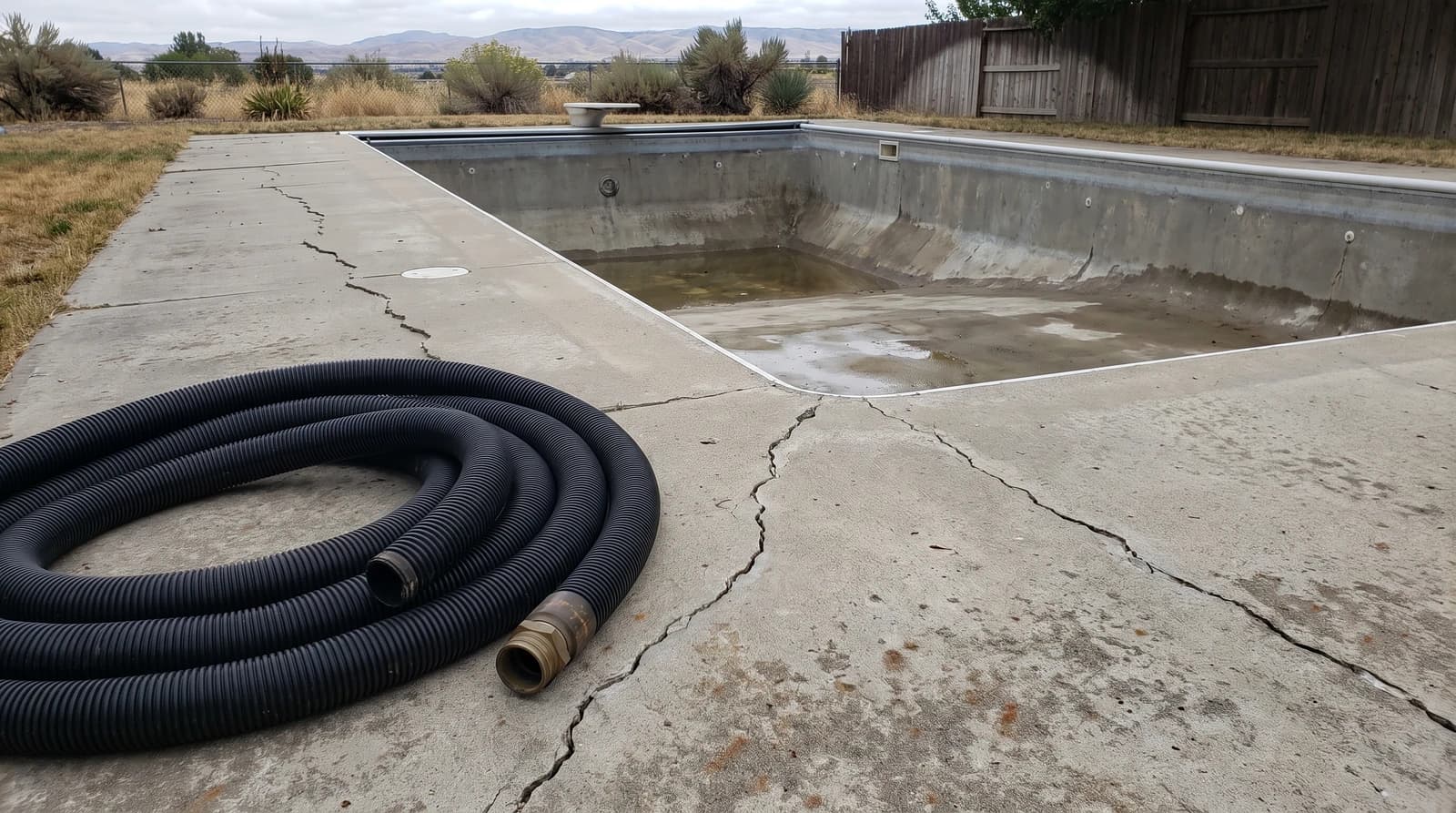
The first warm week of spring, I drove past a house off Ustick and watched a guy running a garden hose from his backyard straight into the gutter. His old pool was half-empty, and the water was sheeting down the street toward the storm drain.
He wasn't trying to break any rules. He just didn't know where else to put 20,000 gallons before his pool demolition could start.
That's the part almost nobody plans for. Long before an excavator shows up, you've got a swimming pool full of water sitting in your yard, and it has to go somewhere.
So let's talk about the water. Where it goes, what's actually legal here in the Treasure Valley, and how it fits into the rest of the job.
Why the water comes first in any pool demolition
You can't tear out a pool that's full. The shell has to be empty and reasonably dry before anyone breaks concrete or pulls fiberglass loose.
Old pool water isn't just water, either. Depending on when you last treated it, it can carry chlorine, salt, algae, and whatever's been sitting in the deep end since last summer.
Dump that in the wrong spot and you can kill a lawn, stain a neighbor's driveway, or send chemicals into a storm drain that runs straight to the Boise River.
Where all that water actually goes
You've basically got three options around here, and the right one depends on your chlorine level and how much of a hurry you're in.
The cleanest approach is letting the pool sit untreated for a week or two so the chlorine burns off in the sun. Once it tests low, you can drain it slowly onto your own landscaped areas, spreading it out so it soaks in instead of running off. Grass handles dechlorinated pool water just fine.
On a sewer connection? Some folks drain through a cleanout so the water heads to the treatment plant. That's the safest route for salt-water pools, since salt is rough on lawns and garden beds and doesn't break down in the sun the way chlorine does.
And if you just want it gone, a decent submersible pump and the right timing empties most in-ground pools in a few hours.
Here's the short version of doing it right:
- ✓Let the chlorine drop first. Stop adding chemicals a week or two ahead so levels fall on their own.
- ✓Test before you drain. A cheap pool test strip tells you if it's safe for your yard.
- ✓Drain slow, not all at once. Spread it across your property so it soaks in.
- ✓Keep it on your lot. Not the street, not the gutter, not the neighbor's yard.
- ✓Send salt water to the sewer. Never onto lawns or planting beds.
This holds true whether you're in Boise, Meridian, or out toward Nampa. The rules about storm drains don't change from one town to the next in the valley.
How draining fits into the rest of the pool demolition
Once the shell's empty, the actual demolition moves quick. For a standard in-ground concrete pool, the pool demolition itself usually runs two to four days on site, depending on how tight the backyard access is and whether you want a full dig-out or a partial fill.
The draining is the slow part, and it's the part you can knock out yourself before we ever pull up. Stop the chemicals, let it settle, pump it down over a day or two.
If you'd rather not mess with pumps and test strips, that's fine too. We handle the water on plenty of jobs.
Still deciding between filling the pool in versus hauling the whole thing out? Both are real options, and the right one comes down to your yard, your access, and your budget. If you already know you want it gone, here's how the whole pool demolition service works, from the first pump to the final grade.
Timing your pool demolition around Boise weather
Water and weather go together here more than people expect.
Spring is the busy season for pool demolition, and for good reason. The ground's soft enough to dig, the water drains without freezing, and you get the backyard back before summer hits.
Draining in the dead of winter is a headache. A half-empty pool can heave or crack in a hard freeze, and frozen ground makes the dig slower and pricier.
If you're set on a winter tear-out, drain as late as you can before demolition day so the empty shell isn't sitting through a cold snap.
Summer works fine too, but it's our busiest stretch across the Treasure Valley. Book a couple weeks out if you want a specific date.
The bottom line
Draining is the quiet first step of any pool demolition, and it's worth doing right. Let the chlorine drop, test before you drain, keep the water on your own property, and time it so an empty pool isn't sitting through a freeze.
Do that, and the tear-out itself is the easy part.
Not sure where to start, or just don't want to deal with 20,000 gallons and a garden hose? Give us a call at (208) 593-2877. We'll walk you through the whole thing, or handle it start to finish. Water, shell, and all.
Need Help With Pool Demolition?
Top Shelf serves Boise and the Treasure Valley with professional junk removal, cleanouts, and demolition services.