
Mobile Home Demolition: Do You Need an Asbestos Check?
Before mobile home demolition in the Boise area, older units may need an asbestos survey. Here's what it costs, how long it takes, and when Idaho requires it.
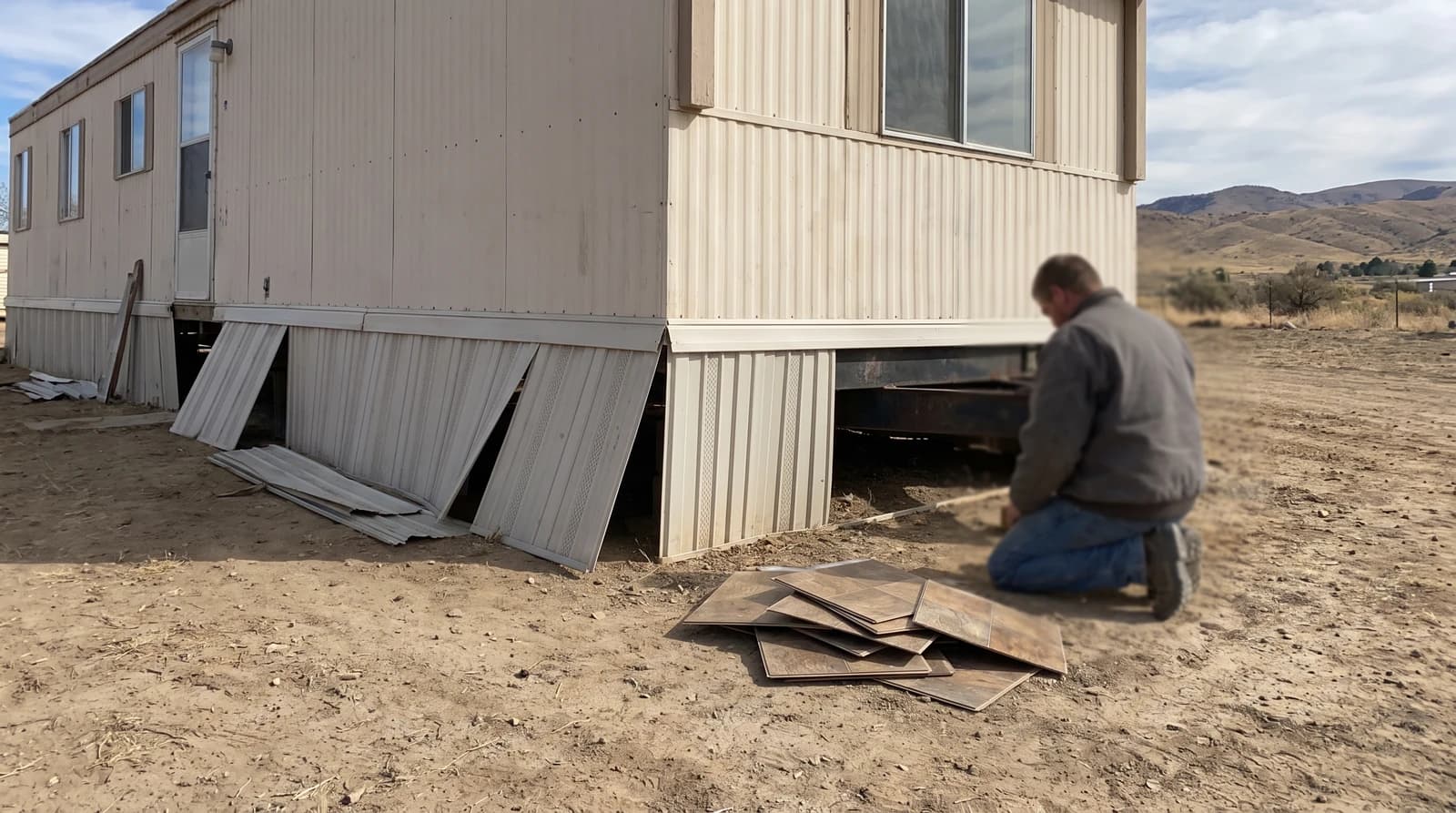
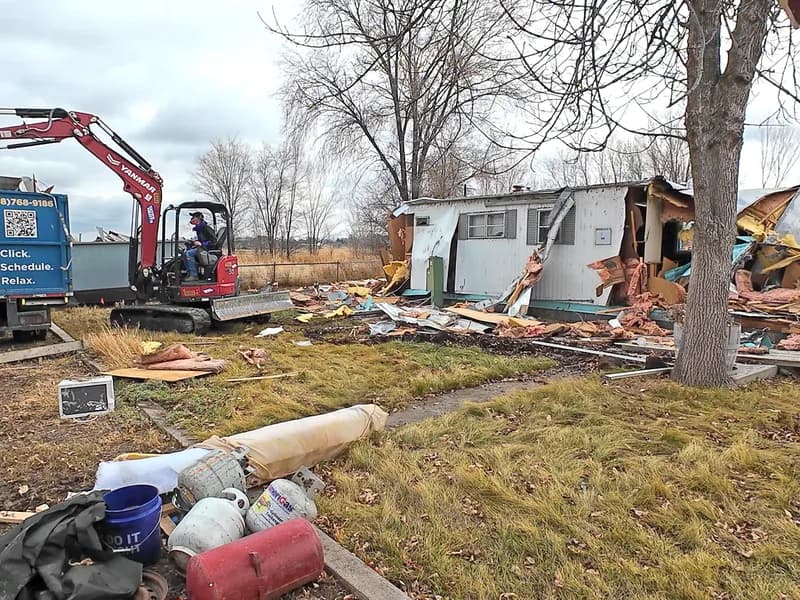
A guy out past Kuna called us back in March about his dad's old single-wide. Built in 1974, sitting on a few acres, nobody living in it since 2019. He wanted mobile home demolition lined up before the family listed the land.
Fair enough. Then he mentioned the floors were that speckled nine-inch tile, and the furnace ducts had a papery white tape wrapped around the joints.
That changes things. Not so much the price of the tear-down as the order you do things in.
On a home that old, somebody ought to find out whether there's asbestos in it before a machine touches it. Once it's a pile in the yard, you can't un-know what was in it.
Here's how this actually goes around the Treasure Valley, minus the scare tactics.
Why the age of the home decides almost everything
The rough dividing line is the mid-1980s. Asbestos didn't get pulled from most building products until 1989, and plants kept installing whatever was already sitting on the shelf. So a 1968 trailer and a 1979 single-wide are both suspect. A 1998 double-wide almost never is.
In older mobile homes it turns up in a handful of predictable spots:
- Nine-by-nine floor tile and the black mastic glued under it
- The gray felt backing on old sheet vinyl
- Furnace duct wrap, register boots, and the tape on duct joints
- Some exterior siding panels and troweled-on roof coatings
- Gaskets and millboard around the old furnace itself
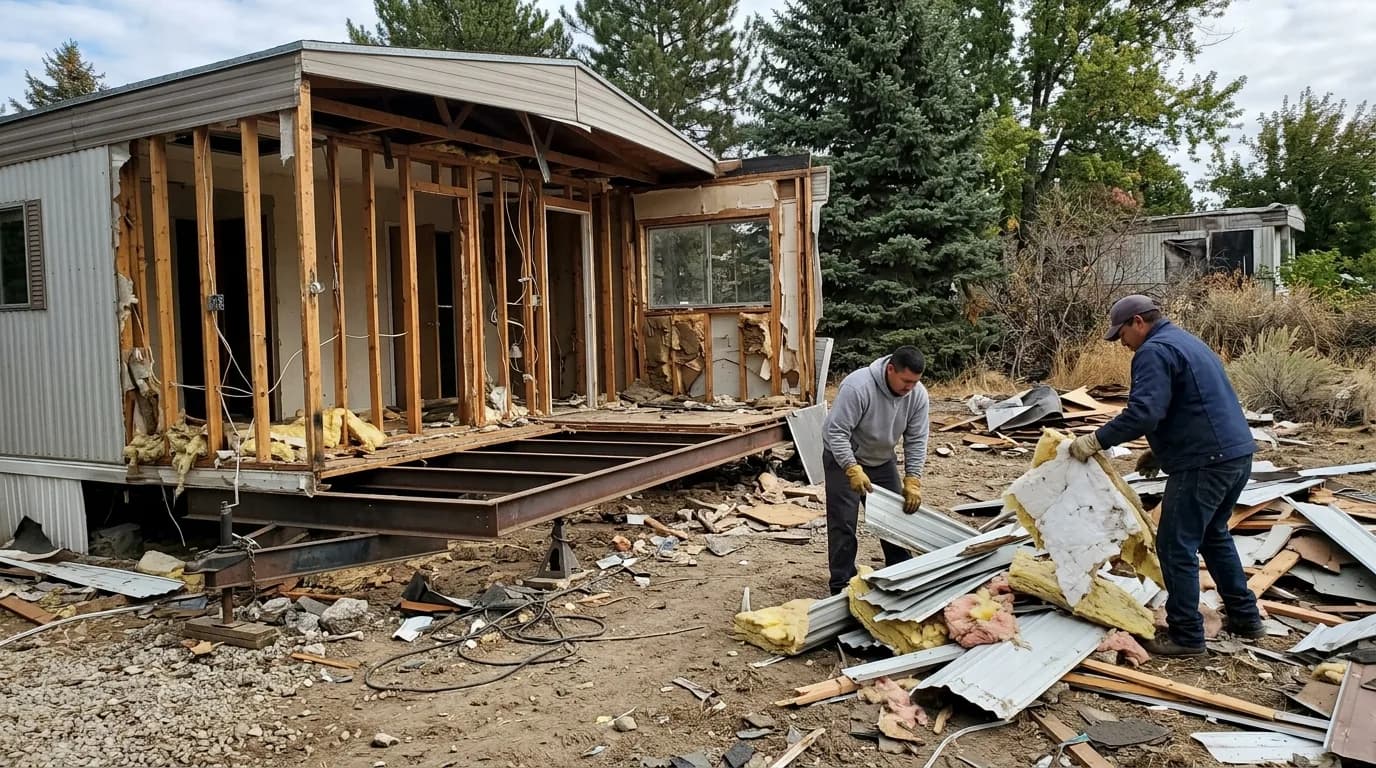
Sitting there intact, none of it hurts anybody. It becomes a problem when it gets crushed, sawed, or scraped, which is more or less the job description of demolition.
What an asbestos survey before mobile home demolition looks like
You hire a certified inspector. They walk the home, cut small samples out of anything questionable, bag them, and ship them to a lab. Four to eight samples on a single-wide is typical.
Results take two to five business days. You can pay for a rush if a closing date is breathing down your neck.
What comes back is a written report. Either nothing was detected and you're clear to demolish, or it lists the materials and what percentage showed up.
If it's the second one, a licensed abatement contractor pulls those specific materials first, bags them properly, and hauls them to a permitted disposal cell. Then our crew comes in and does the demo.
That's the whole thing. It's not the ordeal people picture. Most of the mobile homes we take down in Nampa, Meridian, and out in the county come back clean, or come back with one small item like a bathroom floor.
When Idaho actually makes you file something
This is where people tie themselves in knots online, because the federal rule and everyday reality don't line up neatly.
Idaho DEQ handles asbestos demolition notification here. Single-family residences of four units or fewer are generally exempt from the federal NESHAP requirements, and a mobile home somebody lived in usually lands in that bucket. So our guy in Kuna, taking down one trailer on his own ground, probably isn't filing anything.
The exemption gets thin fast, though. If the work is part of a commercial project, or a park is clearing several units at once, or a developer is taking down multiple homes on one parcel, it gets treated differently, and there's a ten-working-day notification before anybody can start. Ten working days is two full calendar weeks. That's the part that wrecks schedules when nobody planned for it.
So which bucket are you in? Fastest way to find out is to call DEQ's Boise regional office and describe your situation in two sentences. It's free and takes about ten minutes. We make that call for customers when the answer isn't obvious, because guessing is worse.
Worth knowing too: the Ada County landfill and the local transfer stations won't take asbestos-containing debris in the regular waste stream. Regulated material has to be wrapped, labeled, and run to a permitted cell. That's a big reason we steer people toward our mobile home demolition service instead of a roll-off and a free weekend. A dumpster full of mixed debris with old floor tile in it becomes somebody's problem at the scale house.
What asbestos does to your mobile home demolition budget
Here's roughly what we see around the valley. Prices move, so treat these as a starting point and not a quote.
| Step | Typical Treasure Valley cost | Time it adds |
|---|---|---|
| Survey and lab work, single-wide | $350 – $700 | 3 – 7 days |
| Survey on a double-wide | $500 – $900 | 3 – 7 days |
| Abatement of a bathroom or kitchen floor | $1,200 – $2,500 | 1 day on site |
| Whole-home flooring plus duct wrap | $3,000 – $6,000 | 2 – 3 days |
| DEQ notification, when it applies | Small filing fee | 10 working days |
Set that next to the demo itself, which usually runs a few thousand for a typical single-wide, and you can see why a surprise abatement bill stings. The number isn't huge. It just shows up after you already did the math.
It's also the best argument against doing this yourself. We wrote a whole piece on whether DIY mobile home demolition pencils out, and asbestos is the item that flips it for most people. A rented skid steer doesn't care what's in the floor. The rules do.
Want the wider view on permits, utility disconnects, and the order everything happens in? Our Idaho mobile home demolition guide walks through the full sequence.
Bottom line
Built before about 1985? Get a survey before anybody swings a hammer. It's a few hundred bucks and a week, and it either clears you completely or saves you from a much uglier conversation later.
Newer than that and you're probably fine, though a quick look at the flooring never hurts.
Not sure which side of the line your place falls on? Call us at (208) 593-2877 with the year it was built and where it sits. We'll tell you straight whether it's worth testing, and we're fine saying no if it isn't.
Need Help With Mobile Home Demolition?
Top Shelf serves Boise and the Treasure Valley with professional junk removal, cleanouts, and demolition services.