
Mobile Home Demolition: Does the Scrap Metal Cut Your Cost?
Wondering if scrap metal lowers the cost of mobile home demolition in Boise? Here's what the frame, siding, and axles are really worth in the Treasure Valley.
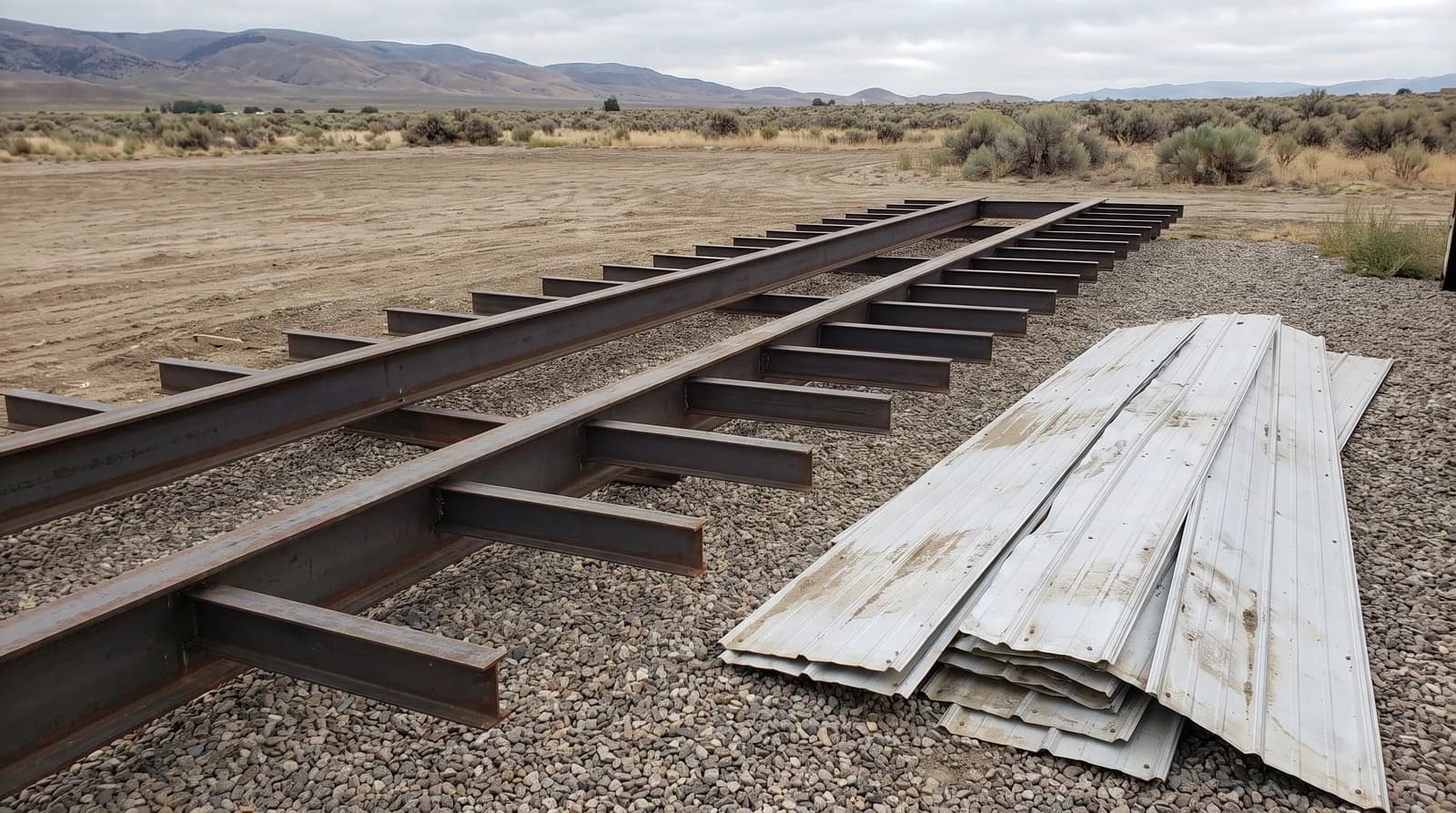
A guy out near Karcher Road in Nampa called us last spring. He was standing next to a 1978 single-wide he'd inherited and wanted a price on mobile home demolition. He'd also been reading forums, and he was sure the steel frame underneath was worth a couple grand.
His question was blunt. Shouldn't the scrap cover the whole job?
Fair thing to ask. These homes are full of metal, and metal has value. But the numbers floating around online are almost never what a Boise scrap yard actually pays, and that gap catches people off guard.
Short version: the metal is worth real money. It still won't pay for the job. It does take something off the top, though, and knowing how much helps you read a quote.
What's actually worth money in a mobile home
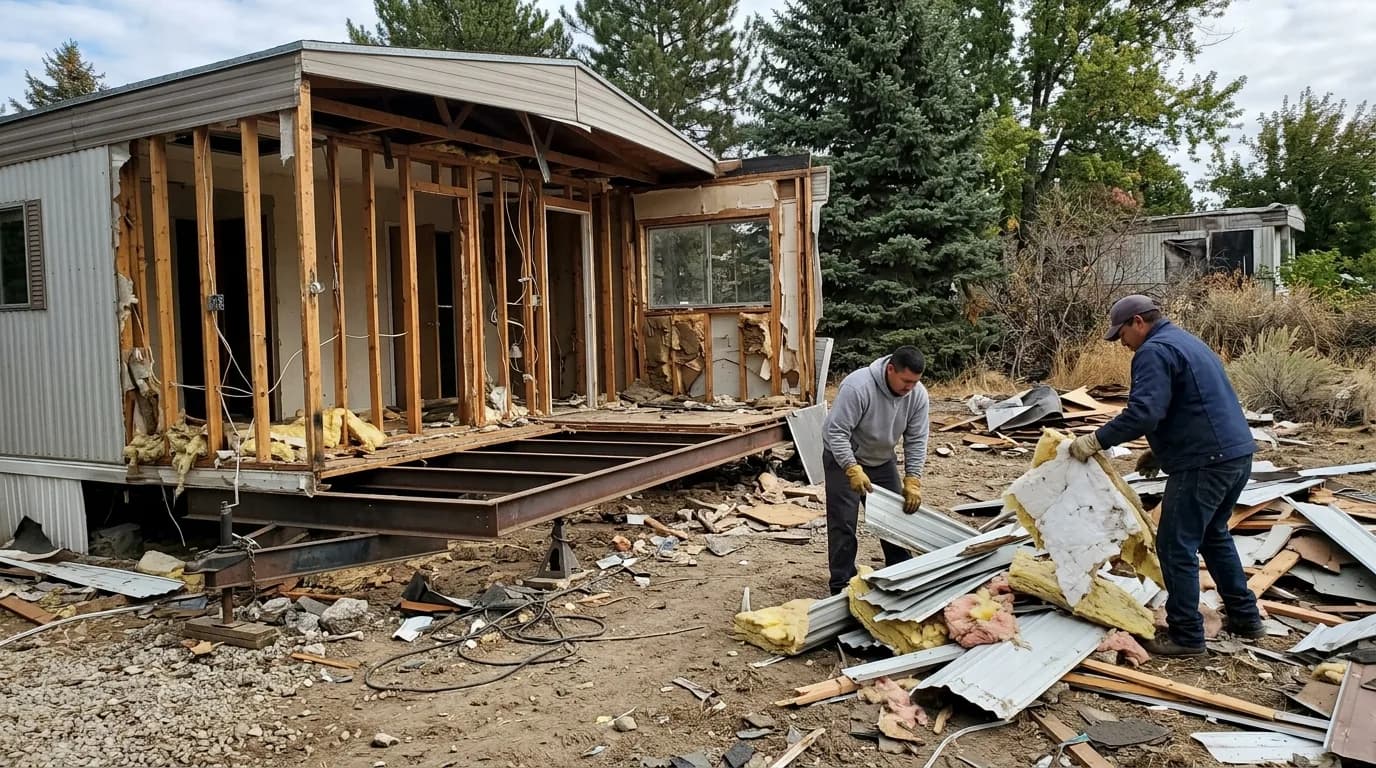
A single-wide sits on two long steel I-beams that run the length of the home, with crossmembers welded between them. That's the chassis. It's the heaviest single piece of metal on the property, usually 2,000 to 4,000 pounds depending on the year and the length.
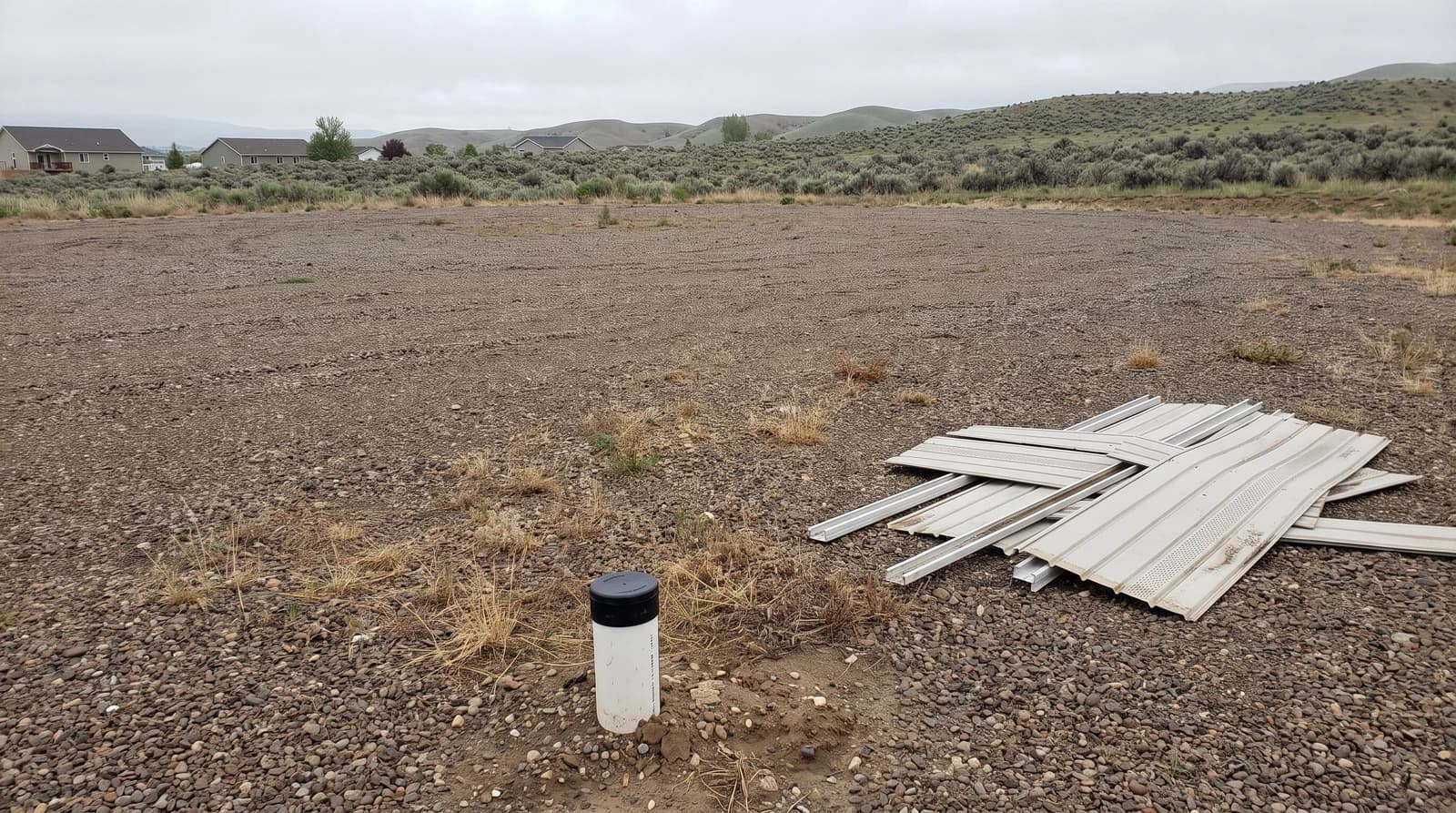
Then there's the skin. Plenty of pre-1990 homes around the valley wear aluminum siding, and aluminum pays several times what steel does per pound. Newer homes tend to have vinyl over OSB, which is worth exactly nothing at the yard.
Axles and the tow hitch are usually still attached, or sitting in the weeds behind the home. Copper wiring runs through the walls, though older places often used aluminum branch wiring, which pays a lot less. The furnace, water heater, and any leftover appliances have some light-iron value.
Here's roughly what those pieces bring at a yard like Pacific Steel or Western Recycling, based on what we've actually been paid the last couple of years:
| What it is | Rough weight | What a Boise yard pays |
|---|---|---|
| Steel frame, single-wide | 2,000–4,000 lbs | $100–$300 |
| Aluminum siding | 300–800 lbs | $150–$400 |
| Axles and hitch | 400–900 lbs | $30–$80 |
| Copper wiring (if it's copper) | 20–60 lbs | $60–$200 |
| Furnace, water heater, appliances | 200–400 lbs | $15–$40 |
Add it up and a well-picked single-wide might come back with $400 to $900 in scrap. A double-wide wrapped in aluminum could clear a thousand. Against a demo bill that usually runs $4,500 to $9,500 in the Treasure Valley, that's a dent, not a payoff.
Does scrap really lower your mobile home demolition cost?
Depends entirely on how the contractor prices the work, and it's worth asking straight out.
Some outfits quote a flat number and quietly pocket whatever the metal brings. Others build the expected scrap value into the quote up front, which is what we do. Same money in your pocket either way, as long as the second guy actually discounted it.
What scrap doesn't touch is the expensive part. Most of your bill is labor to take the home apart safely, plus disposal tonnage on everything that isn't metal.
Fiberglass insulation. Particleboard flooring. Roof decking, cabinets, carpet, drywall. That's the bulk of the weight, and it all goes to the landfill at a per-ton rate. Hidden Hollow in Ada County and Pickles Butte down in Canyon County both charge by weight, and a single-wide easily makes 8 to 14 tons of material nobody's recycling.
So the honest math: scrap knocks maybe 5 to 10 percent off. Anyone promising a free demo because of the steel is either planning to dump the debris somewhere or hasn't priced a landfill ticket lately.
Where the metal goes during a mobile home demolition
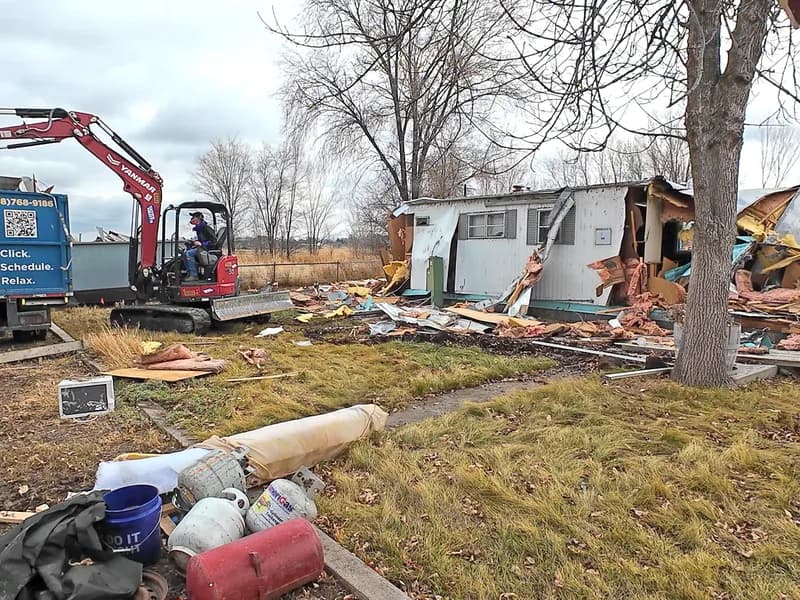
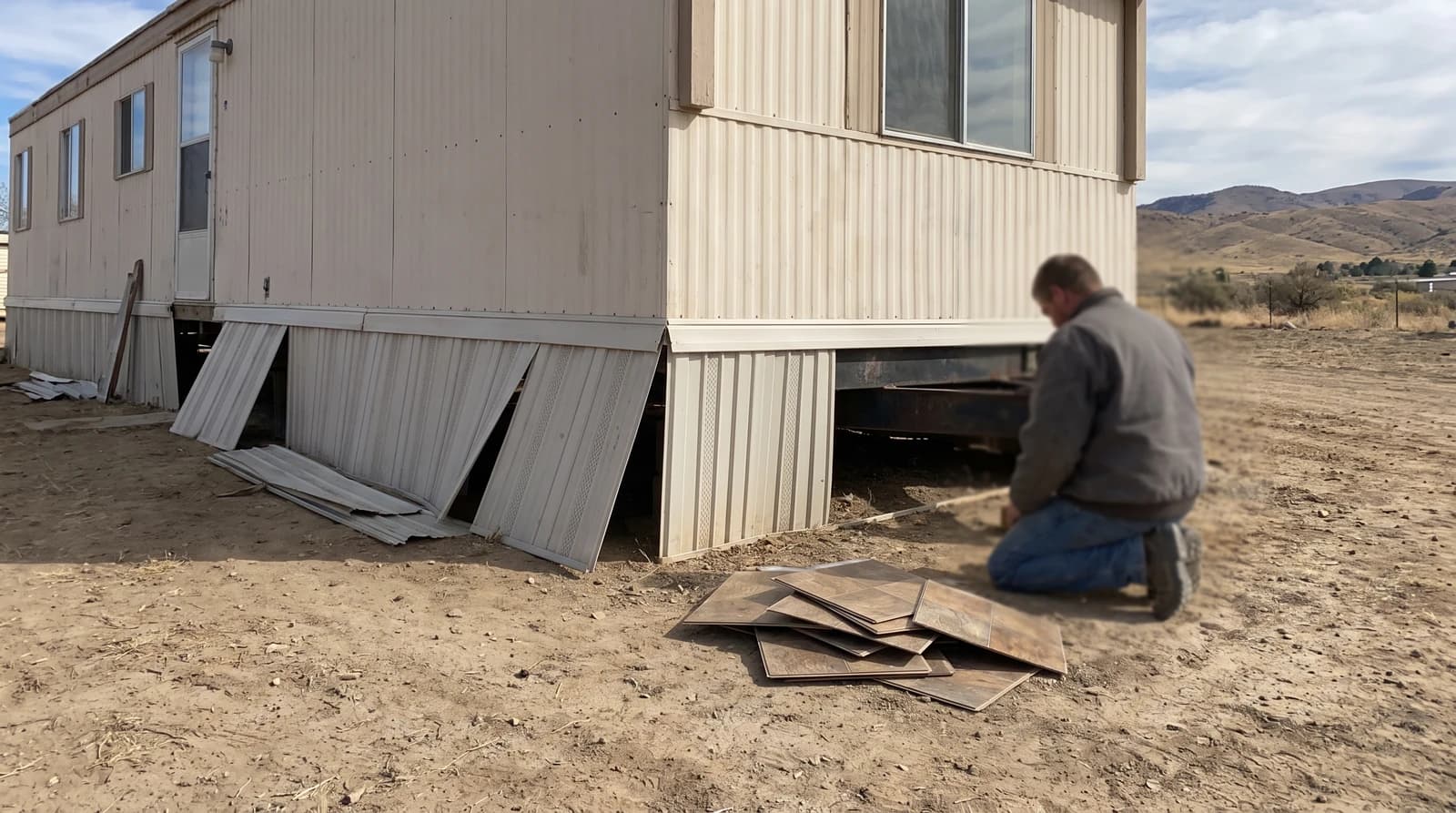
On our jobs the metal comes out as the home comes apart, not sorted out of a mixed pile afterward. Siding comes off early and goes in its own stack. Appliances and the furnace get pulled before we touch the structure. Wiring comes out when the walls open up.
The frame goes last. Once the box is off it, we cut the chassis into manageable lengths and haul it to a recycler. Axles usually ride along, though a decent set sometimes finds a second life under a utility trailer.
A few things people assume are recyclable but aren't, at least not here:
- Vinyl siding and vinyl windows
- Fiberglass and rockwool insulation
- Particleboard subfloor, which is usually water-damaged anyway
- Roof shingles, unless you've got a metal roof
Anything still usable inside is a different conversation. Working appliances, solid cabinets, and light fixtures are worth a call to Idaho Youth Ranch or a reuse store before demo day, because once we start, that stuff is debris. If you want the whole process laid out start to finish, we covered it in our guide to mobile home demolition in Idaho.
The mistake we see most often
People strip the home themselves chasing scrap value, then find out they've made the demolition harder.
Here's why. Pulling siding and wiring is the easy, satisfying part. What's left is a stripped shell with exposed insulation, a compromised structure, and nothing holding the walls square. That's slower to load and more dangerous to drop, and a good contractor prices accordingly. We've quoted homes that would've been cheaper to demo intact.
Want to salvage? Salvage the interior. Cabinets, doors, fixtures, appliances, anything you can carry out a doorway. Leave the shell alone. We got into where that line sits in our post on whether DIY mobile home demolition is worth it.
One more thing. Hauling scrap yourself only pays if you own a truck and trailer rated for steel weight. Two thousand pounds of I-beam is not a half-ton pickup load.
Bottom line
The metal in your mobile home is worth a few hundred to maybe a thousand dollars, and it should show up as a lower quote instead of a bonus for whoever hauls it away. Ask about it. Any crew doing mobile home demolition in Boise, Meridian, or Nampa should tell you straight whether scrap is baked into your number.
Just don't expect it to move the needle much. Landfill tonnage is what drives the price.
Yes, we'd love the job. But if you've got a home you're thinking about tearing down and just want a real number with the scrap already accounted for, call us at (208) 593-2877. Happy to walk the property and tell you what we see, even if you end up going a different direction.
Need Help With Mobile Home Demolition?
Top Shelf serves Boise and the Treasure Valley with professional junk removal, cleanouts, and demolition services.