
How Much Does Fence Removal Cost in Boise? (2026 Prices)
Real per-foot fence removal cost in Boise for wood, chain link, vinyl, and iron, plus what the posts, the gates, and dump fees actually add to your bill.
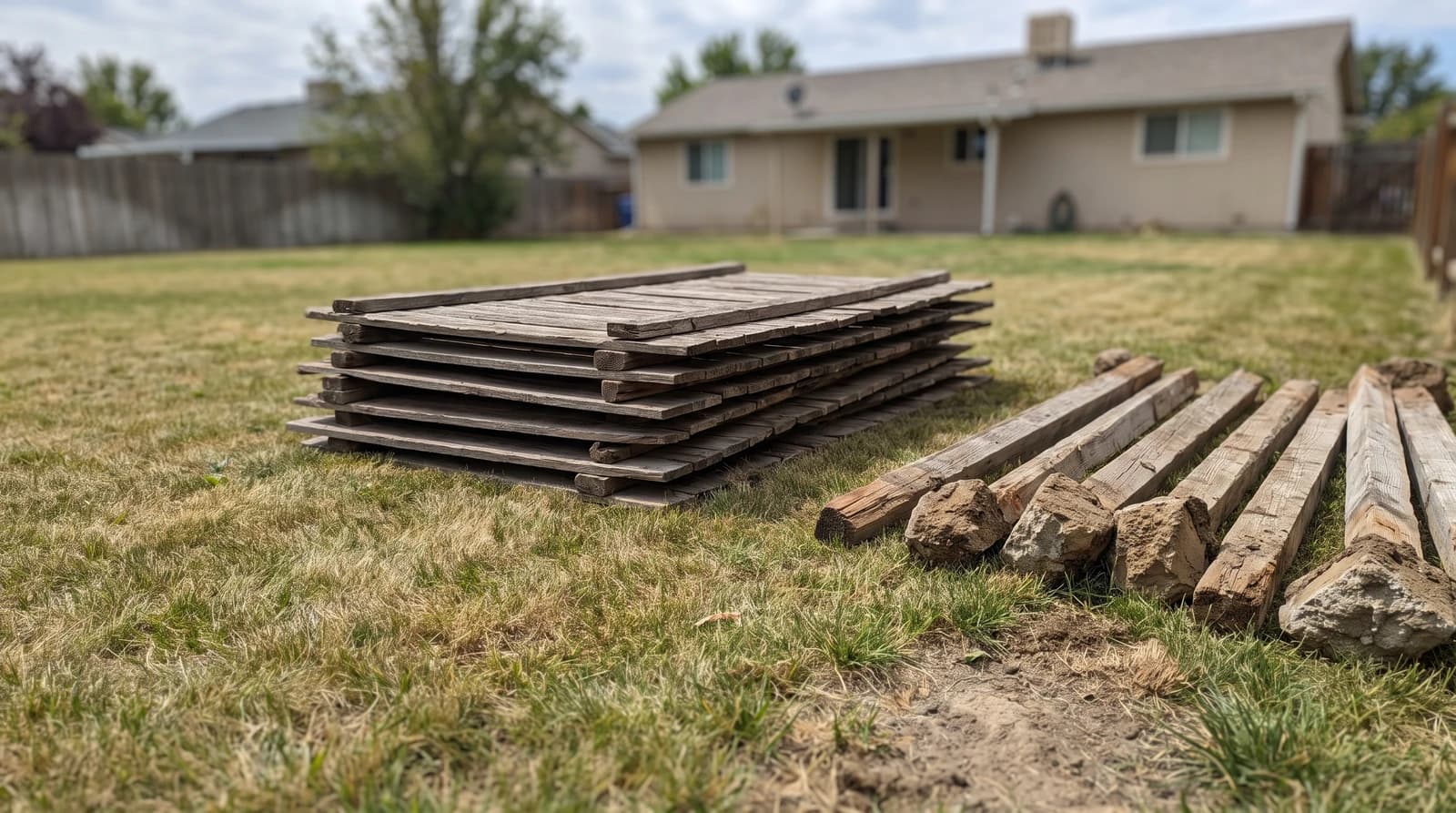
A guy out near Ustick and Linder called us last spring with the fence removal cost already worked out in his head. He'd walked the property line with a tape measure and landed on 138 feet of tired cedar privacy fence plus one sagging gate. He'd read "$3 a foot" somewhere online, so in his mind this was a four-hundred-dollar Saturday.
He wasn't crazy. The number he found just skipped the part that actually costs money.
Around here it runs $3 to $9 per linear foot, and where you land in that spread has almost nothing to do with the panels. It's what's under the ground that moves the price.
What fence removal costs around the Treasure Valley
These are the ranges we quote most often in Boise, Meridian, and Nampa. Your yard can push you above or below them. This is the honest middle.
| Fence type | Typical cost per foot | What drives the number |
|---|---|---|
| Chain link | $2 to $5 | Fast to cut down, but posts sit deep in concrete |
| Wood privacy (cedar or pine) | $4 to $7 | Heavy debris volume, lots of dump weight |
| Vinyl panel | $4 to $6 | Light material, though posts are often concrete-filled |
| Wrought iron or ornamental steel | $6 to $10 | Heavy sections, welded rails, awkward to load |
| Split rail or ranch style | $3 to $5 | Few posts, low volume, easiest of the bunch |
Almost every company has a minimum, us included. Ours lands around $250 to $300, so a 20-foot run between two houses isn't going to cost sixty bucks no matter what the per-foot math says. Sending two guys and a truck across town has a floor under it.
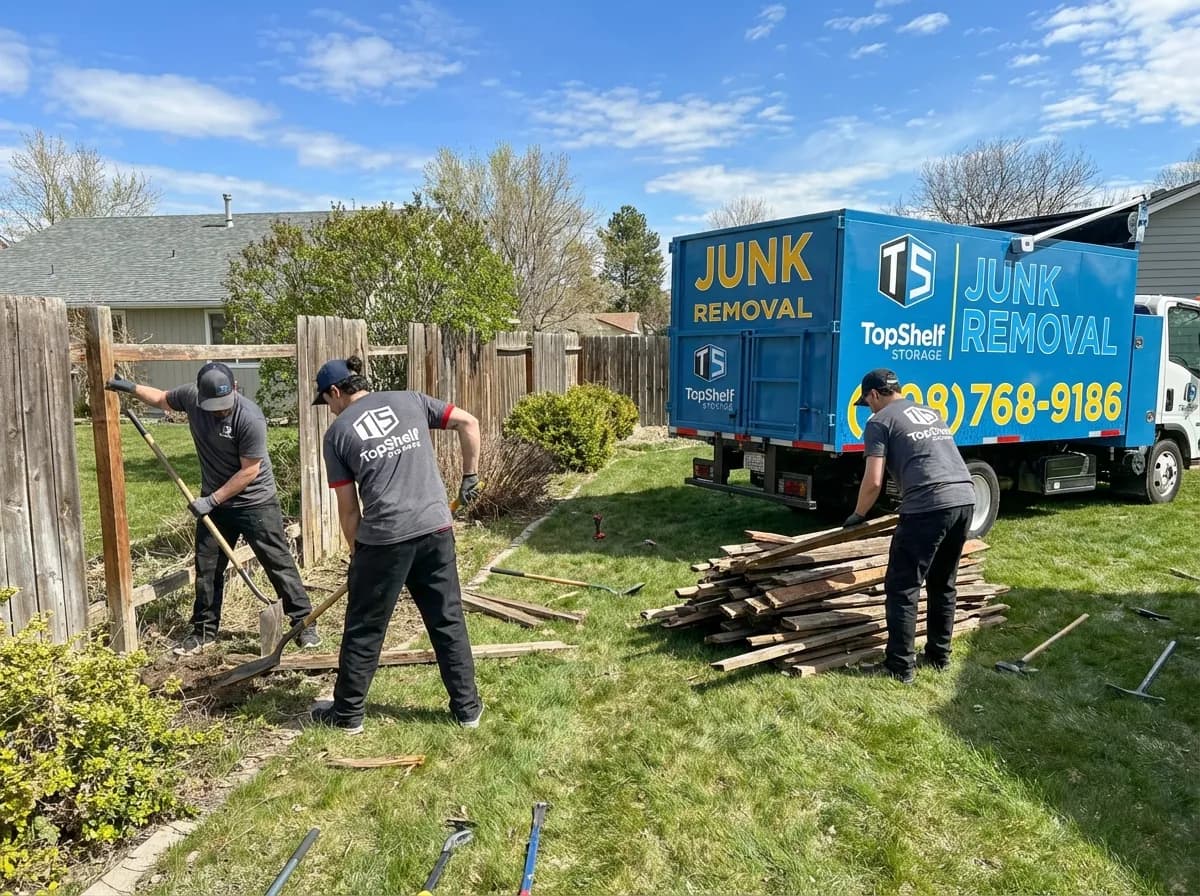
How long does it take? Most residential runs are a half day. A 100 to 150-foot fence with the posts pulled is usually three to five hours for a two-man crew, and it leaves with us the same trip.
Why the posts set your fence removal cost
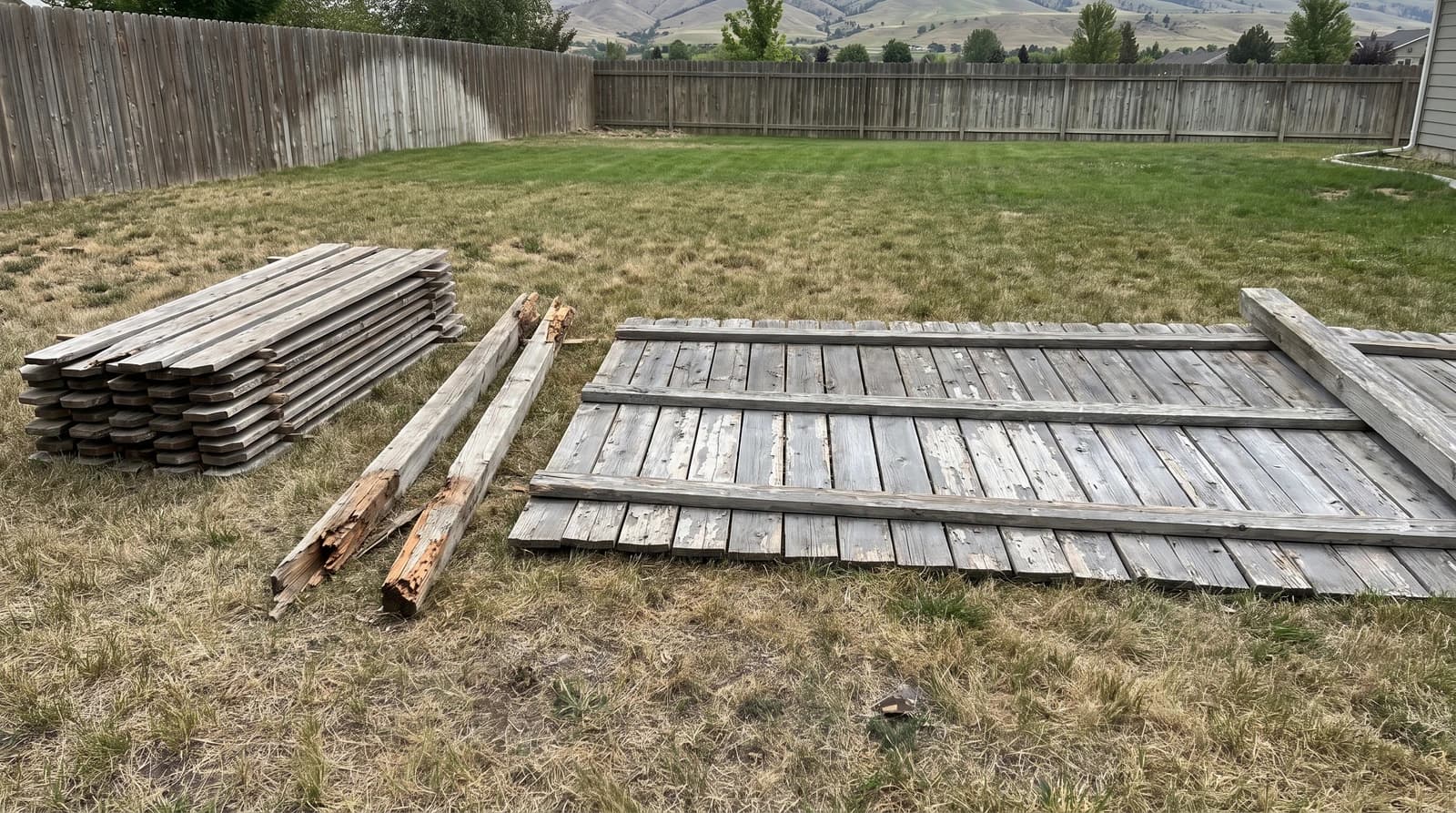
Panels come down fast. Two people with a pry bar and a sawzall can flatten 100 feet of cedar in under an hour.
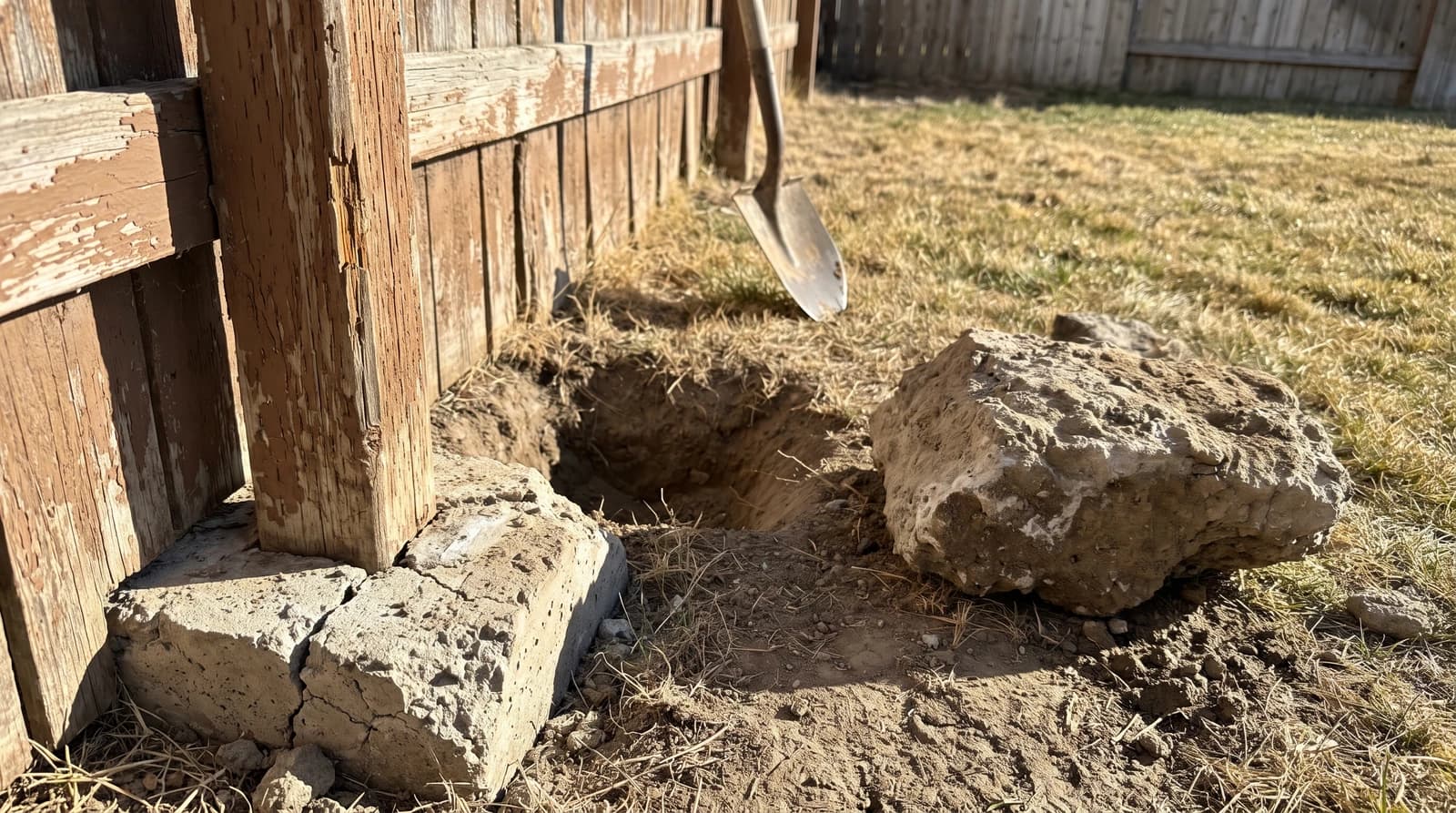
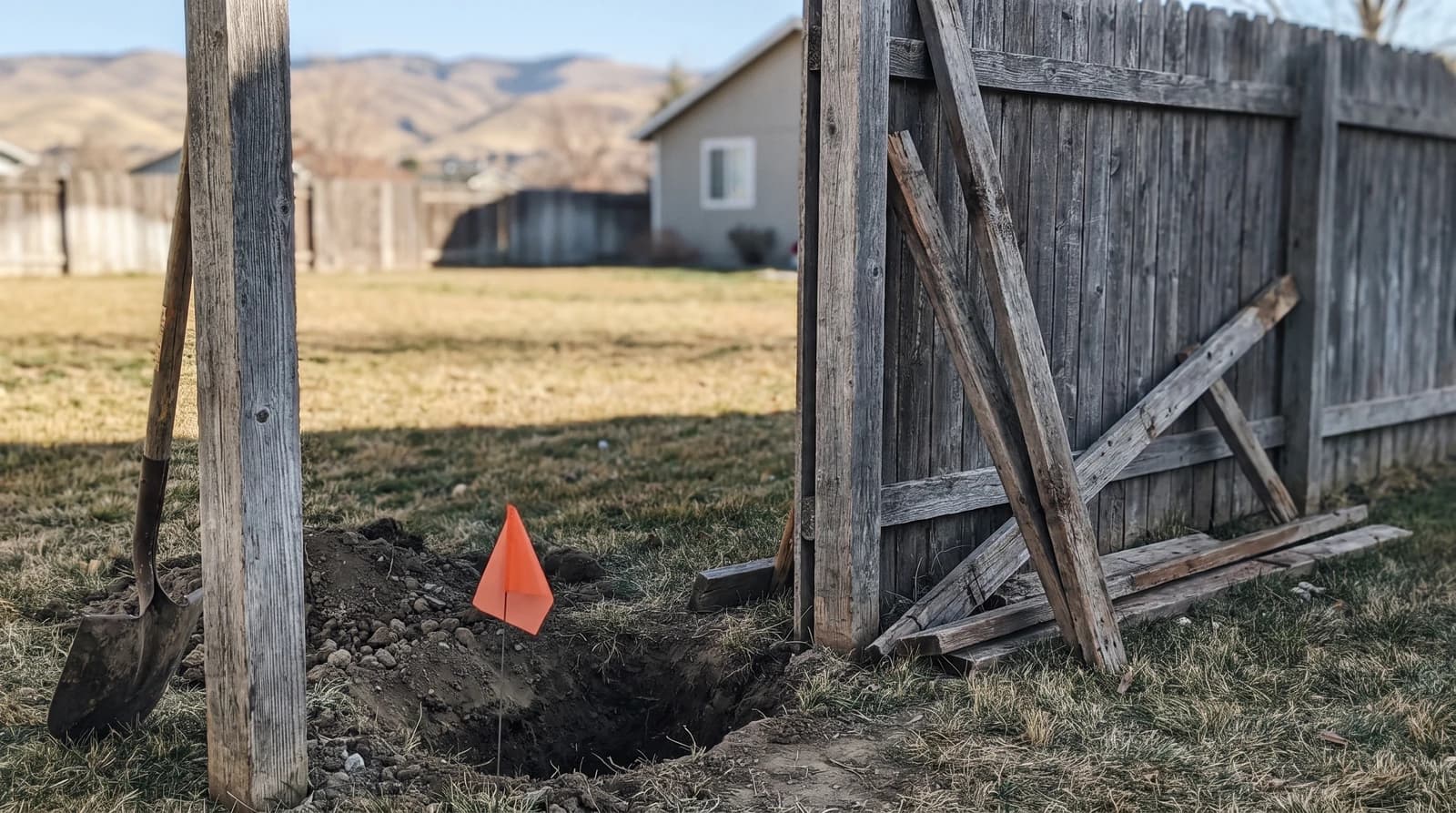
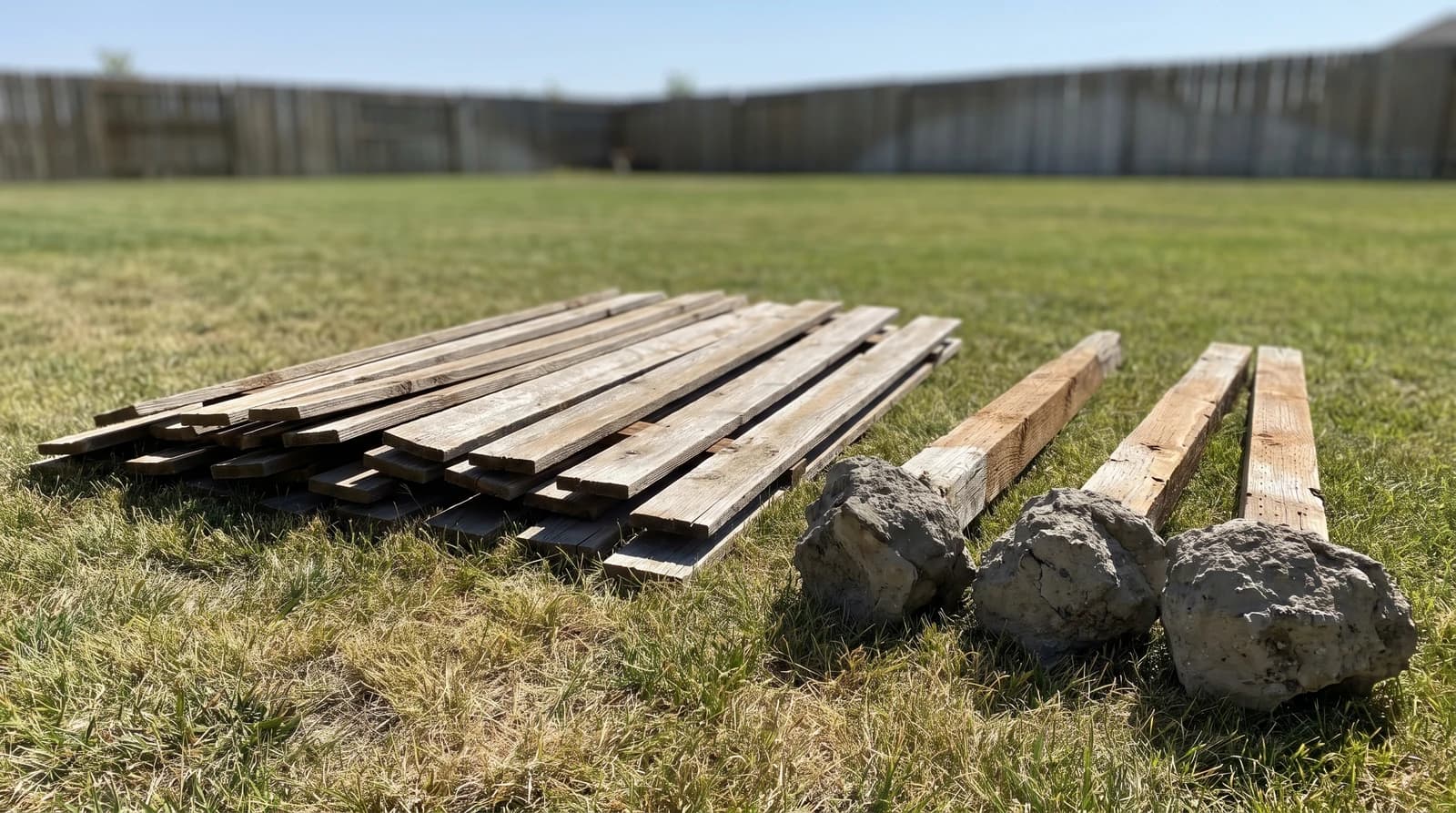
Then you hit the posts. Most Boise fences built in the last thirty years have 4x4s or steel posts sitting in a bell of concrete 18 to 30 inches down, and the corner and gate posts always got the fattest footings, because whoever built it knew those take the abuse.
Pulling them is where the hours go. A post puller or a jack and chain handles most, but some snap off and leave a chunk of concrete down there. We wrote a whole piece on what to do with the concrete footings, since that's the surprise that comes up most on these jobs.
If the footings are staying put because a new fence is going in the same line, say so when you call. That knocks real money off the number.
A few other things stretch a half day into a full one:
- No side gate or alley access, so every panel gets carried around the house
- Vegetation grown through it, like Virginia creeper, trumpet vine, or an arborvitae hedge that swallowed the pickets
- A retaining wall or a slope under the fence line, which kills any straight pull on the posts
- Two fences stacked together, which happens more than you'd think when a neighbor built their own right alongside yours
- Buried junk from an older fence somebody cut off at grade instead of pulling
That last one gets people. We've pulled galvanized pipe from a 1960s chain link out of the same holes as a cedar fence built in 2004. Two fences deep, one trench.
Dump fees, scrap metal, and whether to just do it yourself
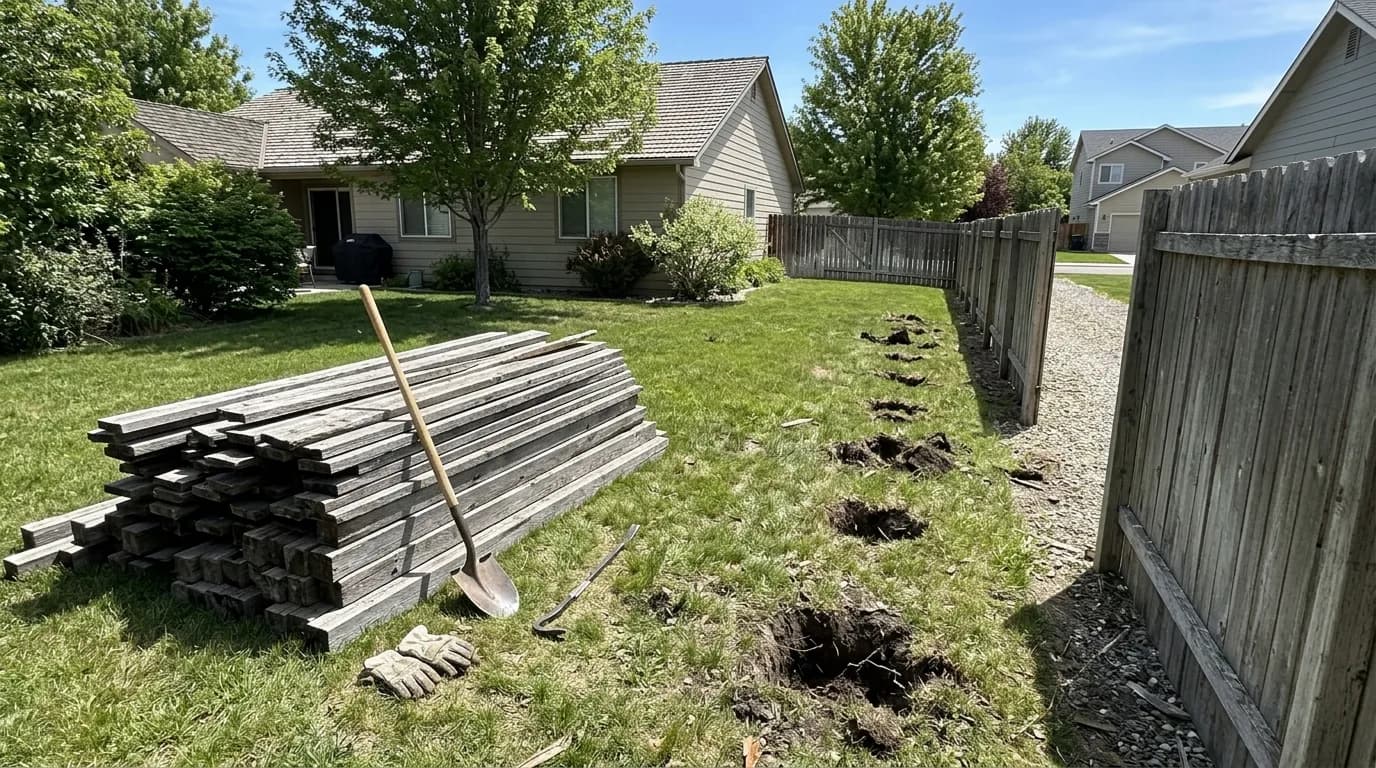
Every bid you get includes disposal, whether the contractor breaks it out on paper or not. Ada County Landfill charges by the ton, and weathered cedar that's been soaking up sprinkler water for fifteen years weighs more than it looks. A 150-foot privacy fence usually comes in around a ton and a half once it's broken down and loaded.
Metal is the one break you get. Chain link fabric, steel posts, and iron sections go to Western Recycling instead of the landfill, and on a decent-sized chain link job that scrap shaves something off the bill, usually $30 to $80. Not free removal, but it's real money, and it's why chain link sits at the bottom of the table.
So should you just do it yourself? If you've got 30 feet of split rail, a truck, and a free Saturday, yeah, probably. Our DIY versus hiring a pro breakdown walks through where that line usually falls.
We'd take the job. We're just not going to pretend it's the only smart move.
Getting a fence removal quote that doesn't change
Three numbers and two photos will get you a price that holds.
Measure the total footage. Count the posts and the gates. Check whether the posts are set in concrete, which you can usually tell by grabbing one and giving it a shove.
Then text a photo down the length of the fence and one close-up of a post at ground level.
When we quote fence removal with that much to go on, the number on the phone is the number on the invoice. Quotes go sideways when somebody describes "a little fence in the back" and it turns out to be 200 feet of wrought iron on a hillside up in the foothills.
Bottom line
Budget $3 to $9 a foot, expect a minimum charge on a short run, and remember that posts and gates push the price harder than length does.
Want a real number instead of a range? Measure it, snap a couple of photos, and call us at (208) 593-2877. We'll tell you what it costs, and if the honest answer is that you should rent a trailer and knock it out yourself, we'll tell you that too.
Need Help With Fence Removal?
Top Shelf serves Boise and the Treasure Valley with professional junk removal, cleanouts, and demolition services.