
Fence Removal in Boise: What About the Concrete Footings?
Fence panels come down in an hour. The concrete footings are the real work. Here's what Boise homeowners should know about posts, costs, and backfill.
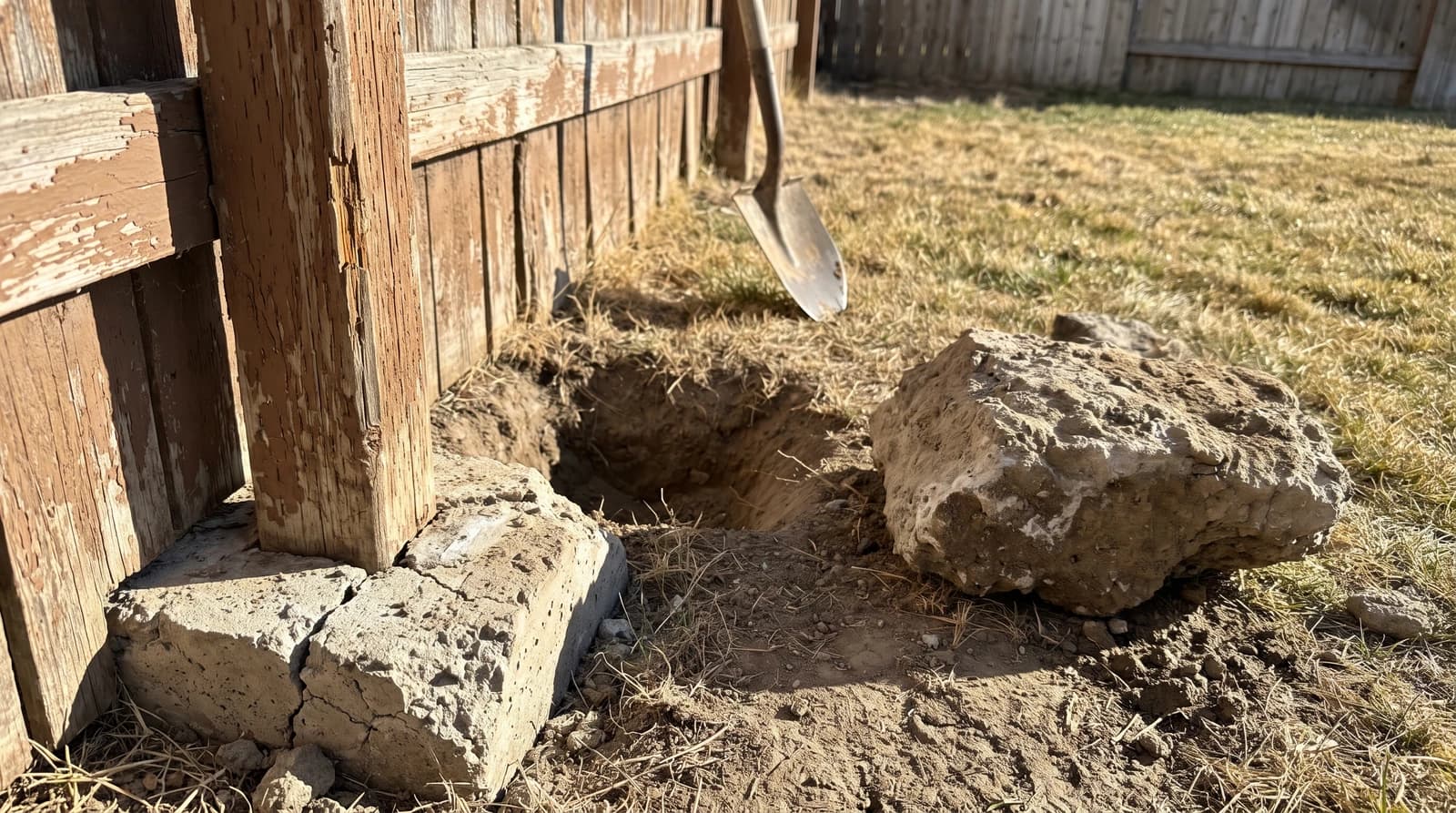
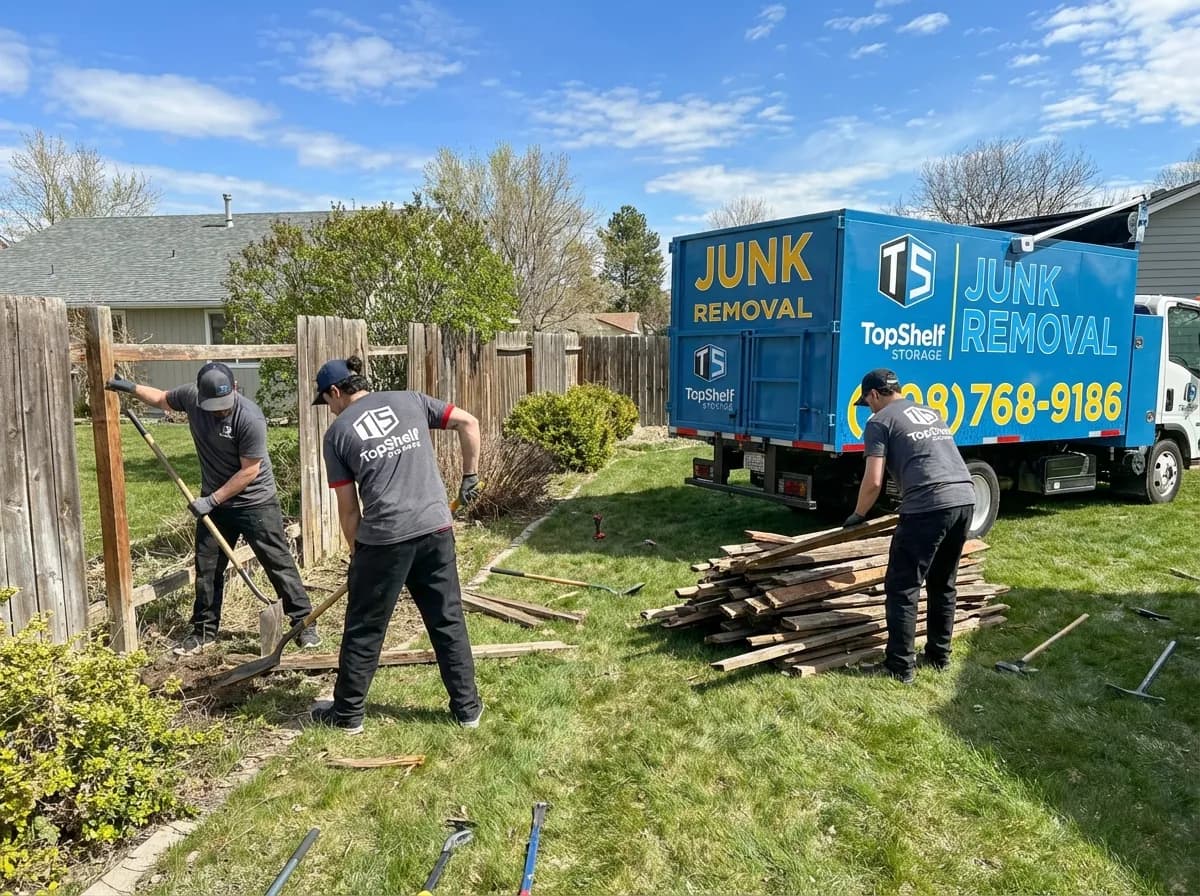
Last spring we handled a fence removal on a lot near Hillcrest. About 160 feet of old cedar, gray and leaning. The panels came down in a little over an hour.
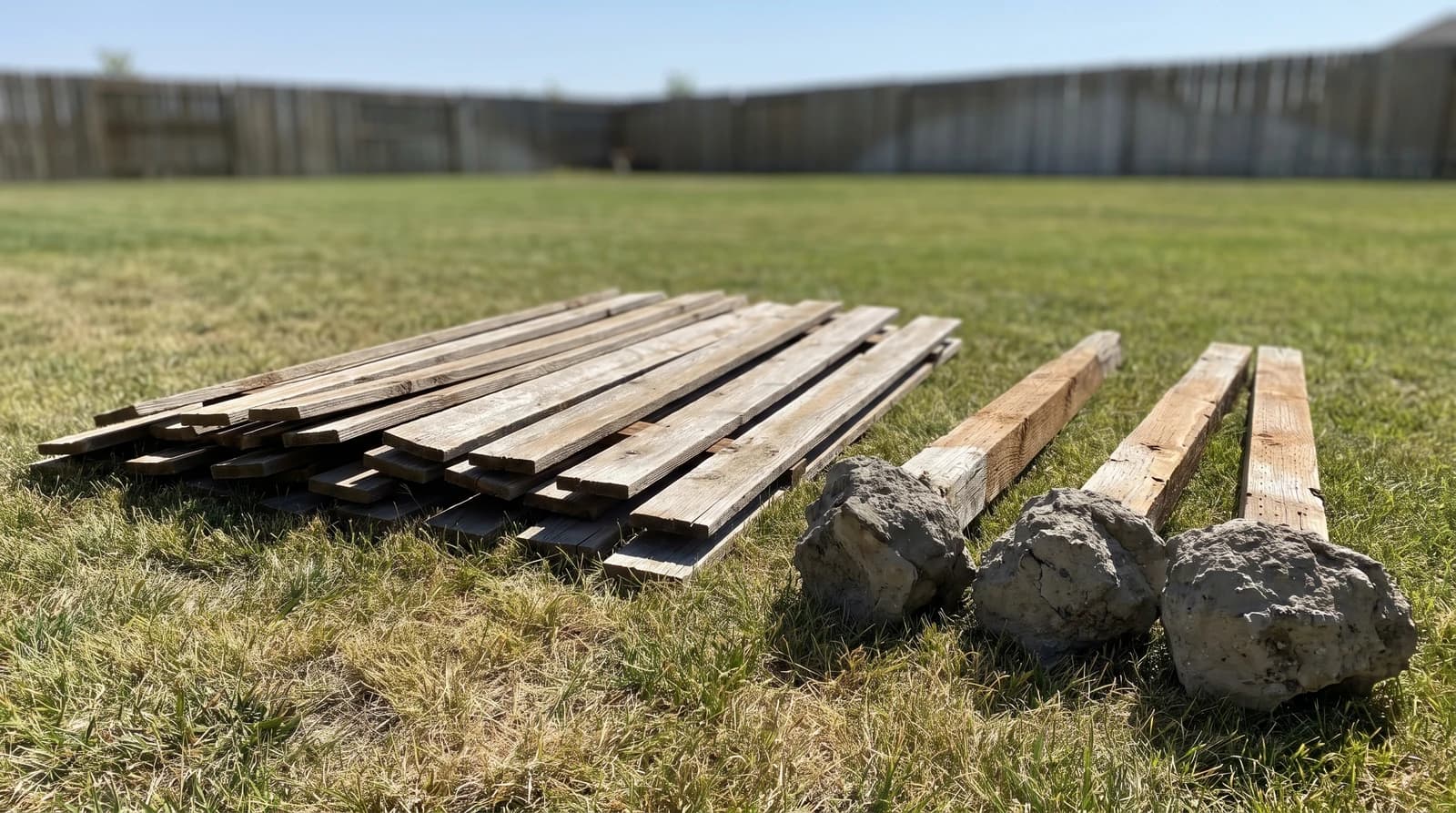
Then we spent the rest of the morning wrestling fourteen lumps of concrete out of the ground, each one roughly the size of a five-gallon bucket.
That's the part almost nobody budgets for. The fence itself is the easy half. What's holding those posts up is the actual job.
Why fence removal is really about the footings
Most fences around the Treasure Valley went in the same way. Dig a hole, drop the post, dump in a bag of concrete, add water, move to the next one.
Depth and diameter vary wildly, though. Older fences in the North End or up on the Bench often have footings a foot across and 30 inches deep, sometimes belled out at the bottom so they fight you the whole way up.
Newer builder-grade fences in Meridian and Kuna? Sometimes it's a thin collar of concrete eight inches down and the post practically hands itself to you.
You won't know which kind you've got until the first one comes out. That's just how it goes.
The real question is what's going in that spot next. New fence on the same line, grass, a patio, a garden bed. Each answer points you somewhere different.
Your three options for the old posts
Leave them in place. Cut the post flush at grade and walk away. Cheapest and fastest, and yes, we'd rather sell you the full pull, but if nothing's ever happening on that ground again it's honestly fine. Just know you're leaving a surprise for whoever digs there in ten years.
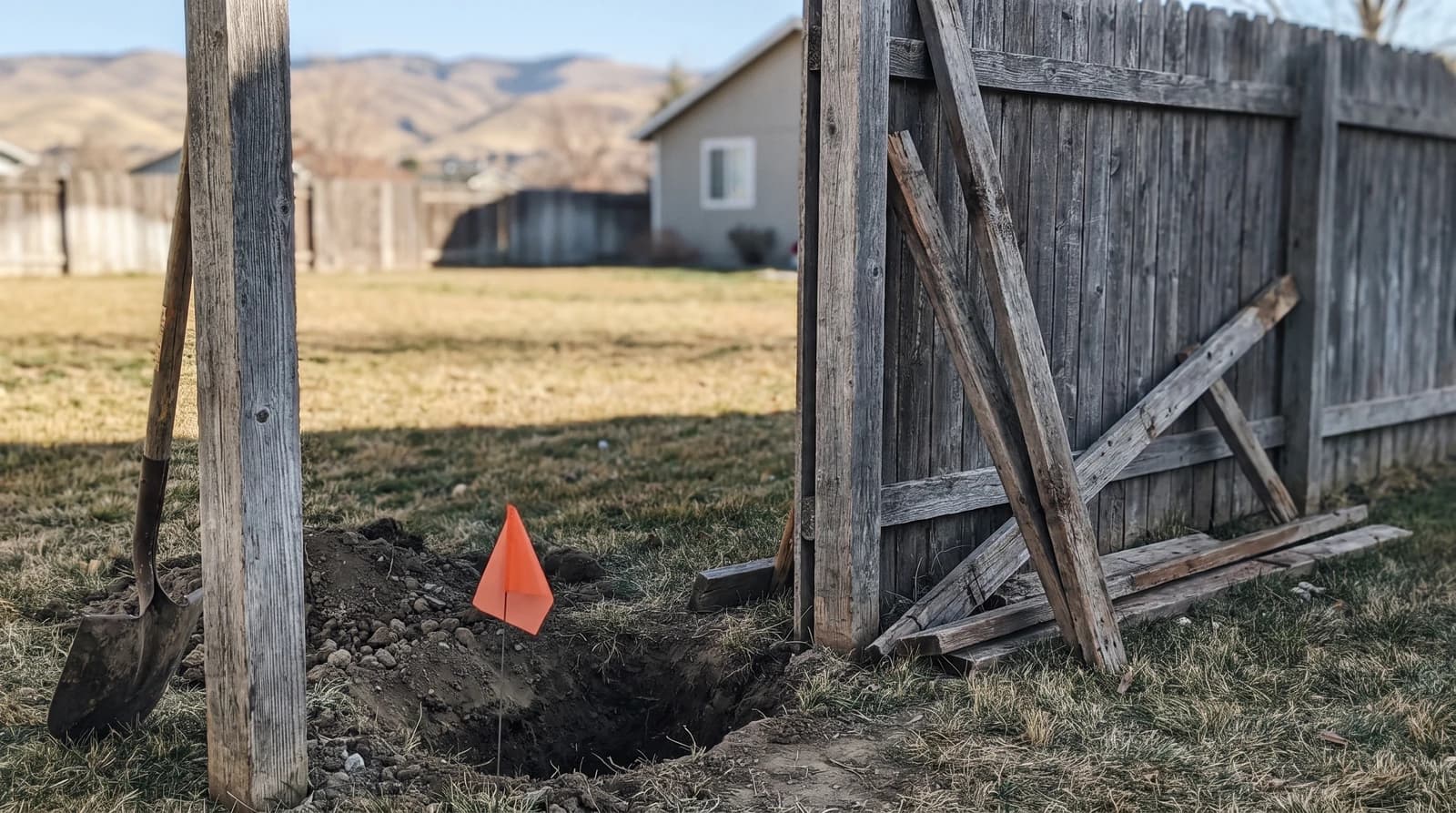
Pull them whole. Soak the soil the night before. Work a bar or a farm jack under the concrete collar and lever the whole thing up in one piece. You're left with a clean hole to backfill and a heavy chunk to haul off.
Dig and break. This one's for the big monolithic footings, or when a new post has to land in the exact same spot. Slower, dirtier, and where most DIY weekends go sideways.
What fence removal with footings costs around here
Straight teardown runs roughly $3 to $7 per linear foot in the Boise area, depending on material, height, and whether we can get a truck near the line. Footings get priced separately, because they're a completely different kind of work.
| Footing approach | Typical add per post | When it makes sense |
|---|---|---|
| Cut flush, leave concrete | $0–5 | Nothing else going in that ground |
| Pull small footing whole | $10–20 | Chain link, vinyl, shallow sets |
| Dig and break big footing | $25–45 | Deep or belled concrete, new post in the same hole |
| Haul concrete off-site | Usually in the quote | Always, unless you want it piled in the side yard |
Access moves those numbers more than anything else. A back fence you reach through a 34-inch gate means every chunk gets carried by hand, and that shows up on the bill. A side yard we can back a trailer into is cheaper. If you're still weighing whether to rent a truck and do it yourself, we laid out the honest tradeoffs in our post on fence removal DIY versus hiring a pro.
One more thing worth knowing: clean concrete and mixed fence debris don't go to the same place. Concrete recyclers take clean footings by weight at a decent rate. A trailer of rotted cedar, staples, and rusted wire goes to the Ada County Landfill at mixed-debris rates, and metal from chain link can head to Western Recycling instead. Sorting on site saves real money, which is why our crews separate as we load.
Don't forget the holes you leave behind
Here's the mistake I see most, and it's an easy one to make.
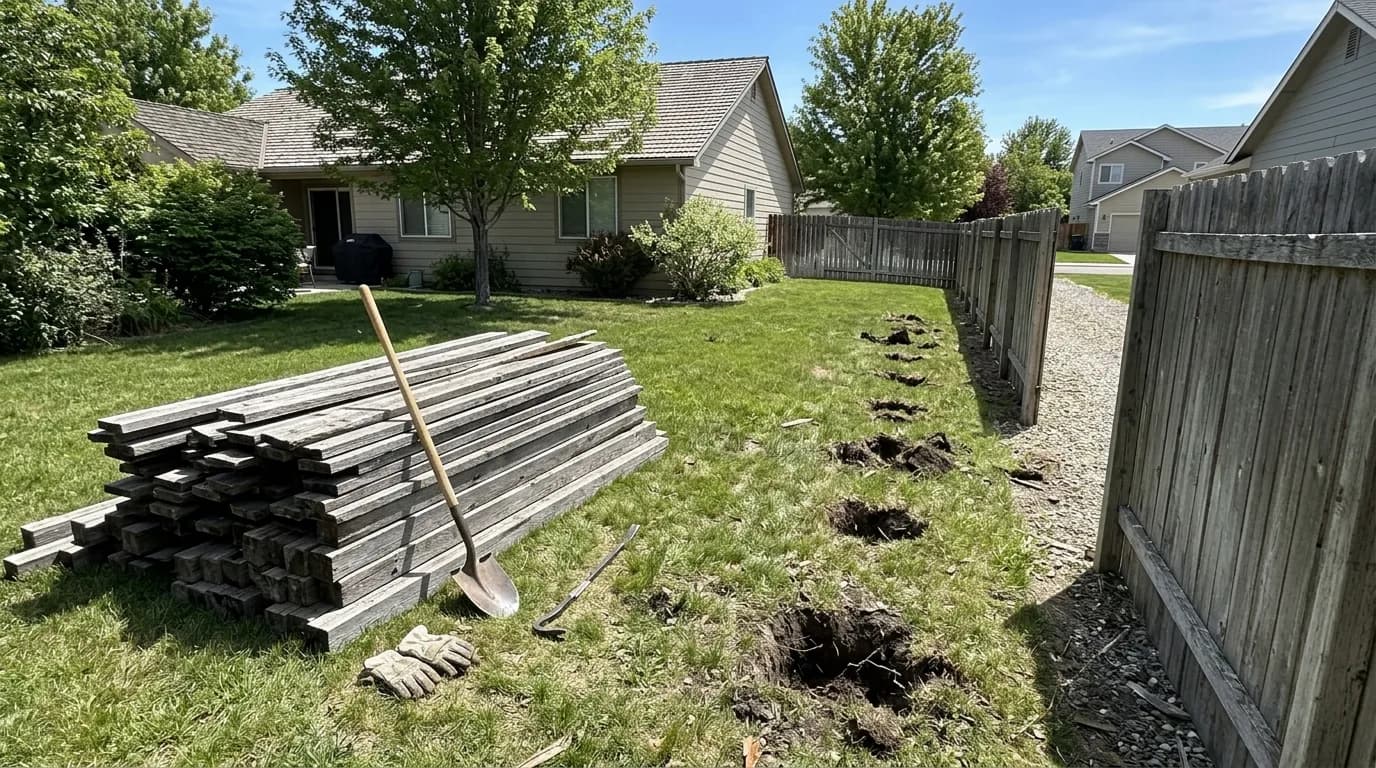
Someone pulls fourteen footings, shoves the dirt pile back in loose, rakes it smooth, and calls it done. By August that soil has settled three or four inches, and there's a row of shallow divots marching across the lawn.
Backfill in layers instead. Six inches of soil, tamp, water, repeat. Then overfill a little, because it's going to drop no matter what you do.
A few things worth having on hand before the crew leaves:
- A yard or two of screened topsoil (one yard fills roughly 20 to 25 post holes)
- Grass seed or sod if you're planting the line back in
- A hand tamper, or a length of 4x4 if you're improvising
Spring and fall are the easiest windows for this out here. Summer ground in the valley bakes hard as a brick by mid-July, which makes pulling footings slower and more expensive. February isn't much better.
One last thing, since it comes up on maybe a third of our fence jobs. If the fence sits on a shared property line, the footings do too, so pulling them changes the ground on both sides. Have that conversation with the neighbor before the work starts, not after. We wrote up how that usually goes in our post on handling fence removal on a shared line.
Bottom line
The fence comes down in an afternoon. The concrete decides your budget, your schedule, and how that stretch of yard looks six months later. Figure out what's going in that ground before you decide how deep to dig.
Want a straight number? We do fence removal all over Boise, Meridian, and Nampa, footings included. Call or text (208) 593-2877 and tell us how many posts you're dealing with. We'll tell you what it takes.
Need Help With Fence Removal?
Top Shelf serves Boise and the Treasure Valley with professional junk removal, cleanouts, and demolition services.