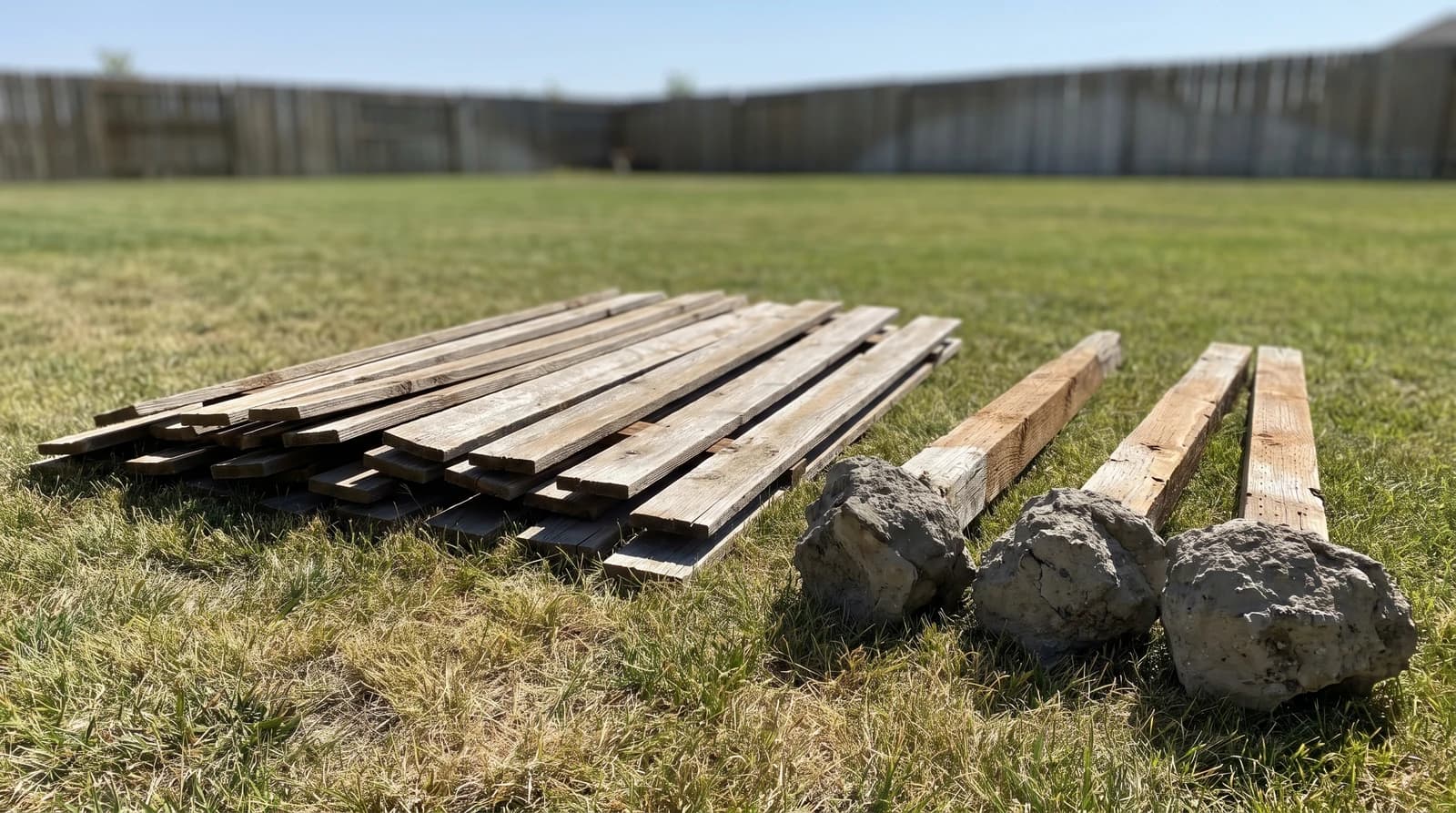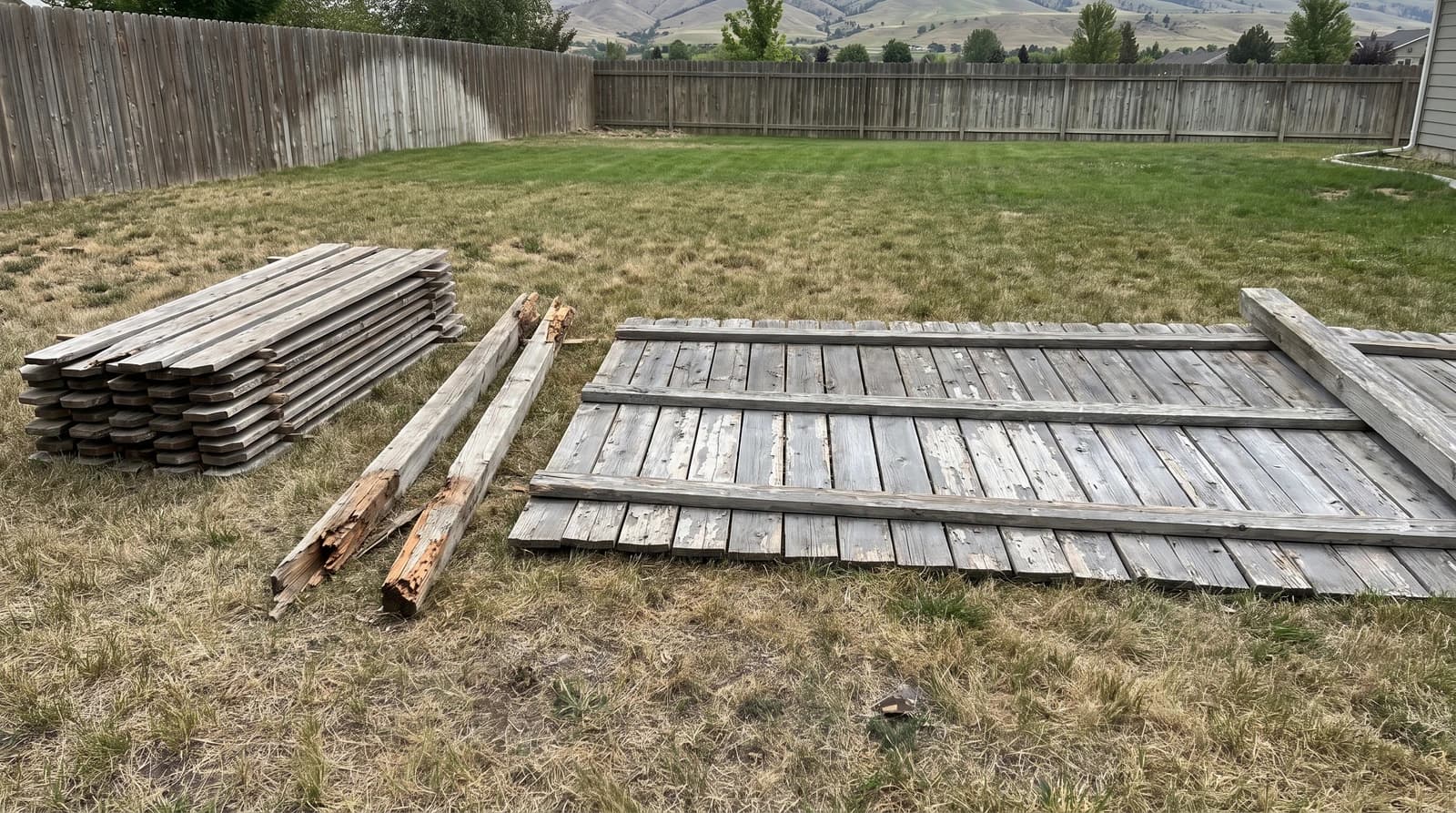

Fence Removal in Boise: When Trees and Vines Grew Into It
Fence removal in Boise gets tricky when a tree or vine has grown into it. Here's what changes, who owns the tree, and what overgrown fence removal costs.
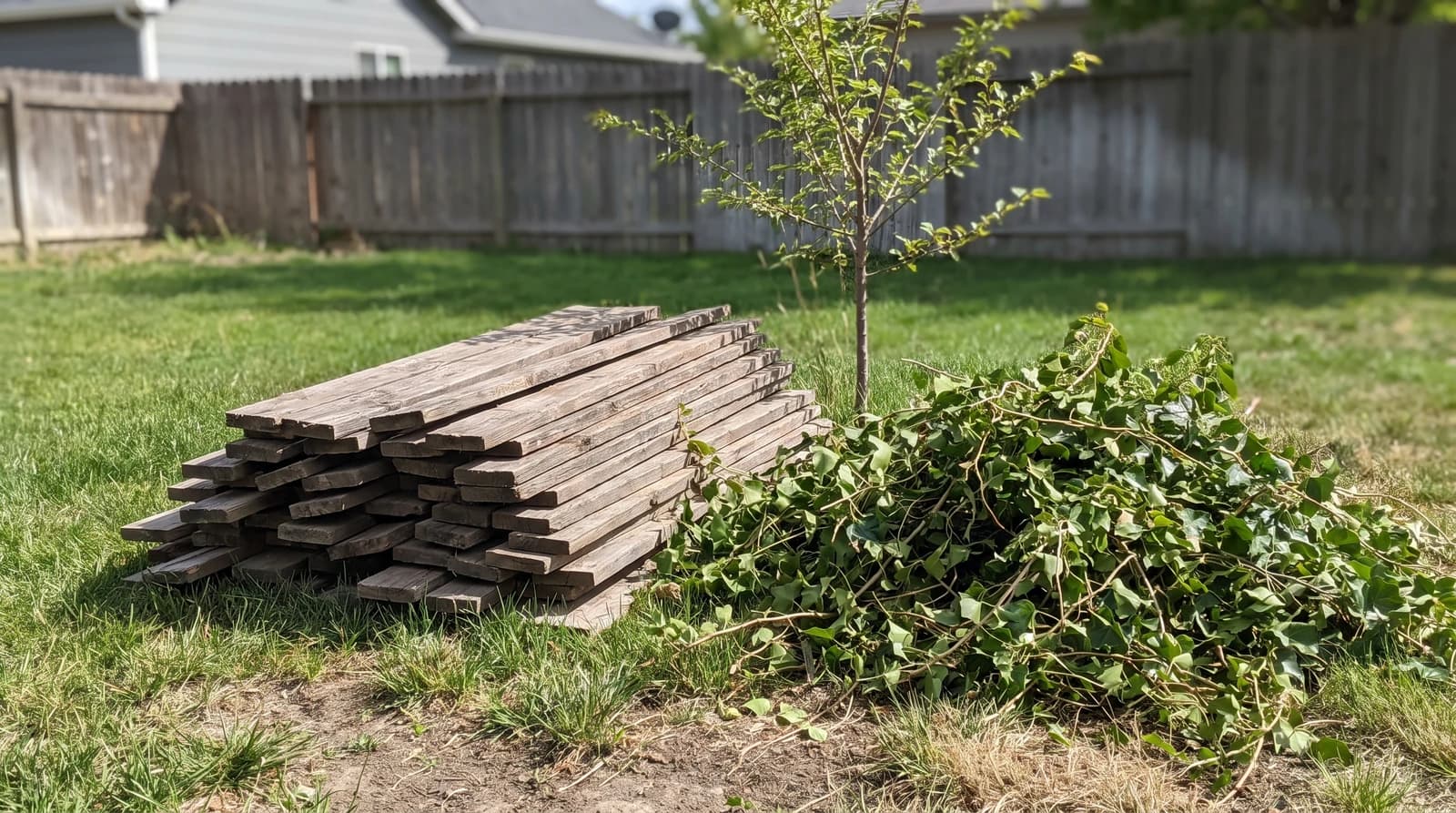
Some fences you can't even see from the street. There's one back there somewhere, buried under Virginia creeper, with a Siberian elm growing right out of the corner post. That's a pretty normal day for fence removal in Boise, especially in older neighborhoods on the Bench and in the North End.
Everybody agrees the fence is done. The trouble is that the plants are holding it up now.
So what changes when a tree or vine has grown into the fence you want gone? You're looking at more work, more care, and a bit more money. It's rarely a dealbreaker, though.
Why an overgrown fence takes longer to tear out
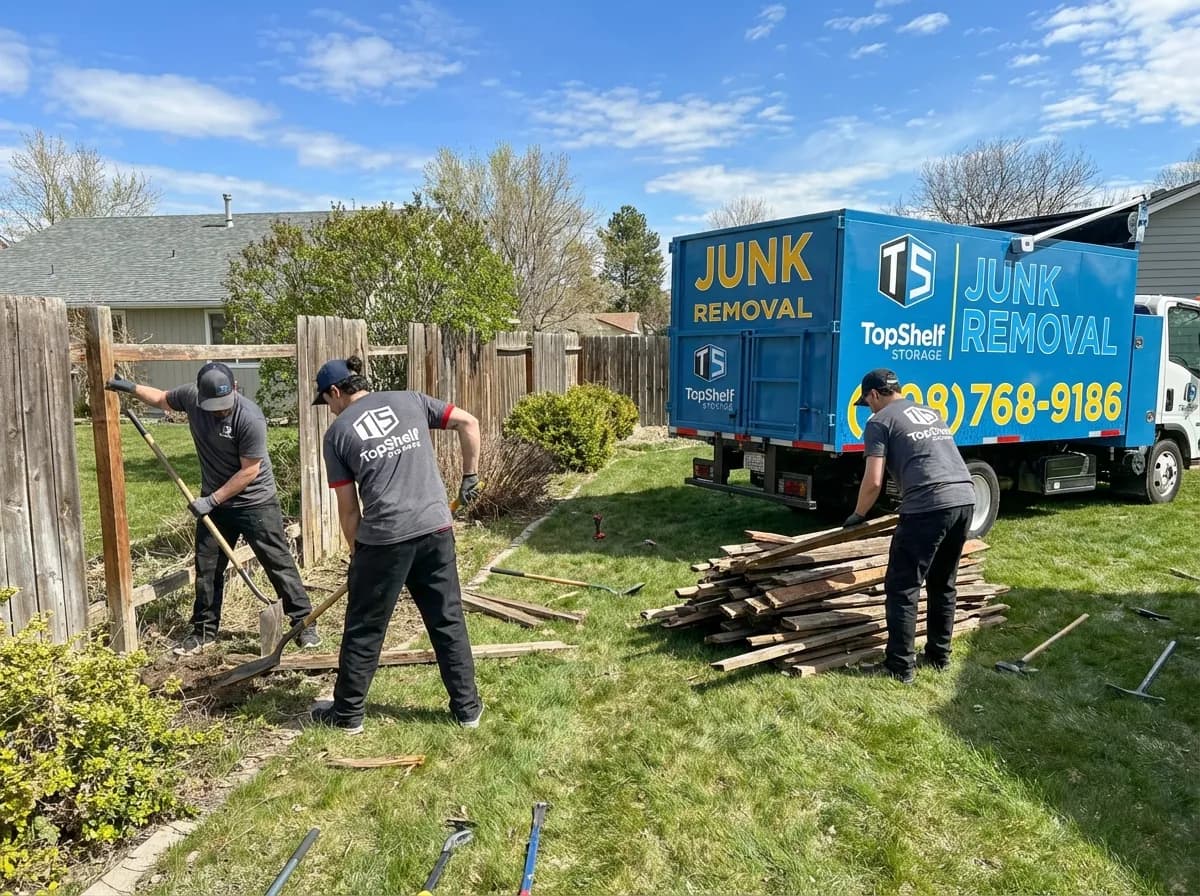
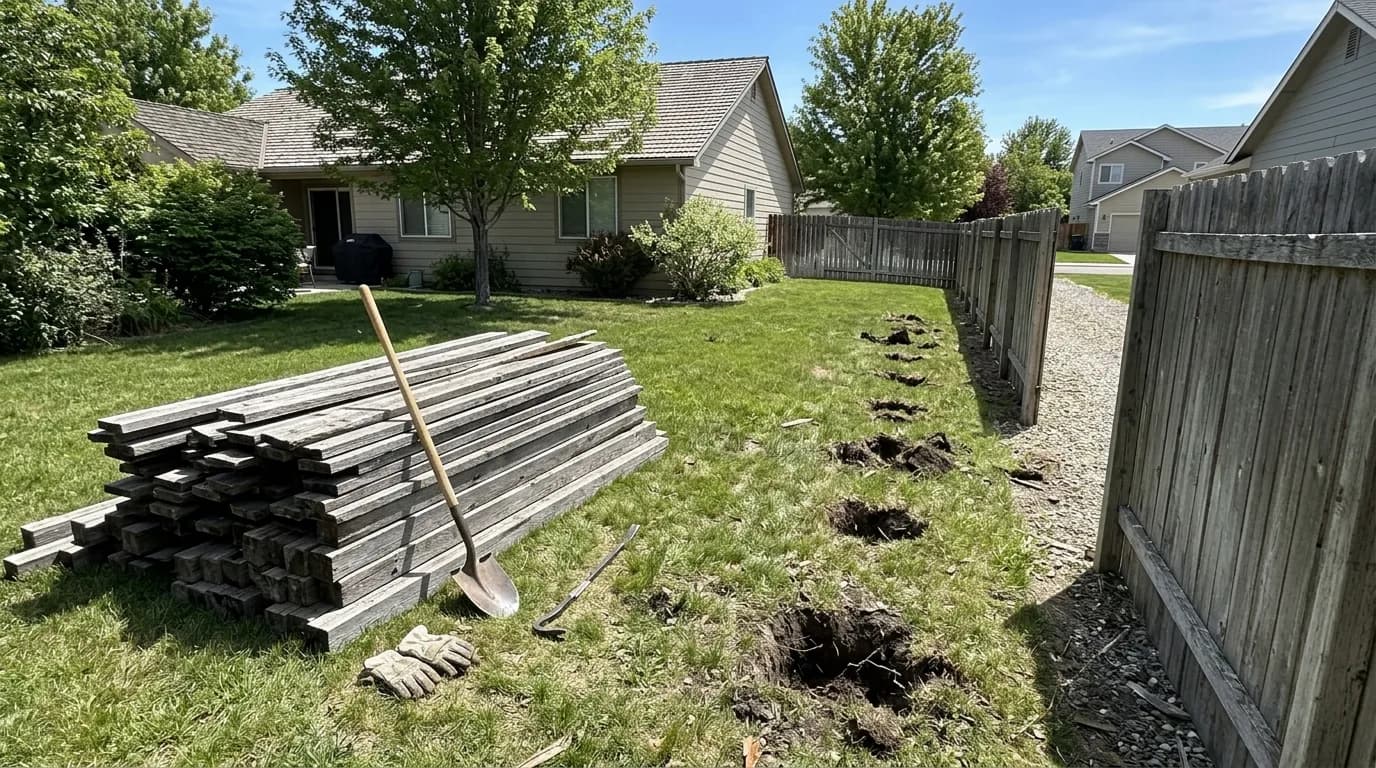
A plain wood privacy fence comes down pretty fast. Pop the pickets, cut the rails, pull the posts, load it up. On a typical 100-foot run with nothing growing on it, our crew is usually done in two or three hours.
Add a few years of overgrowth and it can eat up most of the day.
Vines wrap around every rail and weave between the boards, so you can't just pull a panel off. You have to cut the vine loose first, or you'll drag half the fence and your neighbor's lilac down with it.
Trees are slower still. Sometimes the fence isn't just touching the tree. It's inside it.
Then there's the stuff you don't find until you start. Black widows love a shady, overgrown fence line, and wasps like to build in the gaps between boards.
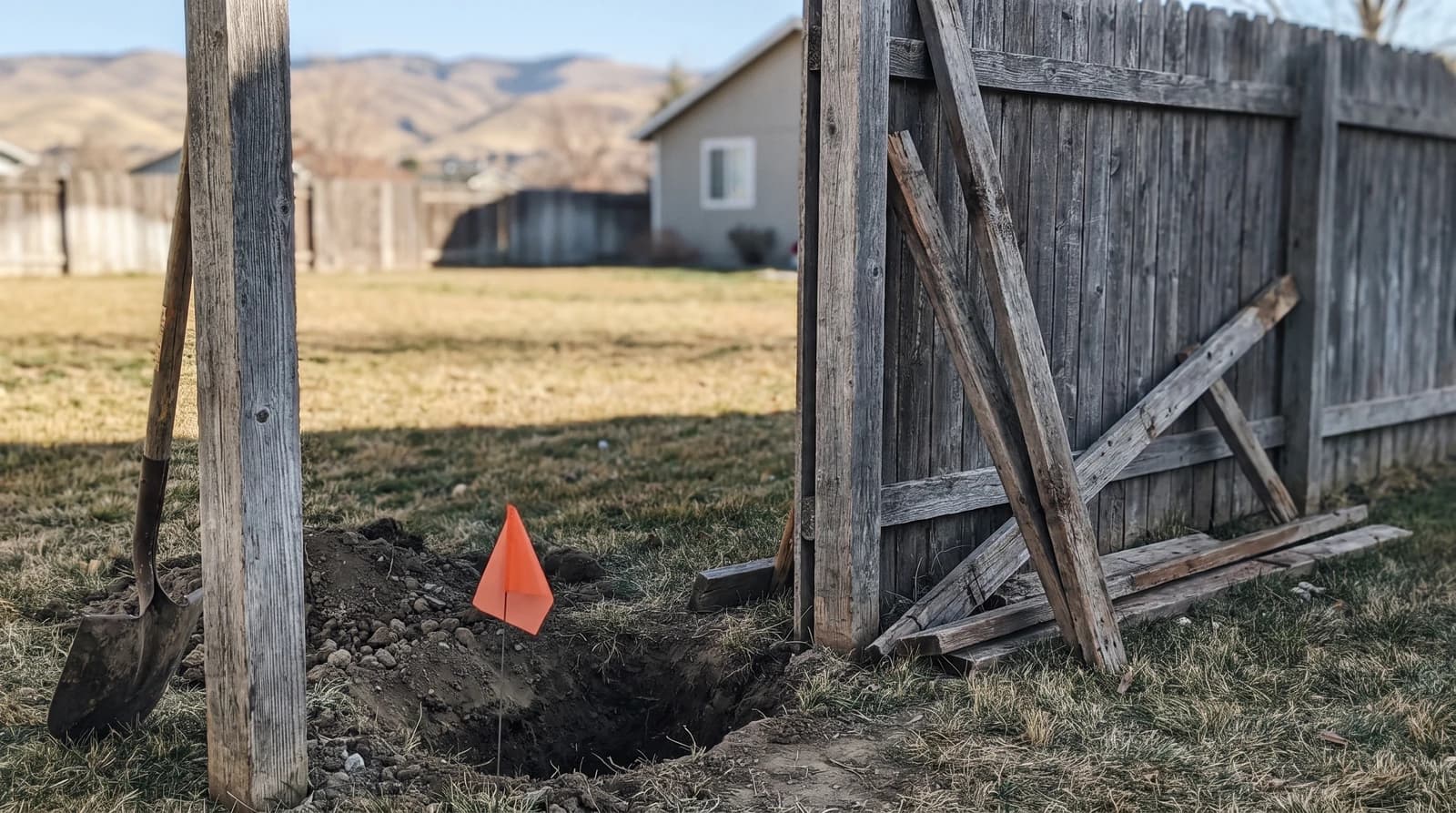
We've also pulled plenty of posts that looked solid and turned out to be rotted clean through, held up by nothing but ivy. That's not a reason to panic. It's just why we slow down on these jobs.
Fence removal in Boise when a tree grew through it
This is the one people worry about most. A volunteer elm or maple sprouted next to the fence 15 years ago, and now the trunk has swallowed a rail or a chunk of chain link.
Can you just pull it out? Usually, you shouldn't. Trees grow around wire and wood kind of the way skin heals over a splinter, and ripping that material out tears open the bark, which gives rot and bugs an easy way in.
What we do instead is cut the fence material off flush with the bark on both sides and leave the buried piece where it is. The tree keeps growing over it. It looks a little odd for a season, and then you stop noticing.
The exception is when you want the tree gone too. Plenty of people do, especially with Siberian elms, which drop seeds everywhere and come up along fence lines like weeds.
A small one can usually come out with the fence. If the trunk is thicker than your leg, though, you want an arborist, and we'll tell you that up front.
One more thing. If the tree is in the strip between the sidewalk and the street, it's probably a city street tree, so check with Boise's Community Forestry office before anyone cuts it.
Vines, ivy, and the fence they're holding up
Vines aren't as dramatic as trees, but they're a lot more tedious. On Treasure Valley fences, it's usually English ivy, trumpet vine, Virginia creeper, or wild grape.
The mistake is grabbing a handful and yanking. Old vines are tougher than old fence boards, so you'll snap pickets, pull a section over before you're ready, or get a face full of dead leaves and spiders.
Next, decide if you want the vine back. If you're planning to let that trumpet vine climb the new fence, just cut it back hard. Done with it for good? Then the root crown has to come out, or you'll see it again by June.
If you can wait, late fall and winter are the easiest time for this. The leaves are down, the wasps are gone, and you can actually see every post.
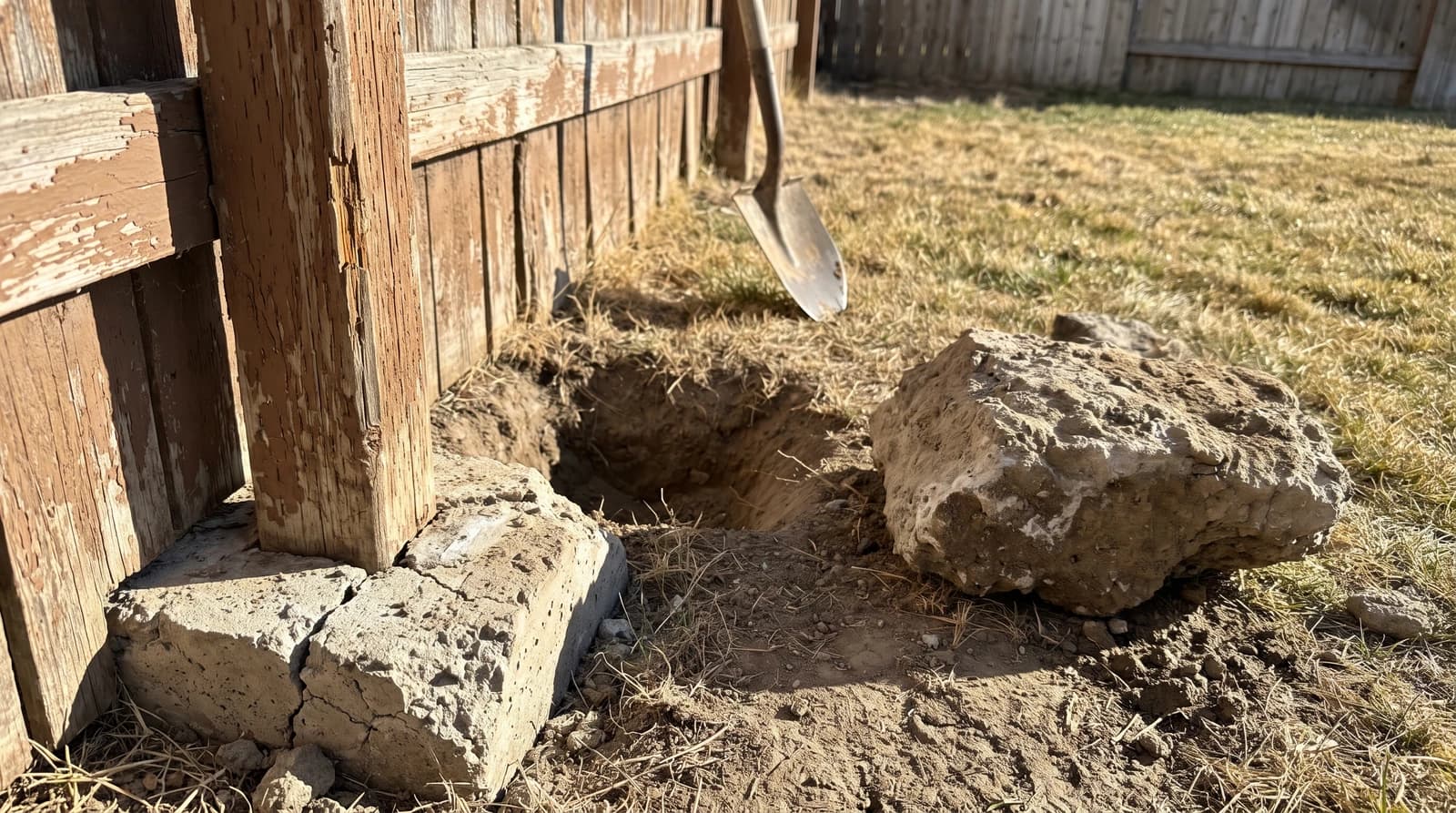
Roots also like to wrap around old concrete post footings, which turns pulling posts into a real fight. If nothing's getting built or planted in that spot, it's sometimes smarter to cut the post off just below ground level and leave the concrete alone.
Whose tree is it, anyway?
Before anyone cuts anything, figure out exactly where the trunk sits.
A tree that's clearly in your yard is your call. When it's in your neighbor's yard, you can generally trim what hangs over onto your side, but you can't do anything that hurts or kills the tree. And if the trunk sits right on the property line, you both get a say.
This matters more than people think. Idaho law lets property owners go after damages when someone cuts or injures their trees without permission, and in some cases that means triple damages.
A quick chat over the fence costs nothing. A dead maple can cost a lot. If it's a shared fence, have that conversation before you book anybody, us included.
What fence removal in Boise costs when it's overgrown
For a standard wood fence with nothing growing on it, most homeowners in Boise, Meridian, and Nampa pay somewhere around $4 to $8 per linear foot for removal and haul-away. Chain link usually lands toward the low end.
Overgrowth pushes that up because it adds labor and a whole separate pile of green waste. Here's roughly how it breaks down:
| What's growing on it | What it adds | Rough extra cost |
|---|---|---|
| Light vines, easy to cut | A little extra cutting | $0 to $1 per foot |
| Heavy ivy or trumpet vine | Cutting, pulling, more hauling | $1 to $3 per foot |
| Tree grown into a rail or wire | Careful cuts at the trunk | $50 to $150 per tree |
| Small volunteer trees removed | Cutting and root work | $75 to $250 each |
Those are ballpark numbers, not a quote. Text us a few photos and we can usually give you a real price on fence removal pretty quickly.
So where does all of it go? We sort as we load, so the wood heads to the Ada County Landfill and the chain link and metal posts go to Western Recycling as scrap.
Yard waste stays in its own pile. Your curbside compost cart can handle some trimmings, but it's not built for 80 feet of ivy.
Bottom line: An overgrown fence isn't really a bigger problem, just a slower one. Cut the vines early, figure out who owns the tree, and don't rip wire out of a living trunk.
If you'd rather hand the whole thing off, take a look at our fence removal service or give us a call at (208) 593-2877. Send over a couple of photos and we'll tell you what we see. Yes, we'd love the job, but if it looks like something you can knock out yourself on a Saturday, we'll tell you that too.
Need Help With Fence Removal?
Top Shelf serves Boise and the Treasure Valley with professional junk removal, cleanouts, and demolition services.