
Deck Removal in Boise: Do the Footings Come Out Too?
Wondering if the concrete piers come out during deck removal in Boise? Here's what's under most decks, what pulling footings costs, and when to leave them.
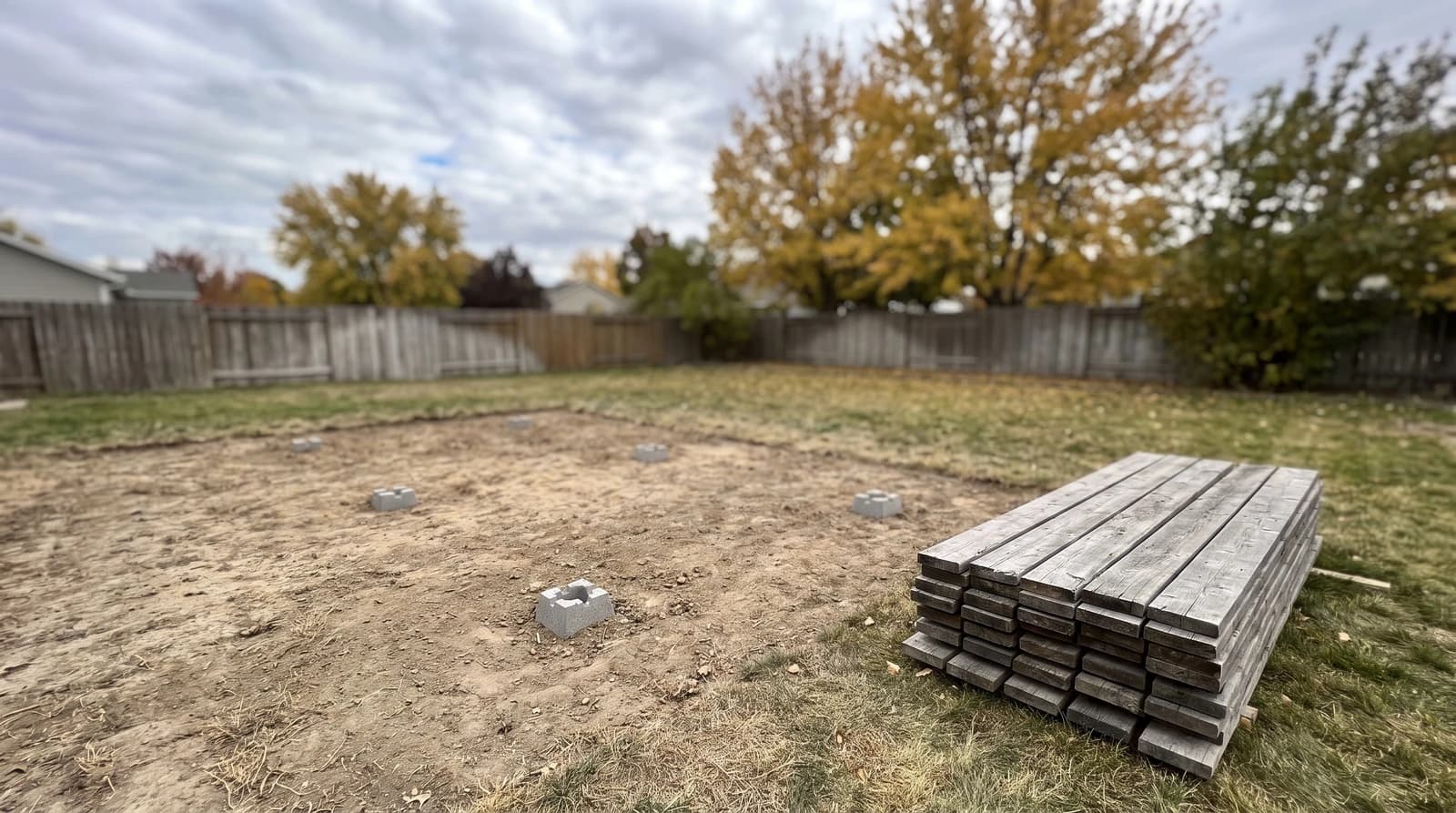
Most deck removal jobs around Boise go about the same way. Boards come up, framing comes down, and by late morning there's a clean rectangle of dirt where the deck used to be.
Except for the concrete. Six or eight gray stumps sticking out of the ground right where the posts were.
That's usually when the homeowner walks out with a coffee and asks the real question. Do those come out too?
Usually yes, and usually they should. But it depends on what's down there and what you've got planned for the yard.
First, figure out what's holding your deck up
Not all deck footings are the same, and around the Treasure Valley we run into three or four common setups.
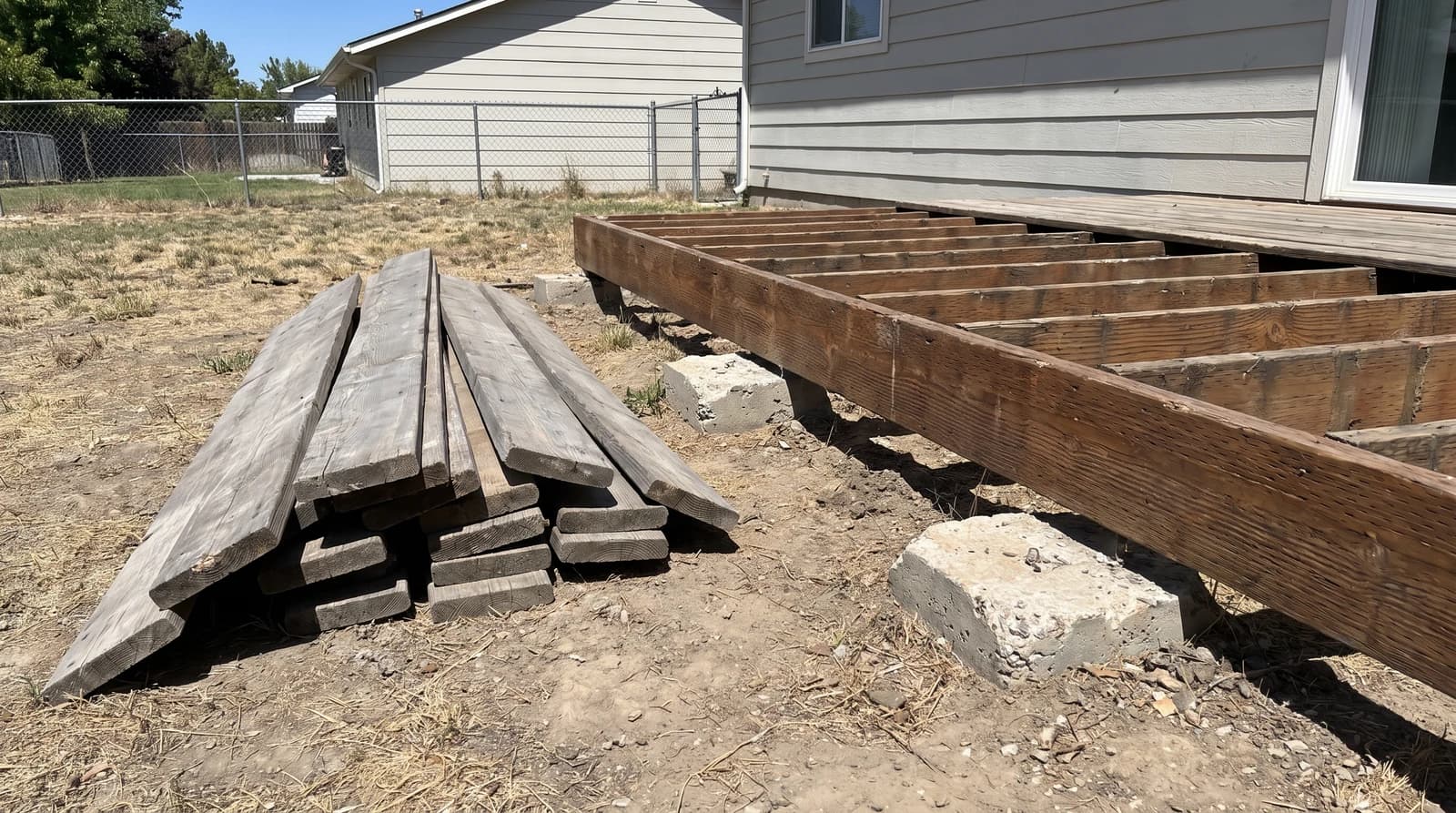
Older decks, especially the ones built in the 70s and 80s up on the Bench and in the North End, often sit on precast pier blocks. Those little pyramid-shaped blocks just rest on the dirt. You can lift one out with one hand.
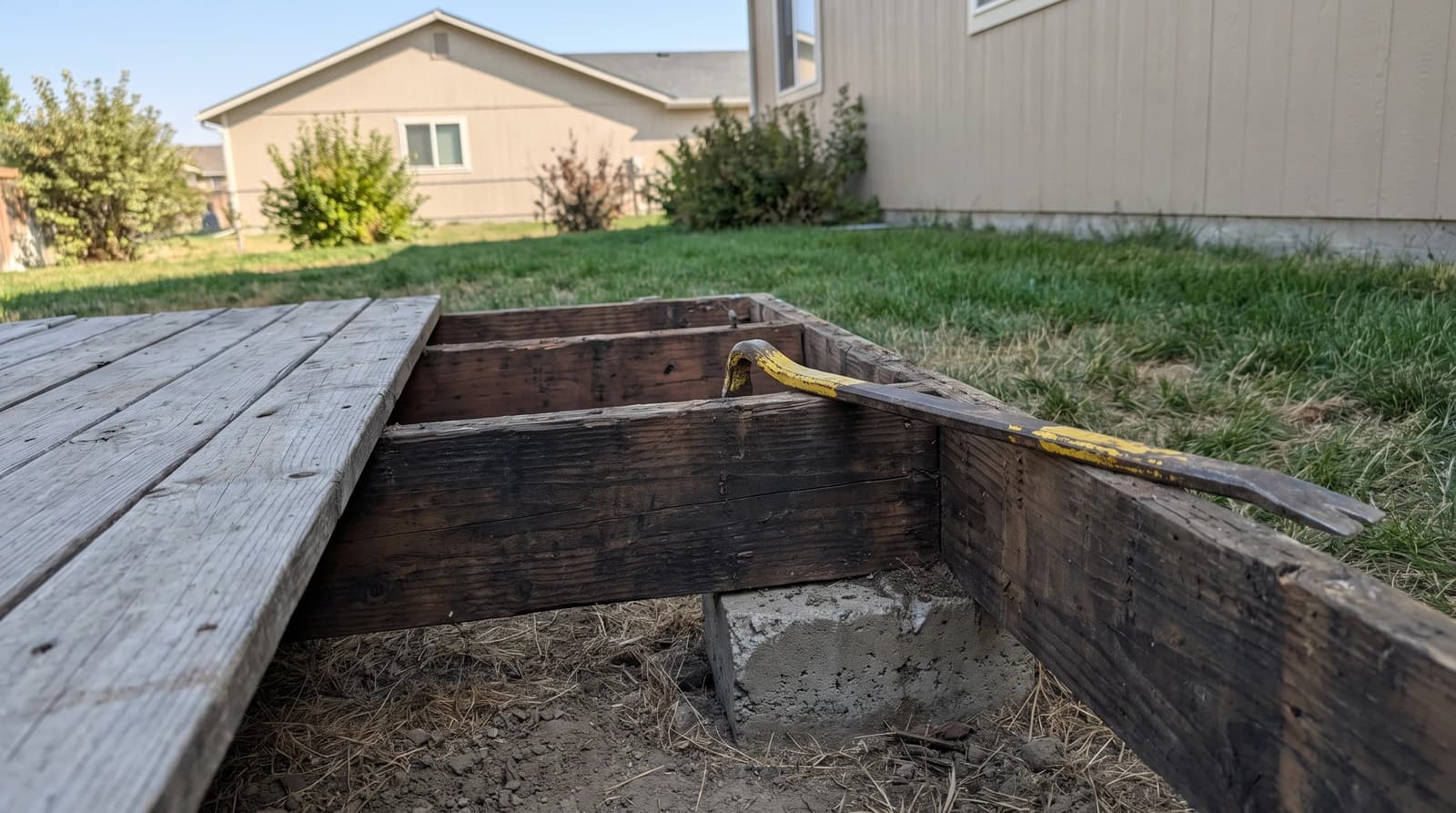
Newer decks in Meridian, Nampa, and the Eagle subdivisions are almost always on poured piers. Somebody dug a hole, dropped in a cardboard tube form, and filled it with concrete.
Code here means getting below frost depth, so those tubes usually run 24 to 30 inches deep and 10 to 12 inches across. Call it a couple hundred pounds of concrete per post, sitting in the ground like an anchor.
Then there's the third category: whatever the last guy felt like doing that weekend.
We've pulled posts set in five-gallon buckets of concrete. Bare 4x4s buried straight in the dirt with no footing at all, rotted off at ground level, show up more often than you'd think. One deck in Garden City was resting on stacked patio pavers, and it had been that way for fifteen years.
Do the footings come out during deck removal?
On most of our jobs, yes. Here's why we lean that direction.
A pier that stops an inch below grade is invisible until you find it with a mower blade or a tiller. If you're laying sod, pouring a patio, digging a garden bed, or setting a play structure, that concrete is in the way of all of it.
And pulling piers while the equipment and the truck are already sitting in your driveway costs a lot less than bringing us back out later.
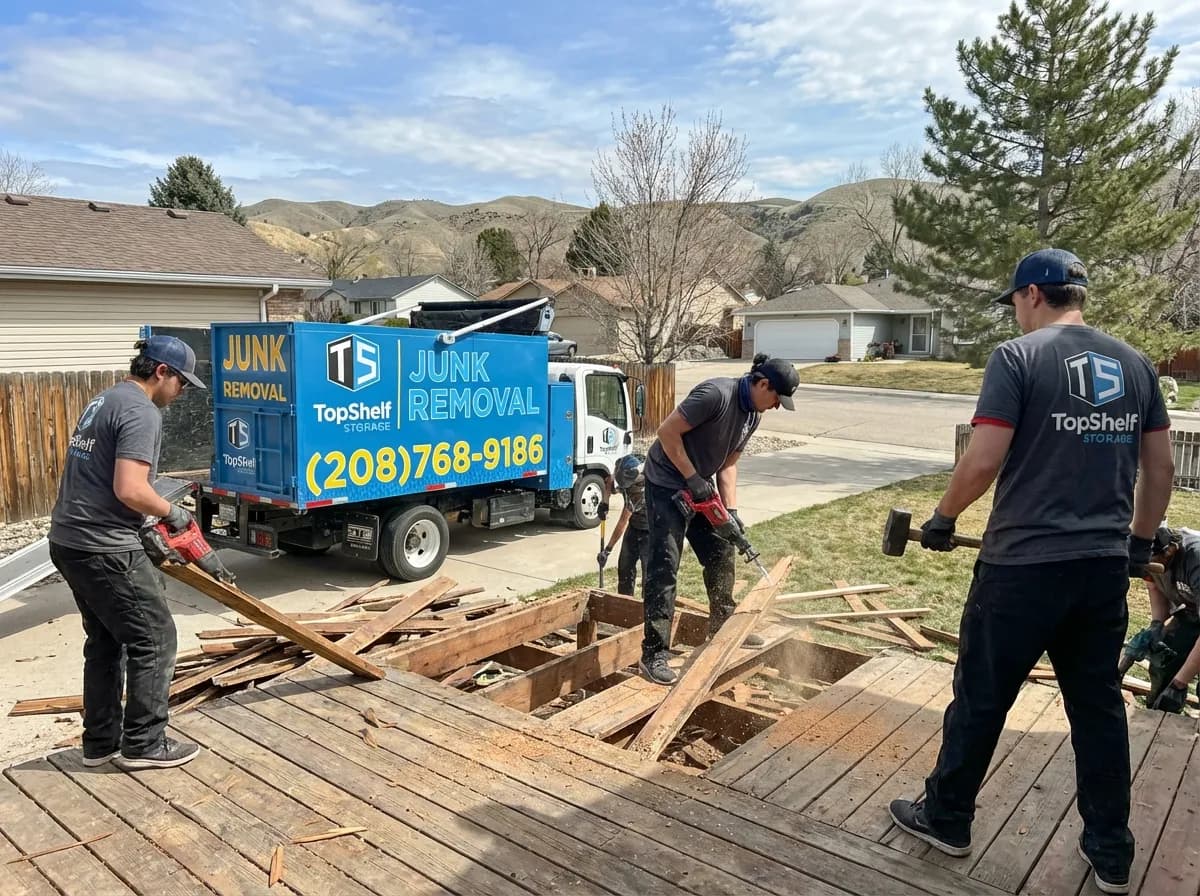
The work itself isn't complicated, just physical. We dig a collar around the pier, rock it loose, and lift it out whole if it cooperates. Oversized ones, or ones with rebar running through the middle, get broken up and hauled out in pieces.
Times it clearly makes sense to pull them:
- You're re-sodding, seeding, or landscaping where the deck was
- A patio, shed, or hot tub pad is going in the same footprint
- The new deck won't line up with the old post spacing
- The piers stick up above grade and you'd be mowing around them forever
The concrete doesn't have to go to the landfill, either. Clean broken concrete is recyclable around here and outfits like Western Recycling take it. Old pressure-treated framing is a different story, since it can't be burned or chipped, so that heads to the Ada County landfill with anything else too far gone to reuse.
What it costs to pull footings during deck removal
This is the part people want a number for, so here's roughly how it shakes out on Boise-area jobs.
| What's under the posts | What it takes | Typical added cost |
|---|---|---|
| Precast pier blocks | Lift and haul by hand | Usually included |
| Poured piers, 8-10 inches | Dig collar, rock loose, lift | $40-$75 each |
| Deep piers with rebar | Break up, haul in pieces | $75-$150 each |
| Full concrete pad under deck | Slab breakout and haul | $3-$6 per sq ft |
For context, a straightforward teardown on a typical 12x16 ground-level deck usually lands between $450 and $1,400 depending on size, height, and access. Footings move that number more than anything else, which is why we'd rather hear about them before we quote than after. You can see how we scope the whole job on our deck removal page.
Most decks have somewhere between four and ten posts. Run that math on the middle column and you can see why a plain teardown quote and a teardown-plus-footings quote land in pretty different places.
When it's fine to leave them in the ground
We're a demolition company, so yes, we'd love the extra work. There are still real situations where digging piers is money you don't need to spend.
Building a new deck in the same footprint with the same post spacing? A good builder may reuse those piers outright. Have them look before you have us dig.
If the area is just going back to gravel or bark, a pier cut flush at grade disappears under two inches of material and nobody's the wiser.
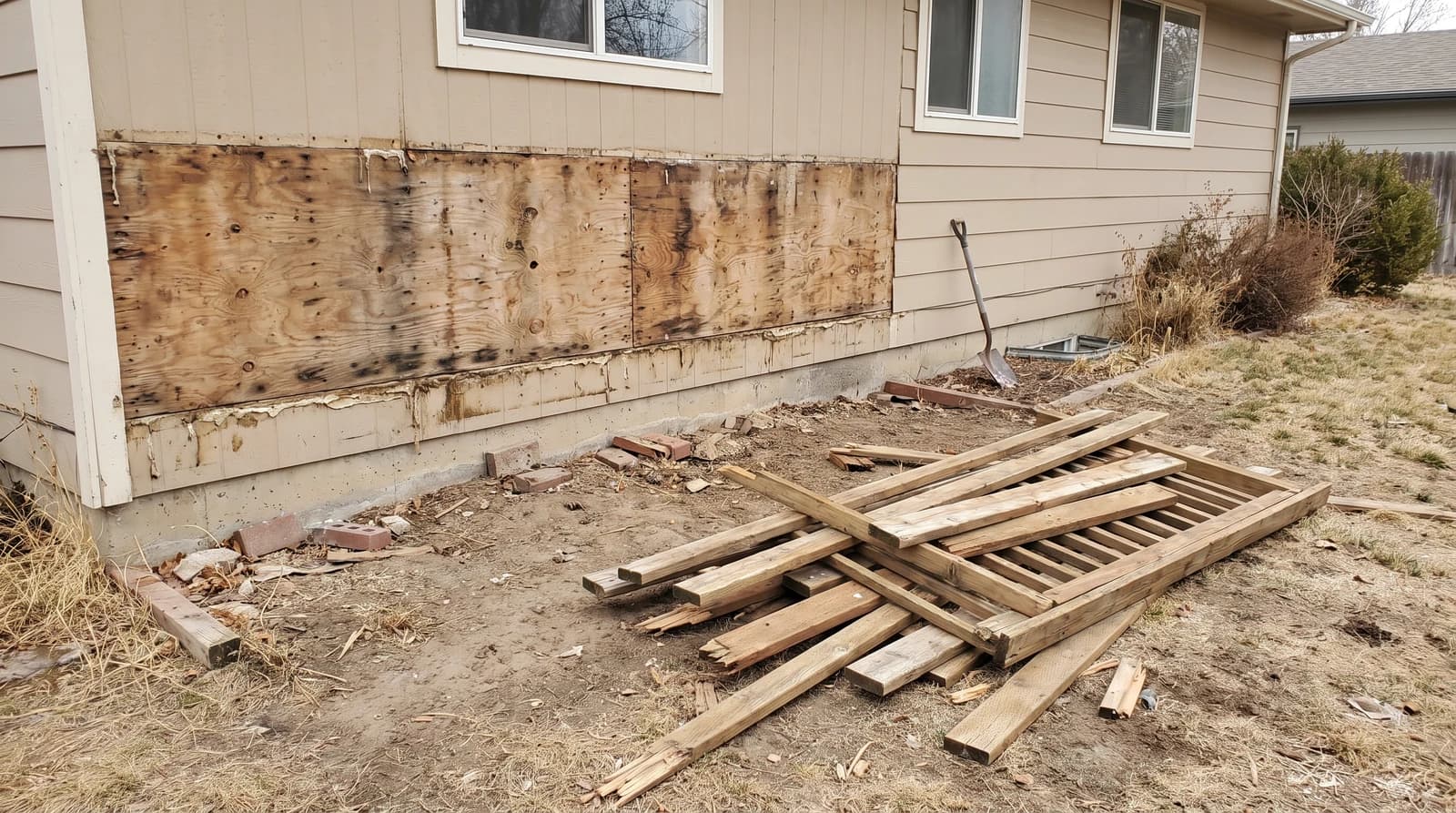
And when the deck is attached to the house, the footings are honestly the small problem. The ledger board and the siding behind it are where the careful work happens, and we wrote up what happens to the siding on attached decks if that's your situation.
One more thing before anybody starts digging. Sprinkler lines and low-voltage landscape wire love to run right past deck posts, and a 30-inch hole finds them in a hurry. Walk the yard and flag what you know about.
Still not sure the deck needs to come down at all? Fair question. Tearing it out versus fixing it usually comes down to the framing, not the boards.
Bottom line
Footings come out on most jobs, and it's worth doing if anything is going back into that space. Blocks are close to free to remove. Poured piers run $40 to $150 apiece depending on how deep and how stubborn they are.
The main thing is knowing what you've got before you get a price, so nobody's surprised on job day.
Want a straight number? Give us a call at (208) 593-2877. Send a photo of one post base and we can usually tell you what's down there without ever driving out.
Need Help With Deck Removal?
Top Shelf serves Boise and the Treasure Valley with professional junk removal, cleanouts, and demolition services.