
What to Do With Leftover Building Materials in Boise
By Eric Hinderager, owner of Top Shelf Junk Removal and Demolition · Updated
Not sure what to do with leftover building materials after a remodel? Learn what to keep, where to donate or sell it, and when hauling it off makes sense.
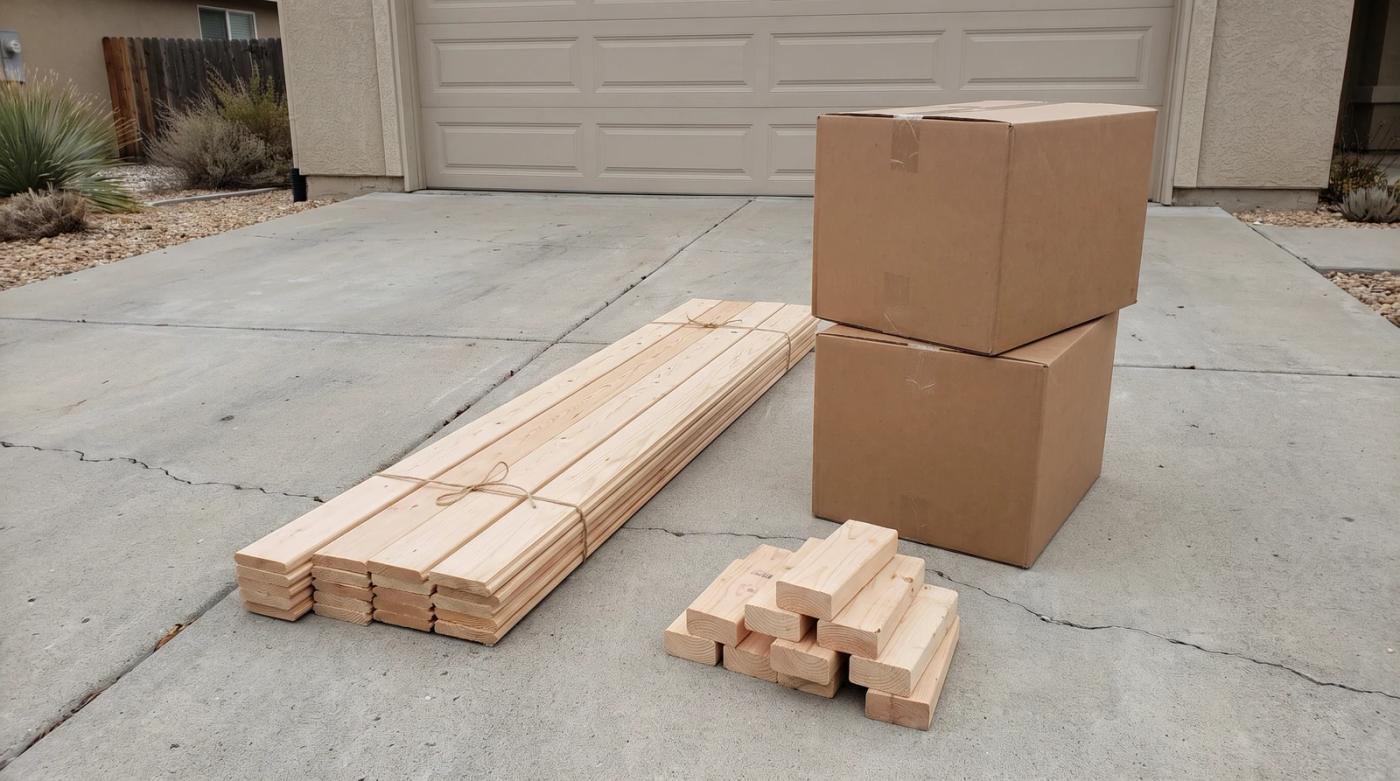
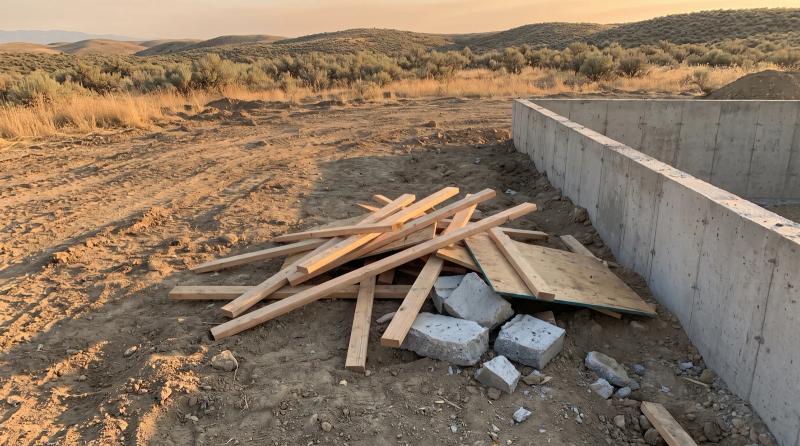
What to do with leftover building materials comes down to three choices: keep what matches your house, donate or sell what's still good, and haul off the rest. Most people get stuck on the middle step.
Here's how to sort the pile, where it can go around Boise, and when it makes sense to let someone else take it.
What to do with leftover building materials
Nobody plans for the pile. Leftover materials just show up after almost any remodel or building project.
A box or two of tile. A bundle of shingles. A bucket of thinset that turned into a rock. Enough scrap trim to build a doghouse.
Then it sits. Who wants to toss something that's still perfectly good?
The fix is to sort it soon, while you still remember what each thing was for. Excess building materials lose value fast in a garage.
Which building materials are worth keeping
The rule I'd give a friend: keep what matches something that's already installed in your house. That's it.
If a pipe leaks under your new floor someday and you have to pull up three planks, you'll be glad you kept a box. Half a bag of mortar? You're storing a future brick.
- A full, unopened box of the same tile or flooring you installed
- Extra cabinet hardware and hinges, still in the original bag
- Recent touch-up paint, clearly labeled
- Two or three lengths of matching baseboard or trim
- Any building materials you'd have to special-order all over again
The rest of the materials are clutter with a good backstory. Opened adhesives, short cutoffs, a partial roll of housewrap, that mystery bucket.
None of it lasts long in a Treasure Valley garage anyway. Our summers cook it, our winters freeze it, and caulk doesn't care about your good intentions. Stored materials that go bad are just trash with a delay.
Tip: Before you shelve any paint, write the color code and the room name on the can in permanent marker. Paper labels fade or peel off, and paint counters don't keep formula records forever. A gallon you can't identify is just heavy trash.
Where to take leftover building materials in the Treasure Valley
For anything still usable, you have three good options. Donate it, sell it, or give it away. Good materials can help someone else finish a project.
Reuse centers are the first stop for most people, because they take a wide range of building materials in one place. The Habitat for Humanity ReStore is the big one around here.
The ReStore takes unused doors, cabinets, light fixtures, unopened flooring, decent windows, and hardware. They'll usually hand you a donation receipt, and sales help fund local builds.
They're a store, though, not a dump. They only want what somebody would actually buy off the floor.
Stuff they'll typically turn down:
- Opened or old paint, stain, and solvents
- Used insulation, or anything that's been wet
- Short cut lumber and busted-up scrap
- Windows with fogged or broken seals
- Anything with mold, rot, or possible lead paint
Call before you load the car. What reuse centers accept can change with what's on their floor and how much room they have.
Scrap metal is easier. Western Recycling takes leftover ductwork, copper, aluminum framing, and steel. Metal is one of the few materials that can pay you back a little when you drop it off.
Idaho Youth Ranch is worth a call for household pieces that came out during the remodel, like a working light fixture or a good vanity mirror. They're not set up for raw construction material, so don't show up with lumber.
Here's a quick way to match the item to the spot:
| What you have | Best move |
|---|---|
| Unopened tile, flooring, cabinets, doors | Donate to the ReStore or sell it |
| Copper, steel, aluminum, ductwork | Scrap yard |
| Pavers, brick, fence pickets, sod | List it free online |
| Opened adhesives, wet drywall, scrap wood | Landfill or a haul-off |
| Old paint and solvents | Household hazardous waste drop-off |
How to sell excess building materials
If you want to sell excess building materials, keep it simple. Take a clear photo. Say what it is, how much you have, and whether the boxes are unopened.
Facebook Marketplace works well for this. Extra pavers, spare fence pickets, half a pallet of brick. Somebody in Kuna or Star will often drive over to grab it, especially if it's free or cheap.
Unopened excess building materials sell best. Open boxes, mixed dye lots, and odd lengths are harder to move, so ask for less or give them away.
Not everything in the garage is a building material, either. A cleanout can turn up older pieces, like an antique milk can or vintage door hardware, that someone may want. An antique milk can is worth listing on its own instead of tossing it in with the scrap.
When should you clear out excess inventory?
The best time is the week your contractor pulls out. Not next spring. Not "when I get around to organizing the garage."
Think of the pile as excess inventory, the same way a store would. Every week it sits, it gets harder to donate and easier to forget.
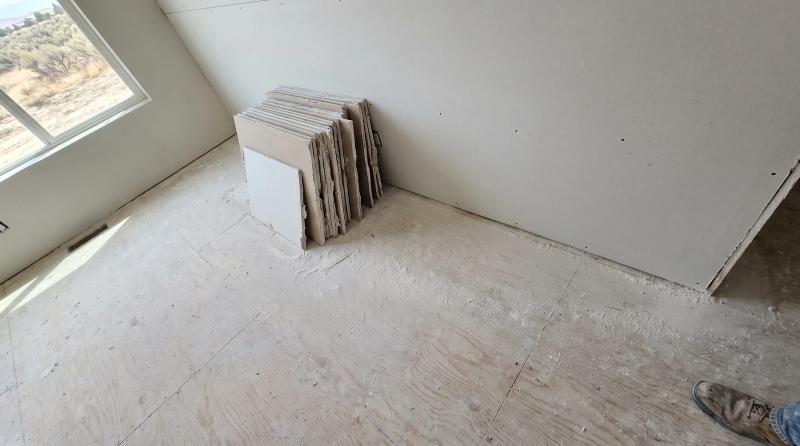
Give it an afternoon. Sort the materials into three piles: keep, pass on, or toss. Keepers go in one labeled bin on a shelf. Donations go in the back of the car.
Then look at what's left and decide: landfill run, or phone call?
Contractors deal with excess inventory all the time. Common moves are taking unopened building materials back to the supplier, using them on the next job, or choosing to donate them. If you hired a pro, ask before they leave whether they'll take their extras with them.
When it's cheaper to haul it than store it
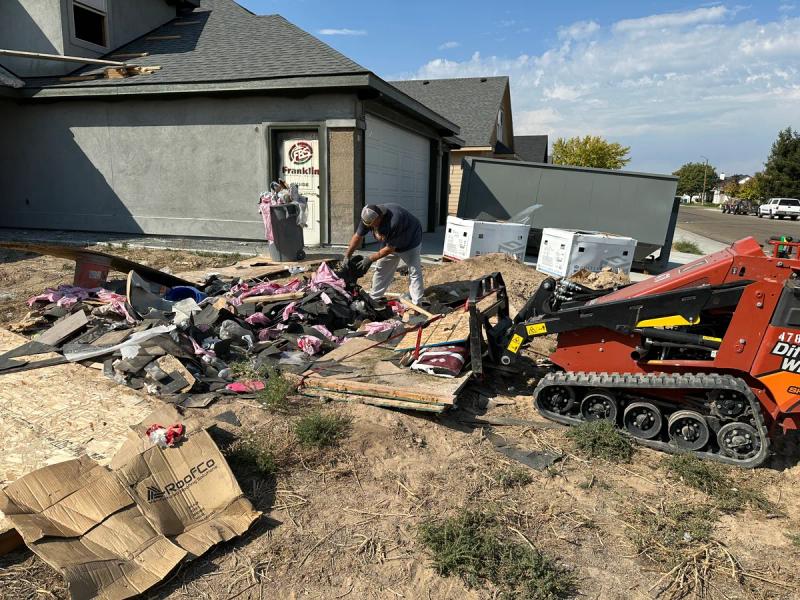
Here's where I'll be straight with you. If you've got two boxes and access to a truck, running it out to Hidden Hollow Landfill on Seaman's Gulch yourself is often the simplest option. The landfill charges a fee to drop off, so check their current rates before you go.
The math flips when the pile gets heavy or awkward. Tile, mortar, brick, and shingles weigh a lot for how little room they take up. Shingles off even a modest roof add up fast.
Concrete and masonry can have their own drop-off rules, separate from regular household trash, so check where they go before you load up. That can mean a second trip and a separate fee.
A few things move the cost of a haul-off up or down:
- Volume: how much truck space the materials take up
- Weight: heavy building materials like tile, brick, and concrete are harder to load and dispose of
- Access: a pile by the garage door is quicker than one in a basement
- Sorting: a mixed load takes longer to handle than a sorted one
That's usually when people call us. At Top Shelf Junk Removal and Demolition, a post-remodel cleanout is priced by how much truck space the pile takes up. We pull out the metal and the pieces someone else can use so they can be donated or recycled where possible.
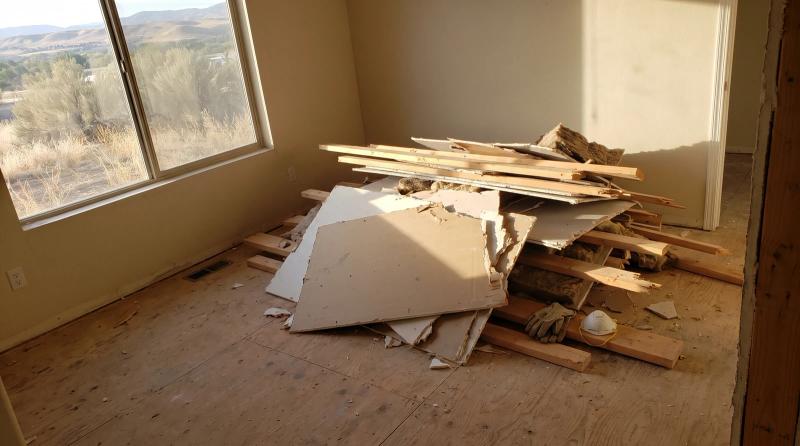
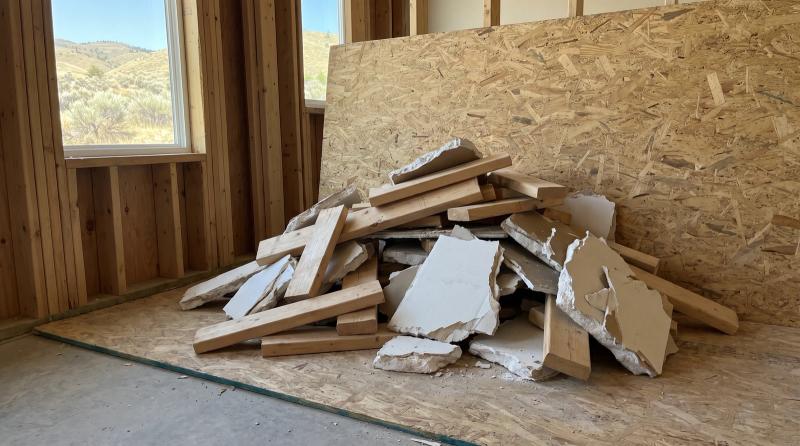
Worth knowing: lumber in one pile and drywall scrap in another moves fast. We'll take it either way, but a tidy pile helps.
Common mistakes to skip:
- Holding onto opened materials "just in case"
- Dropping off excess building materials at a spot that already said no
- Mixing paint cans in with regular debris
- Waiting until the garage is full before you deal with it
So, what to do with leftover building materials? Keep what matches your house. Donate or sell what somebody would still buy. Get rid of the rest while you still remember what it was for.
Want a hand with that last part? Give us a call at (208) 593-2877. We'll come take a look for free and give you a price before anything gets touched.
Frequently asked questions
What do contractors do with leftover materials?
They often move good leftover materials to the next job, return unopened items to the supplier, or donate them. Excess inventory that can't be used goes to the scrap yard or the landfill. Ask yours what happens to the extras before they pack up.
Where can I donate leftover lumber and tile?
The Habitat for Humanity ReStore is the main stop for unopened tile, flooring, doors, and cabinets. Short cut lumber is usually a no, so call first and ask what they need right now.
How do I throw away construction debris?
Small, light loads can go to Hidden Hollow Landfill in your own truck. Concrete, brick, and masonry can have separate drop-off rules, so check before you load them, and paint or solvents need a hazardous waste drop-off. Bigger or heavier piles are often easier to have hauled.
Who buys leftover building supplies?
Related reading: Junk Removal in Boise: Old Lawn Mowers, Grills and Yard Tools and Junk Removal Estimate in Boise: What the Walkthrough Covers.
Neighbors and local DIYers on Facebook Marketplace are the usual buyers, mostly for unopened boxes and full pallets. Scrap yards take metal. Most other excess building materials are easier to donate than to sell.
Need Help With Construction Cleanup?
Top Shelf serves Boise and the Treasure Valley with professional junk removal, cleanouts, and demolition services.