
Nails in Yard? Construction Cleanup Boise Homeowners Should Plan For
By Eric Hinderager, owner of Top Shelf Junk Removal and Demolition · Updated
Nails in yard construction cleanup Boise homeowners face: what's left in the dirt, how to magnet sweep it, and when to book the cleanup before sod goes in.
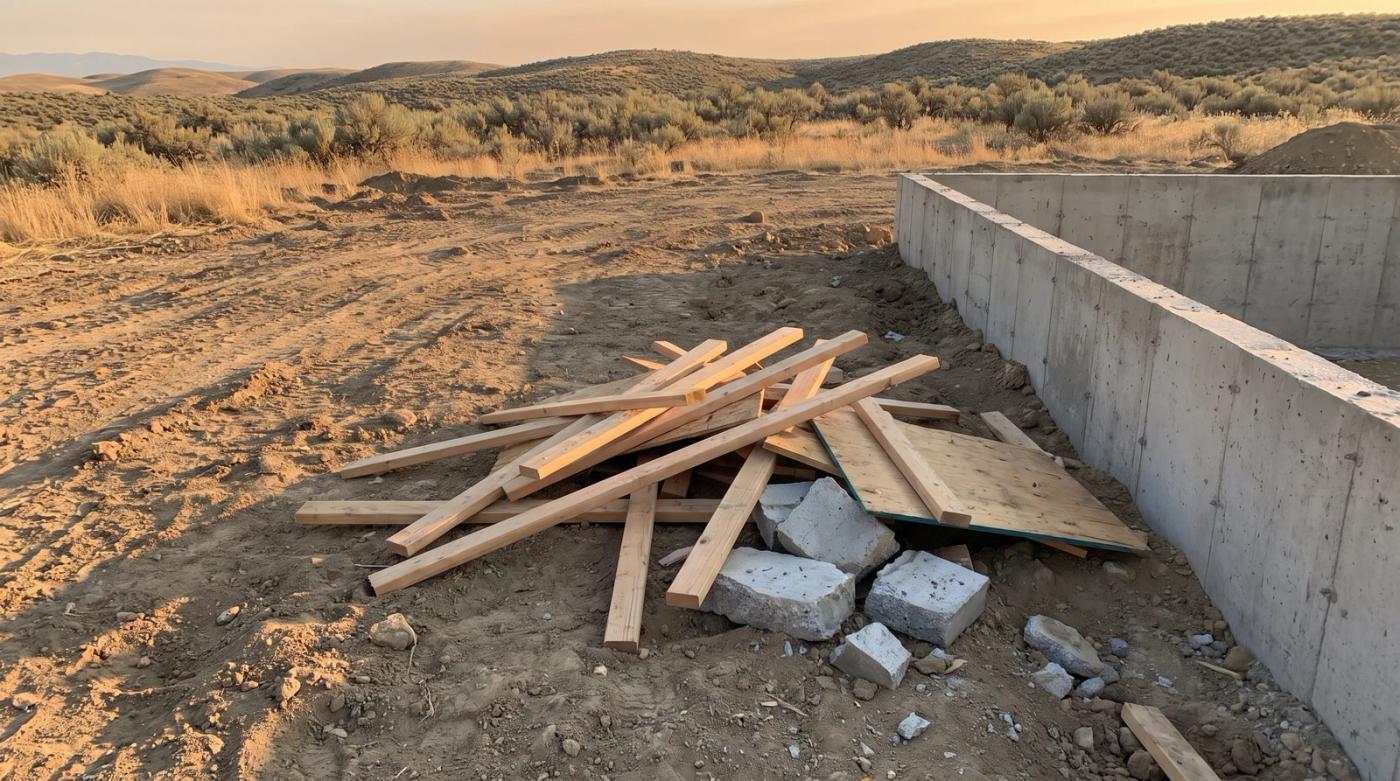
Nails in yard construction cleanup Boise homeowners put off comes down to one order of work: haul the debris, finish the grade, then sweep the dirt with a magnet twice before sod goes in. Get that order wrong and you pay for the same work twice. Skip the sweep and a roofing nail can end up in a tire, a paw or a bare foot.
A roofing nail sitting in backyard dirt can end up in a dog's paw weeks after the house is finished, because nobody thought about cleanup past the front door.
That's the part nobody plans for. The inside of the house gets a cleaning because you're standing in it.
The dirt around the house gets whatever patience is left at the end of a build, which usually isn't much.
So if you just wrapped a new build, an addition, or a gut remodel, the outside is where the leftovers are. Here's what's down there and how to deal with it before sod goes in.
Nails in the yard: construction cleanup in Boise starts outside
What ends up in the dirt after a build
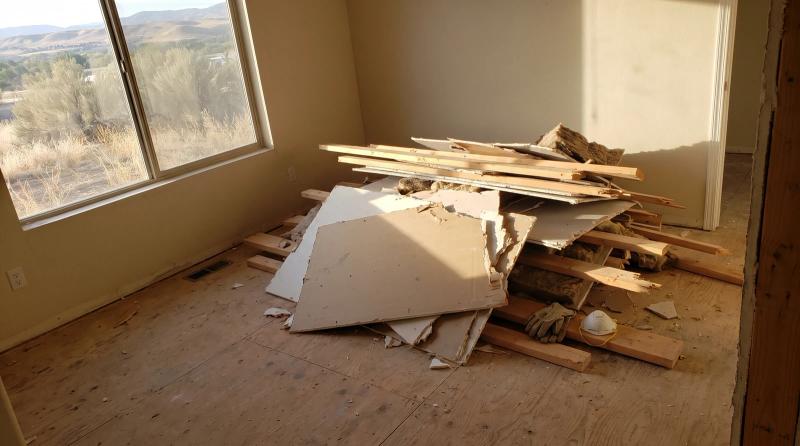
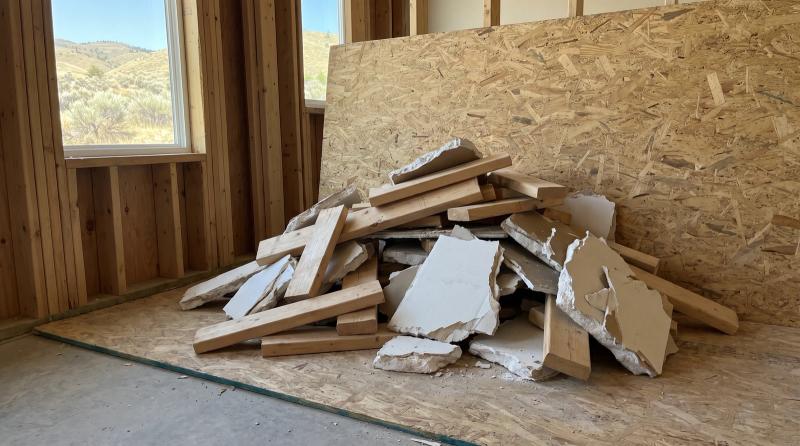
Every trade that touched your house dropped something outside. Framers toss offcuts over a shoulder without looking. Nails roll, and roofers drop a lot of them.
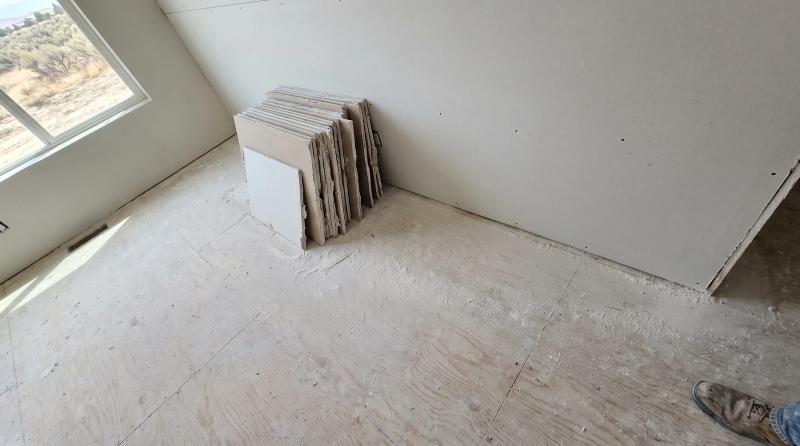
Then the drywall crew shakes scraps out by the garage, and the siding guys leave Tyvek strips knotted into the fence line.
Nobody's being sloppy on purpose. The guy who made the mess is three jobs down the road before anybody notices.
Here's what typically turns up in a new-build yard in Meridian, Eagle or south Boise:
- Framing offcuts and busted 2x4s half buried in the backfill
- Roofing nails, drywall screws, and staples ringing the whole house
- Tyvek scraps, shingle wrappers, and banding tangled in the fence
- Broken tile, grout buckets, and dried thinset behind the garage
- Concrete washout piles where a truck chute got rinsed
The washout piles surprise a lot of people. A driver rinses out somewhere convenient, and weeks later you've got a heavy gray lump that a shovel just bounces off.
That's why the order matters. If we remove debris after grading instead of before, a skid steer has already broken that pile into chunks and spread them around.
Why a magnet sweep matters more than you'd think
Metal is the real problem. Wood you can see and pick up.
A galvanized roofing nail sitting point-up in loose dirt is invisible until it's in a tire, a paw, or your bare foot.
Rolling magnets do the job. What people get wrong is timing and coverage.
Tip: Do your magnet sweep after the final grade, not before. Grading turns the soil over and brings buried metal right back up to the surface. Sweep first, let a skid steer churn the ground, and you've swept twice while still missing the nails.
One pass isn't enough either. Go around the drip line twice, in two directions, then hit the driveway, the edges of the property, and whatever path the crews walked from their trucks to the back.
That's where the density is. The second pass, crossing the first, tends to catch metal the first one rolled right past.
Construction nails also hide well in fall. Fallen leaves cover them as easily as loose dirt does, so rake first and sweep after. Do the same for any outdoor spaces the crews used, like the side of the house where they stacked siding or cut trim.
How do you keep a construction site neat and clean?
The easiest yard cleanup is the one that never piles up. A few habits during the build take care of most of it:
- Pick one drop spot for scrap and trash, away from where the lawn will go, so the mess isn't spread across the whole property.
- Do a quick cleaning walk at the end of each day: pick up offcuts, bag packaging and unwanted clutter, and roll a magnet along the drive.
- Wet down the cutting area before cutting tile or concrete outside, so the dust doesn't settle into beds and gravel.
- Keep hazardous materials like paint thinner and solvents in their own spot, off the ground and out of the scrap pile.
None of these are fancy solutions. One pile, one magnet and one walk a day keep a job site from turning into a weekend project later.
On a bigger job, or a commercial one, a professional post-construction cleaning crew often handles the inside: floors, windows, cabinets and fine dust. That kind of cleaning doesn't usually cover what's sitting in the dirt outside, so ask before you assume it's included.
When should yard cleanup happen around your landscaper?
Timing trips up more homeowners than anything else here. Sod and sprinkler crews usually aren't hired to clear the ground for you, and lawn care companies generally aren't either.
Many will install right over the top of whatever's sitting there, and honestly that's fair, because that's not what you hired them for.
So the order goes: haul the debris, final grade, magnet sweep, then landscaping. Flip any two of those and you're paying twice.
Think of it as site clearing for the lawn. The ground has to be empty before anything new goes on it.
Whether you do it yourself or bring in professional post-construction help, give yourself some buffer. We handle this all over the Treasure Valley, and the jobs that go smoothest are the ones booked well ahead of the sod truck instead of the morning of.
Not sure whose job this is in the first place? We got into that in our post on who handles cleanup on a new-build job site.
Short version: it depends on your contract, and most contracts are vaguer about it than you'd like.
What does construction clean-up cost around the Treasure Valley?
We price by how much truck space the debris takes up, and the estimate is free. A light pass with some lumber and a few bags of scrap sits at the low end.
A lot with concrete chunks, a washout pile, and buried drywall goes higher, because heavy material like concrete costs more to dispose of, not just because it takes up room in the truck.
The same few things set the price on any construction clean-up: how much there is, how heavy it is, and how easy the pile is to reach. A post-remodel cleanup is often lighter than a new build, since the job happened in a smaller footprint, but tile and concrete still push it up.
Concrete and dirt are the expensive part. The landfill charges by weight, and a modest pile of broken concrete outweighs a whole truckload of framing scrap.
Not everything has to go in the ground, and that's one of the simpler solutions for keeping cost down. Clean metal can go to a scrap recycler instead of the landfill. Usable lumber sometimes finds a home instead of a hole in the ground.
If you've got a decent stack of it sitting there, read our post on what to do with leftover building materials before you pay anybody to haul it off.
Should you just do it yourself? If it's a pickup load of scrap wood and you've got a free Saturday, sure. Just take care lifting concrete, because it's heavier than it looks.
The landfill and drop-off sites around the valley aren't hard to use. It stops being fun once concrete is in the mix, or when the pile weighs more than it looked like it would. Which it usually does.
That's often the point where people hand off the rest: they've filled their truck twice, done the math on the rest of their weekend, and tapped out.
Common questions about cleanup services
Where should loose nails go during a build?
Loose nails should be placed in a bucket or can with a lid. Don't drop them in a contractor bag, where they poke through and spill on the way to the truck.
What about leftover paint, solvents and other chemicals?
Keep hazardous materials out of the scrap pile. Ada County runs a household hazardous waste facility for them; check their current hours and rules before you load up.
Is a magnet sweep worth it after a small remodel?
Yes. A post-remodel cleanup tends to focus on the inside, but anywhere the trades cut, carried or tossed scraps outside can hold screws and nails. Two passes in two directions is one of the cheapest solutions there is.
Bottom line
The yard is the last part of a build, and it's the part that actually hurts people. Get the debris out, grade it, sweep it with a magnet twice in two directions, then landscape.
That order saves money, makes the final cleaning easier, and keeps nails out of your tires.
Related reading: Junk Removal in Boise: Old Lawn Mowers, Grills and Yard Tools and Junk Removal Estimate in Boise: What the Walkthrough Covers.
Top Shelf Junk Removal and Demolition offers expert post-construction cleanup services outside the house across the Treasure Valley. If you'd rather not give up a weekend to it, call us at (208) 593-2877. We'll come look and tell you what it'll run, and if it's something you could knock out yourself in an afternoon, we'll say that too.
Need Help With Construction Cleanup?
Top Shelf serves Boise and the Treasure Valley with professional junk removal, cleanouts, and demolition services.