
Tire Removal, Rims On or Off: What Boise Homeowners Should Know
By Eric Hinderager, owner of Top Shelf Junk Removal and Demolition · Updated
Tire removal, rims on or off, Boise: learn what moves the cost, when pulling rims pays off, how a change over works and where old rubber and steel go.
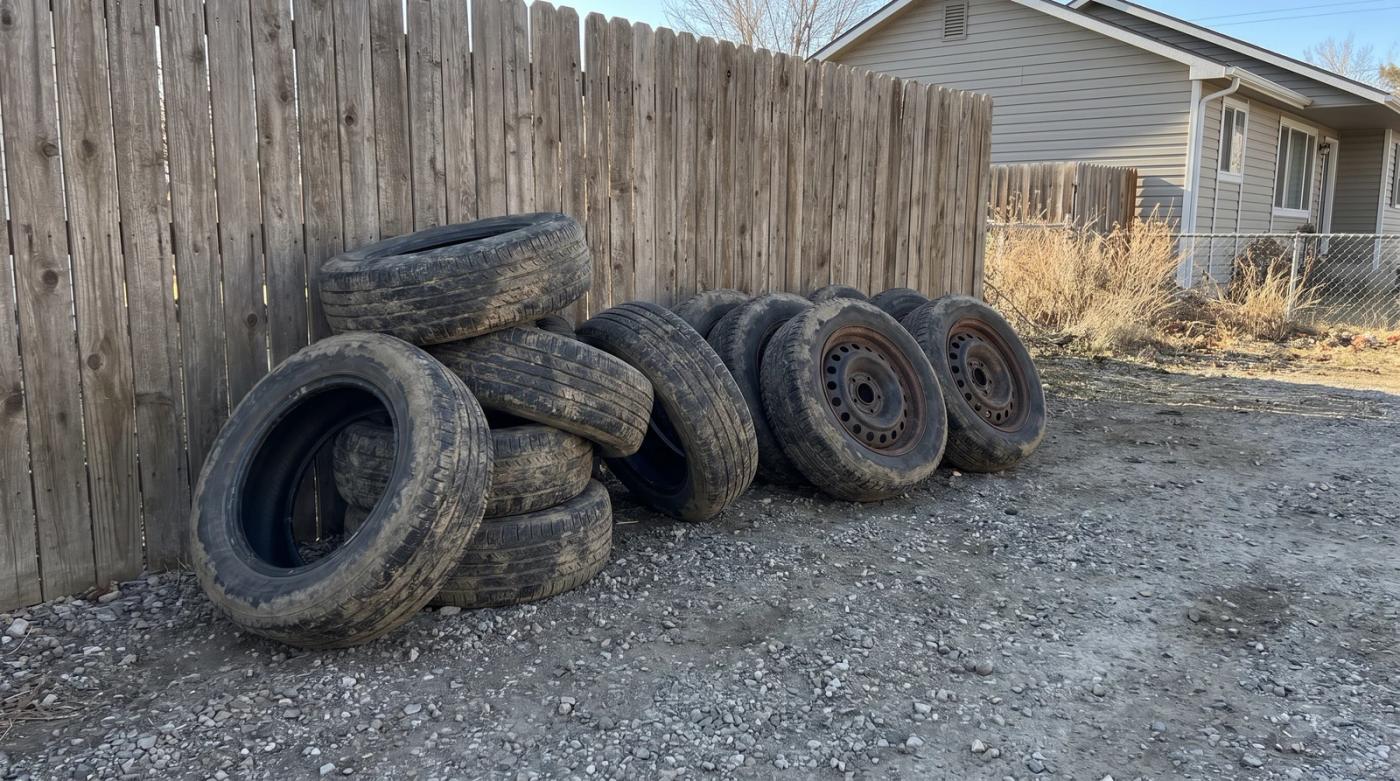
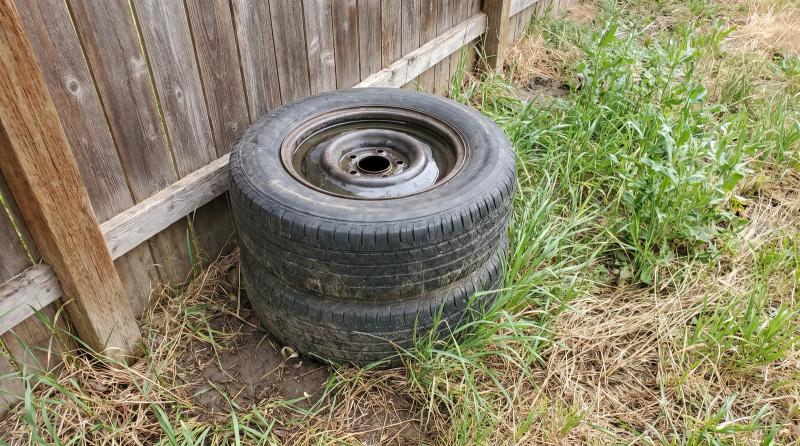
Tire removal, rims on or off: Boise homeowners can have old tires hauled either way, and the rims don't have to come off first. Leaving them on can change the cost a little, so it's worth weighing that against paying a shop to pull them and making the extra trip yourself.
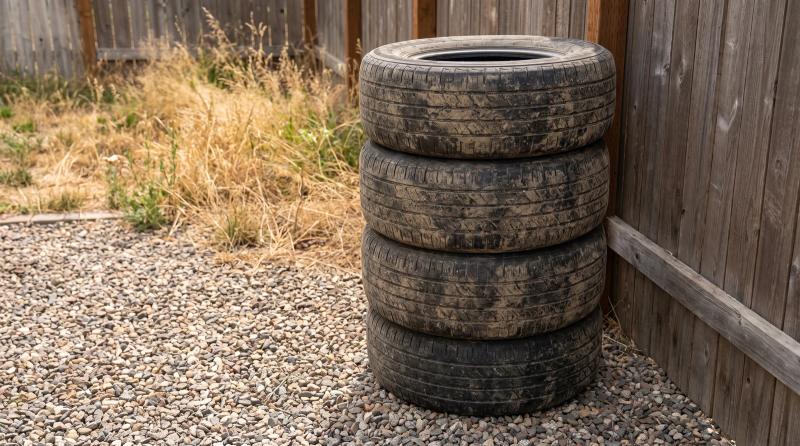
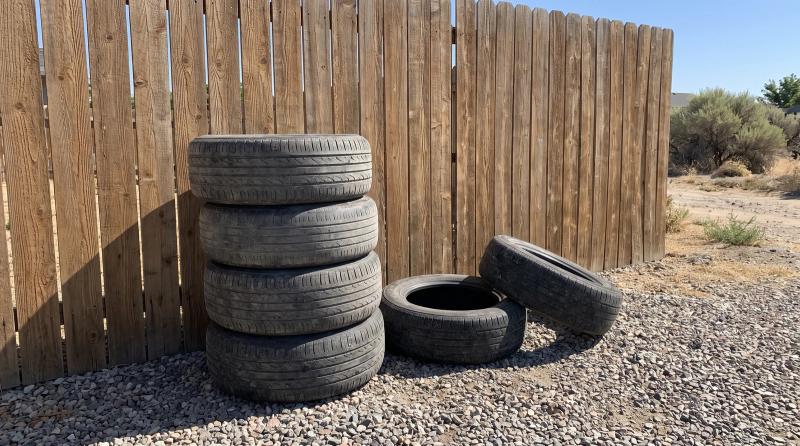
Old tire piles turn up behind a lot of Treasure Valley garages. Some are still bolted to steel wheels, and the pile has often sat under a tarp since a previous owner left.
Tire removal with rims on or off in Boise: why it matters
Two waste streams, not one
A tire and a rim are two different waste streams. Rubber goes one direction, steel and aluminum go another.
Tire processors shred rubber into crumb and mulch. Run a chunk of steel through that equipment and you've got a bad day and a repair bill.
So somewhere between your driveway and the end of the line, somebody has to separate them.
That's why some self-serve drop sites charge a tire upcharge when the rim is still on. It isn't a scam. It pays for someone to run each one through a bead breaker.
What moves the cost up or down
There's no single per-tire number, because the real cost depends on the whole load. Around Boise, Meridian and Nampa, these are the things that push it up or down:
| What you've got | What it does to the cost |
|---|---|
| Passenger tire, no rim | Lowest. Bare rubber stacks tight in the truck |
| Passenger tire, rim on | A bit more. Extra weight, extra handling |
| Light truck or SUV tire, rim on | More again. Heavier steel takes more space |
| Run-flat tire, rim on | Stiff sidewalls make it heavier and harder to separate |
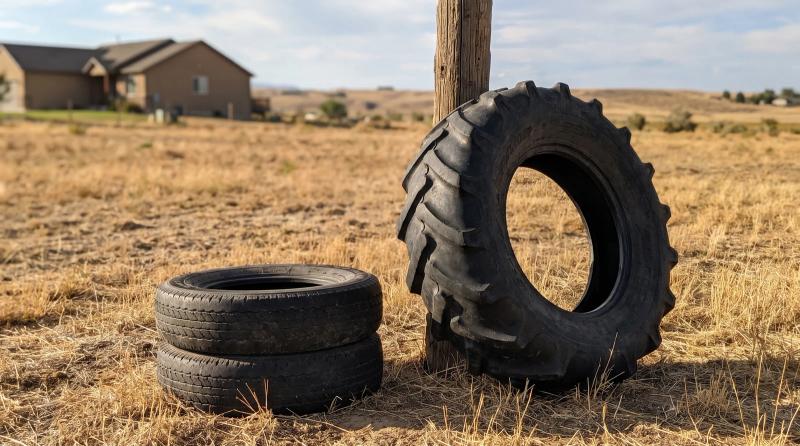
| Trailer or small equipment tire | Depends on size and whether it's foam-filled |
Volume matters most. A few tires in the corner of a garage cleanout just take up some of the truck space that job is already using.
Access matters too. Tires stacked by the garage door load faster than a pile tucked behind a Boise shed or up in the rafters.
Good to know: Aluminum rims bring more at local scrap yards than steel ones do, and the price moves with the metals market. Steel rims bring very little. If your wheels are the shiny cast kind, pull them and sell them separately. If they're plain painted steel, don't burn the afternoon.
What is a change over?
A tire change over off rims means a shop pulls the old rubber off your wheels and mounts new rubber on the same rims. It's one of the most common tire services around, and it's a different service than hauling junk.
Most newer cars have a pressure sensor, called TPMS, inside each wheel. During a change over, many shops offer a TPMS rebuild, which swaps the worn seal, nut and valve core so the sensor doesn't leak.
Why does that matter? Old seals crack with age, and a slow leak at the sensor is easy to miss. A rebuild during the change over heads that off.
A TPMS rebuild won't fix a dead sensor battery, though. When the battery's gone, the whole sensor gets replaced.
After the new rubber goes on, the shop spins each wheel and adds small weights where it's heavy. That's how you get balanced tires that don't shake at highway speed.
If you're keeping the rims, a change over is usually the right call. Ask up front whether a TPMS rebuild and balanced tires are included, and whether the shop keeps the old rubber.
Some online tire sellers let you get free delivery to a local installer. Ask whether taking the old set is part of that installer's tire services before you order. If you get free delivery to your house instead, the old tires are still yours to deal with.
Doing the demount yourself
Getting a tire off a wheel depends on your setup and how much you enjoy fighting a tire iron. Here's the basic order if you want to try it:
- Let all the air out by pulling the valve core. On a sensor wheel, go easy, because a bent stem means a TPMS rebuild at best.
- Break the bead on both sides so the rubber lets go of the rim.
- Work the top bead over the rim edge with tire irons and a little soapy water.
- Flip it over and pry the second bead off the same way.
- If the rim is going to scrap, knock off the weights. Balanced tires have them clipped to the rim edge or stuck to the inside.
Breaking a bead by hand is miserable work. Tires that sat in an Idaho backyard through a few winters bond to the rim, and the rubber goes stiff and stubborn.
Why some sets won't budge
A run-flat tire has thick, stiff sidewalls built to carry the car with no air in it. That's great on the road and awful in a driveway. Most people can't get a run-flat tire off a rim with hand tools.
Not sure what you've got? A run-flat tire usually says so on the sidewall, with marks like RFT, ROF, ZP or SSR.
Hauling a run-flat tire away is no different than hauling any other one. It's only the demount that's hard.
Sensors add another catch. Pry in the wrong spot and you can crack one, which turns a simple TPMS rebuild into a full sensor replacement.
A shop that offers tire services will demount them for a per-wheel fee. If you're keeping the rims, that's the move. Drop them off, get your wheels back clean, and deal with bare rubber after.
Don't want the rims either? Leave everything assembled and have the whole thing hauled as is. Whether that beats a demount plus the extra trip, or a drop site's tire upcharge for rims on, depends on the load, and a free estimate tells you.
Where the rubber and steel end up
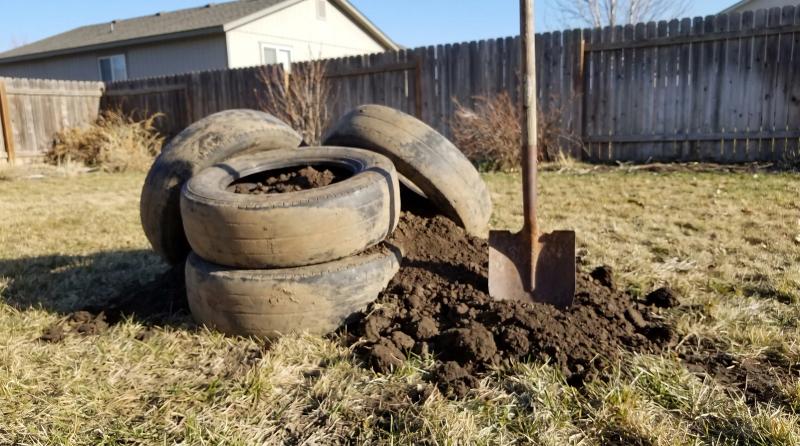
This part surprises people. None of it has to go in a hole.
Rubber that goes to a processor can come back as playground surfacing, road base, or fuel for industrial kilns. Metal can go to a scrap yard and get melted down. Both beat burying it.
Whole tires are a headache in a landfill because they float back to the surface over the years. Ada County's landfill is still another option for tires. Every drop site sets its own rules and fees, including any upcharge for rims, so call the location before you load up.
Stuff people get wrong
- Tires holding water or dirt. A tire sitting flat in the yard can fill up with rainwater. It adds a lot of weight and breeds mosquitoes, so tip and drain them before pickup day.
- Assuming the shop that sold you tires takes the old ones back. Many tire services do that at the time of purchase, for a fee. Months later? Often not.
- Paying for a TPMS rebuild on wheels you're tossing. If the rims are headed for scrap, tell the shop to skip it.
- Leaving weights on scrap rims. Balanced tires carry small clip-on or stick-on weights, and some scrap yards want those pulled first.
- Not saying how many still have rims. Tell whoever's hauling them how many tires still sit on a wheel, so the estimate matches the load.
Quick tip: If the tires are still mounted, stack them neatly instead of leaving a loose heap. Twelve tires in a tight stack eat less truck than twelve tossed in a pile, and truck space is what you're paying for.
Frequently asked questions
When can you put studded tires on in Idaho?
Idaho allows studded tires from October 1 through April 30. To be sure, check the Idaho Transportation Department for the current dates before you swap.
Is October too early for winter rubber?
Not always. Winter tires wear faster on warm pavement, so a lot of people wait until the days stay cold.
Does everything have to come apart before pickup?
No. We take old tires, wheels and all. Some drop sites add an upcharge for rims, but we price by truck space, so just tell us how many still have a rim on.
Should I pull aluminum rims first?
Only if you want to keep them or sell them for scrap. Plain steel rims usually aren't worth the effort.
Related reading: Junk Removal Boise Prices: What Your Quote Actually Includes and How to Dispose of an Old Lawn Mower and Grill: Boise Disposal Guide.
Got a pile that keeps growing behind the shed? The tire removal service at Top Shelf Junk Removal and Demolition takes old tires, wheels and all, and they can ride along with the rest of a cleanout. Call (208) 593-2877 and tell us what you've got. We'll set up a free estimate before anything gets loaded. No pressure either way.
Need Help With Tire Removal?
Top Shelf serves Boise and the Treasure Valley with professional junk removal, cleanouts, and demolition services.