
Studded Snow Tire Removal in Boise: When and How to Ditch Old Sets
By Eric Hinderager, owner of Top Shelf Junk Removal and Demolition · Updated
Studded snow tire removal in Boise: when Idaho's stud season ends, what moves the cost of getting rid of old sets, and where worn tires end up.
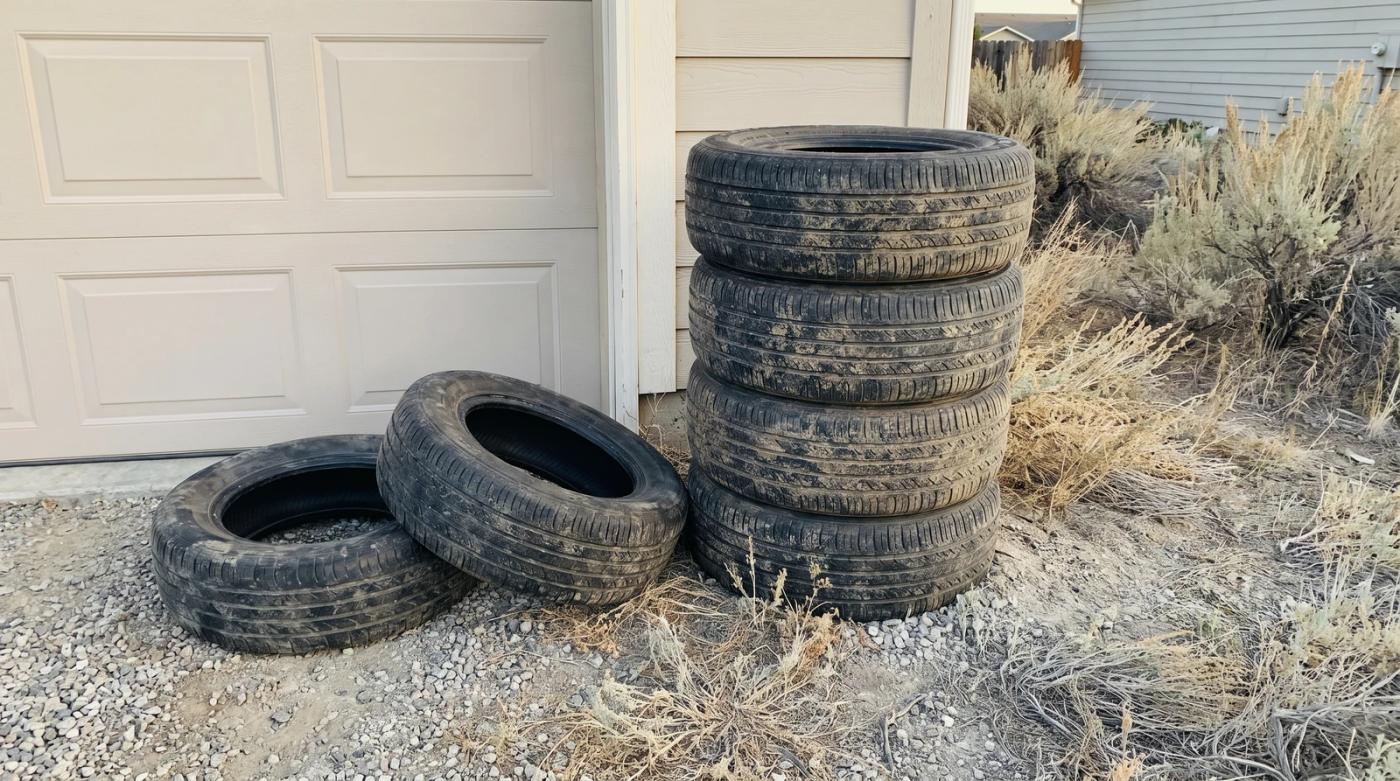
Studded snow tire removal in Idaho comes down to two jobs: getting the studs off your vehicle before the permitted season ends, and getting rid of worn sets that won't grip anymore. The first one is the law. The second is usually a stack in the garage.
Getting rid of old sets in Boise is a little more annoying than it should be, mostly because people hang onto them way past the point of usefulness. A worn set isn't worth anything to anybody. It's still heavy, still awkward, and curbside won't touch it.
So what do you actually do with them?
When is studded snow tire removal due in Idaho?
Studs are permitted in Idaho from October 1 through April 30. Outside those dates, studded tires aren't permitted on the road, so the swap back has to happen by the end of that window.
If your vehicle still has studs on it after the season closes, you're out of compliance. That's why shops around the Treasure Valley get so busy in late spring, right before studs stop being permitted.
Most people don't swap on the first day studs are permitted, though. A lot of drivers wait for the first real cold snap, which often doesn't show up until November.
Good to know: Tire laws change at the state line. In Oregon and Washington, studs aren't permitted until November, and in a few states they aren't permitted at all. If your winter driving takes you out of Idaho, check the rules where you're headed.
Why do worn sets pile up in Boise garages?
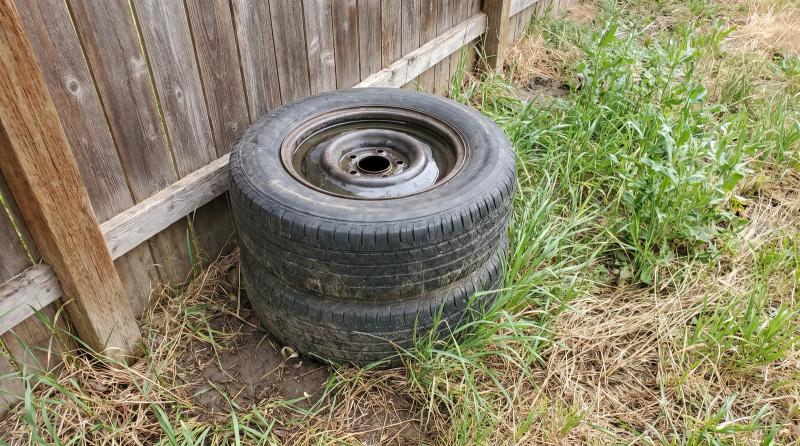
Here's where the pile starts. If you do the swap yourself, or you keep your winter tires mounted on their own wheels, nobody takes the old ones off your hands. They go to the side of the garage, next to the paint cans.
Then you buy a new set the following fall and now you've got eight. Add a spare from a car you sold, plus a couple your kid left behind, and suddenly it's a project instead of an errand.
Worn studded tires are easy to spot. Either the pins sit flush with the tread or they're gone entirely, leaving little empty sockets behind. Once that happens the set isn't doing much for you on ice, and most shops won't put it back on a rack.
When it's time to replace a set like that, the old studded tires are just heavy rubber with a little metal in them. They've done their job.
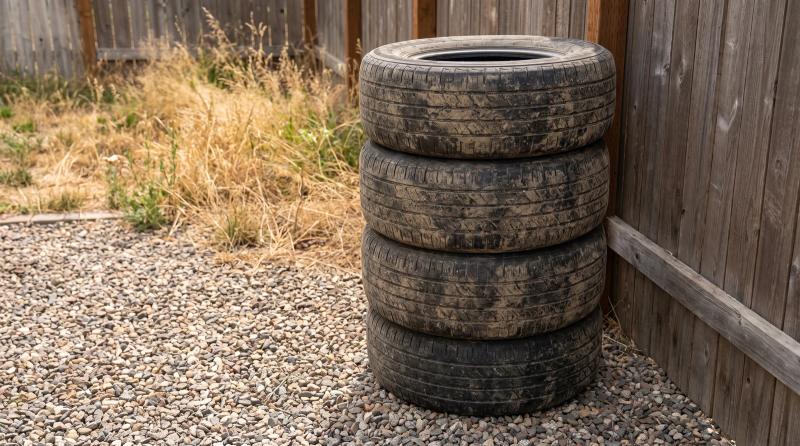
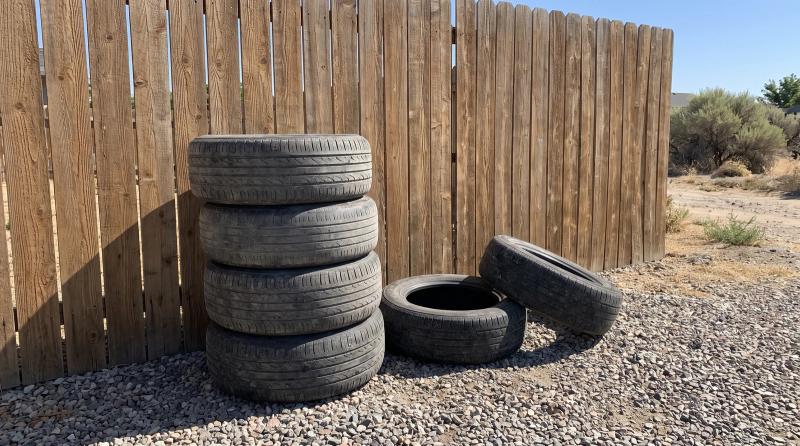
Heads up: Don't stack an old set outside along the fence figuring you'll deal with it later. Each one holds water like a bowl, and by mid-July you've got a mosquito nursery a few steps from the patio. Stored inside or gone entirely, those are the two good options.
What moves the cost of getting rid of them?
You've got a few options around the Boise area. The right one depends on how many you're sitting on and whether they're still mounted.
| Option | What moves the cost | Makes sense when |
|---|---|---|
| Shop takes them when you buy new | Each shop sets its own policy and fee | You're already buying a new set there |
| Haul them to Ada County Landfill yourself | A per-tire fee; check how they handle tires still on rims | You've got a truck and four or fewer |
| Pickup service | How many there are, whether they're on rims, size and access | Six or more, no truck, or no free Saturday |
The landfill route looks cheaper on paper. Then you factor in the drive out to the landfill, the loading, the black rubber streaks down your seats, and however they handle anything still on a rim. Four, sure. Twelve stops being fun somewhere around number five.
Check the landfill's current policy before you load up, since what's permitted and what it costs can change.
One thing that trips people up: studded tires usually aren't treated differently when you dispose of them. The metal studs are small, and processors already deal with the steel belts inside every tire. A little metal in the tread generally isn't a big deal, but it's worth asking wherever you take them.
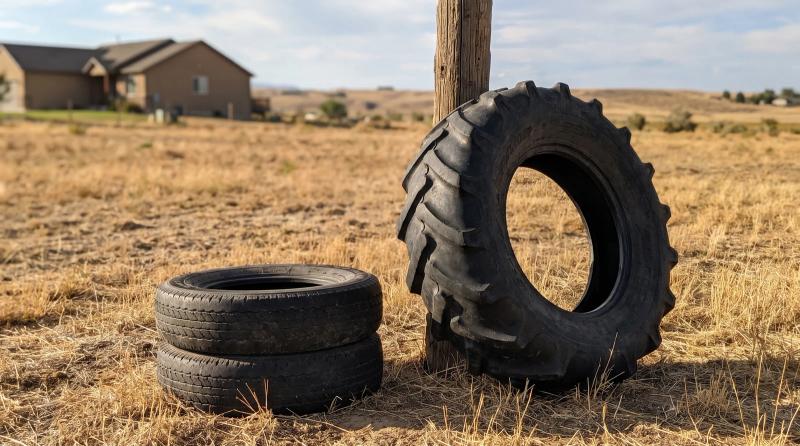
What does push the cost up? Sets still on rims, big truck tires, a big pile, and tight access, like a back corner of the garage behind boxes and bikes.
When should you book, and where do they end up?
Late April into May is the obvious answer and it's also the busiest stretch. Tire shops in Meridian and Nampa fill up with swap appointments as the stud season closes, and a lot of garage cleanouts land on the same few spring weekends.
June is usually calmer. The swap rush is over, the weather's still decent, and it's often easier to find a slot.
Early fall works too, before studs are permitted again and the new set goes on in October or November. Clear the old ones out first so you're not building a second pile on top of the first. Sounds obvious.
Almost nobody does it.
Couple of things worth knowing before we show up:
- Sets still on rims take up more room and cost more. If you own the tools, it helps when you remove them from the wheels first
- Loose sets stack better than ones standing on edge, and stacked loads faster
- A small pile of loose passenger sets is quick work; mounted ones, big truck tires and tight access take longer
A lot of old tires don't get buried whole. Many go to processors that shred them.
Some of that becomes tire-derived fuel for cement kilns and industrial boilers. Some is ground into crumb rubber, which shows up under playground equipment, on running tracks, and as infill in artificial turf. Some ends up as rubber landscape mulch.
Haul them yourself or hand them off, worn tires generally go down the same disposal path. The only real difference is who spends the Saturday.
Now, if your set still has decent tread and live studs, hang onto it. A set that's only a season or two old can sell on the local marketplace pages come October, sometimes for real money.
If you take a closer look and want to pull a set back out of the pile, set it aside before the pickup.
A worn studded set is a seasonal problem that quietly turns into a permanent one. Once the studs wear flush it's done as a winter tire, and every month it sits is another month of garage floor you're giving up.
Got one set and a pickup truck? Run it out to the landfill yourself.
More than that, or they're still on rims and you don't own the tools to pull them off, give Top Shelf Junk Removal and Demolition a call at (208) 593-2877. We'll give you a firm price on site before we touch anything, and we can grab the rest of the garage junk while we're there if you want.
Frequently asked questions
Can you remove studs from studded snow tires?
Yes. Removing studs is slow but simple: grab each one with pliers or diagonal cutters and twist it straight out. Even after you've pulled them, the soft winter rubber wears fast in summer heat, so it's rarely worth the effort on a worn set.
Are all snow tires studded?
No. Plenty of snow tires are studless and grip with soft rubber and lots of small slits in the tread. People sometimes call those chunky tread blocks rubber studs, but only a set with metal pins pressed into the tread counts as studded.
How do studs actually grip the ice?
Each one is a small, hard pin, often tungsten carbide, that sits just proud of the tread. On ice the studs bite in like cleats, which is why studded tires (tyres, on British sites) lose most of their value once the pins wear flush.
Should you run a pair or a full set?
Related reading: Junk Removal Boise Prices: What Your Quote Actually Includes and How to Dispose of an Old Lawn Mower and Grill: Boise Disposal Guide.
A full set. A pair of studded tires on just one axle can leave the other end sliding on ice, so shops generally put them on in fours.
Need Help With Tire Removal?
Top Shelf serves Boise and the Treasure Valley with professional junk removal, cleanouts, and demolition services.