
How to Drain a Water Heater With Sediment and Haul It Out
By Eric Hinderager, owner of Top Shelf Junk Removal and Demolition · Updated
How to drain a water heater with sediment: shutting off power and water, clearing a clogged drain valve, safe flushing, and getting the old tank hauled.
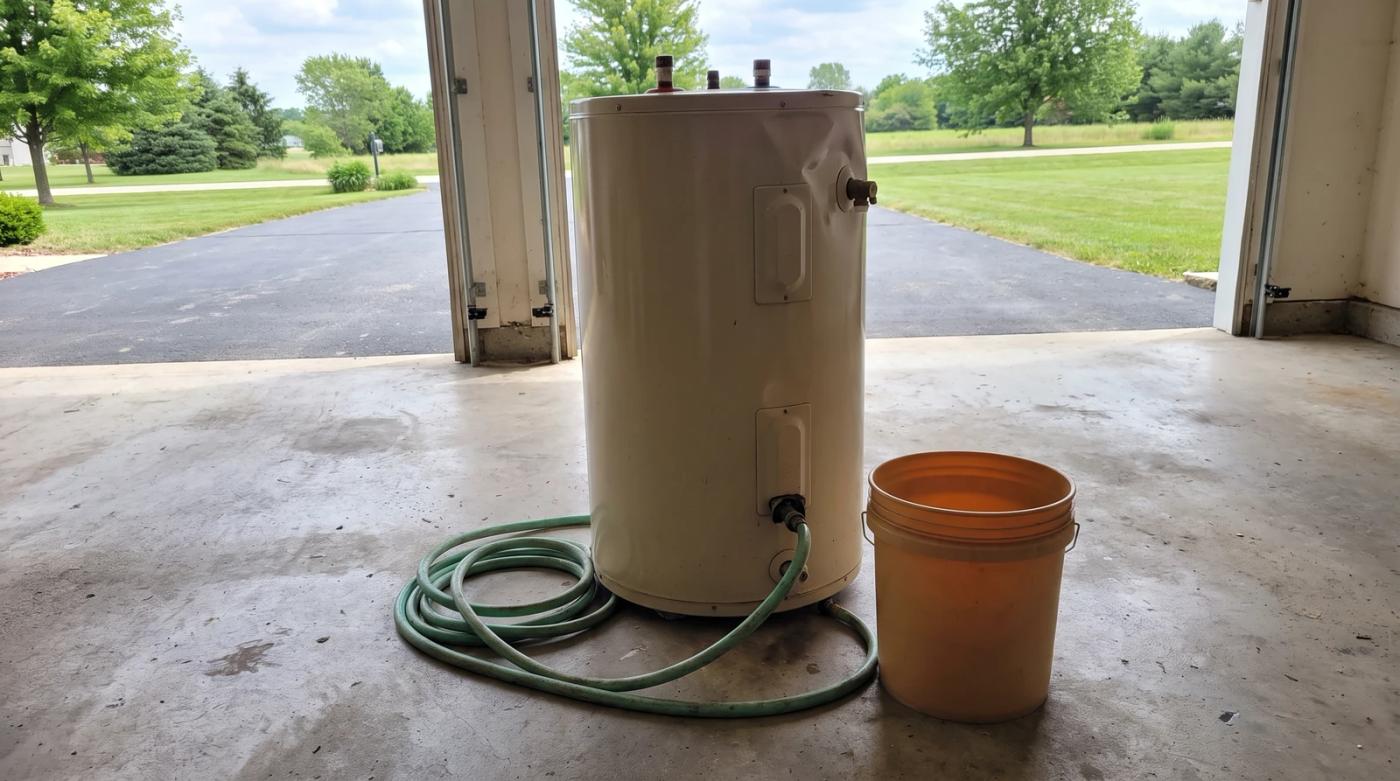
Here's how to drain a water heater with sediment: turn off the power or gas, close the cold-water inlet, let the water cool, then run a hose off the drain valve and flush it until it runs clear. That's the whole job on paper.
In the Treasure Valley, that last step is often the hard part on a water heater. Our hard water can leave a thick layer of mineral gunk in the bottom, and it can plug the valve so only a trickle comes out.
So a lot of homeowners crack the valve, see a little come out, and figure the tank is empty. Tip it, though, and it often still sloshes. Here's what to know before the old water heater comes out.
How to drain a water heater with sediment
If you're comfortable doing it yourself, it helps to drain the tank before it gets hauled. Less water means less weight and a lot less mess. Here's the order we'd follow:
- Turn off the power. Flip the breaker on an electric water heater, or turn the gas control knob to off.
- Close the cold water supply valve at the top of the unit.
- Allow it to cool first, overnight if you can. Water straight out of the heater can scald you.
- Hook a garden hose to the tank drain at the front, near the bottom, and run it somewhere outside that can handle the flow.
- Open a hot water faucet in the house so air can get in and the water actually flows.
- Open the drain valve slowly and allow it to run until what comes out of the hose looks clear.
Heads up: On a gas water heater, the gas has to be shut off and the connection properly capped before anyone disconnects it. Don't just unscrew the flex connector and hope it's fine. If you're not sure how, have a licensed plumber or a gas service tech handle it, and call Intermountain Gas right away if you ever smell gas.
If it trickles and quits, sediment is probably blocking the valve. With the spigot still running, crack the cold water valve open for a few seconds to stir things up, then close it again.
Sometimes that knocks the clog loose. Sometimes it doesn't. If it won't budge, some people rent a small transfer pump or put a wet/dry vac on the valve to pull the gunk out.
Quick tip: The heater drain on most tanks is a simple boiler drain, the same threaded spigot you'd see on an outside faucet. Plastic ones clog and crack easily. Brass ones hold up better.
If you're keeping the unit, close the valve once it runs clear and refill before the power goes back on. A water heater tank switched on dry can burn out its heating elements.
Why does Boise's hard water clog everything?
Treasure Valley water carries a lot of calcium and magnesium. When it heats up, those minerals drop out and settle at the bottom of the tank. Give it enough years and you can end up with a thick, crusty layer of sediment.
That layer sits between the burner and the water, so you get less hot water and often a rumbling or popping sound. It also clogs the drain valve and adds real weight. An old water heater can feel heavier than its size suggests, even with the water out, because of what's caked in the bottom.
Some water heaters have a curved dip tube or a valve sold as a sediment buster, meant to keep minerals stirred up so more of them wash out. Most older water heaters have neither.
A lot of older units also came with cheap plastic drain valves. Crank on one too hard and it snaps off, and now water is pouring out with no easy way to stop it.
Heads up: Leave the temperature and pressure relief valve alone. It's the lever on the top or side that lets off pressure in an emergency, and lifting it while the water is still warm can spray you. If the relief valve is dripping or crusted over, mention it to your plumber.
How much does an old tank weigh?
A full water heater is a completely different animal than one that's been flushed out. Water weighs a little over eight pounds a gallon, so a full tank carries hundreds of pounds of water on top of the steel.
| Type | With the water out | Still full of water |
|---|---|---|
| 40- or 50-gallon | Two people and a dolly can handle it | Far too heavy to move safely |
| 80-gallon electric | Heavy even with the water out; plan on two strong people | Not something to move |
| On-demand (tankless) | Light and wall-mounted, nothing to let out | About the same |
Sediment adds to all of that. So no, nobody's walking a half-full 50-gallon tank out of a utility closet. The water has to come out first, or at least as much of it as will.
What does hauling the old one away cost?
First, doesn't the plumber take the old one? Often, yes. If a plumber is putting in your new water heater, hauling off the old water heater tank is often part of the job, so ask what's included before they leave. Plumbing contractors handle the gas and water lines; hauling is a separate question worth asking early.
But plenty of times it doesn't work out that way. Maybe the old one quit making hot water and you swapped it yourself, so now it's sitting in the garage. Maybe you went with an on-demand heater and the installer left the old 50-gallon behind.
Or maybe you bought a house in Meridian and there's a dead spare in the side yard the last owner never dealt with. All three are common, and that's when calling a Junk Removal crew makes sense.
People often ask who's supposed to unhook what. For water heaters it's simple: we haul, we don't plumb.
A single water heater with the water already out, sitting somewhere easy like a garage or a ground-floor closet, is about as simple as a pickup gets. Pricing is based on how much truck space it takes, and the estimate is free.
Basement installs, tight closets, oversized tanks, and ones that are stuck full all take more work to get out. If yours won't let go of its water, mention it when you call. It can still come out, but it takes more time and some planning about where it all goes.
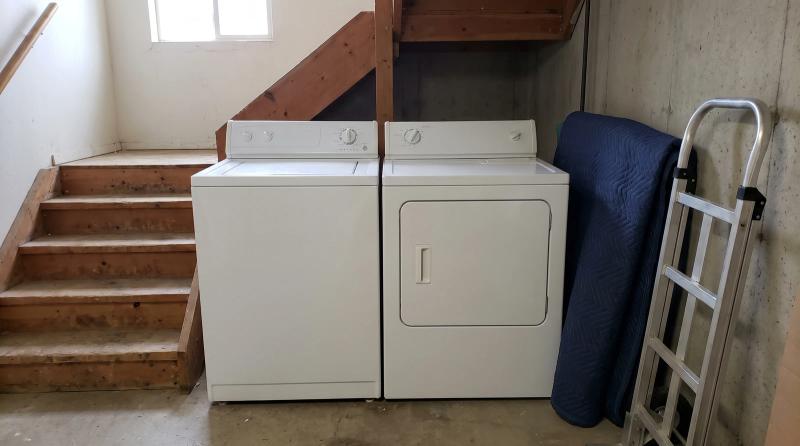
If other stuff is going too, like the old washer or a pile of boxes, it makes sense to bundle it into one trip, since pricing goes by how much truck space the whole load takes.
Can you haul it yourself? Sure. We'd love the job, but honestly, with a truck and a strong friend it's very doable. The Ada County Landfill at Hidden Hollow takes appliances, and since it's mostly steel, a scrap yard like Western Recycling will take it too. You'll need a dolly, a second person and a couple of ratchet straps.
Just don't expect much from the scrap yard. An old steel tank isn't worth much as scrap. When we pick one up, we recycle what we can, and a steel tank is a good fit for metal recycling instead of the landfill.
Water heater removal isn't complicated, but it's heavy and it's wet. Get the power or gas off, drain the tank as far as you can, and don't be surprised if Boise's hard water fights you on that last bit.
If you'd rather not wrestle it out yourself, give us a call at (208) 593-2877 and ask about our appliance removal service. Tell us the size and where it's sitting, and we'll give you a straight price. No pressure either way.
Frequently asked questions
Is it safe to empty a hot water heater yourself?
Yes, if the power or gas is off and the hot water has had time to cool. The real risks are scalding water, a brittle plastic valve that snaps, and a gas connection that isn't capped right.
Does a sediment buster really work?
It can slow new buildup by keeping minerals moving so more of them wash out. It won't break up years of hard crust that's already set, so an old water heater still needs a real flush, or replacing.
How long does flushing take?
It depends on how much sediment is in there, how cool the water is, and how often the valve clogs. Plumbing contractors sometimes use a small pump to push water back through the tank and break up the crust, which can speed things up.
What if the valve snaps off?
Related reading: Junk Removal Boise Prices: What Your Quote Actually Includes and Junk Removal in Boise: Old Lawn Mowers, Grills and Yard Tools.
Close the cold-water inlet right away so nothing new flows in; only what's already in the tank comes out. A plumber can thread a new boiler drain into the water heater, or tell us when you call and we'll plan around the water.
Need Help With Appliance Removal?
Top Shelf serves Boise and the Treasure Valley with professional junk removal, cleanouts, and demolition services.